
What Is Cellulose Acetate Eyewear? A Material Deep Dive
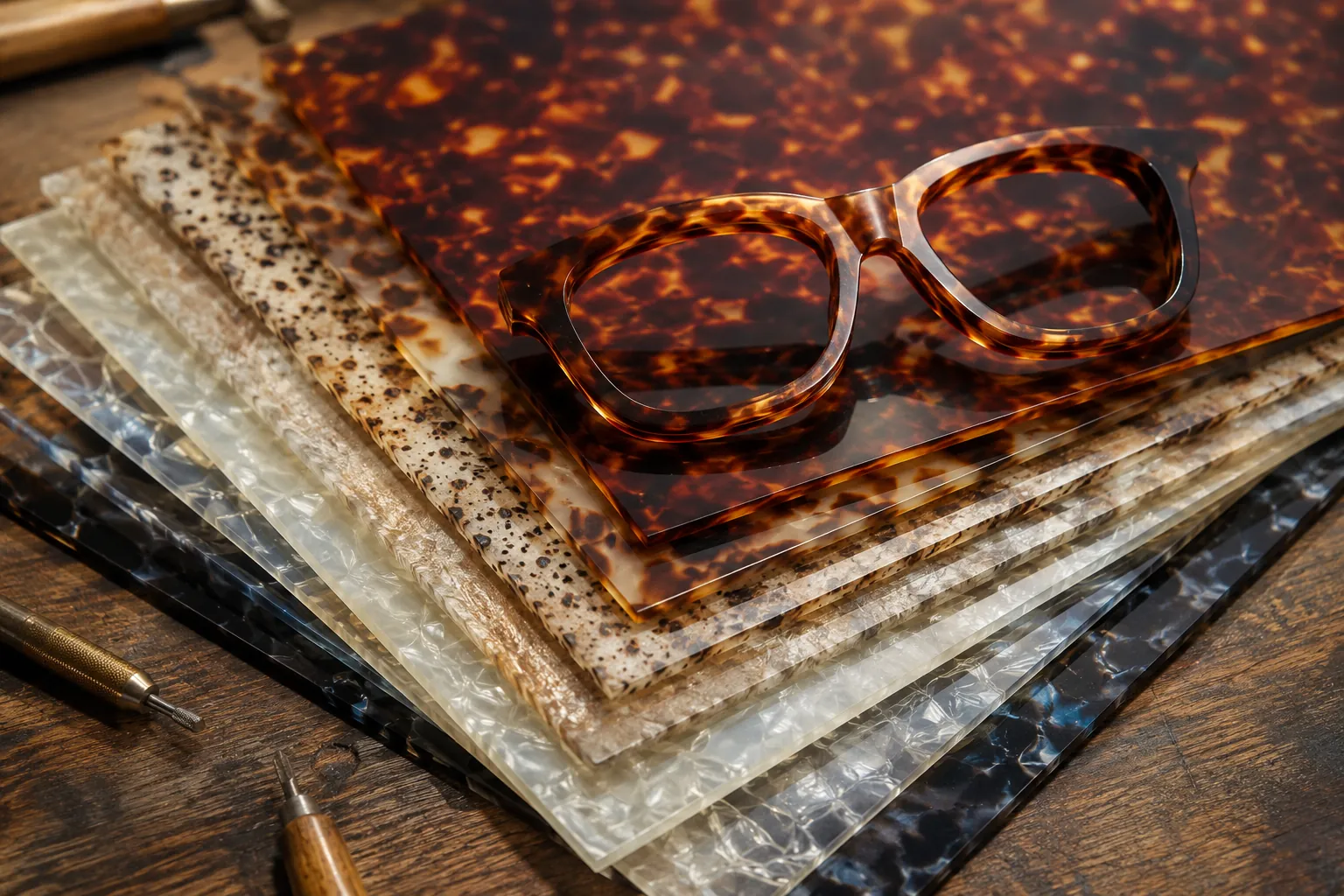
Cellulose acetate is the material behind most premium sunglasses — yet many buyers couldn't explain what it actually is. Understanding acetate, including the difference between block and sheet acetate, helps you spec better frames and recognize quality. This deep dive demystifies the most prestigious mainstream frame material.
What cellulose acetate is
Cellulose acetate is a plant-based plastic made from cellulose — typically wood pulp or cotton fibres — combined with acetic acid and plasticizers. The result is a hypoallergenic, lightweight-yet-substantial material that takes color beautifully and polishes to a deep, glossy finish. Unlike injection plastics, acetate is worked from solid material, which is why it feels and looks more premium.
Why acetate feels expensive
- Color depth: pigments and patterns are layered through the material, not printed on.
- Hand-finish: frames are hand-polished and tumbled to a rich gloss.
- Weight: the substance in the hand reads as quality.
- Hypoallergenic: skin-friendly, important for all-day wear.
Acetate's magic is that the color isn't on the frame — it's in the frame, layer by layer. That's why it ages gracefully instead of wearing off.
Block vs sheet acetate
There are two ways acetate frames begin, and the difference signals quality tier.
| Type | How it's made | Color effects | Tier |
|---|---|---|---|
| Sheet acetate | Pressed into flat sheets, frames cut from them | Layered patterns, marbling | Standard–premium |
| Block acetate | Built up in solid blocks, hand-laid layers | Complex 3D color depth | Premium–luxury |
Sheet acetate is the workhorse — excellent for most premium frames, with beautiful marbled and gradient effects. Block acetate is higher-end: color layers are built into a solid block, allowing depth and effects that sheet can't match, at a higher cost. For most brands, quality sheet acetate is the sweet spot.
How acetate becomes a frame
Frames are CNC-cut from the acetate sheet or block, then go through barreling/tumbling (with wood chips and polishing compound) over hours or days to round edges and bring up the gloss, followed by hand polishing, hinge setting and assembly. This labour is what acetate's premium pricing pays for. The full process is in how acetate frames are made.
Color and customization
Acetate's standout advantage is color. Because each color sheet/block is a material in itself, you can choose from thousands of stock acetates — solids, transparents, marbles, gradients, tortoiseshell — or commission custom acetate for an exclusive look. No mould is required to change color, which keeps acetate flexible at low MOQ. Pair with Pantone matching for brand color — see Pantone matching.
Caring for and judging quality
Quality acetate is well-polished (no dull or rough spots), has crisp color layers, solid hinge anchoring, and consistent thickness. Lower-grade acetate looks cloudy, polishes poorly and can dry out over time. Inspect samples for gloss, edge finish and hinge security.
Want premium acetate frames for your brand?
LumiShades CNC-cuts and hand-finishes acetate frames in Wenzhou, from thousands of stock colors to custom acetate. Request a sample to feel the quality.
Get a sampleSummary
Cellulose acetate is a plant-based, hypoallergenic material whose layered color and hand-finish make it the premium choice for sunglasses. Sheet acetate suits most premium frames; block acetate reaches luxury. Its color flexibility and low-MOQ friendliness make it ideal for brands building a distinctive, high-perceived-value range.