
Choosing the Right Frame Material for Your Sunglasses Brand
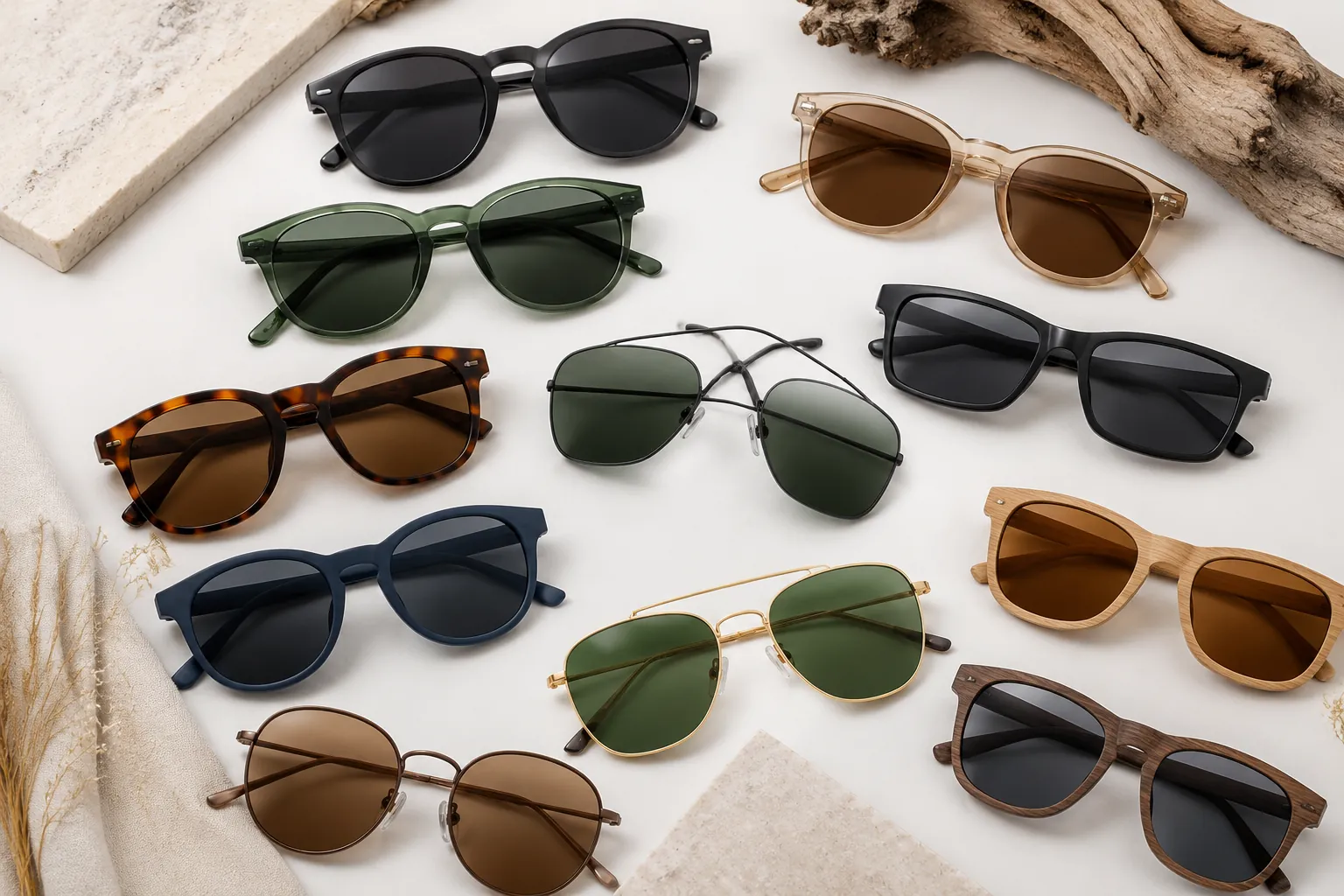
The frame material you choose shapes your product's look, weight, durability, cost and the very story your brand tells. Pick wrong and you either overspend or undersell. This guide gives you a clear decision framework for choosing frame material by price point, audience, durability needs and brand positioning.
The five material families
- Acetate: premium look, color depth, substantial feel — fashion and premium.
- TR90 nylon: light, flexible, tough, cheap — sport and value.
- Metal (Monel/steel/titanium): elegant, precise, varies by alloy.
- Bio-acetate: acetate's qualities plus sustainability.
- Wood/bamboo: natural, individual, eco-niche.
Decision factor 1 — Price point
| Retail tier | Best-fit materials | Why |
|---|---|---|
| Value / promo | TR90, basic metal | Lowest cost, durable |
| Mid | TR90, acetate, stainless | Balance of look & cost |
| Premium | Acetate, bio-acetate, titanium | Look, feel, story |
| Eco-premium | Bio-acetate, wood/bamboo | Sustainability narrative |
Material should match what your customer pays. A premium price needs a premium feel (acetate, titanium); a value price needs efficient production (TR90, Monel).
Decision factor 2 — Audience and use
- Fashion/lifestyle → acetate (color depth, premium feel).
- Sport/active → TR90 (light, flexible, impact) — see sport wrap.
- Classic/elegant → metal, especially aviator in Monel/titanium.
- Eco-conscious → bio-acetate or wood/bamboo.
- Kids → TR90 (durable, flexible, safe).
Decision factor 3 — Durability needs
If frames will take abuse — sport, kids, outdoor — prioritize flex and impact resistance: TR90 and titanium excel; acetate is durable but more rigid; wood needs hybrid builds. For everyday fashion wear, all materials suffice when well-made. Validate with testing — see durability testing.
Decision factor 4 — Brand story
Material is narrative. Acetate says "crafted, premium." Titanium says "engineered, light, refined." Bio-acetate and wood say "responsible." TR90 says "performance, accessible." Choose the material that reinforces the story your marketing tells.
Customers don't just wear your material — they wear what it signals. Match the material to the message.
Decision factor 5 — MOQ and tooling
Material affects how you can launch:
- Acetate/bio-acetate: low MOQ, no mould for color changes — great for testing.
- TR90: needs a mould for new shapes — better at committed volume.
- Metal: tooling for new shapes; stock platforms keep MOQ low.
With LumiShades, stock platforms across materials start at a 50-pair MOQ. See MOQ explained.
A simple decision path
- Set your retail price point.
- Identify your audience and primary use.
- Match to the material family above.
- Check durability needs and brand story alignment.
- Confirm MOQ/tooling fits your launch budget.
- Sample 2–3 material options to feel the difference.
Choosing the right material for your range?
LumiShades works acetate, bio-acetate, TR90, metal and wood/bamboo in-house. Tell us your price point and audience and we'll recommend and sample options.
Request a free quoteSummary
There's no universally best frame material — only the right one for your price point, audience, durability needs, brand story and launch budget. Use this framework to narrow the field, then sample your finalists. The material that scores well across all five factors is the one your collection should be built on. Mix materials across SKUs to serve different segments within one brand.