
Wood and Bamboo Sunglasses: A Manufacturing Guide
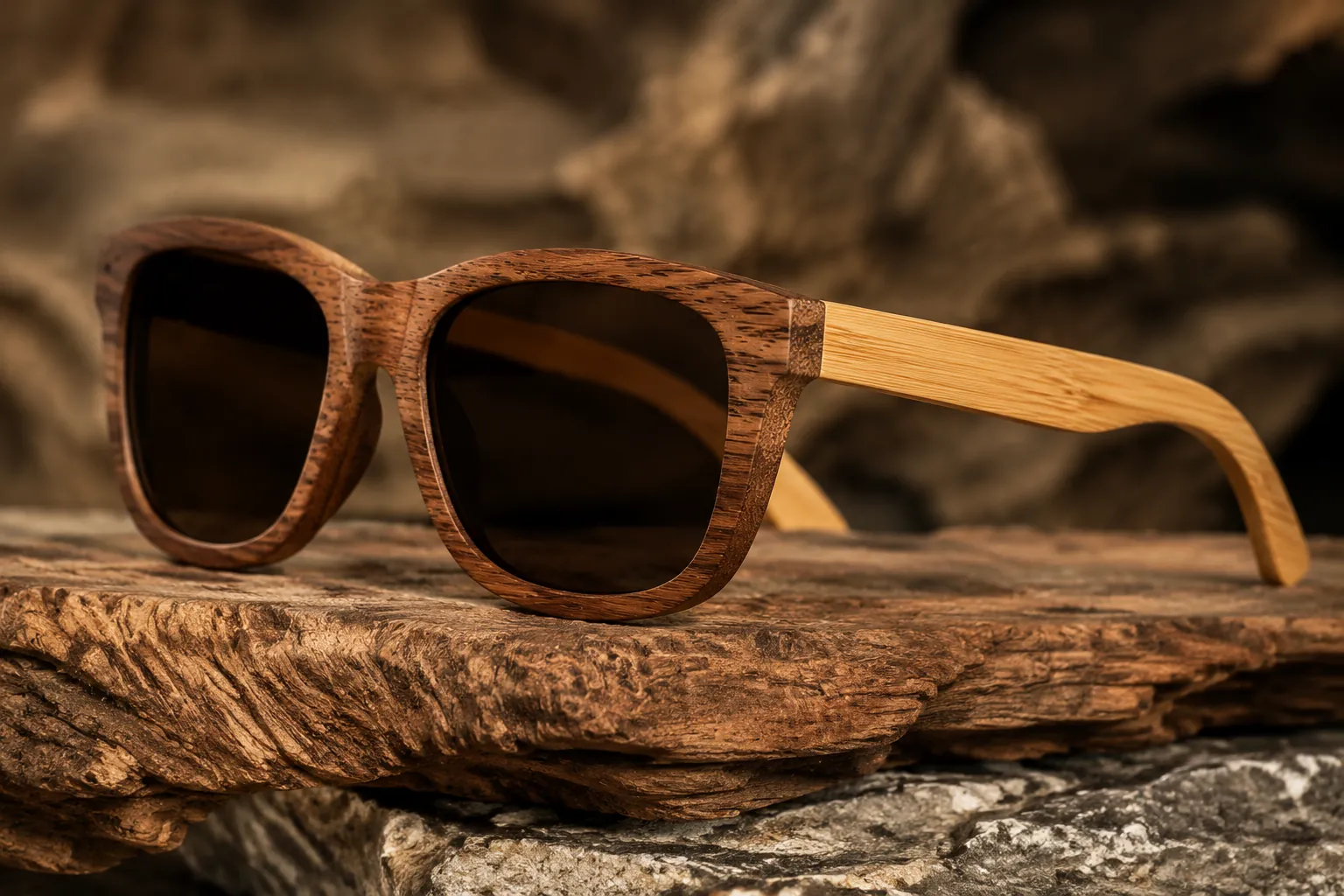
Wood and bamboo sunglasses occupy a distinctive niche: natural, warm, individual, and inherently sustainable in story. But natural materials bring manufacturing challenges that injection plastics don't. This guide covers species selection, build types, durability and the QC pitfalls of making wooden eyewear that survives real use.
The appeal of natural frames
Wood and bamboo frames stand out on a shelf full of plastic and metal. Each pair has unique grain, a warm tactile quality, and a built-in eco-natural narrative. They suit lifestyle, eco, festival and boutique brands, and command a premium for their craftsmanship and individuality.
Wood vs bamboo
| Aspect | Wood | Bamboo |
|---|---|---|
| Material | Hardwoods (walnut, ebony, zebrawood, etc.) | Fast-growing grass (technically) |
| Weight | Light–medium | Very light |
| Sustainability | Depends on sourcing | Very renewable, fast-growing |
| Look | Rich grain, varied | Uniform, light-toned |
| Cost | Varies by species | Generally lower |
Build types: solid vs hybrid
Pure wood/bamboo frames are beautiful but have limits — natural material can be brittle and reacts to humidity. Most quality wooden eyewear uses smart construction:
- Solid wood/bamboo: full natural frame; most authentic, most demanding to engineer.
- Hybrid: wood front with metal/acetate temple cores or hinges for strength and adjustability — the most reliable approach.
- Layered/laminated wood: thin wood plies bonded for stability and reduced warping.
The most durable wooden sunglasses are rarely all wood. A hybrid build keeps the natural look where it's seen and adds engineered strength where it's stressed.
The floating-frame feature
A popular selling point: many wood and bamboo sunglasses float on water (the material is less dense than water). It's a genuine, marketable differentiator for beach and water-lifestyle brands — confirm buoyancy with your factory as it depends on species and build.
Durability and finishing
Natural materials need protection. A quality finish (oil, lacquer or sealant) guards against moisture, sweat and UV graying. Without it, frames can swell, crack or discolor. Spec the finish explicitly and test it. Hinges and temples take the most stress, which is why hybrid metal hinges are common — see hinge types.
QC pitfalls unique to wood/bamboo
- Cracking/warping from humidity — require proper drying and sealing.
- Grain/color variation — natural, but set acceptable tolerance so pairs aren't wildly mismatched.
- Glue lines in laminated/hybrid builds — inspect for clean joints.
- Finish consistency — even sealing, no rough or dull patches.
- Hinge anchoring into wood — a common failure point.
Sustainability — done right
Wood/bamboo's eco story only holds if sourcing is responsible. Bamboo is inherently renewable; hardwoods should come from managed/FSC sources. Keep sourcing documentation to make credible claims, and pair with eco packaging for a coherent story.
Launching wood or bamboo sunglasses?
LumiShades manufactures solid and hybrid wood/bamboo frames with protective finishing and metal-reinforced hinges. Request a sample to test the build and float.
Get a sampleSummary
Wood and bamboo sunglasses offer unmatched natural character and a strong eco narrative — but demand careful engineering. Favour hybrid builds for durability, spec a protective finish, set tolerances for natural variation, and source responsibly. Done well, they're a distinctive, premium niche that's hard for competitors to copy.