
Hinge Types in Sunglasses: Spring vs Barrel and Beyond
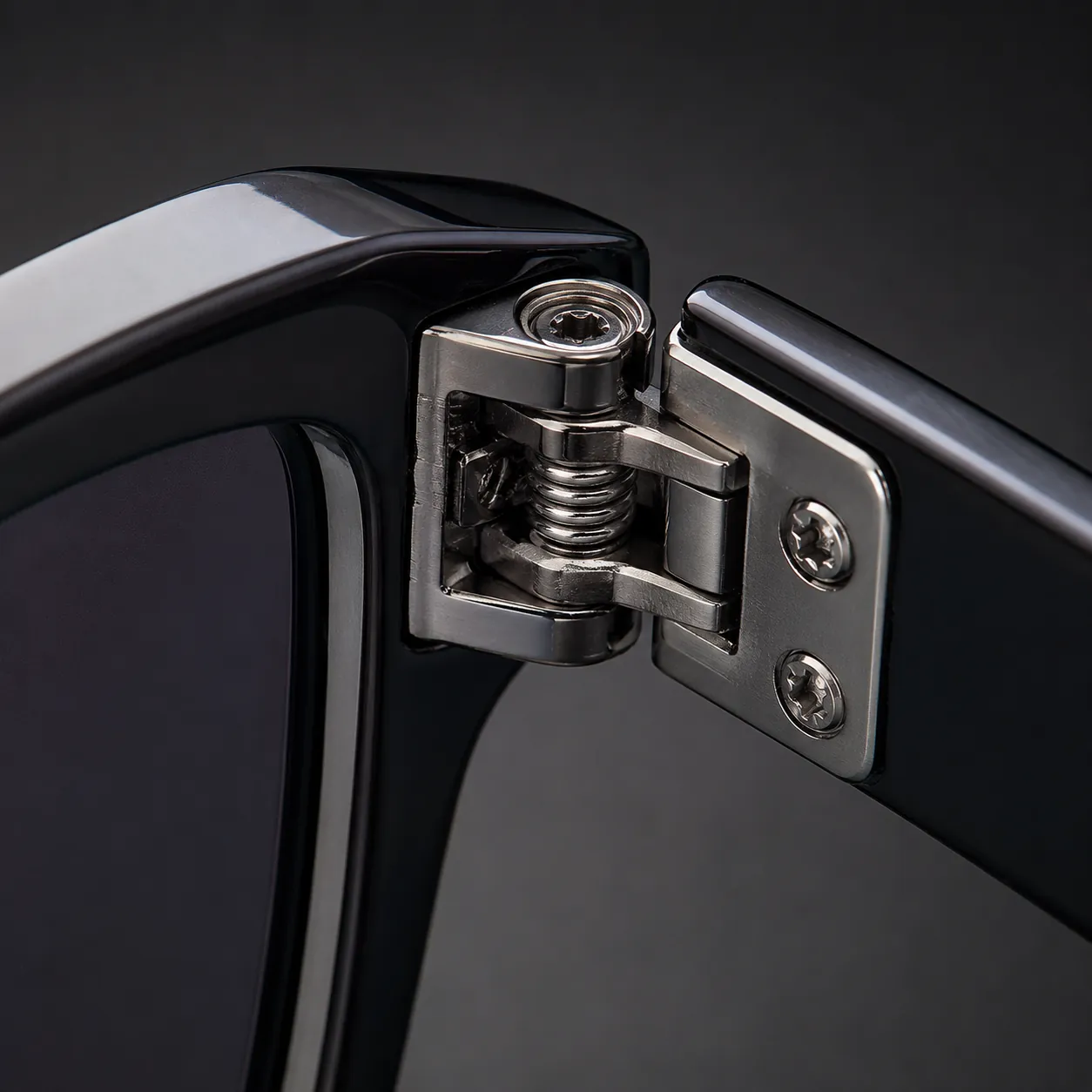
The hinge is the hardest-working part of any pair of sunglasses — opened and closed thousands of times over its life — yet it's the detail buyers most often overlook in a spec. The hinge type affects durability, fit, comfort and perceived quality. This guide compares spring, barrel and other hinges so you spec the right one.
Why hinges matter more than you think
Hinge failure is one of the most common reasons sunglasses get discarded or returned. A loose, stiff or broken hinge ruins an otherwise good frame. Beyond durability, the hinge governs how the temples open, how snugly the frame grips, and that subtle quality cue when a customer opens a pair for the first time.
The main hinge types
| Hinge type | How it works | Pros | Cons |
|---|---|---|---|
| Barrel hinge | Interlocking barrels + screw | Simple, repairable, cheap | No flex; can loosen |
| Spring hinge | Barrel + internal spring | Flexes outward, comfy fit | More complex, costlier |
| Riveted hinge | Riveted, no screw | Clean, durable | Hard to repair |
| Screwless hinge | Snap/click mechanism | No screws to loosen | Specialty, costlier |
| Integrated/wire-core | Hinge built into material | Sleek, minimal | Design-specific |
Barrel hinges: the classic standard
The barrel hinge — interlocking metal barrels joined by a small screw — is the traditional, most common hinge. It's simple, inexpensive and repairable (you can tighten or replace the screw). The downsides: no flex (temples open to a fixed point), and the screw can loosen over time. Barrel hinges suit classic, fashion and value frames where flex isn't required.
Spring hinges: comfort and durability
Spring hinges add an internal spring that lets the temple flex outward beyond its normal open position, then snap back. This is a meaningful upgrade: the frame adapts to different head sizes, grips more comfortably and securely, and resists damage from over-flexing — a real benefit for sport and active wear, and for kids. The trade-off is added cost and complexity. Spring hinges pair naturally with flexible TR90 sport frames.
A spring hinge is the cheapest upgrade that makes a frame feel expensive — it adapts to the face and survives the abuse barrel hinges don't.
Riveted and screwless hinges
Riveted hinges skip the screw, attaching via rivets for a cleaner look and no screw to loosen — but they're harder to repair. Screwless hinges use a click/snap mechanism, eliminating screw maintenance entirely; they're a premium, specialty option. Both signal a higher-end frame.
Hinges by material and style
- Acetate fashion: barrel or spring, set into the acetate — see how acetate frames are made.
- Metal frames: often integrated/soldered hinges — see metal frames.
- Sport TR90: spring hinges for flex and grip.
- Minimal/rimless: integrated or screwless for a clean line.
Hinge quality and QC
Whatever the type, inspect: smooth open/close action (no grinding or excessive stiffness), secure anchoring into frame/temple, screw tightness (and thread-locking if used), and endurance. Hinge endurance testing (thousands of open/close cycles) is part of frame durability standards — see durability testing.
How to spec your hinge
- Match hinge to use: spring for sport/comfort, barrel for classic/value.
- Confirm anchoring method into your frame material.
- Specify thread-locking on screws to prevent loosening.
- Require hinge endurance testing in QC.
- Consider screwless/riveted for premium minimal designs.
Want frames with hinges that last?
LumiShades fits spring, barrel, riveted and screwless hinges with endurance testing. Tell us your style and use case for the right hinge.
Request a free quoteSummary
The hinge is small but decisive for durability, fit and perceived quality. Barrel hinges suit classic and value frames; spring hinges add comfort and durability for sport and premium; riveted and screwless options elevate minimal designs. Spec the hinge deliberately and test its endurance — your return rate will thank you.