
TR90 Nylon Frames Explained for Eyewear Brands
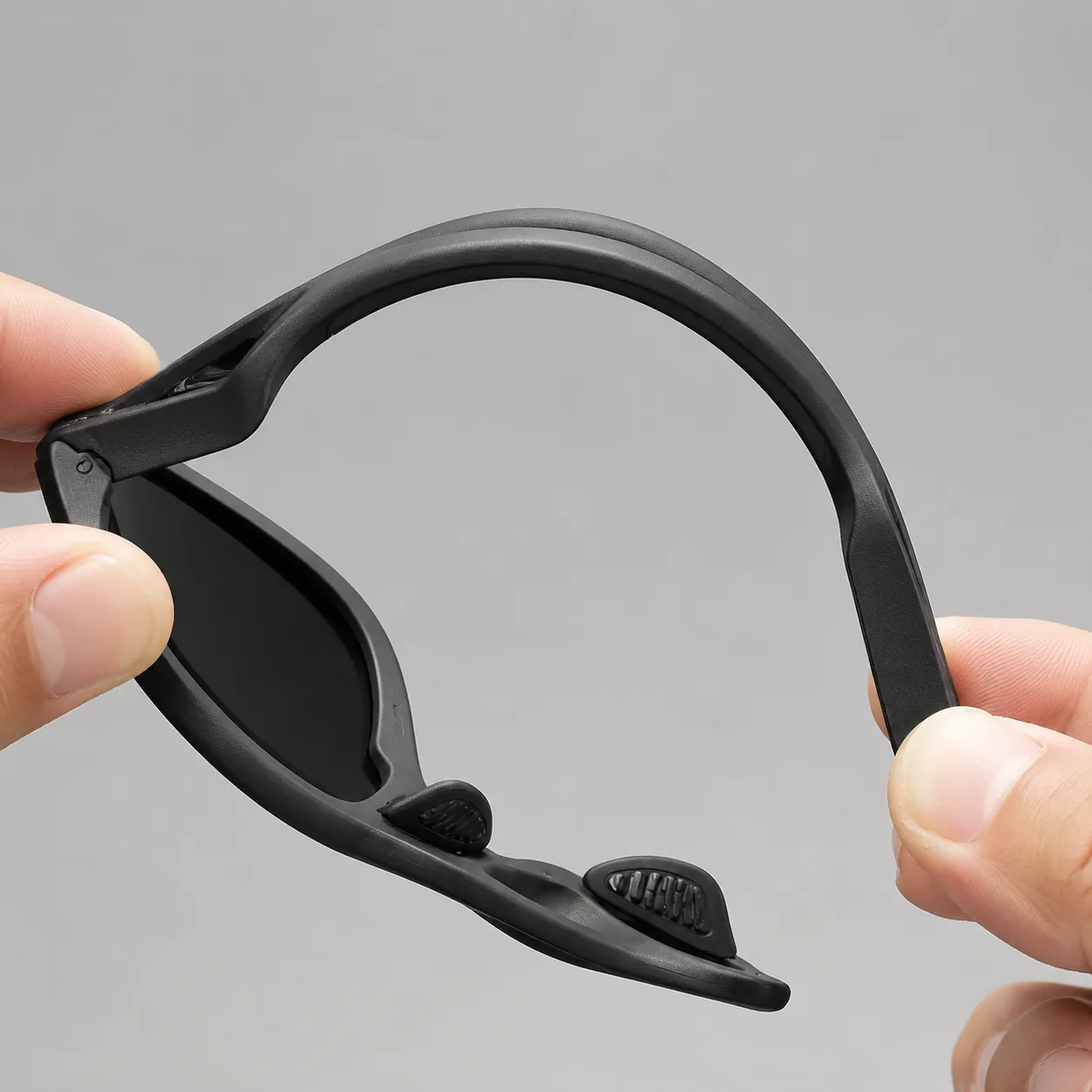
TR90 has quietly become one of the most-used frame materials in modern sunglasses, especially for sport and value lines. Light, flexible and tough, it solves problems acetate and metal can't. This guide explains what TR90 is, where it wins, how it's made, and how to spec it for your collection.
What TR90 actually is
TR90 is a thermoplastic — a grade of nylon (polyamide) engineered for memory, flexibility and impact resistance. The "TR" stands for the material family and "90" the grade. In eyewear it's prized for being remarkably light, able to flex and snap back without breaking, and comfortable for all-day and active wear.
Why brands love TR90
- Lightweight: among the lightest frame materials — barely noticeable on the face.
- Flexible: bends and returns to shape, resisting the snapping that breaks rigid frames.
- Impact-resistant: ideal for sport, kids and rough use.
- Comfortable: warms slightly to the skin, grips well.
- Cost-effective: injection moulding makes it cheap at volume.
TR90 is the material you spec when the frame has to survive being sat on, dropped and thrown in a gym bag — and still cost a few dollars to make.
Where TR90 fits
TR90 dominates sport wrap styles, running, cycling and outdoor eyewear, kids' frames, safety eyewear and value fashion. Its lightness and grip make it the default for performance, while its low cost makes it the backbone of high-volume value programs. It's less suited to luxury fashion, where acetate's color depth wins — compare in acetate vs TR90.
How TR90 frames are made
TR90 is injection-moulded: pellets are melted and injected into a steel mould, cooling into the frame shape. This is fast and cheap per pair once the mould exists, but the mould is a real upfront investment, and the shape is fixed by the tooling. Color is added by compounding pigment into the material (solid or translucent) or by post-mould coating/printing. See tinting for lens color and Pantone matching for frame color.
Color and finish options
| Finish | How achieved | Look |
|---|---|---|
| Solid color | Pigment compounded in | Uniform, matte or gloss |
| Translucent | Tinted transparent material | Modern, light |
| Rubberized | Soft-touch coating | Grippy, sporty, premium feel |
| Two-tone | Multi-shot moulding/coating | Sporty, branded |
A rubberized soft-touch coating is especially popular on sport TR90, adding grip and a premium tactile feel.
Tooling, MOQ and cost
The economics flip versus acetate: TR90 needs a mould (a real upfront cost and lead time), but once it exists, per-pair cost is low and falls fast with volume. So TR90 suits brands committing to a shape at scale. On stock TR90 platforms, LumiShades offers a 50-pair MOQ; a brand-new custom mould carries a higher minimum to amortize tooling. TR90 sits in the entry/value price tiers.
How to spec TR90 frames
- Confirm stock platform vs new mould (cost/MOQ difference).
- Choose color method: compounded, translucent, rubberized, two-tone.
- Specify temple flex and any metal core reinforcement.
- Select hinge type — spring hinges pair well with flexible sport frames.
- Choose lens material — PC for impact suits TR90 sport frames.
Building a sport or value line in TR90?
LumiShades injection-moulds TR90 frames in-house with rubberized and two-tone finishes. Tell us your shape and volume for a quote.
Request a free quoteSummary
TR90 nylon delivers lightness, flexibility, impact resistance and low cost — making it the natural choice for sport, kids and value eyewear. It needs tooling upfront but rewards volume with very low unit costs. Spec the finish, hinge and lens to match its performance strengths, and it's a workhorse material your range will lean on.