
Acetate vs TR90 Sunglass Frames: Which Should You Choose?
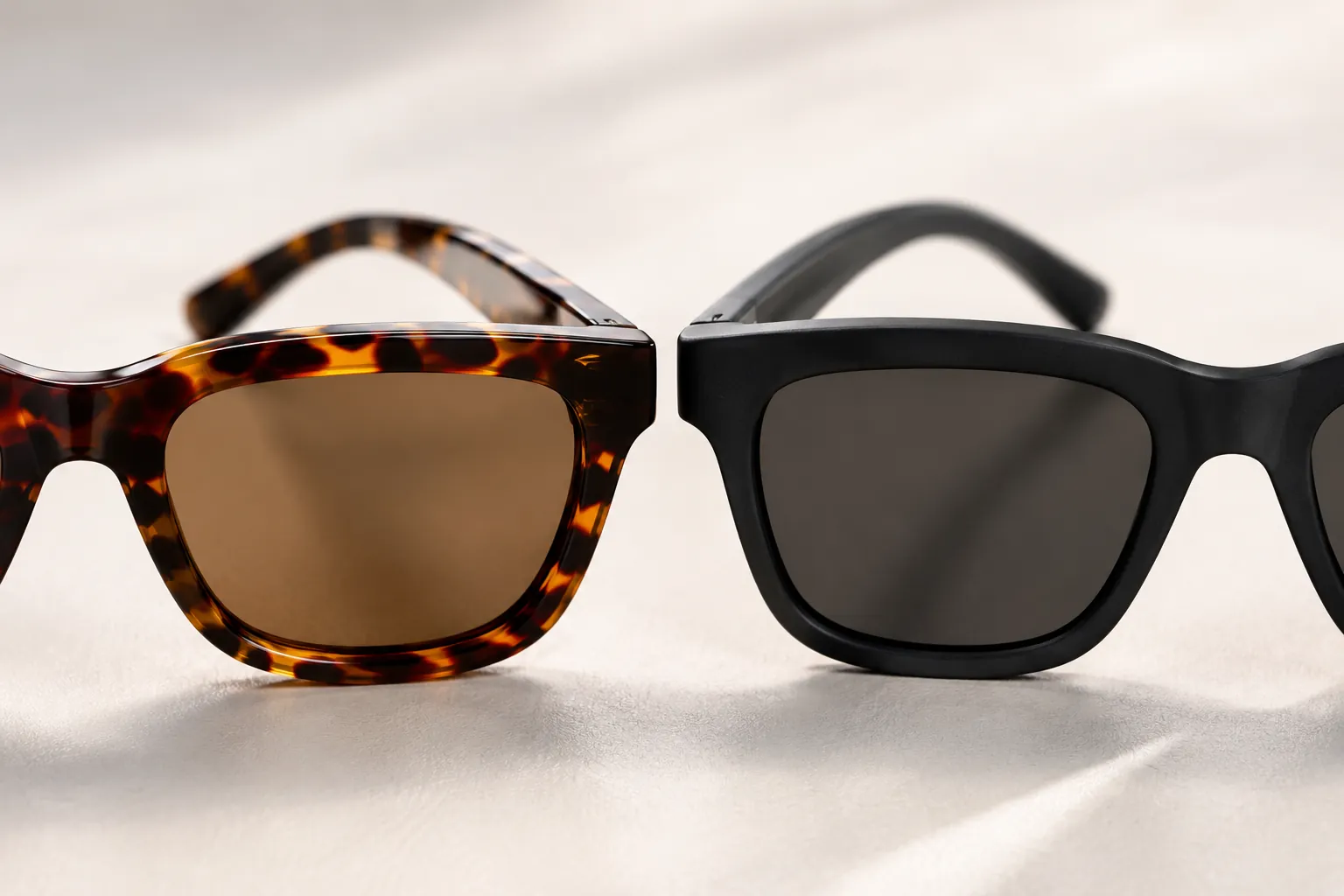
Acetate or TR90? It's the single most consequential frame-material decision most sunglasses brands make. One delivers depth, weight and a premium hand-feel; the other delivers lightness, flexibility and value. This guide compares them across look, durability, cost and MOQ so you choose the right hero material for your line.
The two materials in one sentence each
Acetate (cellulose acetate) is a plant-derived plastic prized for rich, deep colors, a substantial feel and a premium finish. TR90 is a thermoplastic nylon known for being extremely light, flexible and impact-resistant at a lower cost.
Side-by-side comparison
| Property | Acetate | TR90 Nylon |
|---|---|---|
| Look & feel | Premium, deep colors, substantial | Light, sporty, clean |
| Weight | Heavier | Very light |
| Flexibility | Rigid (can crack if abused) | Highly flexible, bounces back |
| Color range | Layered, marbled, deep | Solid, translucent |
| Durability | Durable, repairable | Very durable, hard to crack |
| Cost | Higher | Lower |
| Best for | Fashion, premium, optical | Sport, value, kids |
When acetate wins
Acetate is the material of choice for fashion and premium eyewear. Its layered, marbled and gradient color effects are impossible to replicate in injected plastics, and the weight signals quality in the hand. If your brand sells a story, a price point above value, or distinctive color, acetate carries it. Learn the material deeply in what is cellulose acetate.
Acetate is what a customer feels when they pick up a pair and think "this is expensive." That perception is worth real margin.
When TR90 wins
TR90 excels where weight, flexibility and durability matter more than luxury feel: sports, outdoor, kids' eyewear, safety and value programs. It shrugs off impacts, flexes instead of snapping, and costs less to produce — making it ideal for sport wrap styles and high-volume value lines. Dive deeper in TR90 explained.
How they're made — and why it matters
Acetate frames are CNC-cut from solid sheets, then hand-polished and tumbled — a labour-intensive process that adds cost but allows endless color and shape variety. TR90 is injection-moulded, which is fast and cheap per pair once tooling exists, but limits you to the mould's shape and solid/translucent colors. This is why acetate suits low-MOQ custom color and TR90 suits high-volume runs. See how acetate frames are made.
Cost and MOQ implications
- Acetate: higher unit cost, but flexible at low MOQ (no mould needed for color changes). Lands in the upper price tiers.
- TR90: low unit cost at volume, but a custom shape needs a mould. Lands in the entry/value tiers.
With LumiShades, both start at a 50-pair MOQ on stock platforms; new TR90 moulds carry higher minimums.
Can you use both?
Yes — many brands run acetate for premium/fashion SKUs and TR90 for sport/value SKUs within one collection. You can even combine them in a single frame (acetate front, TR90 temple cores) for a balance of look and durability.
Deciding between acetate and TR90?
LumiShades works both materials in-house in Wenzhou. Tell us your price point and audience, and we'll recommend the right material and sample it.
Request a free quoteBottom line
Choose acetate for premium look, color depth and low-MOQ flexibility; choose TR90 for lightness, flexibility, durability and value at volume. Match the material to your price point and audience — and remember you can use both across a collection. For a full decision framework, see choosing frame material.