
TAC vs Polycarbonate vs Nylon Sunglass Lenses Compared
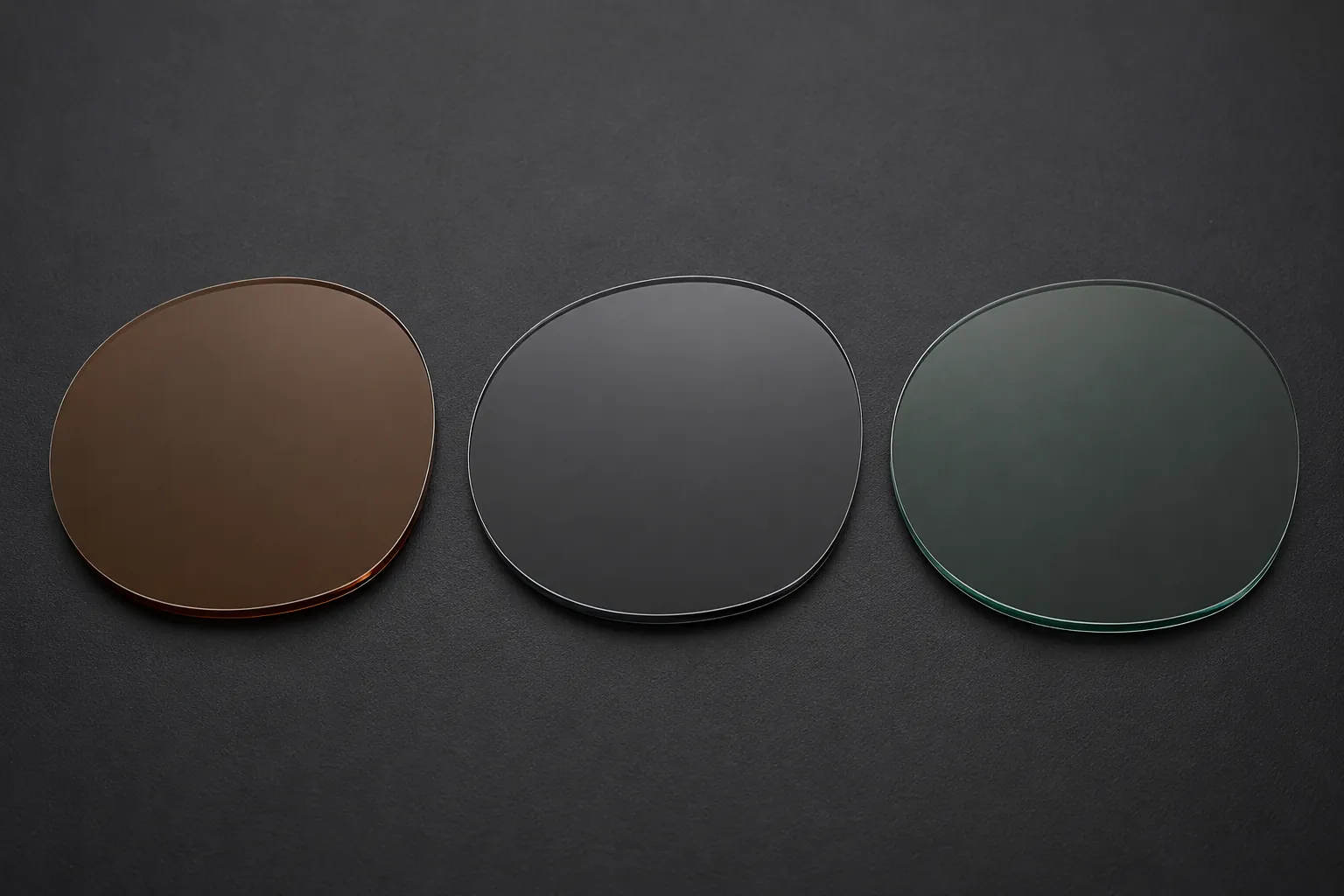
The lens material you choose shapes optical clarity, impact safety, weight, cost and which product tier a pair belongs in. TAC, polycarbonate and nylon are the three workhorses of sunglass lenses. This guide compares them head-to-head so you spec the right material for each line.
The three materials in brief
- TAC (Triacetate Cellulose): the standard for affordable polarized lenses — a laminated film stack, light and inexpensive.
- Polycarbonate (PC): impact-resistant, lightweight, inherently UV-blocking — the go-to for sport and safety.
- Nylon (polyamide / Trivex-style): premium optical clarity with excellent impact resistance — used in high-end and performance eyewear.
Head-to-head comparison
| Property | TAC | Polycarbonate | Nylon (PA) |
|---|---|---|---|
| Optical clarity | Good | Good (some distortion) | Excellent |
| Impact resistance | Moderate | Excellent | Excellent |
| Weight | Light | Very light | Light |
| Scratch resistance | Low (needs hardcoat) | Low (needs hardcoat) | Better, still coat |
| UV blocking | Via coating | Inherent | Via coating/material |
| Cost | Lowest | Low–mid | Highest |
| Best for | Polarized value lenses | Sport, kids, safety | Premium performance |
TAC: the value polarized workhorse
TAC lenses are built as a laminate, which makes them the natural home for the polarizing film. They're inexpensive and light, ideal for value and mid-market polarized sunglasses. The trade-offs: lower scratch and impact resistance than PC or nylon, and a risk of delamination if quality is poor. Always spec a hardcoat. More on polarized TAC in polarized vs non-polarized.
Polycarbonate: impact and safety
Polycarbonate is the toughest mainstream lens — it resists shattering, which makes it the standard for sports, children's eyewear and safety applications. It's also inherently UV-blocking, simplifying compliance. The downside is slightly lower optical precision (some peripheral distortion) and softness that demands a good scratch coat. PC suits sport wrap and active lines.
If a lens might get hit — sport, kids, safety — polycarbonate is rarely the wrong answer.
Nylon: premium clarity meets toughness
Nylon-based lenses (polyamide, and Trivex-type materials) combine excellent optical clarity with high impact resistance and good chemical stability — the reason premium sport and luxury brands favour them. The trade-off is cost: nylon sits at the top of the lens-material range and belongs in premium tiers where the optics justify the price.
Matching material to product tier
| Tier | Recommended lens | Why |
|---|---|---|
| Entry / value | PC or TAC | Cost-effective, UV400 |
| Mid / fashion polarized | TAC polarized | Affordable polarization |
| Sport / active | Polycarbonate | Impact safety + light |
| Premium / performance | Nylon | Best clarity + toughness |
Coatings apply to all three
Whichever base you choose, coatings finish the lens: hardcoat for scratch resistance, mirror or gradient for looks, AR for glare, and oleophobic top coats. UV400 must be confirmed regardless of material. See AR coatings and mirror coatings.
Not sure which lens material fits your line?
LumiShades produces TAC, polycarbonate and nylon lenses in-house, all UV400. Tell us your product tier and we'll recommend and sample the right material.
Request a free quoteBottom line
There's no single best lens material — only the right one for the job. TAC for affordable polarized, polycarbonate for impact and sport, nylon for premium optics. Match material to tier, always add the right coatings, and confirm UV400 every time.