
Anti-Reflective Coating for Sunglasses: Is It Worth It?
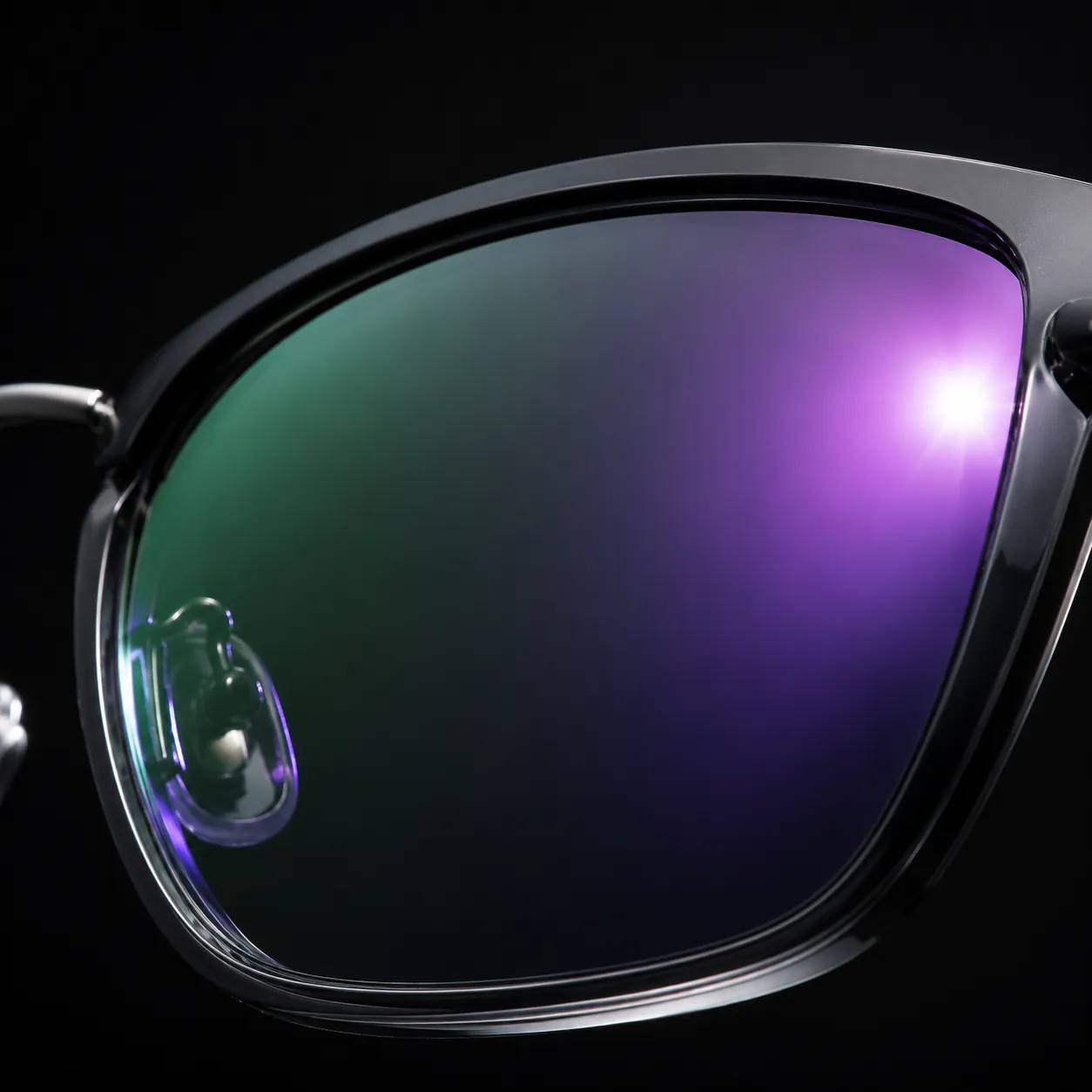
Anti-reflective (AR) coating is well known on clear eyeglasses, but it plays a different and underrated role on sunglasses. Applied to the back of the lens, AR kills the distracting glare that bounces off the inside surface into the wearer's eye. This guide explains where AR is worth the cost on sunglasses and how to spec it.
Frontside vs backside AR — a key distinction
On clear glasses, AR goes on both surfaces to reduce reflections and improve cosmetics. On sunglasses, front AR is usually not wanted — you often want reflectivity (that's what mirror coatings do). The valuable application is backside AR: a coating on the inner surface that stops light coming from behind and around the wearer from reflecting off the back of the lens into the eye.
On sunglasses, the glare that ruins the experience often comes from behind you. Backside AR is the fix nobody markets enough.
What backside AR solves
- Sun or bright light behind/beside the wearer reflecting off the rear lens surface.
- "Bounce-back" glare that's especially noticeable with mirror and dark lenses.
- Distracting reflections of the wearer's own eyes/face.
It pairs especially well with mirror lenses, where the front reflectivity can otherwise be undermined by rear glare — see mirror coatings.
How AR coatings are applied
Like mirror coatings, AR is built by vacuum deposition of thin optical layers — but tuned to cancel reflections via destructive interference rather than create them. Quality depends on layer precision and a durable top coat, because AR layers can show smudges and scratches if unprotected. An oleophobic top coat is essential on AR'd sunglasses.
Is it worth the cost?
| Lens type | Backside AR value | Recommendation |
|---|---|---|
| Mirror / flash mirror | High | Strongly recommend |
| Dark category 3–4 | High | Recommend |
| Premium / sport | High | Recommend |
| Light/fashion tint | Moderate | Optional |
| Entry value lens | Low | Usually skip for cost |
AR adds to unit cost and runs in coating batches, so it makes most sense on premium, mirror and dark lenses where the glare reduction is most noticeable and the price point supports it.
Durability matters
Poorly made AR is a liability — it shows every fingerprint and can craze or peel. Always spec AR with a hardcoat beneath and an oleophobic/hydrophobic top coat above, so it resists smudges and cleaning. On a premium sunglass, this stack is what makes the lens feel high-quality in the hand.
How to spec backside AR
- Specify AR on the back surface only for sunglasses.
- Pair with hardcoat (under) and oleophobic top coat (over).
- Confirm it suits your base lens material (PC, TAC, nylon).
- Reserve it for premium, mirror and dark lenses to justify cost.
- Require an adhesion/durability check in QC.
Upgrading your premium lenses with AR?
LumiShades applies durable backside AR with protective coatings in-house, ideal for mirror and dark lenses. Request a sample to see the glare difference.
Get a sampleSummary
On sunglasses, AR's real value is backside — eliminating bounce-back glare from behind the wearer. It's worth the cost on premium, dark and mirror lenses, provided you spec it with proper protective coatings. Used selectively, AR turns a good lens into one that feels genuinely premium.