
Sunglasses Lens Categories 0 to 4, Explained
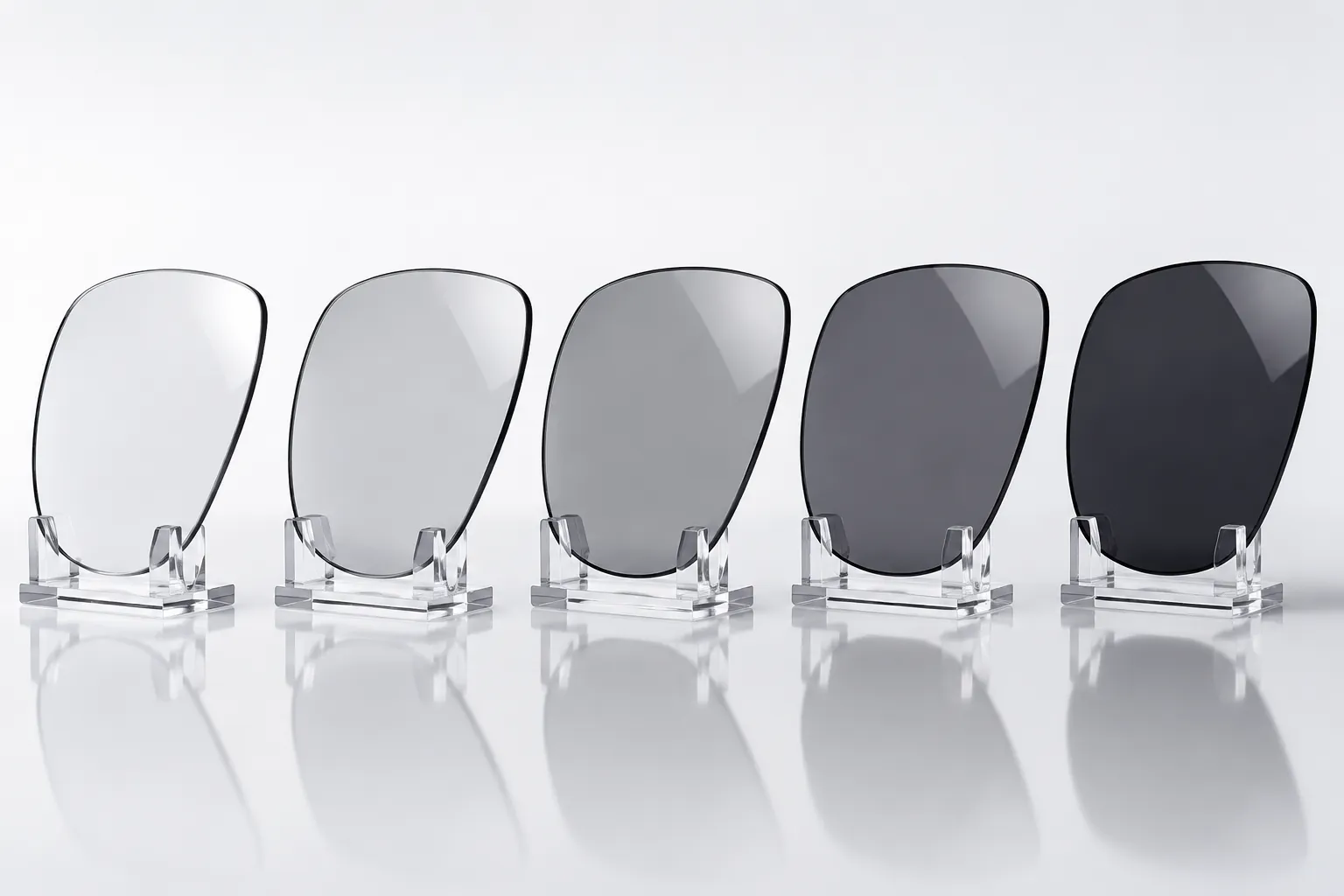
Lens filter categories 0 to 4 are the standardized way to describe how much visible light a sunglass lens blocks — and they carry real legal and labeling consequences. For brands and importers, understanding categories prevents compliance trouble and helps you spec the right darkness for each market and use. Here's the complete breakdown.
What the categories measure
The category describes visible light transmission (VLT) — the percentage of visible light that passes through the lens. Lower category = lighter lens = more light through; higher category = darker lens = less light. Categories are defined under EN ISO 12312-1 (and mirrored in AS/NZS 1067). Crucially, category is about brightness, not UV — UV protection is a separate requirement.
The five categories
| Category | Light transmission | Tint | Typical use |
|---|---|---|---|
| 0 | 80–100% | Clear / very light | Fashion, indoor, night |
| 1 | 43–80% | Light | Overcast, low sun, fashion |
| 2 | 18–43% | Medium | Average sun, everyday |
| 3 | 8–18% | Dark | Bright sun, the most common |
| 4 | 3–8% | Very dark | High glare: mountains, sea, desert |
Category 3: the everyday standard
Category 3 is the workhorse of sunglasses — dark enough for bright sunshine, suitable for most general and driving use. If you spec a single mainstream sunglass lens, category 3 is usually it. Most fashion and lifestyle sunglasses fall here.
Category 4: powerful but restricted
Category 4 lenses are very dark, designed for extreme glare — high-altitude mountaineering, glaciers, open sea, desert. The critical compliance point: category 4 lenses are not legal for driving in the EU, Australia and many markets because they cut too much light. If you sell category 4, you must label it "not suitable for driving."
Category 4 is a mountaineering tool, not a fashion choice. Sell it dark, label it clearly, and never let it onto a driving line.
Driving and category rules
- Daytime driving: categories 1–3 are generally acceptable.
- Category 4: prohibited for driving — must be labeled.
- Category 0–1: only filter for night driving (most night-driving "sunglasses" claims are dubious).
Labeling obligations
Compliance isn't just making the lens — it's labeling it. Under EN ISO 12312-1 you must communicate the filter category and any restrictions (e.g. not for driving) to the end user, typically on packaging or a hangtag. A manufacturer that supplies the correct category data per batch makes your labeling straightforward. Gradient lenses need special care — see gradient lenses guide.
Category and UV are independent
This bears repeating: a category 1 (light) lens can and must still be UV400. Darkness does not equal UV protection. Always confirm UV separately — see UV400 explained.
How to spec category
- Decide the use case (everyday, sport, extreme glare, fashion).
- Choose the matching category and target VLT%.
- Confirm driving suitability for your market.
- Require a category/VLT test report per batch.
- Plan packaging/labeling to state category and restrictions.
Need category-compliant lenses with the right labeling data?
LumiShades supplies lenses across categories 0–4 with VLT test reports and labeling guidance for your market. Request a quote.
Request a free quoteSummary
Categories 0–4 standardize lens darkness, with category 3 the everyday default and category 4 reserved for extreme glare and barred from driving. Spec by use, label by law, and never confuse category with UV protection. Get categories right and your range is both fit-for-purpose and compliant.