
UV400 Protection Explained for Eyewear Buyers
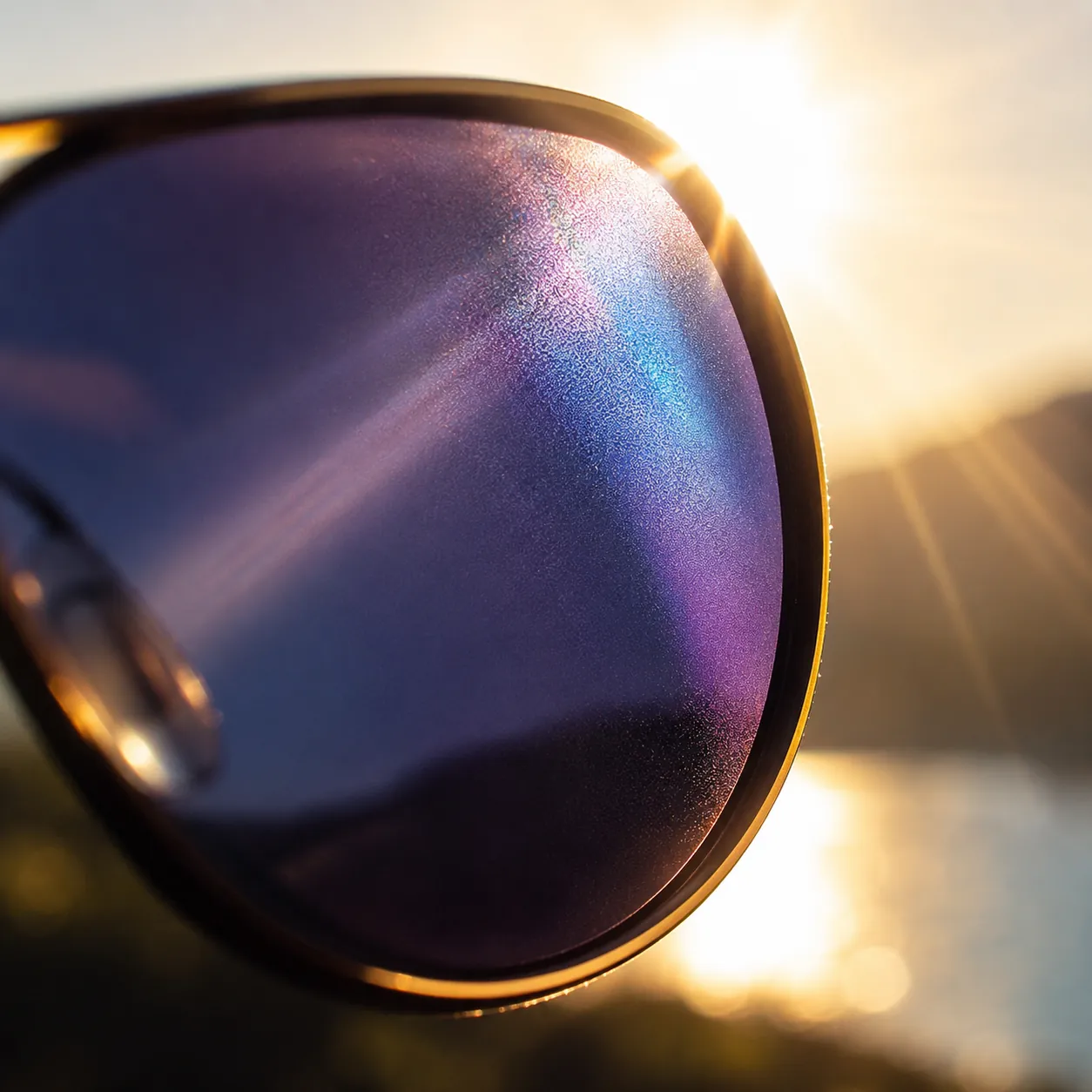
"UV400" appears on nearly every sunglasses listing, yet many buyers — and even some suppliers — don't fully understand what it guarantees. For an eyewear brand, getting UV protection right is both a safety obligation and a compliance requirement. Here's what UV400 means and how to make sure every lens you sell delivers it.
What UV400 actually means
UV400 means the lens blocks all ultraviolet light up to 400 nanometres — covering both UVA (315–400nm) and UVB (280–315nm), the wavelengths that damage eyes. "400" is the cutoff in nanometres. A true UV400 lens blocks essentially 100% of harmful UV, which is the protection level health authorities recommend.
The dangerous myth: dark equals protective
Tint darkness and UV protection are completely independent. A very dark lens with poor UV blocking is more dangerous than no sunglasses at all: the darkness dilates the pupil, letting more unfiltered UV reach the retina. This is exactly why cheap "fashion" sunglasses can harm eyes — and why your brand must verify UV, never assume it from tint.
A dark lens that doesn't block UV is a trap: it opens the pupil wide and then lets the damage straight in.
How UV protection is built into a lens
- In-mass absorbers: UV-blocking compounds mixed into the lens material — durable, can't scratch off. Polycarbonate inherently blocks most UV.
- UV coating: applied to the surface — effective but can wear if low quality.
- Best practice: a base material that blocks UV plus verification testing.
See how base materials differ in TAC vs polycarbonate vs nylon.
The standards behind the claim
| Standard | Region | UV requirement |
|---|---|---|
| EN ISO 12312-1 | EU | UV protection by filter category |
| ANSI Z80.3 | USA | UV transmittance limits |
| AS/NZS 1067 | AU/NZ | UV protection & categories |
| FDA (impact) | USA | Impact resistance (separate) |
"UV400" is a marketing term; the legal requirement is set by these standards. A compliant lens meets the UV limits in the standard for your market. Filter categories add a second dimension — see lens categories 0–4.
How to verify UV400 on your order
- Require a UV transmittance test report per batch, not a blanket claim.
- Use a UV tester (a simple meter) on incoming samples for a quick check.
- Confirm the protection is in the lens material or a durable coating, not a surface film that wears.
- Match the report's wavelength data to the UV400 claim (transmission near zero up to 400nm).
Marketing UV400 honestly
Because UV protection is a health claim, market it accurately. State that lenses block 100% of UV up to 400nm and that they meet the relevant standard for the market. Avoid implying a dark tint alone protects. Honest, standards-backed claims build trust and keep you legally safe.
Need verified UV400 lenses?
Every LumiShades lens is UV400 with batch-level test reports — across PC, TAC and nylon. Request a sample and the documentation that proves it.
Request a free quoteKey takeaways
UV400 blocks all harmful UV up to 400nm and protects the eye regardless of tint. Darkness is not protection — verify UV with batch test reports and meet your market's standard. Get this right and you protect both your customers' eyes and your brand's reputation.