
Polarized vs Non-Polarized Sunglasses Lenses: A Buyer's Breakdown
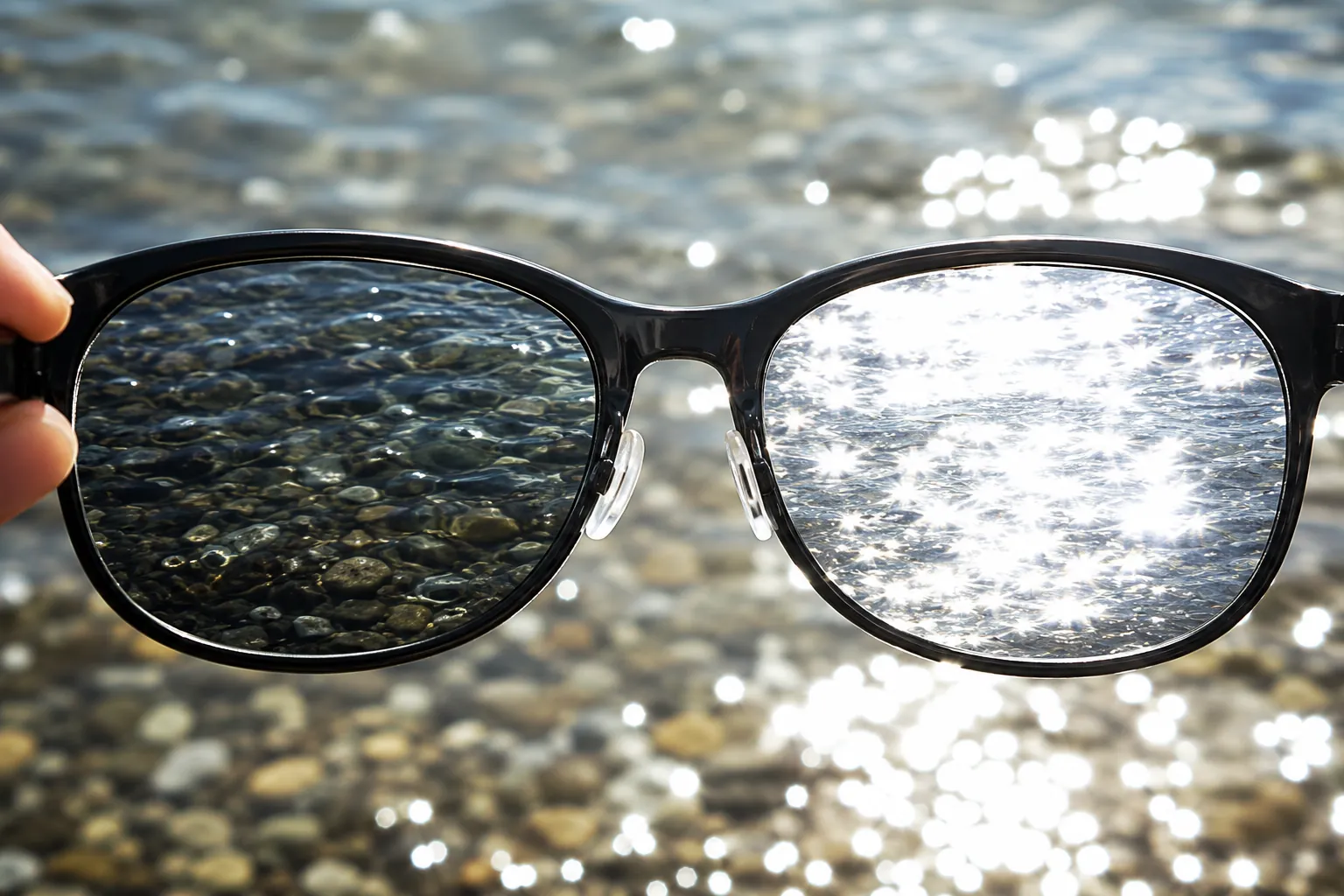
"Polarized" is one of the most-requested — and most-misunderstood — features in sunglasses. For brands, knowing exactly what polarization does, when to spec it, and how to verify it's real is the difference between a genuine premium feature and a marketing claim that fails on the shelf.
How polarization actually works
Glare is light that has been reflected off a flat surface — water, road, snow, a car hood — and become horizontally polarized. A polarized lens contains a film whose molecular alignment blocks that horizontal light while letting useful vertical light through. The result: glare drops dramatically, contrast and color pop, and the eye relaxes. A plain tinted lens just dims everything equally; it cannot selectively kill glare.
Polarized vs non-polarized at a glance
| Feature | Polarized | Non-polarized |
|---|---|---|
| Glare reduction | Excellent | Only general dimming |
| Contrast/color | Enhanced | Neutral |
| LCD screen visibility | Can darken/rainbow | Unaffected |
| Cost | Higher | Lower |
| Best for | Driving, water, snow, outdoor | Fashion, general, screen use |
When to spec polarized
Polarized lenses earn their premium in high-glare use: driving, fishing, boating, skiing, golf, cycling and any outdoor sport. If your brand targets these markets — or simply sells a premium positioning — polarization is a feature worth charging for. Pair it with a sport wrap frame for the strongest performance story.
When non-polarized is the better call
Polarization isn't universally desirable. It can make LCD dashboards, phone screens and some aircraft instruments hard to read, and pilots often avoid it. For pure fashion lines, screen-heavy users, or value programs where cost is paramount, a quality UV400 non-polarized lens is the right choice.
Polarized is not "better" — it's "better for glare." Spec it for the use case, not as a reflex.
How polarized lenses are built
Most polarized sunglass lenses are TAC (triacetate cellulose), built as a laminate: the polarizing film is sandwiched between protective layers, then the stack is curved and edged to fit the frame. Quality depends on film alignment, lamination integrity (delamination is the classic defect) and the UV layer. Compare TAC with other lens materials in lens materials compared.
How to verify polarization is real
Cheap suppliers sometimes label non-polarized lenses as polarized. Two simple field tests:
- Two-lens test: hold two polarized lenses and rotate one 90°. Real polarization goes black at the crossed angle.
- Screen test: look at an LCD screen through the lens and tilt your head. Polarized lenses darken or shift at certain angles.
For bulk, require a polarization efficiency report (good lenses exceed 99%) alongside UV transmission data.
Polarization and UV are separate
A critical point for buyers: polarization does not equal UV protection. They're independent properties. Always confirm both — your lens should be polarized and UV400. Details in UV400 explained.
Adding polarized lenses to your range?
LumiShades produces genuine 99%+ efficiency polarized TAC lenses with UV400, fully tested and documented. Request a sample to feel the difference.
Get a sampleSummary
Polarized lenses kill reflected glare and boost contrast — a real, chargeable premium for outdoor and driving markets. Non-polarized remains right for fashion, screens and value lines. Spec by use case, verify the polarization is genuine, and never confuse it with UV protection.