
Gradient Tint Lenses: The Complete Sourcing Guide
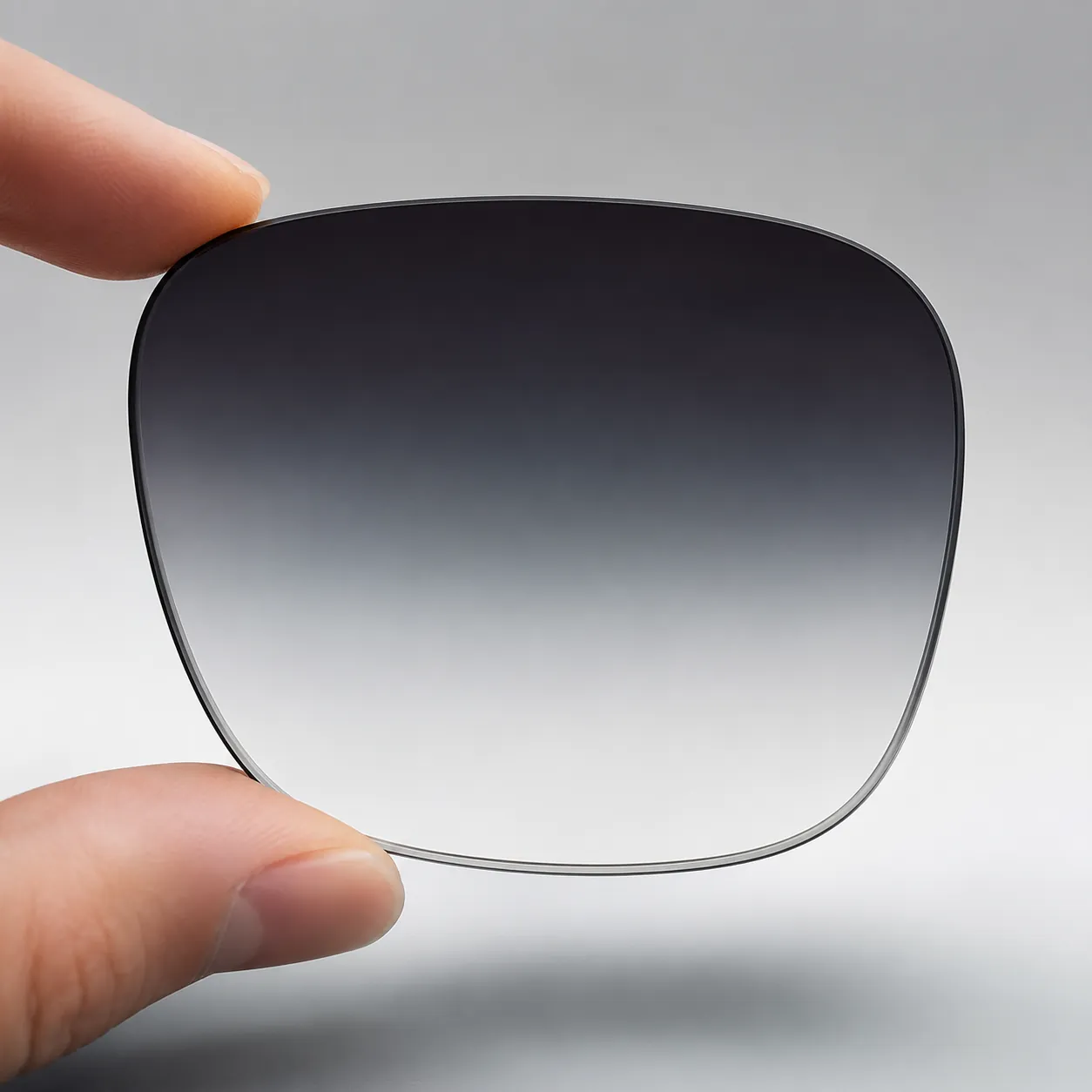
Gradient tint lenses — dark at the top, fading to light at the bottom — are a signature fashion-eyewear look that also serves a real function. For brands, gradients offer a distinctive aesthetic at modest cost. This guide covers single vs double gradients, the dyeing process, tolerances and how to spec gradient depth for your collection.
What a gradient lens does
A single gradient shades from a darker top to a lighter bottom. Functionally, it blocks overhead sun and glare while keeping the lower field clearer — useful for driving (see the dashboard) or city wear. Aesthetically, gradients give a softer, more fashion-forward look than a uniform tint, and they keep the eyes more visible, which many wearers prefer.
Single vs double gradient
| Type | Pattern | Best for |
|---|---|---|
| Single gradient | Dark top → light bottom | Driving, fashion, everyday |
| Double gradient | Dark top & bottom, light middle | Water/snow glare from below, fashion |
| Solid tint (for contrast) | Uniform darkness | Maximum glare, sport |
Double gradients shade both top and bottom with a clearer band through the middle — good where glare reflects up off water or snow, and a strong fashion statement.
How gradient lenses are dyed
Gradients are created by controlled dip-dyeing: the lens is slowly raised out of a heated dye bath so the top dwells longest (darkest) and the bottom least (lightest). The dip speed, dwell time and dye concentration control the gradient curve. It's a skilled process — consistency across a batch is the challenge, and a quality dye line is what keeps pair-to-pair gradients matched. Learn the full picture in how lenses are tinted.
Spec'ing gradient depth and color
To get the gradient you want, specify clearly:
- Top darkness: e.g. category 3 (8–18% light transmission) at the top.
- Bottom darkness: e.g. category 1 (43–80%) at the bottom.
- Gradient position: where the transition midpoint sits vertically.
- Color: grey, brown, G15, or fashion tints — provide Pantone references.
"Smoke gradient" means three different things to three factories. Give transmission targets top and bottom, plus the transition height, and everyone builds the same lens.
Tolerances and consistency
The two consistency risks with gradients are gradient height variation (the transition line at different heights pair to pair) and color matching across a batch. Set a tolerance for the transition position and require a sealed gold sample so production matches your approved gradient. Insist on a per-batch shade check.
Categories and compliance
Because the top and bottom differ in darkness, classify the lens carefully. A gradient driving lens must keep its lower zone within category limits acceptable for driving (not category 4). Verify against EN ISO 12312-1 — see lens categories explained. UV400 must apply across the whole lens regardless of tint depth.
Where gradients sell best
Gradients shine in fashion-led lines, cat-eye and round styles, and women's collections where a softer, eye-visible look is desired. They pair beautifully with acetate frames for a premium feel.
Adding gradient lenses to your collection?
LumiShades dip-dyes gradient lenses in-house with controlled depth and per-batch consistency. Send your color and gradient targets for a sample.
Get a sampleSummary
Gradient tints blend fashion appeal with real function. Choose single or double gradient, specify top and bottom darkness plus transition height, demand batch consistency, and confirm category compliance and UV400. The result is a distinctive, sellable look at a friendly cost.