
Mirror & REVO Coatings for Sunglasses: A Sourcing Guide
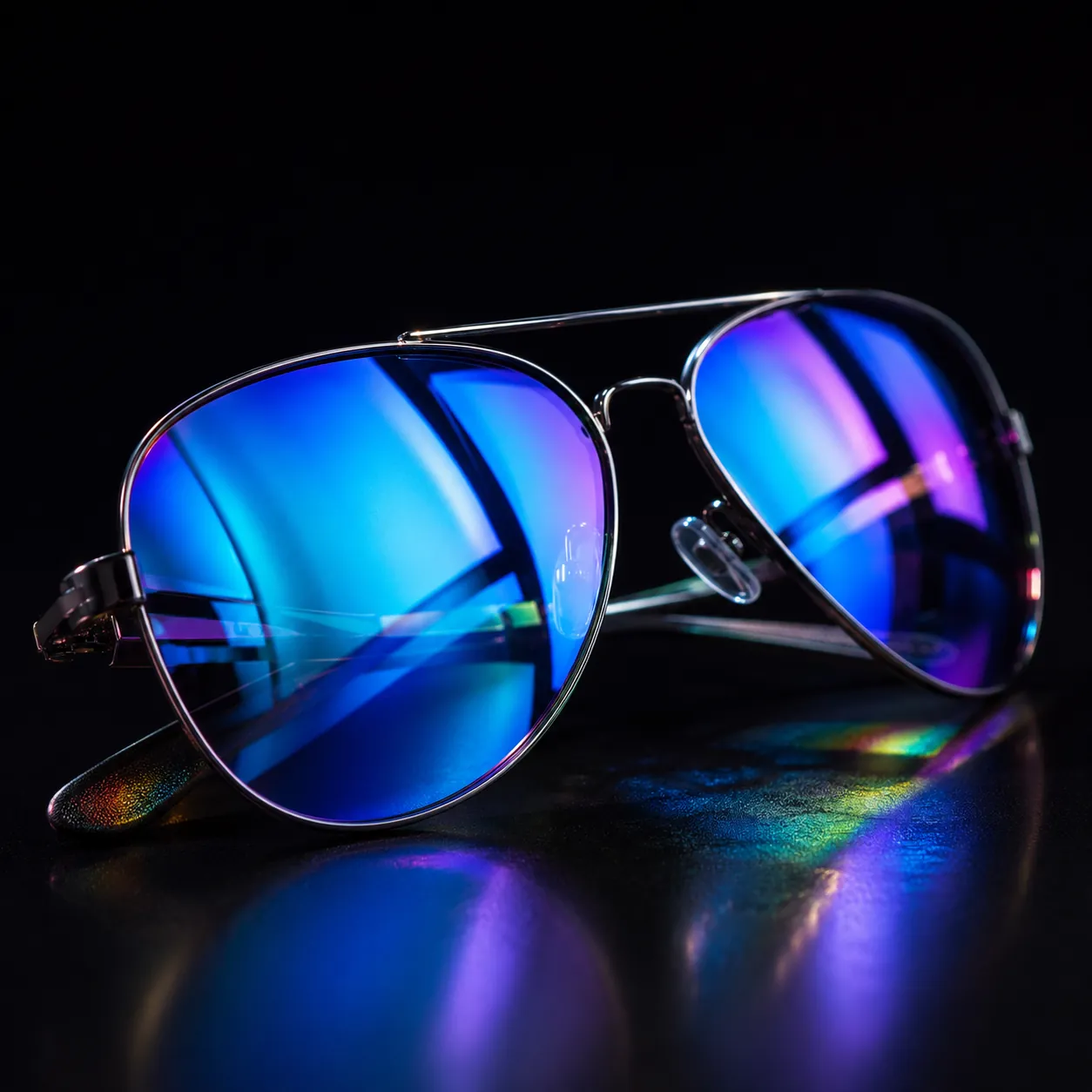
A flash mirror finish turns an ordinary pair of sunglasses into a statement — and into a higher-margin product. Mirror and REVO coatings are among the most popular upgrades brands request. This guide covers how they're made, the color options, durability, and how to spec a mirror finish that survives the real world.
Mirror vs REVO: the difference
A mirror coating is a reflective metallic layer applied to the front of the lens that bounces light away, reducing the amount that reaches the eye and giving that signature reflective look. REVO is a brand-originated, premium take on mirror technology — multi-layer coatings engineered to selectively filter wavelengths for enhanced contrast, not just reflectivity. In sourcing terms, "REVO-style" usually means a higher-spec, multi-layer mirror with optical tuning.
How mirror coatings are applied
Mirror finishes are created by vacuum deposition: lenses are placed in a chamber where thin metallic and oxide layers are evaporated and bonded to the surface, layer by layer. The number and composition of layers determine the color and intensity of the mirror. It's a precise process — uneven deposition shows as patchiness or color shift, which is why an in-house coating line matters for quality.
Color and intensity options
| Mirror color | Look | Common pairing |
|---|---|---|
| Silver | Classic, neutral | Any base tint |
| Gold | Warm, premium | Brown/amber base |
| Blue | Cool, sporty | Grey base |
| Green | Subtle, contrast | G15/green base |
| Red/Fire | Bold, fashion | Dark grey base |
| Pink/Purple | Fashion, statement | Light fashion tint |
The base lens tint sits beneath the mirror, so the final appearance combines both. A flash (light) mirror is subtle; a full mirror is highly reflective. Specify both base tint and mirror color/intensity.
Durability — the real concern
Mirror coatings live on the front surface, so they face fingerprints, cleaning and abrasion. Quality and durability depend on layer adhesion and a protective top coat. Cheap mirror coatings scratch and show fingerprints badly; good ones include a hardcoat and oleophobic top layer.
A mirror lens is judged in month two, not day one. Spec the hardcoat and top coat, or your beautiful finish becomes a scratched complaint.
- Hardcoat: improves scratch resistance.
- Oleophobic/hydrophobic top coat: resists fingerprints and water spots.
- Backside AR: reduces bounce-back glare from behind — see AR coating guide.
MOQ and cost impact
Mirror coating runs in batches in the coating chamber, so it carries a modest minimum and adds to unit cost. Within the LumiShades tiers, a mirror upgrade pushes a pair toward the upper end of its band. The premium look easily supports a higher retail price, making mirror lenses a strong margin play.
How to spec a mirror lens
- Base lens material (PC, TAC) and base tint color.
- Mirror color and intensity (flash vs full).
- Polarized or not — mirror can sit over polarized TAC.
- Protective coatings: hardcoat + oleophobic top + optional backside AR.
- UV400 confirmation (independent of the mirror).
Want a mirror finish that lasts?
LumiShades applies multi-layer mirror and REVO-style coatings in-house, with hardcoat and oleophobic protection. Request a sample to see the depth and durability.
Get a sampleSummary
Mirror and REVO coatings deliver high-impact looks and high margins — if you spec durability alongside color. Choose your base tint and mirror finish, always add protective coatings, and confirm UV separately. Done right, a mirror lens is one of the easiest premium upgrades to sell.