
Blue-Light Filtering in Sunglasses: What Buyers Should Know
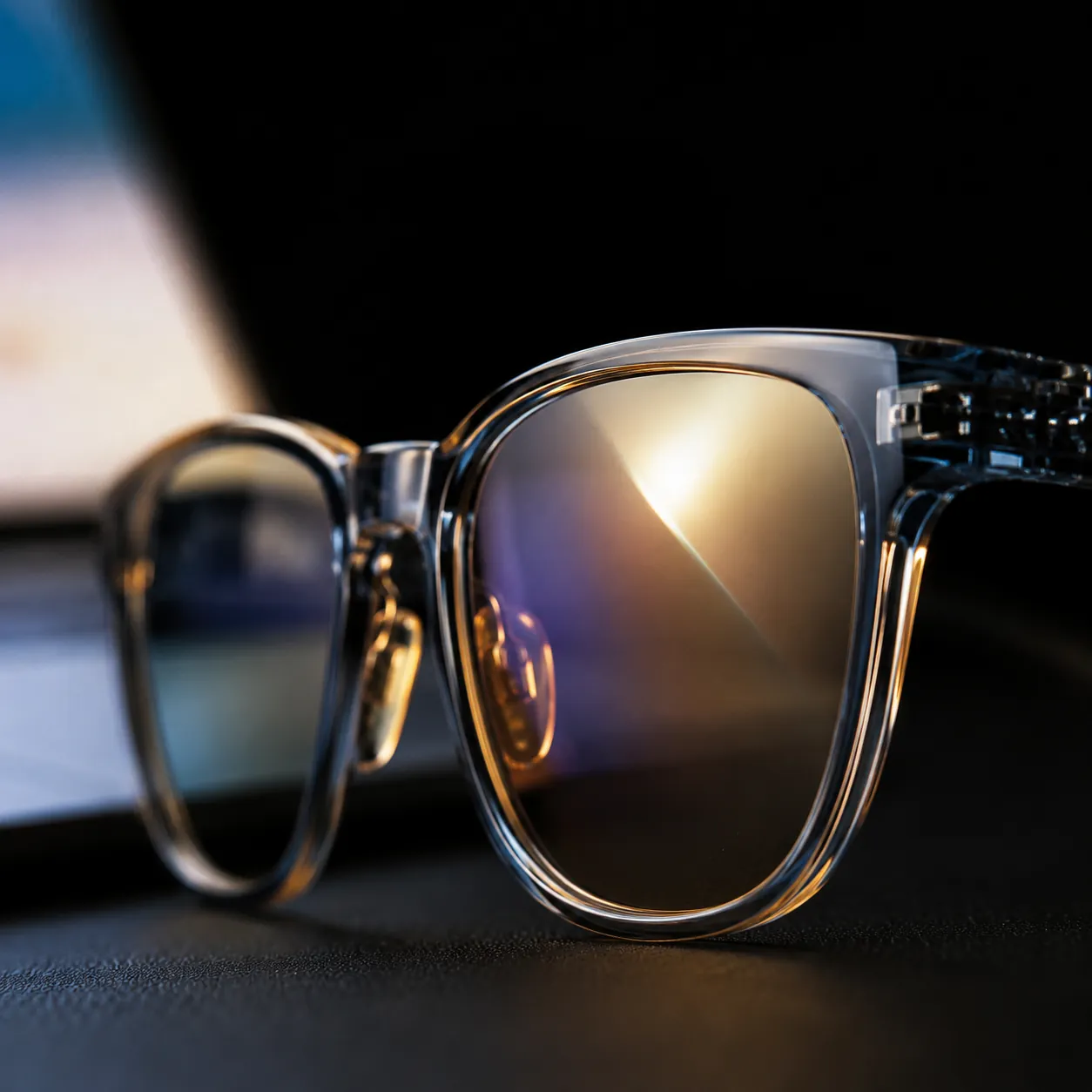
Blue-light filtering has jumped from computer glasses into sunglasses marketing, but the claims are easy to overstate and easy to get wrong. For brands, understanding what blue-light filtering really does — and what compliance allows you to say — keeps your marketing credible and legal. Here's the honest picture.
What "blue light" means in eyewear
Blue light is the high-energy visible (HEV) portion of the spectrum, roughly 400–500nm. Some of it (around 415–455nm) is sometimes called "harmful blue light." Sources include the sun (by far the largest) and screens. In sunglasses, blue-light filtering means the lens reduces transmission in this HEV band, beyond just UV.
Two ways to filter blue light
- Tinted/absorptive: the lens material or dye absorbs HEV — often gives a slight yellow/amber cast. Effective, can filter a meaningful percentage.
- Coating-based: a coating reflects part of the blue band — usually filters a smaller percentage, with a faint blue/purple reflection.
If a "blue-light" lens looks perfectly clear with no tint and no reflection, it's probably filtering very little. Real filtering shows up somewhere.
What the claims can and can't support
| Claim | Defensible? | Note |
|---|---|---|
| Reduces blue light transmission | Yes, with test data | State the % and band |
| Blocks 100% of blue light | No | Would distort color badly |
| Reduces glare/eye strain outdoors | Reasonable | Tied to tint, not just HEV |
| Cures/prevents eye disease | No | Health claim — avoid |
| Improves sleep | Risky | Evidence is for screens, not sunglasses |
Blue light in sunglasses vs computer glasses
Computer (clear) glasses target screen blue light. Sunglasses already block far more total light, including blue, by virtue of being tinted — a category 3 grey lens reduces blue light substantially just from its darkness. So "blue-light sunglasses" is often a way to formalize and quantify what a good tinted UV400 lens already does. The honest angle is "enhanced HEV filtering," not a miracle feature.
Color and clarity trade-offs
Stronger blue-light absorption shifts color perception toward warm/amber. For some uses (driving, contrast in haze) this is a benefit; for fashion lenses where neutral color matters, heavy blue filtering can look off. Balance the filtering level against the look your brand wants.
Compliance and honest marketing
Blue-light claims attract regulatory scrutiny in many markets. Keep claims specific and evidence-backed: state the percentage of HEV reduced and the wavelength band, back it with a transmittance report, and avoid health claims. Combine with verified UV400 — blue-light filtering does not replace UV protection. See UV400 explained.
How to spec blue-light filtering
- Decide the method: absorptive tint vs coating.
- Set a target HEV reduction % and band.
- Accept the color cast that comes with absorption.
- Require a transmittance test report covering 400–500nm.
- Confirm UV400 and category separately.
Want credible blue-light filtering lenses?
LumiShades produces HEV-filtering lenses with transmittance test data so your marketing claims are defensible. Request a sample and the reports.
Request a free quoteSummary
Blue-light filtering in sunglasses is real but easy to overhype. Filter HEV via tint or coating, quantify the claim with test data, accept the color trade-off, and never make health claims. Treat it as an evidence-backed enhancement to a UV400 lens, and it adds genuine value without legal risk.