
UV400 Test Reports Before Sunglasses Ship
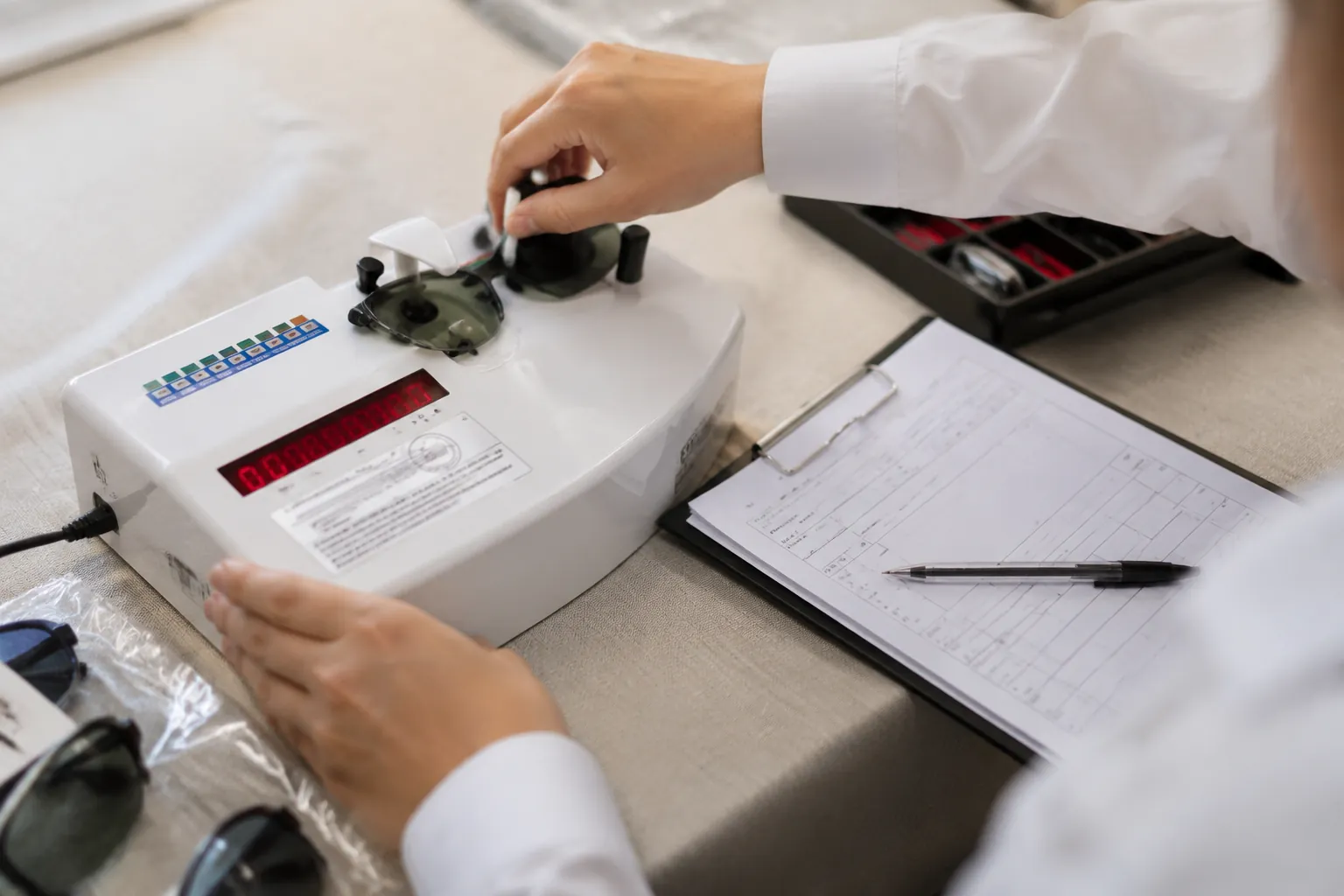
If you buy sunglasses for private label, distribution, or retail, a UV400 claim on a spec sheet is not enough. Ask for the report. Ask for the batch link. Ask for proof that the packed goods match the tested sample. This guide shows what to request before shipment so you do not confuse UV protection with full market compliance or find missing documents after the goods leave the factory.
Start With the Right Question: What Does UV400 Prove?
UV400 means the lens is intended to block ultraviolet radiation up to 400 nm, including UVA and UVB wavelengths. For buyers, it is a lens-performance claim. It is not proof that the finished sunglasses meet every performance, labeling, chemical, or market-entry requirement.
Separate three checks from the start: lens UV protection, product safety performance, and shipment conformity. UV400 addresses only the first. If the order needs support for CE EN ISO 12312-1, ANSI Z80.3, or AS/NZS 1067, the document package must go beyond one UV printout. It must identify the exact product configuration tested.
Ask the supplier to confirm the lens color, filter category or visible light transmittance where relevant, base curve, lens thickness, material, coating, and finish. TAC, PC, nylon, mirrored, polarized, gradient, and solid-tint lenses can perform differently. If the factory changes resin grade, dye lot, coating stack, mirror layer, or lens supplier, an old report may not support the current shipment.
Treat UV400 as a lens attribute, not a shipment approval. Release the shipment only when the tested sample, production batch, carton labels, and final inspection records all point to the same product identity.
Documents to Request Before Shipment
Do not wait until cartons are moving. Request the paperwork while the bulk lot is still under factory control. Tie every document to the purchase order, model code, colorway, lens specification, and destination market.
The supplier should state which documents apply to the current shipment and which are only historical references. That distinction matters. Old reports can mislead buyers if the lens, coating, tint, or supplier has changed.
- UV400 test report for the finished lens or finished sunglasses, not only for raw material.
- Laboratory name, test method, test date, sample ID, and measured result.
- Batch, lot, or production reference linked to the production run and carton labels.
- Compliance declaration or technical summary for the target market, if applicable.
- Artwork proof for lens marking, temple marking, packaging claims, and user information.
- Incoming QC and final QC records for the sampled shipment.
If a supplier says "UV400 tested" but cannot provide a report number, sample ID, test date, or measured result, treat the claim as unverified. A useful report lets you trace the result back to the product configuration that was packed. Traceability matters more than a polished PDF.
A controlled workflow links lens production or lens finishing records to assembly records, and assembly records to final inspection. The same product code, lens specification, and lot reference should appear on the lens lot sheet, packing list, carton mark, and QC pass sheet. Then the buyer can compare the paper trail against the shipment quickly.
What a Useful UV Report Contains
A useful report is specific. It tells you what was tested, how it was tested, when it was tested, and what the measured result means. A weak report gives you a logo, a pass stamp, or a generic statement that cannot be tied to the SKU being shipped.
For sunglasses, the report should also show whether the result applies to the exact production lens or only to an earlier development sample. That is often where the risk hides.
| Item | What to Check | Buyer Risk If Missing |
|---|---|---|
| Sample ID | Matches production batch, model, lens color, material, and finish | Report may belong to a different product |
| Test wavelength range | Shows ultraviolet transmittance or blocking through 400 nm | No evidence that the UV400 claim was actually measured |
| Visible light transmittance | Confirms tint level or filter category where required | Lens may be too light, too dark, or incorrectly classified |
| Lab name and date | Identifies who tested the sample and when | Paperwork may be outdated, incomplete, or self-generated |
| Method reference | States the standard or procedure used | Result may not support the intended market requirement |
For Europe, the document set should align with CE requirements and EN ISO 12312-1 where sunglasses performance is relevant. That includes transmittance, filter category, and labeling consistency. For the United States, ANSI Z80.3 is a recognized performance reference for nonprescription sunglasses. The buyer should still keep product identity, artwork, import, and regulatory records. For Australia and New Zealand, AS/NZS 1067 is the relevant sunglasses standard family. One UV report does not cover all of these requirements.
Read the measured data, not only the conclusion. Some reports show percentage transmittance. Some show spectral curves. Some show only pass or fail. If the measured numbers or spectral graph are missing, ask for the full report page. You should be able to see how the lens performs at relevant UV wavelengths up to 400 nm.
If the report references a standard, confirm that the tested configuration matches the product being purchased. A smoke lens, brown lens, clear fashion lens, mirrored lens, and polarized lens do not automatically share the same transmittance or classification results. The report must prove that the tested sample applies to the SKU.
Batch Consistency: The Check Buyers Miss
One passing UV400 sample does not prove that every pair in the shipment is identical. Batch variation can come from dye concentration, coating thickness, lens material changes, curing conditions, supplier substitution, or handling after lens finishing. Small changes can matter.
A shift in tint chemistry may affect visible light transmittance or color consistency even when UV blocking remains acceptable. Do not assume a clean UV result means the whole batch is controlled.
Ask for batch consistency evidence in plain terms:
- How many samples were pulled from the production lot.
- Whether samples came from different points in the production run.
- Whether lenses were checked before or after final assembly.
- Whether any color shift, haze, coating defect, or mirror inconsistency was recorded.
- Whether the factory changed lens supplier, tint formula, coating line, or material grade.
Agree on the sampling plan before production release, not after a dispute. Buyers can use their own inspection standard, the supplier's QC plan, or a third-party inspection plan. The plan should state how samples are selected, what is checked, and what result triggers rejection, rework, or additional testing.
Material choice matters. TAC lenses are common in polarized sunglasses. PC lenses are often chosen for impact resistance and low weight. Nylon lenses are valued for flexibility and clarity in many eyewear applications. None of these materials is compliant by name. UV performance, optical quality, coating adhesion, tint consistency, and labeling must be checked against the finished lens and the target market requirement.
Traceability is easier when the supplier controls more of the process, such as frame production, lens sourcing or tinting, decoration, assembly, and final QC. If those steps are split across several vendors, require clearer batch records. Responsibility becomes harder to verify after shipment.
Pre-Shipment Checks That Catch Real Problems
Pre-shipment verification should be practical. The goal is to stop nonconforming goods before shipment, not to create paperwork after the fact. Compare the packed goods, approved sample, test report, QC records, and carton marks against the same purchase order and product specification.
A solid pre-shipment check usually covers five points: lens marking or product claims, visual appearance, packaging, paperwork, and random sample review. For sunglasses, visual defects that can signal weak process control include uneven tint, haze, dust or inclusions in coating, inconsistent mirror finish, poor polarization alignment where applicable, and visible scratches. These are not automatically UV failures. They are reasons to investigate.
Use this order:
- Confirm the shipment matches the approved sample code, product specification, and colorway.
- Check carton labels against the PO, lot code, SKU, quantity, and carton count.
- Pull random pairs from different cartons, not only from the top layer.
- Inspect lens tint, coating, frame finish, and decoration under consistent lighting.
- Verify report numbers, lab name, test date, sample ID, and document scope before release.
The pull count should follow the inspection plan agreed in the PO, quality agreement, or third-party inspection booking. For higher-risk orders, buyers may require wider carton spread, additional sample pulls, or independent lab retesting. If the supplier sends pre-shipment QC photos, the photos should show actual carton labels, lot references, packed goods, and multiple sampled units. Studio images of one perfect pair prove nothing about shipment conformity.
Also check decoration durability and accuracy. A pad-printed logo, hot-stamped temple mark, laser engraving, metal emblem, or soft-touch coating should match the approved specification. A change in decoration method is not just cosmetic. It can affect durability, chemical documentation, labeling accuracy, and how the approved sample should be judged during final inspection.
How Compliance Documents Fit Together
Buyers often mix up UV400, certification, and market entry. They are related, but not the same. UV400 is a lens-performance claim. CE with EN ISO 12312-1 support, ANSI Z80.3, and AS/NZS 1067 relate to sunglasses performance and safety requirements in different markets or technical frameworks. REACH addresses chemical substance restrictions in the EU. FDA registration may be relevant to the U.S. regulatory picture for certain eyewear businesses or products, but it does not replace product testing, labeling review, or a complete compliance file.
Think of the file in three parts. The UV400 report supports the ultraviolet-blocking claim. The compliance file supports the product's suitability for the target market. The material and chemical file helps show that the frame, lens, inks, coatings, adhesives, nose pads, screws, and decorations do not create a restricted-substance or labeling problem.
Factory management certificates can support supplier evaluation, but they do not replace product compliance. ISO 9001 relates to quality management systems. BSCI relates to social compliance auditing. Neither certificate proves that a specific sunglasses shipment meets UV400, CE EN ISO 12312-1, ANSI Z80.3, AS/NZS 1067, REACH, or destination-market labeling requirements.
Example: if a buyer changes from pad print to a metal logo plate, record that change in the bill of materials and production specification. It may affect durability testing, material declarations, corrosion review, or chemical documentation. The same logic applies if the frame changes from acetate to injection-molded plastic, if the lens changes from TAC to PC, or if the coating changes from gloss to matte.
Serious buyers keep the approved sample, test report, bill of materials, decoration method, artwork, packaging specification, and shipment lot code locked together. If one item changes, review the file. If the supplier cannot explain whether the lens, frame, print, coating, or packaging changed since approval, the shipment is not adequately controlled.
Commercial Terms That Affect Your Risk
Compliance mistakes are not only technical. They are commercial. Small orders can fail if the specification is vague. Large orders can multiply the cost of a small documentation gap.
Use MOQ, tooling strategy, production lead time, inspection timing, and final payment terms as risk controls, not only as price levers.
| Order Stage | Typical Buyer Focus | Risk Control Point |
|---|---|---|
| Prototype or sales sample | Design, fit, lens choice, first compliance review | Confirm the tested sample matches the approved specification |
| Pilot order | Packaging, labeling, carton marks, and first production trace | Check batch labels and claim accuracy before repeat orders |
| Repeat order | Consistency across production lots | Verify that reports, materials, and artwork have not changed |
| Large-volume order | Supply continuity, inspection coverage, and market risk | Require pre-shipment QC, lot traceability, and document review before release |
At low volume, the buyer often has more room to adjust the product after review. At scale, any mistake in lens specification, labeling, decoration, or documentation becomes expensive to correct. A lower unit price does not reduce compliance exposure if the shipped goods cannot be sold, must be relabeled, or need replacement.
Use the production schedule to force checkpoints. Approve the physical sample first. Lock artwork, lens specification, packaging claims, and decoration method next. Then require the UV report and any market-specific compliance documents for the actual bulk lot before final shipment release. If the supplier cannot tie the documents to the carton count, shipping mark, and lot code, the commercial risk remains open.
What to Put in the PO and Release Checklist
Your purchase order should not only say "UV400 required." It should name the exact evidence required before shipment release. Keep the wording simple, measurable, and tied to the destination market.
The goal is to prevent last-minute arguments after the goods are packed.
- Approved sample code, approval date, and revision version.
- Lens material, color, coating, tint reference, and filter category where applicable.
- Required standards, declarations, and compliance documents by destination market.
- Batch, lot, or production reference required on cartons and documents.
- Pre-shipment photo, QC record, and inspection report requirements.
- Written buyer approval required before shipment release or container loading.
Ask for the report package in PDF plus key shipment identifiers in text form, including model code, lens color, lot reference, carton count, and PO number. This helps your internal team, forwarder, customs broker, or third-party inspector cross-check the shipment.
For decorated frames, the release checklist should also state the exact logo method, print location, ink color, engraving position, emblem material if used, and packaging claim language. A small specification change can create a real dispute. If the approved sample used laser marking on the temple and the bulk lot arrives with pad print, that is a process change. It may affect durability and document accuracy.
Do not buy UV400 as a slogan. Buy evidence. A complete report, a clear batch link, and a documented pre-shipment check protect the buyer far better than trying to fix missing proof after arrival.
Have a custom sunglasses project in mind?
Send us your styles, target market and quantities and we will return a detailed quote with MOQ, lead time and a sample plan.
Get a QuoteWhy source this from Wenzhou with LumiShades
Wenzhou in Zhejiang Province is widely regarded as China’s eyewear manufacturing capital, producing a large share of the world’s sunglasses. That concentration matters to buyers: a deep local supply chain for acetate sheet, hinges, lens blanks, plating and packaging means shorter component lead times, easier color and material matching, and a workforce with decades of eyewear-specific skill. LumiShades has manufactured in this ecosystem since 2009, and our vertical integration — in-house injection molding, acetate cutting, CNC milling, lens tinting, decoration and quality control — means no part of your order is quietly subcontracted to a workshop you cannot audit.
For international buyers, that vertical control translates into accountability. When a single factory owns every step, defects are traced and fixed at source rather than bounced between vendors, and your specifications survive intact from first sample to bulk. We back this with 15+ years of experience, shipments to 60+ countries, more than 5 million pairs produced per year and a 98.5% on-time delivery rate. Our certifications — CE EN ISO 12312-1, FDA registration, ANSI Z80.3, AS/NZS 1067, REACH, ISO 9001 and BSCI audit — mean the compliance documentation your market requires already exists. Explore our manufacturing capabilities and quality control process to see how this works in practice.
Frequently asked questions
Is a UV400 report enough for CE or FDA compliance? No. A UV400 report supports only the ultraviolet-blocking claim. For the EU, buyers should maintain CE documentation supported by the applicable sunglasses performance requirements, commonly including EN ISO 12312-1. For the U.S., FDA registration may be relevant to the regulatory file, and ANSI Z80.3 is a recognized performance reference for nonprescription sunglasses, but neither replaces a complete product specification, labeling review, and shipment traceability file.
Should the report name the exact lens color and material? Yes. The report should match the exact production lens or finished sunglasses, including model, lens material, color, coating, finish, and sample ID. If the shipment uses a different lens material, tint, mirror coating, supplier, or production lot from the tested sample, ask the supplier to justify the change in writing and consider updated testing before release.
How many samples should a buyer ask the factory to test? Use a written sampling plan, not an informal promise. The plan should state how samples are selected, which cartons or production points are covered, which checks are performed, and what result triggers rejection, rework, or retesting. For higher-risk or high-volume orders, require wider carton spread and consider independent lab confirmation.
What if the supplier only sends a photo of a test sticker? Do not accept a sticker photo as proof. Request the full report showing laboratory name, report number, sample ID, test date, method reference, wavelength range, and measured result. Then compare the sample ID and product description with the PO, approved sample, carton labels, and packing list.
Can UV400 pass even if the lens color looks inconsistent? Yes. UV blocking and cosmetic consistency are separate checks. A lens may block UV up to 400 nm and still have visible tint variation, haze, coating dust, mirror defects, scratches, or incorrect visible light transmittance. Treat inconsistent color as a quality issue and review the batch before shipment release.
Ready to start?
Explore our shield & oversized sunglasses or request a quote — our sales team replies within 12 hours.
Request a Quote