
TAC vs PC Polarized Lenses for Wholesale Sunglasses
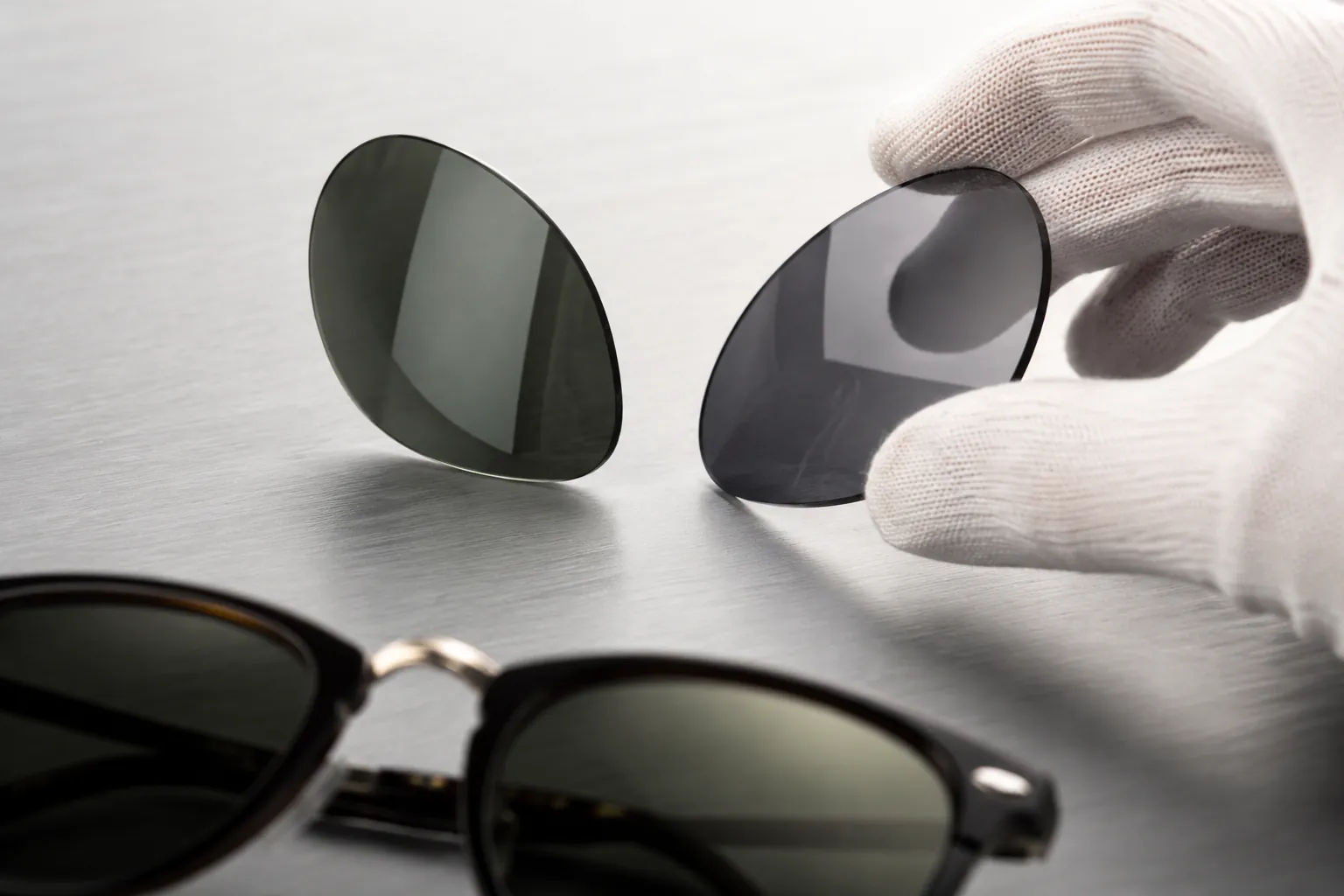
This guide is for buyers sourcing custom sunglasses at volume and deciding between TAC polarized lenses and PC polarized lenses. The right choice is not the buzzword on a quote. It is the lens system that fits the sales channel, target cost, expected wear conditions, compliance requirements, and the factory's ability to hold consistency in bulk. In most programs, TAC polarized lenses are used for value-led fashion and promotional orders, while PC polarized lenses are more often chosen for sports, youth, and active outdoor products where low weight and better impact resistance matter. Below is the practical comparison buyers actually need: cost, optics, thickness, processing risk, tolerances, compliance, and what to lock on the spec sheet before bulk production starts.
Start with the buying decision, not the material name
Many buyers ask for polarized lenses as if that finishes the spec. It does not.
Polarization only describes glare reduction from a polarizing filter. It does not define the base lens material, construction, thickness, coating stack, edge geometry, visible light transmission, or the level of impact resistance required.
TAC usually refers to a laminated lens structure with a polarizing film between multiple layers. In factory use, TAC is common because it delivers polarization at relatively low cost and suits many fashion and promotional products. PC means polycarbonate. In polarized sunglasses, the polarizing function is built into a polycarbonate lens construction, which makes it a common choice for active-use products where impact resistance and lighter weight matter more.
For wholesale orders, the real decision points are commercial and technical:
- Retail channel: promo giveaway, tourist retail, fashion boutique, sporting goods, youth program.
- Expected abuse: occasional casual wear versus frequent outdoor use, bag stuffing, cycling, running, fishing, or youth handling.
- Target price band: what landed cost the program can support at the intended order quantity.
- Compliance target: EU, US, Australia/New Zealand, or mixed-market distribution.
- Appearance sensitivity: tolerance for lens thickness, edge appearance, color variation, and left-right matching.
If those five points are clear, the TAC versus PC decision is usually simple. If they are not, the risk goes up fast. A sample may look fine on the desk and still create cost pressure, quality complaints, or compliance problems in bulk.
Head-to-head: cost, feel, thickness, impact, and production risk
| Factor | TAC polarized lens | PC polarized lens | Buyer note |
|---|---|---|---|
| Typical channel fit | Promotional, entry fashion, casual retail | Sports, active outdoor, youth, higher-abuse use cases | Choose based on use conditions, not marketing language |
| Relative lens cost | Usually lower in comparable programs | Usually higher than TAC | Confirm cost difference on the actual frame and coating specification |
| Typical lens thickness range | Often used in standard fashion builds with moderate thickness | Often selected where lighter and thinner-feeling builds are preferred | Exact thickness depends on frame groove, base curve, design, and test target |
| Optical appearance | Can appear clean and uniform when lamination is well controlled | Can perform well optically, but poor processing may reveal stress patterns | Factory process control matters more than brochure claims |
| Impact expectation | Generally lower than PC | Generally better impact resistance than TAC constructions | PC is usually the safer starting point for sport and active wear |
| Weight and wear feel | May feel slightly heavier depending on construction | Often preferred where low weight matters | Relevant in wrap shapes and long-wear products |
| Tint and lot consistency | Depends on lamination quality, film quality, and process control | Depends on resin quality, tinting or coating process, and QC control | Ask for left-right tint checks and retained production samples |
| Scratch behavior | Depends heavily on hard coating and handling | Depends heavily on hard coating; base material scratches more easily without it | Do not judge scratch performance by base material alone |
| Best MOQ logic | Common in cost-sensitive and broad-distribution programs | Makes more sense when performance justifies the extra spend | Do not over-spec a giveaway product if the use case does not require it |
The short version is blunt. TAC is commonly chosen for lower-cost and mid-cost programs. PC is commonly chosen for active-use programs. The expensive mistake is not picking the cheaper lens. It is picking the wrong lens for the channel, then paying later through returns, resampling, delayed approvals, or failed testing.
What the cost difference means in a real wholesale program
Lens material does not set sunglass cost by itself, but it is a key bill-of-materials lever. Frame material, hinge quality, coatings, logo method, packaging, and quantity also matter. In practical sourcing terms, TAC often supports tighter target pricing. PC adds cost and should earn it through performance, lower complaint risk, or clear channel expectations for sport-oriented construction.
Skip broad assumptions such as PC is always worth it or TAC is always enough. Compare the actual build:
- same frame design
- same lens category or visible light transmission target
- same coating specification
- same packaging
- same order quantity
That like-for-like comparison shows whether the upgrade cost makes sense. In some programs, the difference is small enough to justify PC for risk reduction. In others, the gap is large enough to make TAC the only workable option for the target selling price.
PC often earns its cost after sell-through, not at quote stage. If the sunglasses are meant for running, cycling, fishing, beach sports, hiking, or youth activity, the higher lens cost may still be cheaper than replacements, customer service handling, retailer deductions, or damage-related complaints.
A practical rule: if the product is meant to be worn hard, compare return risk and channel expectations, not just sample cost. If the product is mainly trend-led, logo-led, or price-led, test whether the end customer will really benefit from the higher-performance lens construction.
Optical quality: what buyers should check at sample approval
Polarization is not a simple yes-or-no feature. Buyers often approve based on lens color and logo placement, then miss the problems that trigger complaints in use: haze, rainbow effect, edge distortion, left-right tint mismatch, dust inclusions, coating marks, or visible lamination defects.
With TAC, the main watchpoint is lamination quality. Poor bonding or weak layer control can create waviness, edge defects, or separation risk over time. A capable factory should be able to explain how lamination is controlled and how outgoing inspection is done.
With PC, the main watchpoint is stress and coating quality. Poor molding, edging, or coating can create visible stress patterns or optical disturbance under angled light. That is usually a process problem, not proof that PC is the wrong material.
At sample approval, ask the factory to confirm these points before shipping:
- Polarization orientation: orientation should be consistent across all pairs in the style.
- Left-right tint match: inspect both lenses together under daylight-equivalent lighting and outdoors.
- Edge finish: no chips, roughness, cracks, whitening, or irregular bevels after cutting and shaping.
- Surface quality: inspect for dust points, flow marks, pinholes, coating streaks, and scratches under strong overhead light.
- Outdoor wear check: review glare reduction, visual comfort, and side-angle appearance outside, not only under office lighting.
If the program depends on a specific fashion tint or branded color story, ask how color is controlled from lot to lot and whether retained reference samples are kept for comparison against production batches.
Impact expectations, compliance, and where TAC starts to struggle
If the brief includes sport, youth activity, cycling, fishing, running, hiking, or active outdoor use, PC is usually the safer lens choice. In general use, polycarbonate offers better impact resistance than TAC laminated constructions and is more commonly specified for performance-oriented eyewear.
TAC can still be the right choice for casual fashion and normal day-to-day use. But if rough handling is expected from the start, saving cost on lens material may create a basic mismatch between product positioning and real-world durability. Quality control can reduce defects. It cannot turn the wrong lens construction into the right one for the job.
Compliance also needs to be handled correctly. Lens material alone does not make a product compliant. The finished sunglass must be evaluated against the applicable market requirement for optical quality, UV protection, labeling, and any impact-related provisions in the relevant standard.
For export programs, buyers commonly reference the following frameworks and factory controls: CE EN ISO 12312-1, ANSI Z80.3, AS/NZS 1067, REACH, FDA registration, ISO 9001, and BSCI. These are not blanket approval for every style. The buyer still needs to define the market, intended use, lens category or visible light transmission requirement where relevant, and any testing expectations for the final build.
Practical spec-sheet items to lock early:
- Target market and required standard
- UV protection requirement
- Lens category or VLT range, if relevant
- Base curve and wrap level
- Lens thickness range
- Lens coating requirements
- Logo method on lens or temple, if any
- Packaging and transit expectations
Thickness, frame fit, and why wrap styles change the answer
Lens choice affects more than lens performance. It also affects frame appearance, assembly behavior, and fit stability after shipping. TAC lenses are laminated constructions, so they may present a different thickness profile and edge behavior than PC. In mild-curve fashion frames, that is often manageable. In deeper-wrap styles or lightweight sports frames, PC often fits the brief better because lower weight and impact performance matter more.
This shows up fast on the production floor. Groove width, bevel depth, lens edge profile, and frame tension all need to match. If lens edges are too thick, assembly stress goes up. If they are too thin, the fit may be loose or look weak. If those tolerances are not defined before bulk, the factory may compensate manually during assembly. That usually means more inconsistency.
Common fit issues in bulk orders include:
- Lens edge too thick for the groove, creating insertion stress or front distortion
- Lens edge too thin, causing weak seating or visible gaps
- Polarized lens mismatch with high-base wrap geometry
- Visible rim gaps or uneven seating after shipping because tolerances were never locked
If your style uses a wrapped sports front, ask for lens and frame fit checks before final logo approval. That reduces rework risk. The fix is simple: lock base curve, lens thickness range, groove specification, and fit tolerance at pre-production sample stage. Small details. Big consequences.
A practical sourcing workflow for TAC vs PC programs
Good sourcing is mostly good sequencing. Teams waste time when they argue over decoration details before the lens brief is stable. Set performance first. Then finalize branding and packaging.
- Define channel and price band. Promotional and opening-price fashion programs often begin with TAC. Active and sports programs often begin with PC.
- Set the compliance target. State whether the order is for the EU, US, Australia/New Zealand, or mixed markets, and align testing and labeling to the relevant standard.
- Approve lens color and polarization first. Do this before finalizing temple print, laser marking, foil, or metal badge details.
- Request side-by-side samples. If the brief is not settled, ask for the same frame with TAC and PC lenses for direct comparison on weight, appearance, fit, and use feel.
- Confirm pre-production details. Lock lens thickness, base curve, VLT target if needed, coating requirements, logo method, packaging type, barcode labels, and carton marks.
- Approve bulk against a pre-production standard. The approved reference should clearly define what the factory must match.
- Inspect outgoing goods against the approved sample. Focus on lens consistency, frame-lens fit, logo position, packaging accuracy, and shipping marks.
For decoration, specify the method clearly because each has different cost, appearance, and durability implications:
- Pad print: common for promotional programs and simple logos
- Laser engraving: often used for a cleaner, more permanent mark on suitable materials
- Metal logo plate: adds perceived value but also adds parts and assembly steps
- Foil or hot stamp: useful on some temple surfaces, but color consistency should be checked
This is basic. It still gets missed. Many delays start because the frame look was approved before the lens specification that drives cost, fit, and compliance was locked.
Which lens to choose for promotional, fashion, and sports channels
For promotional sunglasses, TAC is often the better buy. It helps control cost, provides a polarized feature for the end user, and suits large logo-driven programs where margin is tight and expected abuse is modest. If the goal is broad distribution at a value-oriented price, TAC is often the default starting point.
For fashion retail, TAC also fits many projects, especially in styles where shape, color, and brand presentation drive the purchase decision more than technical performance. If the collection is trend-led and the use case is casual, PC may add cost without adding enough customer value to justify it.
For sports and active outdoor channels, PC usually deserves stronger consideration. Better impact resistance, lower weight, and suitability for performance and wrap-oriented shapes make it a more practical choice for cycling, running, fishing, beach sport, hiking, and general active-use frames.
Simple rule: TAC for value-driven promo and casual fashion. PC for active use and higher-abuse conditions. If the brief asks for both the lowest possible cost and sport-level durability, push back early and ask which priority matters more.
That is the sourcing job. Not ordering the most expensive option. Ordering the lens construction that fits the channel, survives the use case, and keeps the bulk program on target.
Have a custom sunglasses project in mind?
Send us your styles, target market and quantities and we will return a detailed quote with MOQ, lead time and a sample plan.
Get a QuoteWhy source this from Wenzhou with LumiShades
Wenzhou in Zhejiang Province is widely regarded as China’s eyewear manufacturing capital, producing a large share of the world’s sunglasses. That concentration matters to buyers: a deep local supply chain for acetate sheet, hinges, lens blanks, plating and packaging means shorter component lead times, easier color and material matching, and a workforce with decades of eyewear-specific skill. LumiShades has manufactured in this ecosystem since 2009, and our vertical integration — in-house injection molding, acetate cutting, CNC milling, lens tinting, decoration and quality control — means no part of your order is quietly subcontracted to a workshop you cannot audit.
For international buyers, that vertical control translates into accountability. When a single factory owns every step, defects are traced and fixed at source rather than bounced between vendors, and your specifications survive intact from first sample to bulk. We back this with 15+ years of experience, shipments to 60+ countries, more than 5 million pairs produced per year and a 98.5% on-time delivery rate. Our certifications — CE EN ISO 12312-1, FDA registration, ANSI Z80.3, AS/NZS 1067, REACH, ISO 9001 and BSCI audit — mean the compliance documentation your market requires already exists. Explore our manufacturing capabilities and quality control process to see how this works in practice.
Frequently asked questions
Is TAC polarized always cheaper than PC polarized? Usually, yes, in a like-for-like comparison. But buyers should only compare cost after aligning the frame, lens category or VLT target, coating specification, packaging, and order quantity. Ask the supplier for two quotes on the same style—one with TAC polarized lenses and one with PC polarized lenses—so the upgrade cost is clear and can be weighed against performance needs.
Which lens is better for sports sunglasses? PC is usually the better starting point for sports and active outdoor sunglasses because polycarbonate generally offers better impact resistance and lower weight than TAC laminated constructions. If the style is for cycling, running, fishing, hiking, beach sport, or youth use, ask the supplier to propose a PC build first and confirm that the finished product is evaluated to the target market standard.
Can TAC polarized lenses meet export compliance requirements? They can, but compliance applies to the finished sunglass, not to the lens material in isolation. A TAC-based product may be suitable if the final build meets the relevant market requirement such as CE EN ISO 12312-1, ANSI Z80.3, or AS/NZS 1067, along with any UV, labeling, and performance requirements that apply. The buyer should state the destination market at inquiry stage and request test documentation or a testing plan for the final approved style.
How should I compare TAC and PC during sampling? Ask for the same frame fitted with both lens types. Then review them side by side for tint match, polarization performance, surface quality, edge finish, visible stress or lamination defects, frame-lens fit, and wearing weight. Check them outdoors as well as under indoor lighting, and ask the supplier to confirm lens thickness, base curve, coating specification, and the intended compliance target for each sample.
What should I put on the spec sheet before bulk production? At minimum, include target market, required standard, UV requirement, lens category or VLT range if relevant, lens material and polarized requirement, coating requirements, base curve, thickness range, frame color, logo method and position, packaging details, barcode or carton marking requirements, and the approved reference sample standard. A vague lens description such as 'polarized lens' is not enough for production control.
What factory documents should a buyer ask for on a compliant sunglasses program? Ask for the supplier's relevant compliance and system documents that apply to the program, such as CE EN ISO 12312-1, ANSI Z80.3, AS/NZS 1067, REACH, FDA registration, ISO 9001, and BSCI, where relevant. Then ask which of those apply to the specific style being quoted, whether testing is based on a similar style or the final build, and whether new testing is required after any change to lens, frame, or decoration.
Ready to start?
Explore our shield & oversized sunglasses or request a quote — our sales team replies within 12 hours.
Request a Quote