
FDA Registration for Sunglasses: What U.S. Importers Need
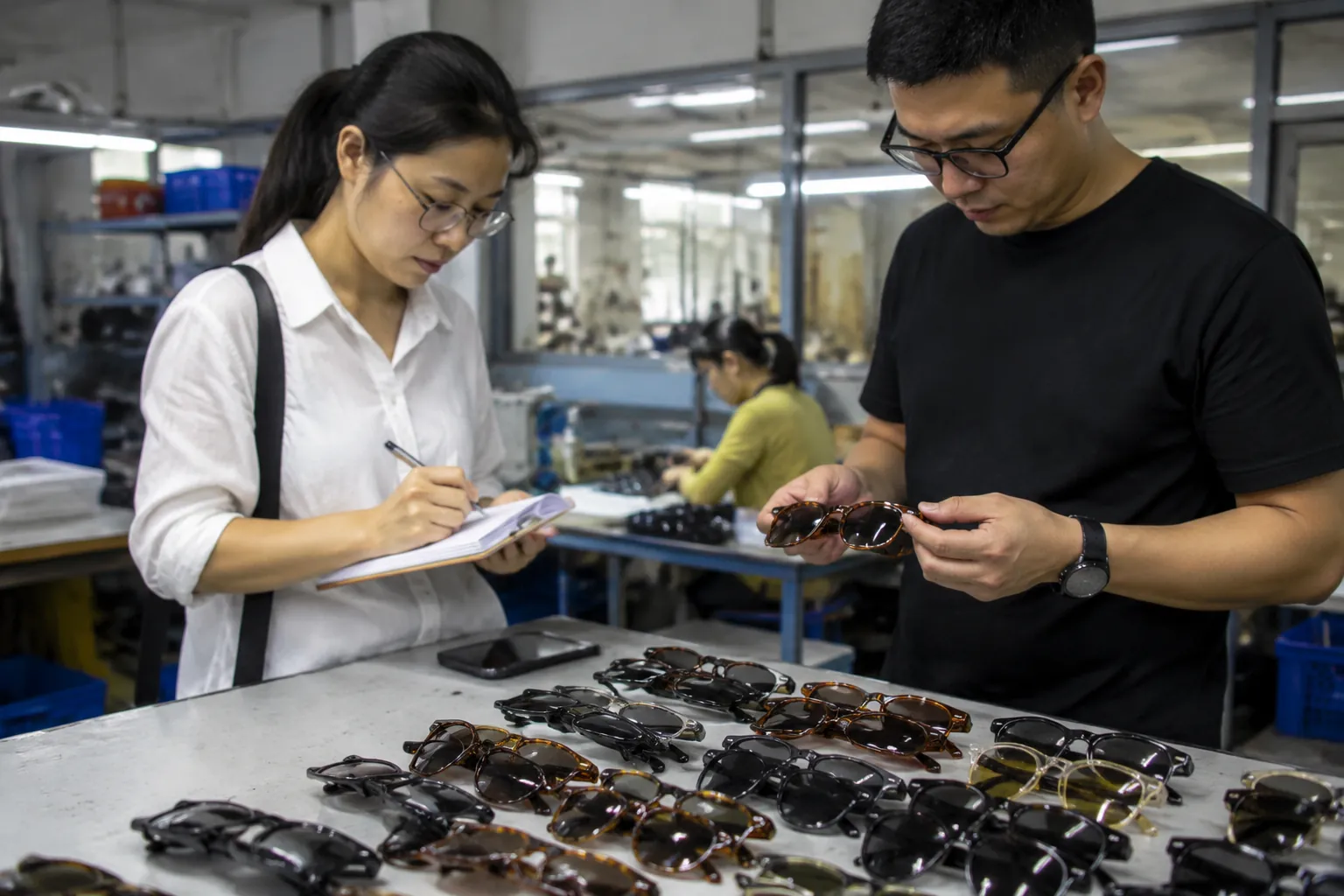
If you source sunglasses for the U.S. market, FDA registration is only one part of supplier due diligence. It helps identify the establishment behind the product, but it does not by itself verify lens performance, UV protection, labeling accuracy, or overall product quality. Treat it as an administrative and traceability check. Then review the standards, test reports, material declarations, and production controls that apply to the exact style being imported.
What FDA registration actually means for sunglasses
For sunglasses and other eyewear sold into the U.S., buyers often ask whether a factory is "FDA registered." The phrase causes confusion. In practice, FDA registration relates to the establishment or company record in the FDA system. It is not blanket approval of every sunglass style produced there.
That distinction matters. Registration does not mean the FDA has reviewed and approved each frame, lens, colorway, or private-label version. It also does not mean every shipment from that source has been tested for the performance points a buyer cares about, such as optical quality, UV claims, or labeling accuracy.
For importers, the practical value of FDA registration is supplier identification and traceability. Ask the supplier for the legal entity name and site details used for FDA registration. Then compare that information with the factory name on commercial documents and test reports. If the names do not match, find out why. You may be dealing with the manufacturer, a related factory, or a trading company.
The key point is simple. FDA registration can support supplier screening, but it does not replace product-specific compliance evidence. Buyers still need documents tied to the actual sunglasses being ordered.
What it does not cover
FDA registration is not the same as product compliance. It does not prove that a sunglass style meets ANSI Z80.3, CE EN ISO 12312-1, or AS/NZS 1067. It also does not by itself confirm UV claims, visible light transmittance category, optical quality, impact-related performance, coating durability, or chemical compliance.
It also does not complete the import file. Buyers still need product documents, labeling review, and supplier declarations that match the style, construction, and destination market. That usually means checking:
- UV protection claim and the test basis behind it
- Lens category, transmittance range, and optical quality requirements
- Material declarations for frame, lens, coating, and hardware
- Labeling consistency across product, packaging, and carton markings
- Any country-specific standard if the same SKU is sold outside the U.S.
A simple rule helps here: if a supplier can provide a registration reference but cannot provide style-level compliance documents or test evidence for the target market, the file is not complete.
The standards buyers should not mix up
One common sourcing mistake is treating all compliance documents as interchangeable. They are not. Each standard or framework answers a different question, so buyers need to match the document to the market and the exact product configuration.
| Item | What it tells you | Typical buyer use |
|---|---|---|
| FDA registration | The establishment is registered in the FDA system | U.S. supplier screening and traceability review |
| ANSI Z80.3 | U.S. performance and labeling standard for nonprescription sunglasses and fashion eyewear | U.S. market compliance review |
| CE EN ISO 12312-1 | Safety and performance requirements commonly used for sunglasses sold into the EU market | EU market documentation and product review |
| AS/NZS 1067 | Australia/New Zealand requirements for sunglasses and fashion spectacles | AU/NZ market documentation and labeling review |
| REACH | Chemical restriction framework that can affect materials and components | Materials screening for frames, coatings, metals, and accessories |
Buyers may also see broader supplier-system or social-audit references such as ISO 9001 or BSCI. Those can help with factory evaluation. They do not replace product-performance standards for sunglasses.
Mixing standards creates delay and risk. A U.S. buyer should not rely on an EU-oriented document in place of U.S.-relevant product evidence. For multi-market programs, keep each market's test reports, declarations, and labeling records separate. Clear files prevent avoidable mistakes.
What importers should ask a factory before ordering
A stronger compliance file starts before sample approval. The best supplier questions are specific, tied to the exact build, and easy to verify against documents.
- Is the FDA registration tied to the actual manufacturing establishment, not only to a trading company or sales office?
- Can you provide current test evidence or compliance documents for this exact style or a materially identical construction for the target market?
- What is the lens material, intended lens category, and any claimed UV performance?
- What is the frame construction: injection plastic, acetate, metal, or mixed material?
- What materials are used in the frame, lens, coating, and hardware, and can you support them with declarations where needed?
- Which decoration method will be used, and does it affect labeling, durability, or appearance consistency?
- Can you keep U.S., EU, and AU/NZ compliance files separated by SKU and revision?
These questions show whether the supplier understands compliance as a product-and-market issue rather than a sales line. They also expose gaps early, before you place a purchase order or approve packaging.
Also ask how the factory controls repeatability from sample to bulk. A reliable supplier should be able to explain how approved samples, artwork, material specifications, and packaging references connect to production records so the bulk run matches the signed-off version.
How a U.S. sunglasses order should move from sample to bulk
The process should be controlled, documented, and easy to audit. A serious supplier should be able to explain what is approved at each stage, which documents tie back to the approved sample, and how changes are handled before bulk production starts.
For custom sunglasses, keep the approved sample, specification sheet, artwork file, and packaging references aligned. If the frame material, lens tint, decoration method, or destination labeling changes after sampling, review the compliance file again. It must still match the final product.
| Stage | Typical output | Buyer check |
|---|---|---|
| Sampling | Initial physical sample and preliminary specification review | Fit, finish, lens shade, logo placement, and intended market requirements |
| Pre-production | Approved sample, artwork, materials, and packaging references | Confirm labeling, construction details, and document alignment |
| Bulk run | Production against approved references | Review in-process controls and consistency with the approved sample |
| Final packing | Packed goods with shipping marks and retail packaging | Check SKU, barcode, label text, and carton markings |
MOQ and lead time vary by supplier, construction, decoration, and packaging complexity, so confirm those details directly with the manufacturer or seller. Do not rely on generic category assumptions. The same goes for pricing: volume breaks, tooling, decoration, and packaging choices can materially change cost per pair.
Low minimums can help with development. But every added variable increases the documentation and production burden. A simple build with standard materials is easier to control than a style with multiple components, special coatings, and market-specific packaging variations.
Which parts of the product matter most in compliance reviews
Compliance reviews often fail because buyers focus on headline documents and not enough on the actual build. A registration reference may be in the file, but the sunglasses still need to match the claims made for that style and market.
Start with the lens. Verify the claimed lens category, any UV claim, and whether the supporting documents apply to the exact lens construction being ordered. A dark lens proves very little by itself.
Next, check frame and component construction. Material choices can affect product consistency, labeling accuracy, and chemical documentation. If the style uses mixed materials, coatings, or decorative elements, make sure those details appear in the supplier's declarations and in any product testing used for the market.
Decoration matters too, especially when it affects branding, permanence, or packaging references. Pad print, laser marking, and metal logo applications are not interchangeable from a production-control standpoint, so the approved sample and order specification should clearly state the method used.
This is where in-house quality control and document control matter. A capable supplier should be able to connect the approved sample, bill of materials, artwork, packaging, and final inspection records so the buyer can confirm that the shipped goods match the reviewed file.
A practical buyer checklist for U.S. orders
Use this before you send a deposit. It is a simple way to catch file gaps while the order is still easier to fix.
- Confirm the seller is the actual manufacturer or can clearly identify the manufacturing establishment.
- Request FDA registration details and keep them in the supplier file.
- Request ANSI Z80.3-related product evidence for the exact style or a materially identical construction intended for the U.S. market.
- Check frame material, lens material, and coating details against the purchase order and approved sample.
- Match artwork files to the decoration method and approved product version.
- Approve one physical sample before mass production.
- Lock SKU, barcode, label text, and carton markings before the bulk run starts.
- Request production-stage photos, inspection records, or other agreed checkpoints.
- Confirm the supplier can keep U.S., EU, and AU/NZ compliance documents separated where needed.
Do not skip the first production review or agreed in-process checkpoint. That is where many avoidable issues first show up: wrong lens shade, branding mismatch, packaging errors, or component substitutions that never made it into the file.
If the order is a custom program, define acceptable tolerances and approval criteria in writing before production begins. That reduces disputes later about whether a variation is acceptable or whether the shipment no longer matches the approved version.
When FDA registration matters less than performance testing
FDA registration matters most as a supplier-control and traceability item. It helps identify the establishment behind the goods. That is useful. It is not the main answer to whether a sunglass style is suitable for sale in a given market.
For U.S. buyers, product-performance and labeling evidence tied to ANSI Z80.3 is usually more useful when reviewing a specific style. If the same SKU will also be sold into the EU or Australia/New Zealand, then CE EN ISO 12312-1 or AS/NZS 1067 may also be relevant for those markets. REACH may matter too where material and chemical restrictions need review.
For multi-market sourcing, ask the supplier to organize documents by destination country, SKU, and revision level. That keeps files clean and reduces cross-filing mistakes, such as using an outdated report after a design change or attaching the wrong market document to a shipment.
The bottom line is straightforward. FDA registration helps verify the source. Product-specific testing, accurate declarations, correct labeling, and controlled production are what reduce risk in a sunglasses program.
Have a custom sunglasses project in mind?
Send us your styles, target market and quantities and we will return a detailed quote with MOQ, lead time and a sample plan.
Get a QuoteWhy source this from Wenzhou with LumiShades
Wenzhou in Zhejiang Province is widely regarded as China’s eyewear manufacturing capital, producing a large share of the world’s sunglasses. That concentration matters to buyers: a deep local supply chain for acetate sheet, hinges, lens blanks, plating and packaging means shorter component lead times, easier color and material matching, and a workforce with decades of eyewear-specific skill. LumiShades has manufactured in this ecosystem since 2009, and our vertical integration — in-house injection molding, acetate cutting, CNC milling, lens tinting, decoration and quality control — means no part of your order is quietly subcontracted to a workshop you cannot audit.
For international buyers, that vertical control translates into accountability. When a single factory owns every step, defects are traced and fixed at source rather than bounced between vendors, and your specifications survive intact from first sample to bulk. We back this with 15+ years of experience, shipments to 60+ countries, more than 5 million pairs produced per year and a 98.5% on-time delivery rate. Our certifications — CE EN ISO 12312-1, FDA registration, ANSI Z80.3, AS/NZS 1067, REACH, ISO 9001 and BSCI audit — mean the compliance documentation your market requires already exists. Explore our manufacturing capabilities and quality control process to see how this works in practice.
Frequently asked questions
Does FDA registration mean sunglasses are approved for sale in the U.S.? No. FDA registration does not mean every sunglass style from that source has been reviewed or approved by the FDA. Buyers should still request product-specific compliance evidence, confirm that labeling matches the U.S. market, and verify that the documents apply to the exact style and construction being imported.
What should I ask for besides FDA registration? Ask for product-level evidence tied to the destination market and the exact build. For a U.S. order, that typically includes ANSI Z80.3-related documentation, the product specification, lens and frame material details, packaging and labeling references, and any material declarations needed for your compliance file. Also confirm that the approved sample matches what will be produced in bulk.
Is CE EN ISO 12312-1 useful for U.S. imports? It can help as supporting information for a style sold in multiple markets, but it is not a substitute for U.S.-relevant documentation. If the product is intended for the U.S. market, review the evidence that applies to U.S. requirements rather than assuming an EU-oriented document covers the same issues.
How should I verify that the FDA registration matches the real factory? Ask for the legal entity name and establishment details used for FDA registration, then compare them with the factory name on quotations, test reports, shipping documents, and supplier onboarding records. If the names differ, ask whether the seller is a trading company, related company, or contract manufacturer and document that relationship before ordering.
What is the main practical risk if I rely only on FDA registration? The main risk is assuming an administrative registration check proves product suitability. You could still receive sunglasses that do not match the claimed standard, have incomplete labeling, use unverified materials, or differ from the approved sample. Registration helps identify the source; it does not replace product review, testing, or production control.
What should a buyer lock down before paying a deposit? Before paying a deposit, confirm the approved sample, product specification, target market, applicable standard, materials, decoration method, labeling text, barcode or SKU information, and packaging references. Make sure the supplier's documents match those details and that any market-specific files are kept separate by SKU and revision.
Ready to start?
Explore our shield & oversized sunglasses or request a quote — our sales team replies within 12 hours.
Request a Quote