
Sunglasses Compliance Pack for Importers
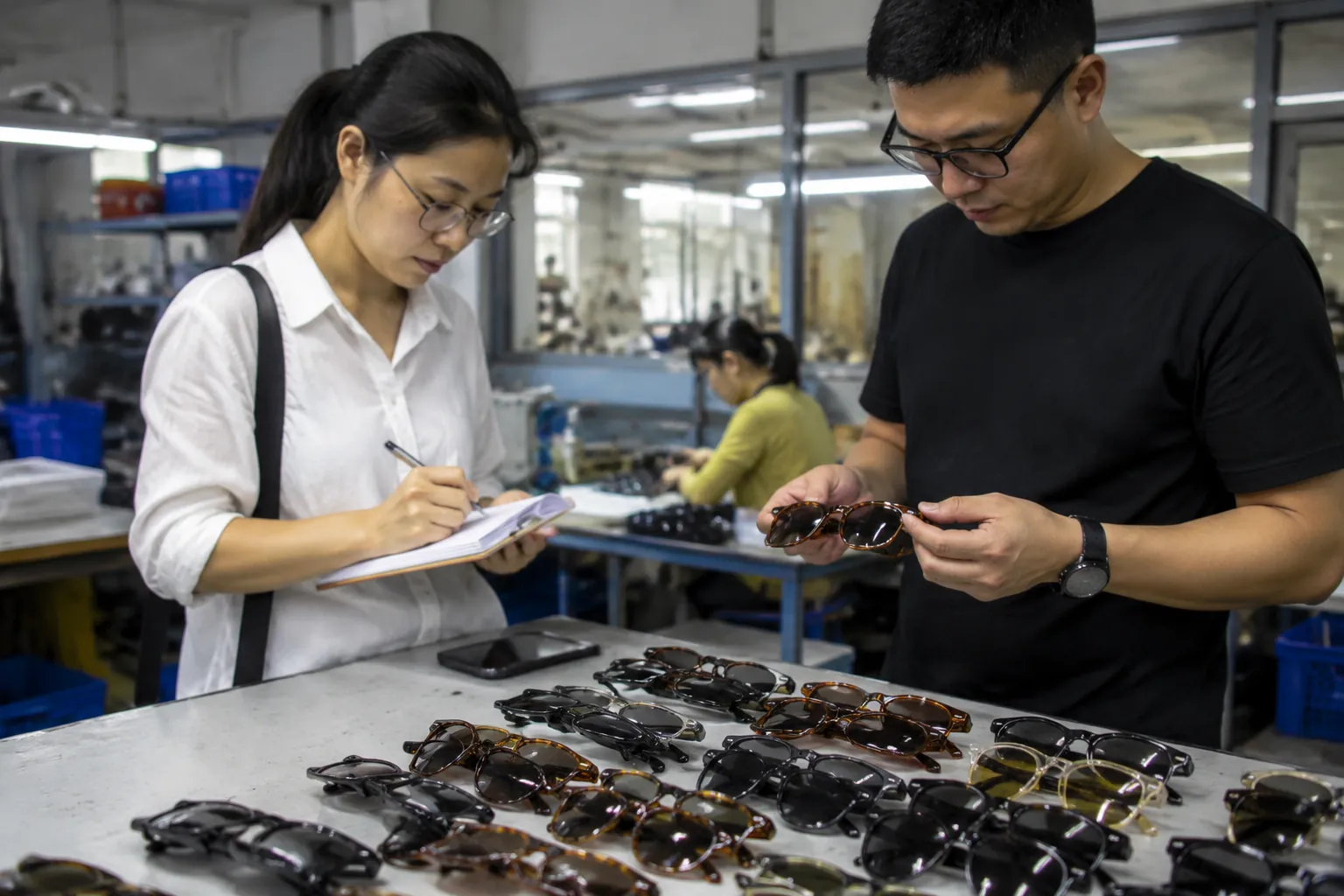
This guide is for importers, brand owners, distributors, and retailers sourcing sunglasses in volume from China or other offshore suppliers. The aim is simple: build an order-specific compliance pack that matches the exact product being shipped. That means frame construction, lens material, lens category, coatings, logo method, and packaging all line up. A good pack helps buyers review market-access documents, product test evidence, and factory records before deposit, before bulk approval, and before shipment release. It will not remove risk. It will show gaps early, while they are still fixable.
Start with the risk map, not the paperwork pile
Many buyers ask a factory for a "compliance pack" and get back a stack of official-looking PDFs that do not match the sunglasses in production. That is the main failure point. A useful file must connect three things: the tested sample, the approved pre-production sample, and the shipped bulk lot.
For sunglasses, buyer risk usually sits in four areas: product safety and performance, chemical compliance, market-entry paperwork, and bulk-to-sample consistency. Lab reports and declarations address the first three. The fourth depends on production control: material traceability, in-process checks, and final inspection discipline.
That is why process matters. A manufacturer that can document molding, acetate work, CNC finishing, lens processing, decoration, and QC is usually better placed to show traceability than a supplier piecing documents together from several sources. The real question is not whether the file looks complete. It is whether the supplier can tie each document to the exact lens construction, frame material, decoration method, and packaging used for the order.
- Before sampling: confirm the destination market, identify the applicable standard, and review planned materials and lens types. Similar-construction reports can help with feasibility, but they are not shipment evidence.
- Before deposit: lock the order-specific checklist, including required test reports, declarations, labeling files, and factory records.
- Before shipment: verify that all paperwork matches the approved style, SKU, colorway, lens category, logo method, and packaging version.
Wait until cargo is packed and your options shrink fast. Some document issues can be fixed quickly. Others cannot. A report tied to the wrong lens category or an unsupported coating claim may mean relabeling, document revision, technical review, or retesting before release.
The minimum document pack most importers should request
There is a difference between a supplier qualification file and an order-level compliance file. Ask for both. The first tells you whether the supplier is suitable. The second tells you whether a specific shipment is ready to move.
| Document | What it proves | When to request it | Typical failure if skipped |
|---|---|---|---|
| CE EN ISO 12312-1 test report | Product test evidence for markets where this standard applies | Before bulk approval | Using a report tied to a different lens tint, lens category, or frame construction |
| ANSI Z80.3 report | Product test evidence for US-market sunglass requirements | Before bulk approval for US sales | Assuming a CE report automatically covers US requirements |
| AS/NZS 1067 report | Product test evidence for Australia/New Zealand requirements | Before bulk approval for AU/NZ sales | Releasing goods without confirming the applicable local classification and labeling basis |
| REACH declaration or supporting chemical test basis | Supplier statement or supporting evidence for restricted substance compliance in relevant components | Before order confirmation and after any material change | Accepting a generic statement with no component scope |
| FDA registration evidence | Registration status where relevant for US import documentation | At supplier onboarding | Treating registration as if it were a product performance report |
| Declaration of conformity | Signed statement linking a specific model or SKU to the applicable standard | Before shipment | Missing style references, issue dates, or responsible company details |
| Inspection records | Evidence that bulk goods were inspected against the agreed quality standard | After production, before shipment | Reviewing only a pass/fail summary instead of actual defect findings and shipment status |
Supplier-level records such as ISO 9001 and BSCI can still help. They show management-system or social-compliance status. They do not replace product testing. A supplier can hold both and still ship a product that differs from the tested sample.
For most buyers, the order-level file is what protects the purchase order. If the goods, labeling, or claims are challenged, shipment-specific documents matter far more than general supplier credentials.
What a valid test report must match
A real report is not enough. It must match the product specification. Buyers often approve reports for "similar styles" that share a shape but not the same materials, lens build, or decoration.
Start with the frame. Polycarbonate, nylon-based materials such as TR90-type formulations, acetate, and metal each bring different construction and process variables. Those differences matter. If the tested sample used one frame material and the production order uses another, the report may not support the goods being shipped.
Then check the lens build. Polycarbonate, TAC polarized assemblies, nylon, and acrylic can behave differently depending on thickness, tint density, coatings, and finishing. A category change, mirror addition, gradient lens, or other variation should be reviewed against the applicable standard and labeling rules. The same goes for a change from non-polarized to polarized, or from one visible light transmission range to another.
- Model reference: the report should map clearly to your style number, supplier code, or approved construction.
- Lens category and tint: category, tint, mirror, gradient, and polarized status are not interchangeable.
- Material callout: frame, temples, lens material, pads, tips, and decorative parts should align with the BOM or approved specification.
- Applicable standard: request the actual report to the specific standard required for your market.
- Issue date and change control: any change in material source, lens construction, coating, or decoration should trigger document review.
Use similar-style reports for early screening only. Not for shipment release. If the bulk order changes in any way that could affect product performance, labeling, or chemical profile, decide whether new testing or a documented technical assessment is required.
Declarations matter only if they tie to the shipment
Customs brokers, marketplaces, and large retail accounts often ask for declarations as well as test reports. Declarations can be quicker to issue than lab reports, but they still need to be specific. A vague letter on supplier letterhead does not help much. A useful declaration is traceable.
A proper declaration of conformity should identify the manufacturer or seller, the product description, style or SKU, applicable standard, issue date, and authorized signatory. For private-label orders, the cleanest format also links the buyer SKU, supplier style number, and purchase order or shipment reference. No guesswork.
For REACH, do not accept a one-line statement with no scope. The declaration should say what it covers. In sunglasses, chemical review often needs to include coatings, adhesives, prints, nose pads, temple tips, pouches, and packaging inks, not just the main frame material. If the product includes a soft-touch coating, printed logo, or glued metal trim, ask whether the declaration still covers those components.
FDA registration is also often misunderstood. It is a registration matter, not proof that a sunglass model meets optical or mechanical requirements. Request it during onboarding or US document review, but do not treat it as a substitute for ANSI Z80.3 or other applicable product testing.
Practical rule: every declaration should point back to a specific product, a specific standard or regulatory basis, and a specific shipment reference. If it cannot be tied to the purchase order, it is much less useful in a review or dispute.
Factory records that cut bulk-shipment surprises
Some of the most expensive problems appear after testing is complete because the production lot drifts away from the tested sample. That is why a strong compliance pack should include internal factory records, not just third-party lab PDFs.
Ask for records that show how the supplier controlled the order from incoming materials to final packing. For sunglasses, the useful checkpoints are usually approved sample control, material verification, lens-processing checks, decoration approval, assembly inspection, and final release.
| Factory record | What to verify | Why it matters |
|---|---|---|
| Approved sample record | Sealed sample photos, logo location, packaging version, lens category | Helps prevent bulk drift from the sample the buyer approved |
| BOM or material list | Frame material, lens material, hardware, coatings, inks, adhesives | Shows whether the tested construction matches production inputs |
| Incoming material check | Resin lot, acetate batch, lens batch, hardware or trim verification | Supports traceability if a defect or claim appears later |
| In-process QC | Lens tint consistency, hinge fit, alignment, print adhesion, cosmetic limits | Helps catch drift before all units are packed |
| Final inspection report | Sample size, defect breakdown, rework record, shipment release status | Shows whether bulk goods met the agreed standard before dispatch |
Decoration method needs extra attention. Laser engraving removes material. Pad printing, heat transfer, spray coatings, rubberized finishes, and glued logo parts add inks, coatings, or adhesives that may need separate review. If decoration changes after approval, check whether the REACH declaration, inspection criteria, and any relevant test evidence still apply.
If the supplier cannot show even basic lot traceability, the value of a test report drops. The report may be genuine. It still does less to show that the shipped goods match the tested sample.
Ask at the right stage or pay later
Timing is one of the few controls buyers can manage directly. The same document request is easy during development and painful after production. This matters even more in custom programs where lens options, logo methods, and packaging variants shift from order to order.
| Stage | What to request | Typical lead-time impact | Cost risk if delayed |
|---|---|---|---|
| Supplier approval | ISO 9001, BSCI, FDA registration evidence, similar-build reports | Usually low | Approving a supplier that cannot support your target market or document requirements |
| Sampling | Target standard confirmation, labeling review, preliminary material declarations | Low to moderate | Locking design decisions before compliance requirements are checked |
| Pre-production | Order-specific testing plan, approved BOM, declaration template | Moderate | Producing bulk with an unreviewed lens, material, or trim combination |
| Pre-shipment | Final reports, signed declarations, inspection records, carton and label check | High if something fails | Holding cargo for retesting, relabeling, document correction, or rework |
Compliance review should run alongside development and production, not after them. If a problem appears at pre-shipment stage, the fix may depend on lab capacity, document correction, packaging replacement, or physical rework. Manufacturing may be finished. The shipment still gets delayed.
Do not loosen document control on small orders. Small runs often carry more variation per SKU, which increases the risk of mismatch between approved sample, report, declaration, and shipped goods.
A practical checklist for every PO
The safest approach is to use the same control checklist on every order and make exceptions visible. Consistency catches drift across seasons, suppliers, and product managers.
- Confirm sales market: EU, US, AU/NZ, or multi-market.
- List exact SKU details: frame material, lens material, tint, category, coatings, logo method, and packaging.
- Match required standards: CE EN ISO 12312-1, ANSI Z80.3, AS/NZS 1067, or other applicable market requirements.
- Request chemical coverage: REACH declaration or supporting basis for relevant materials, coatings, inks, adhesives, and accessories.
- Collect supplier-level records: ISO 9001, BSCI, FDA registration evidence where relevant.
- Collect order-level records: declaration of conformity, approved sample record, BOM, inspection report, and final labeling files.
- Check consistency: style number, lens description, issue date, company name, and SKU should align across all documents.
- Hold shipment if needed: if the file does not match the actual goods, the shipment is not ready for release.
This is where many importers give way. They waive a missing or inconsistent document to protect the ship date, then pay for it later through customs questions, marketplace complaints, relabeling, or customer claims. A disciplined supplier can support a structured process, but only if the buyer sets the requirements clearly and early.
The core objective is straightforward: the product developed, the product tested, and the product shipped should be the same product. If the paperwork proves that, it has value. If not, it is just a folder.
Have a custom sunglasses project in mind?
Send us your styles, target market and quantities and we will return a detailed quote with MOQ, lead time and a sample plan.
Get a QuoteWhy source this from Wenzhou with LumiShades
Wenzhou in Zhejiang Province is widely regarded as China’s eyewear manufacturing capital, producing a large share of the world’s sunglasses. That concentration matters to buyers: a deep local supply chain for acetate sheet, hinges, lens blanks, plating and packaging means shorter component lead times, easier color and material matching, and a workforce with decades of eyewear-specific skill. LumiShades has manufactured in this ecosystem since 2009, and our vertical integration — in-house injection molding, acetate cutting, CNC milling, lens tinting, decoration and quality control — means no part of your order is quietly subcontracted to a workshop you cannot audit.
For international buyers, that vertical control translates into accountability. When a single factory owns every step, defects are traced and fixed at source rather than bounced between vendors, and your specifications survive intact from first sample to bulk. We back this with 15+ years of experience, shipments to 60+ countries, more than 5 million pairs produced per year and a 98.5% on-time delivery rate. Our certifications — CE EN ISO 12312-1, FDA registration, ANSI Z80.3, AS/NZS 1067, REACH, ISO 9001 and BSCI audit — mean the compliance documentation your market requires already exists. Explore our manufacturing capabilities and quality control process to see how this works in practice.
Frequently asked questions
Do I need a new test report for every colorway? Not always, but review each colorway against the actual change. If the change affects lens tint, visible light transmission category, polarization, mirror or gradient coating, lens material, frame material, or decoration method, ask the supplier and test lab whether the existing report still applies to that exact SKU. Do not rely on verbal confirmation. Get written confirmation or a new report tied to the revised construction before shipment.
Is FDA registration enough for selling sunglasses in the US? No. FDA registration evidence is not a product performance report. For US-bound sunglasses, ask the supplier what product testing and labeling documents support the exact model, and review ANSI Z80.3 documentation where applicable. Also confirm that the declaration, product description, and shipment paperwork all identify the same SKU you are importing.
Can I use one CE report for both EU and Australia? Do not assume that. CE EN ISO 12312-1 and AS/NZS 1067 are different standards with different requirements and document expectations. If you plan to sell in both markets, request evidence to each standard for the exact construction being shipped, or get written confirmation from a qualified testing body that the specific product has been assessed against both. If that confirmation does not exist, treat the markets separately.
What is the biggest document mistake importers make? Accepting reports and declarations that do not match the actual shipped product. The most common gaps are the wrong lens category, outdated material details, missing style or SKU references, and declarations so generic they cannot be linked to the purchase order. A practical fix is to compare every document against the approved sample record, BOM, packaging file, and final inspection report before authorizing shipment.
At what order size should I start asking for a full compliance pack? From the first order. Compliance risk comes from product variation and market requirements, not just order value. Even a small order can create customs, labeling, marketplace, or claims exposure if the documents do not match the goods. Build the same document checklist into every PO, then adjust the depth of testing or review only with written justification.
Ready to start?
Explore our rimless sunglasses or request a quote — our sales team replies within 12 hours.
Request a Quote