
How to Review a Sunglasses Test Report Before Payment
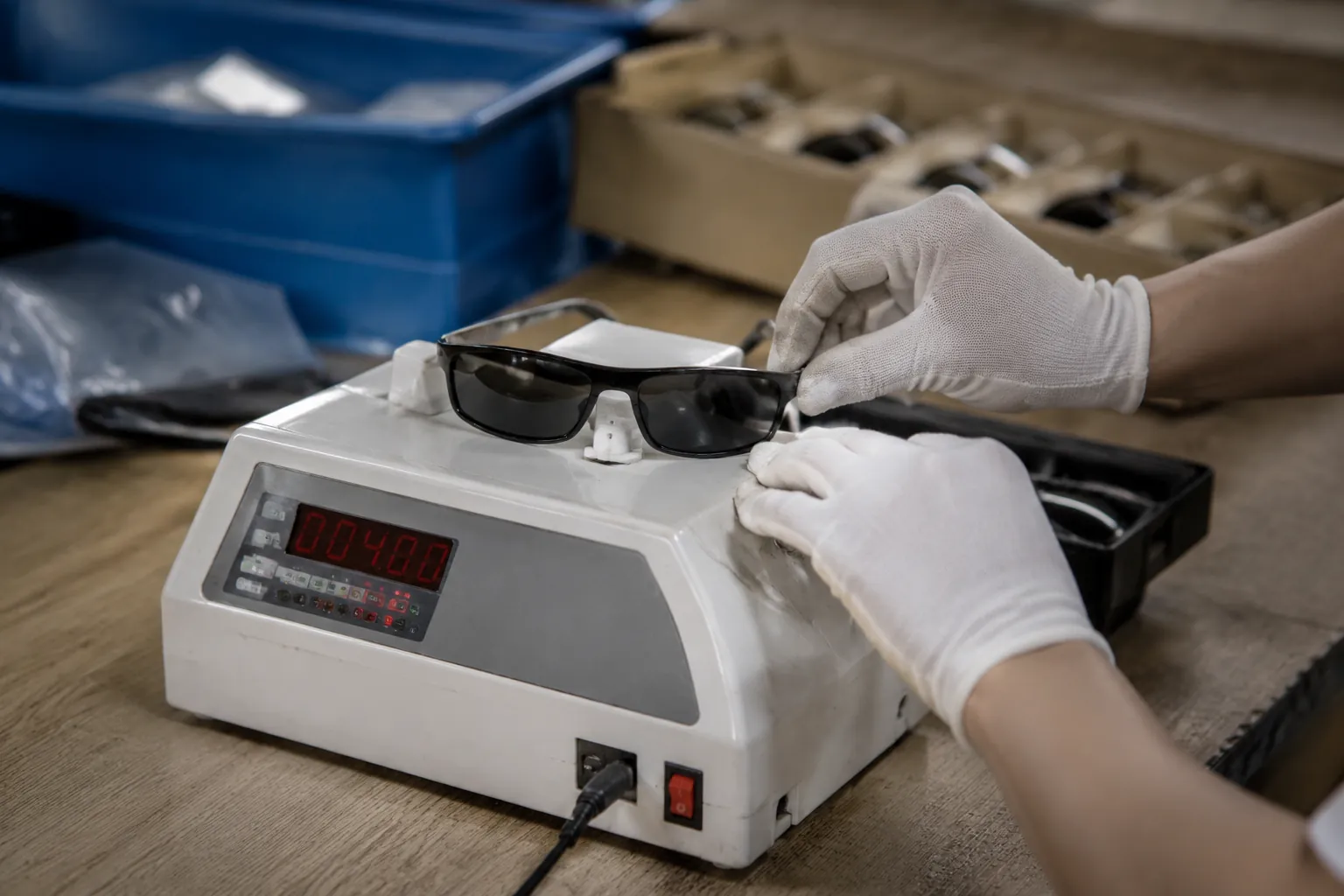
This guide is for importers, brand owners, distributors, and retail buyers approving custom sunglasses before shipment. A test report helps only if the tested sample, test standard, and product details match the goods you are about to pay for. That is the real job here. Reduce the risk of paying balance on goods that pass on paper but do not match your approved sample, market requirements, or labeling. Read the report line by line. Then check it against the approved sample, BOM or material summary, artwork, and packed goods. A pass result matters only when traceability is clear.
Start with product identity, not the pass result
Your first check is simple: does this report belong to your exact SKU? Not a similar frame. Not an earlier prototype. In eyewear, small changes matter. A new lens tint, mirror coating, logo plate, temple material, or a switch from polarized TAC to non-polarized PC changes the product definition.
Before you read the technical results, compare the report against four working documents: the purchase order, approved pre-production sample, BOM or material summary, and final packing list. The style code on the report should match your internal item code or the supplier style number. If the report only says fashion sunglasses or plastic sunglasses, that is too vague for release approval.
- Check frame model number, lens color code, frame color code, hinge type, material family, and logo version.
- Confirm whether the tested sample was polarized or non-polarized, mirrored or non-mirrored, gradient or solid tint.
- Verify size references if the same style is sold in multiple sizes, such as 52-20-145 and 54-18-145.
- Match product photos in the report to the approved sample. A different bridge shape, temple tip, bevel, or decoration location is enough to justify follow-up.
- Check the report issue date and sample receipt date against your order timeline. Older reports need extra review to confirm that the product build and materials have not changed.
Private-label orders need extra care. Decoration is often added after base frame production. Laser engraving, pad printing, heat transfer, foil stamping, and metal logo plate application can add different inks, adhesives, coatings, or metal parts. If the report sample was plain but the shipped goods include decoration, confirm that the test scope and any chemical screening still reflect the finished item you are buying.
Make sure the lab, standard, and market match
A report can be genuine and still be wrong for your target market. Many buyers see one PASS line and stop. Do not stop there. Check the exact standard named in the report and, where shown, the edition or year. Then confirm that it fits the market where the goods will be sold.
For sunglasses, common references include EN ISO 12312-1 for the EU, ANSI Z80.3 for the US, and AS/NZS 1067 for Australia and New Zealand. These are not interchangeable by default. A product tested to one framework may still need different classification wording, warnings, or supporting documents for another market.
| Market | Common standard to verify | Buyer checks on the report |
|---|---|---|
| European Union | EN ISO 12312-1 | Standard reference, filter category, luminous transmittance, UV-related result, sample description, warning statements if applicable |
| United States | ANSI Z80.3 | Applicable lens performance sections, sample identity, and alignment between product claims and packaging |
| Australia/New Zealand | AS/NZS 1067 | Lens category, UV-related claims, road-use limitations where applicable, and labeling consistency |
| Chemical compliance markets | REACH or buyer RSL | Exact materials tested, coatings, inks, adhesives, metal trims, and whether the restricted-substance scope matches the product build |
Check the lab details too. A usable report should show the lab name, report number, sample receipt date, issue date, and sign-off or authorization. If the supplier sends only a cropped front page or a screenshot from a chat app, ask for the full PDF. Missing pages often contain the sample description, scope limits, or detailed results.
Keep product performance reports separate from factory-level paperwork. Some US buyers also ask for evidence of manufacturer FDA registration, but that does not replace product testing. The same applies to ISO 9001 and BSCI. Those documents relate to registration, quality systems, or social compliance. They do not prove that a specific pair of sunglasses meets the optical or chemical requirements for your order.
Read the optical results like a buyer
The lens section is usually the core of a sunglasses report. You do not need to calculate optical data yourself. You do need to confirm that the production lenses match the tested lenses. If the tested sample used one lens specification and bulk production uses another, the report may no longer describe the goods being shipped.
Start with four checks: luminous transmittance, UV-related performance, filter category, and any notes about restricted use. These fields tell you how dark the lens is, how the product is classified, and whether any warnings or sales limits must appear on packaging or instructions.
- Check the declared lens category against your intended product positioning and packaging.
- Review luminous transmittance and compare it with your approved color standard or master swatch.
- Confirm that UV-related performance supports any approved packaging claim, such as UV400, if that claim is being used for the target market.
- Read all comments and limitations, not just the pass line. Use restrictions may affect artwork, carton documents, and online listing copy.
In production, optical performance can shift with material and finishing. Polycarbonate, TAC polarized constructions, acrylic lenses, mirror coatings, and gradient treatments are not interchangeable from a report standpoint. If the factory changed lens material, thickness, tint, mirror stack, or polarization construction after sample approval, treat that change as a new compliance review point.
Ask direct questions. Was the tested lens made from the same material? The same thickness? The same coating construction? The same polarized or non-polarized build? Lens color is not just styling. It can affect classification, labeling, and whether the report still applies to the shipped product.
Check frame materials and decoration against production reality
Frame mismatches are a common reason a report stops being reliable. A development sample may use one resin grade, one acetate sheet source, or one trim finish, while mass production uses another. If the report describes acetate with stainless steel temples, but the goods are injection-molded polycarbonate with a glued zinc-alloy logo plate, you are not reviewing the right product file.
Ask the supplier for the BOM summary used for the tested sample. You do not need every internal process document. You do need the material family and the decorated parts clearly identified. That matters for chemical compliance and for confirming that the tested sample matches production reality.
| Component | Typical production choice | What can change risk |
|---|---|---|
| Front frame | PC, TR90, acetate, or metal | Resin grade change, acetate sheet substitution, plating finish, or different declared material family |
| Lens | PC, TAC polarized, acrylic | Tint formula, mirror coating, polarization construction, or thickness change |
| Decoration | Pad print, laser mark, foil, metal plate | Ink chemistry, adhesive type, added coating layers, or restricted-substance scope under REACH or buyer RSL |
| Hardware | Hinge, screws, temple core | Metal composition, plating, or a different hardware source than the one documented for the tested sample |
Decoration needs its own check. Pad print inks, UV-cured coatings, hot stamping foils, and glued metal badges each add materials that may not be present in an undecorated frame. If REACH screening or a buyer restricted substances list applies, confirm that these added components were included in the tested scope or screened separately.
If a report says nothing about decorative parts, do not assume they are covered. Ask the supplier to identify exactly which components were submitted for testing and whether the tested sample included final branding and finishing.
Use report timing and sample source to judge risk
Not all samples carry the same weight. A hand-built development sample can differ from mass production in tint consistency, print position, torque, coating application, or final assembly details. That is why the report should show when the sample was received, who submitted it, and, where possible, whether it represented production goods.
The safest release sequence is straightforward: approve the pre-production sample, lock the BOM and artwork, complete bulk production, then pull a finished-goods sample and confirm that the existing report still matches the final build or submit a production-representative sample for testing if needed. If lenses, trims, decoration, or packaging claims changed after the report sample was prepared, treat the file as potentially outdated.
Ask the supplier a direct question: Was the tested sample pulled from production, or built separately for the lab? If the answer is unclear, record that risk and decide whether updated testing or added inspection is required before payment.
Quantity matters too. A small pilot run may not reflect the same process conditions as a larger commercial run. That does not automatically mean bulk goods will fail. It does mean buyers should be more careful about sample traceability, in-line control, and final verification when approving larger orders or multiple colorways.
Cross-check labeling, warnings, and carton documents
A passed test report does not finish the approval process. The product, inner packaging, retail box, barcode sheet, and master carton still need to match the tested item and the destination market. Many shipment problems start here. The lens passed, but the packaging claim, warning, or product description does not match the approved documentation.
Review the artwork file and carton marks alongside the report. Check product naming, filter category wording where applicable, country of origin, and any caution statements required by the applicable standard or by your own compliance team. If one shipment mixes several lens categories or colorways under one PO, control labels at SKU level.
- Match item code across product, barcode sheet, carton mark, and report.
- Check lens category or usage restriction wording against the report comments.
- Confirm that claims such as polarized, mirrored, UV400, acetate, or recycled material match the tested sample and approved BOM.
- Do not print standard references or certification-style wording on packaging unless your documentation supports that exact claim.
Keep product reports separate from system certificates in your approval folder. ISO 9001, BSCI, and factory audit files may still matter for supplier management, but they do not replace an item-specific compliance file. A clean release packet should let your team verify the report, artwork, and packing list without mixing records from different SKUs or projects.
Use a release checklist before balance payment
Before you pay the balance or authorize shipment, use a short release checklist. Do not rely on memory. A careful document review costs far less than a customs query, relabeling job, claim dispute, or post-arrival return problem.
- Collect the full report PDF, not screenshots or a summary page.
- Match the report number, lab identity, sample receipt date, issue date, and sign-off page.
- Confirm style code, lens color, frame color, size, material, and logo details against the PO and approved sample.
- Check that the tested standard matches the destination market and any channel-specific compliance requirement.
- Review optical data, including transmittance, filter category, UV-related result, and any limitations or warning notes.
- Confirm chemical compliance scope such as REACH or buyer RSL for frames, lenses, coatings, inks, adhesives, and metal trims where relevant.
- Match packaging claims, barcode sheet, and carton marks to the tested product and approved market wording.
- Require updated documentation if the factory changed materials, lens construction, decoration, or labeling after sample approval.
- Hold balance payment if a key field is vague, inconsistent, missing, or tied to an old or non-representative sample.
A reliable supplier should be able to support these checks with clear files because the underlying records should already exist in its internal QC or compliance process. Even with an organized supplier, buyers should approve against documents and physical production facts, not assumptions. That discipline matters whether you are buying a small promotional run, a retail order, or a private-label program with multiple colorways and markets.
Have a custom sunglasses project in mind?
Send us your styles, target market and quantities and we will return a detailed quote with MOQ, lead time and a sample plan.
Get a QuoteWhy source this from Wenzhou with LumiShades
Wenzhou in Zhejiang Province is widely regarded as China’s eyewear manufacturing capital, producing a large share of the world’s sunglasses. That concentration matters to buyers: a deep local supply chain for acetate sheet, hinges, lens blanks, plating and packaging means shorter component lead times, easier color and material matching, and a workforce with decades of eyewear-specific skill. LumiShades has manufactured in this ecosystem since 2009, and our vertical integration — in-house injection molding, acetate cutting, CNC milling, lens tinting, decoration and quality control — means no part of your order is quietly subcontracted to a workshop you cannot audit.
For international buyers, that vertical control translates into accountability. When a single factory owns every step, defects are traced and fixed at source rather than bounced between vendors, and your specifications survive intact from first sample to bulk. We back this with 15+ years of experience, shipments to 60+ countries, more than 5 million pairs produced per year and a 98.5% on-time delivery rate. Our certifications — CE EN ISO 12312-1, FDA registration, ANSI Z80.3, AS/NZS 1067, REACH, ISO 9001 and BSCI audit — mean the compliance documentation your market requires already exists. Explore our manufacturing capabilities and quality control process to see how this works in practice.
Frequently asked questions
Can I accept one EN ISO 12312-1 report for all colorways of the same frame? Not automatically. First compare the full lens specification for each colorway: material, thickness, tint, gradient, mirror coating, and polarized or non-polarized construction. If any of those variables differ, ask your supplier or compliance team whether separate testing or a documented grouping rationale is required. Do not release all colorways on one report unless you can show that the tested lens build is identical to the shipped lens build for each SKU covered.
Is FDA registration enough for US sunglasses imports? No. FDA registration evidence, where requested by the buyer, is not the same as an item-specific product performance report. For a US shipment, keep manufacturer FDA registration records separate from the product file, and review the sunglasses report against the applicable ANSI Z80.3 requirements, approved artwork, and SKU details. In practice, you should approve the factory document set and the product compliance file as two separate checks.
What is the biggest red flag in a sunglasses test report? The biggest red flag is a mismatch between the tested sample and the shipped product. Check the style code, lens color, frame material, decoration method, logo version, sample date, and named standard before you focus on the result. If the report is generic, outdated, missing a clear sample description, or does not reflect final branded goods, pause payment and ask for a corrected or updated file.
Should I pay balance if the supplier only sends the summary page? No. Ask for the full PDF report with the lab details, sample description, test standard, detailed results, comments, and authorization page. Then compare that report to the approved sample, BOM, and packaging artwork. If the supplier cannot provide the complete report, treat the file as insufficient evidence and hold release until the documentation is complete.
How do REACH checks relate to sunglasses? REACH or buyer restricted-substance checks can apply to frame materials, coatings, inks, adhesives, soft-touch finishes, and metal trims used on sunglasses. Ask which components were actually screened, and confirm that the screened parts match the finished product, including decoration and added logos. If the report only covers an undecorated sample or does not clearly identify the tested components, request a component list and updated screening evidence before approving shipment.
Ready to start?
Explore our sport wrap sunglasses or request a quote — our sales team replies within 12 hours.
Request a Quote