
How to Verify a Sunglasses Supplier's Certifications
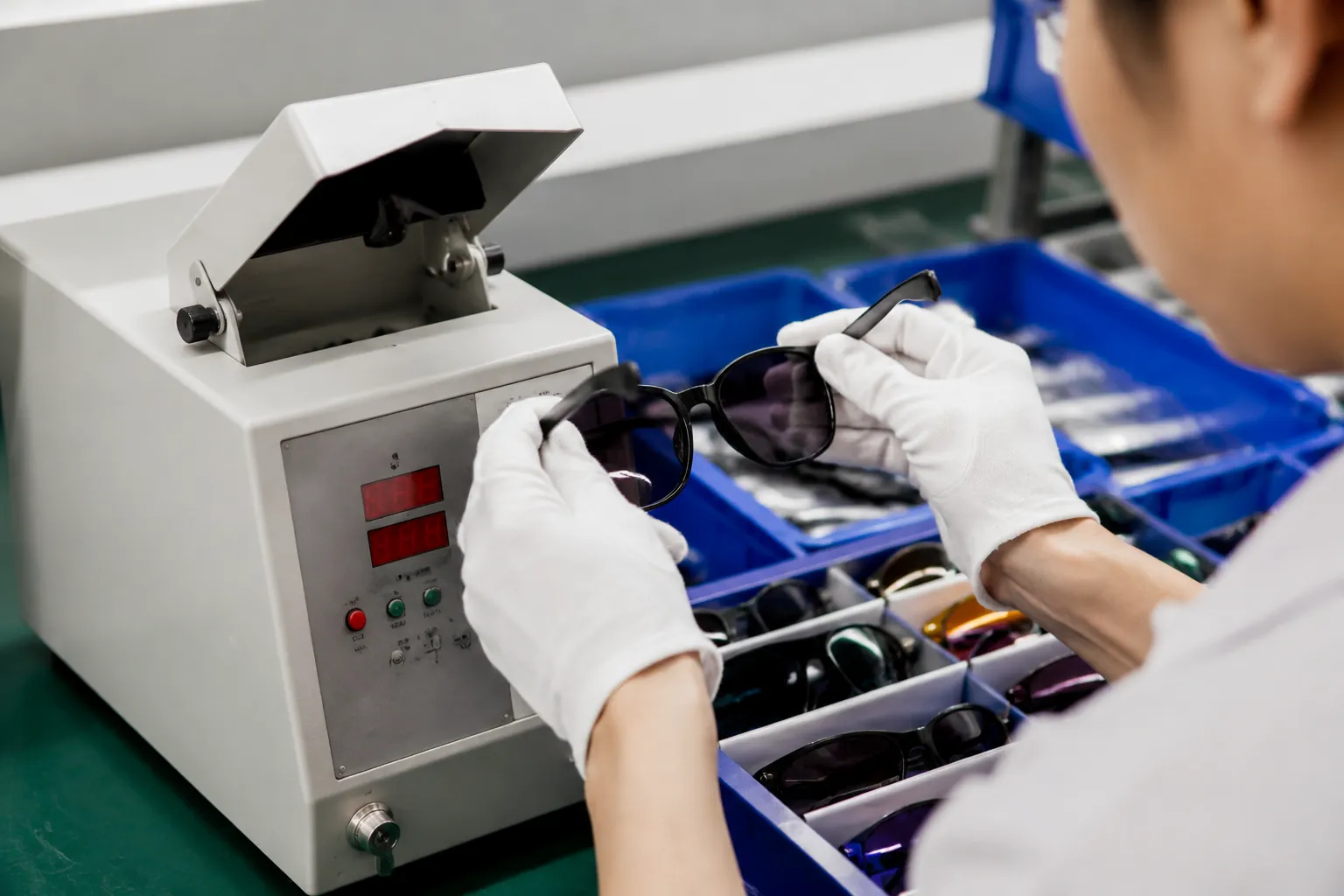
This guide is for brand owners, importers, distributors, and retailers buying sunglasses in volume from overseas factories. The goal is not to collect PDFs. It is to confirm that a supplier's claimed certifications or reports apply to your exact product, your destination market, and your shipment date. Do this before the deposit and again before the balance payment. It helps reduce the risk of customs delays, relabeling costs, retesting, or stock you cannot sell as planned.
Start with the three-part check
Buyers often ask, "Is the factory certified?" That question is too broad. It does not protect a shipment.
You need to verify three separate things: the factory system, the product standard, and the shipment timing. A supplier may hold ISO 9001 or complete a BSCI audit. That still does not prove that a specific sunglass style complies with CE EN ISO 12312-1, ANSI Z80.3, or AS/NZS 1067.
Use a simple framework and test every document against it.
- Match the market: identify where the goods will be sold and which standard or supporting documentation is relevant there. EU, U.S., and Australia/New Zealand requirements are not interchangeable.
- Match the product category: confirm the report covers sunglasses, not reading glasses, safety eyewear, or another eyewear type.
- Match the exact build: confirm frame material, lens material, lens category, coatings, and decorative elements are consistent with the tested sample or documented product.
- Match the shipment timing: confirm the report or supporting file is still relevant when the goods ship, not just when the quotation was issued.
- Match the paperwork trail: confirm the supplier name, manufacturing site, model code, labeling, and commercial documents do not conflict.
If one of these checks fails, treat the claim as unverified. That does not automatically mean the product is non-compliant. It means you do not yet have enough evidence to rely on the claim for that shipment.
This matters because small spec changes can break the link to an old report. A switch from TAC polarized lenses to PC lenses, a new soft-touch coating, or a different lens category can change the tested construction, the chemical-risk review, or the required labeling.
Know which documents matter and which do not
Not all compliance documents prove the same thing. Some show that a product sample was tested. Others show that a business is registered, audited, or working under a management system. Serious buyers separate these fast because suppliers often present them as if they carry equal weight.
| Document | What it shows | What it does not show | Buyer use |
|---|---|---|---|
| CE EN ISO 12312-1 test report | A sunglasses sample was tested against the cited standard and the report records the sample details and results | It does not automatically cover other styles, later revisions, or different materials | Check the sample description, lens category, UV-related results, markings, and warnings |
| ANSI Z80.3 report | A sunglasses sample was tested to the cited U.S. standard | It does not replace EU or Australia/New Zealand requirements | Use it when the product is intended for the U.S. market and confirm the report matches the exact model |
| AS/NZS 1067 report | A sunglasses sample was tested to the cited Australia/New Zealand standard | It does not itself confirm conformity for the U.S. or EU markets | Use it when selling into Australia or New Zealand and verify the sample details carefully |
| REACH test report | Restricted-substance results for specific materials or components, depending on what was tested | It does not prove optical performance, UV performance, or lens category | Review it especially when coatings, paints, plastics, metal trims, or adhesives change |
| FDA registration | Registration status in a U.S. regulatory filing context | It is not a product quality certificate and not proof that a sunglass model passed testing | Keep it on file if relevant, but do not substitute it for product-specific evidence |
| ISO 9001 or BSCI | Management system status or social audit status | Neither document certifies that a specific sunglass style meets a product standard | Use them for supplier screening, not as product compliance proof |
A reliable supplier may have all of these documents. Fine. That is only the start.
The real question is narrower: which report or record covers the exact model, with the exact materials and finish, that you are about to buy?
As a rule, product-specific test reports matter more than general business certificates when you are judging a shipment. If time is limited, read the detailed lab report tied to the actual sunglasses first.
Read the test report against the product spec
The fastest way to spot weak paperwork is to compare the lab report line by line against the final spec sheet and approved sample. Do not stop at the title page. Read the tested sample description, model code, photos if included, lens category, and required markings.
- Frame material: confirm the report describes the same frame material and construction as the order. A report for one construction should not be treated as proof for a clearly different one.
- Lens material: confirm whether the tested sample uses TAC, PC, nylon, acrylic, or another lens material, and whether that matches the final BOM.
- Lens category and tint: confirm the category and visible-light-transmission classification in the report match the actual lenses ordered.
- Model description: check whether the report includes a style number, dimensions, photo, or sample description that reasonably identifies your model.
- Warnings and markings: verify that any required information shown in the report is reflected on the packaging, hangtag, label, or instruction leaflet used for shipment.
This is where process detail matters. Ask whether the tested sample was made through the same production route as your order, especially if the factory or its subcontractors split molding, lens production, coating, printing, logo application, or final assembly across different sources.
Watch for late changes. A report tied to one lens material and category may not support a later version that uses a different lens material, tint, mirror treatment, or decorative part. The same applies if the frame later adds painted logos, metal logo plates, or new coatings. Those changes may require a fresh review of the supporting file, especially for REACH-related materials.
Check dates, revisions, and shipment timing
Many compliance problems start with timing. A document was relevant during development, then drifted away from the final shipment. Buyers collect reports during quotation or sampling and never check them again before releasing the balance.
Compare these dates: sample approval date, report issue date, BOM revision date, packaging artwork approval date, production start window, pre-shipment inspection date, and estimated ship date. Then decide whether the evidence still covers the goods being shipped.
If the approved sample changed after the report was issued, review whether the change is material. A new lens material, a new coating, a revised category, or added decorative parts can all affect whether the existing file is still adequate.
Use a blunt rule: if the tested sample is not materially the same as the shipped product, the old report is not shipment-level proof.
Also compare the compliance file against the commercial record. If pricing, lead time, sourcing, or product construction changed during negotiation, ask what changed in the BOM and whether the test file was reviewed against that revision. Commercial changes do not always create a compliance problem. They should always trigger a document check.
Spot the common mismatch patterns
Most weak files fail in predictable ways. Learn the patterns and you can spot risk early, before the goods are packed.
| Mismatch pattern | Typical cause | Why it matters | Buyer action |
|---|---|---|---|
| Factory name mismatch | The seller is a trading company, but the report belongs to a different factory and the relationship is unclear | There is no clear link between the seller, manufacturer, and tested product | Ask for factory authorization, production-site confirmation, and matching commercial paperwork |
| Style or material mismatch | The sample or BOM changed after the original testing | The tested sample may no longer represent the goods | Request an updated sample record and a fresh review of the supporting documents |
| Decoration mismatch | Paint, coating, logo hardware, or other decorative parts were added or changed after testing | Chemical-risk review or labeling relevance may change | Recheck REACH-related materials and confirm artwork still matches requirements |
| Label mismatch | Packaging was finalized without checking the test report or product standard | Required category or warning information may be missing or inconsistent | Cross-check report requirements against final packaging files before shipment |
- Factory name mismatch: the quotation and invoice come from one company, but the report is issued under another name with no clear legal or manufacturing link.
- Product category mismatch: the document covers another eyewear category rather than sunglasses.
- Style mismatch: the report describes a different construction, shape, or lens build from the ordered model.
- Material mismatch: the tested sample used different frame or lens materials from production.
- Decoration added after testing: paints, coatings, logos, or metal trims were introduced later without document review.
- Packaging mismatch: the file indicates certain markings or warnings, but the hangtag, box, or label does not show them correctly.
These gaps often appear after negotiation or design revision. The supplier may change a component source, finish, or decoration method for cost or production reasons. That may be workable operationally. It still needs a compliance review against the final shipped product.
Build certification checks into the buying process
Do not leave compliance until the cartons are sealed. Build checkpoints into the buying workflow so every major product or packaging change is reviewed before money is committed.
| Stage | What to request | What to verify | Buyer decision |
|---|---|---|---|
| RFQ stage | List of available certifications, sample reports, and target markets covered | Whether the supplier has relevant product-level evidence, not just system certificates | Shortlist or reject supplier |
| Pre-sample | Draft spec sheet with frame, lens, hinge, logo, and packaging details | Whether existing reports are actually relevant to the proposed construction | Proceed with sample or require a testing plan |
| Sample approval | Approved sample record, BOM, and linked lab file | Exact match of material, tint, dimensions, and markings | Lock specification |
| Pre-production | Final BOM, artwork, and supplier confirmation of no substitutions | No unreviewed material, labeling, or decoration changes | Release deposit |
| Pre-shipment | Final QC file, packaging photos, and updated evidence if changes occurred | Shipment still matches the approved compliance file | Release balance and ship |
This process works because sunglasses production has many change points: lens sourcing, coatings, printing, metal trims, and packaging. A change does not automatically invalidate every document. It should always trigger a review against the final BOM and labeling.
A capable supplier should be able to identify where a revision occurred: frame material, lens source, coating, paint, logo part, or packaging. Ask for that traceability in writing. If the supplier cannot explain the changes clearly, treat the file with caution.
Questions to ask the supplier and the lab
Good buyers do not ask, "Do you have CE?" They ask questions that force precise answers and show whether the file is specific, current, and tied to the actual product.
- Which exact standard applies to this model in this destination market?
- Is this document a product test report, a registration, or a management-system certificate?
- Where in the report is the tested sample described, and what is the model code?
- Does the tested sample use the same frame material, lens material, category, coating, and decoration as our final BOM?
- What changed after the report was issued, including supplier, process, or packaging changes?
- Do the carton marks, labels, polybags, and retail packaging include the required product information shown in the file?
- If we change the lens material, coating, or logo method, do we need a document review or retest?
If an answer sounds vague, push one level deeper. Ask, "Show me where this exact product is described," or "Which component on our BOM differs from the tested sample?" Serious suppliers and credible labs can answer directly. Weak files usually lean on document titles and avoid linking the document to the shipment.
Buyer rule: a current document that does not match the actual product is less useful than a report that clearly describes what was tested but needs update review for later revisions.
What a reliable file should look like before shipment
Before you release the balance payment, the compliance file should be consistent and easy to trace. Every document should point to the same product, from the approved sample to the shipping cartons.
A workable pre-shipment file usually includes the purchase order, final approved spec sheet, BOM, approved sample reference, packaging artwork, target-market test reports, REACH evidence for relevant materials or decorative parts where applicable, and manufacturer identity that matches the commercial paperwork. If the supplier is FDA registered, keep that document in its proper place. Do not treat it as proof that the sunglass model itself meets optical or UV-related requirements.
For repeat orders, do not assume nothing changed. Reconfirm the lens source, frame material, coatings, decorative parts, and packaging. Substitutions and revisions happen for supply, lead-time, or cost reasons. The compliance file needs to be checked against those changes.
The final test is simple: do the documents still describe the goods in the cartons you are about to import? If yes, your process is working. If not, stop and close the gaps before shipment.
Have a custom sunglasses project in mind?
Send us your styles, target market and quantities and we will return a detailed quote with MOQ, lead time and a sample plan.
Get a QuoteWhy source this from Wenzhou with LumiShades
Wenzhou in Zhejiang Province is widely regarded as China’s eyewear manufacturing capital, producing a large share of the world’s sunglasses. That concentration matters to buyers: a deep local supply chain for acetate sheet, hinges, lens blanks, plating and packaging means shorter component lead times, easier color and material matching, and a workforce with decades of eyewear-specific skill. LumiShades has manufactured in this ecosystem since 2009, and our vertical integration — in-house injection molding, acetate cutting, CNC milling, lens tinting, decoration and quality control — means no part of your order is quietly subcontracted to a workshop you cannot audit.
For international buyers, that vertical control translates into accountability. When a single factory owns every step, defects are traced and fixed at source rather than bounced between vendors, and your specifications survive intact from first sample to bulk. We back this with 15+ years of experience, shipments to 60+ countries, more than 5 million pairs produced per year and a 98.5% on-time delivery rate. Our certifications — CE EN ISO 12312-1, FDA registration, ANSI Z80.3, AS/NZS 1067, REACH, ISO 9001 and BSCI audit — mean the compliance documentation your market requires already exists. Explore our manufacturing capabilities and quality control process to see how this works in practice.
Frequently asked questions
Is FDA registration enough for selling sunglasses in the U.S.? No. FDA registration is not a substitute for product-specific evidence. Ask the supplier which U.S. standard they rely on for the model, request the relevant test report such as ANSI Z80.3 if applicable, compare that report to the final BOM and packaging, and keep the registration document separate from the product test file.
Can one CE EN ISO 12312-1 report cover all future styles from the same supplier? Usually no. A report is strongest when it clearly identifies the tested sample. If a future style changes frame material, lens material, lens category, dimensions, coating, or decoration, review the old report against the new BOM and ask the supplier or lab whether updated testing or a new evaluation is needed before shipment.
How often should I ask for updated certification documents? Review them at supplier onboarding, at sample approval, and again before shipment. Request updated evidence whenever the BOM, lens type, lens category, coating, decoration, packaging, factory, or manufacturing site changes. If the supplier says nothing changed, ask for that confirmation in writing and compare it to the final purchase documents.
What is the fastest way to spot a weak compliance file? Compare the report description to the approved sample and final BOM. Check the model code, frame material, lens material, lens category, photos or dimensions, supplier or factory name, and required labeling. If those do not line up, treat the file as incomplete and ask the supplier to explain each mismatch in writing.
Do REACH documents matter if the sunglasses already passed optical testing? Yes. Optical and UV-related testing do not address restricted substances. Review REACH evidence for the materials that can present chemical compliance risk, such as paints, coatings, plastics, nose pads, metal trims, adhesives, and logo parts. Ask which components were tested, which supplier provided them, and whether those components match the final BOM.
Ready to start?
Explore our sport wrap sunglasses or request a quote — our sales team replies within 12 hours.
Request a Quote