
Sunglass Lens Scratch Resistance: Buyer Guide
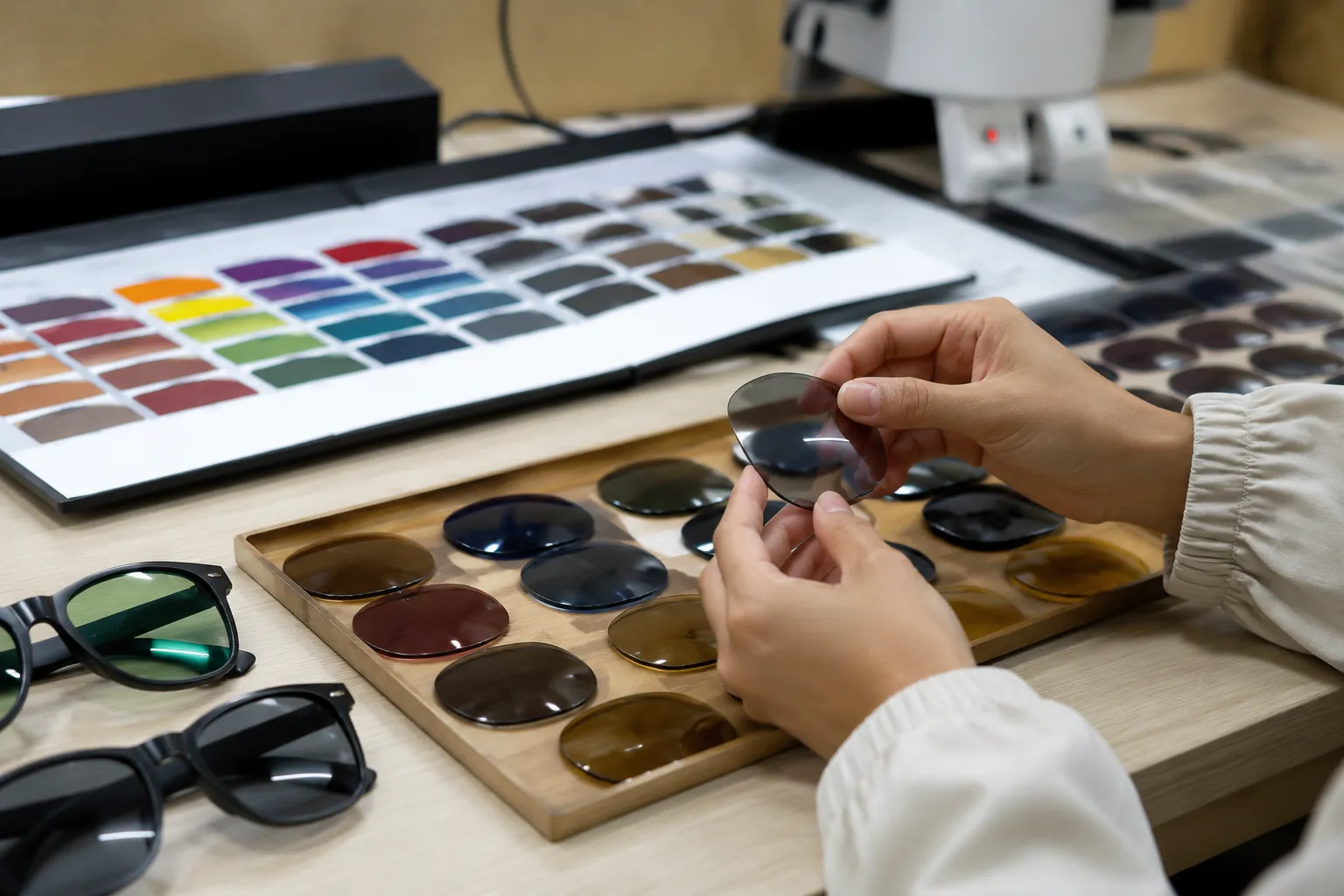
Scratch resistance sounds simple until returns start, mixed lots land on a distributor's desk, or a coating that passed samples fails in packing. This guide is for brand owners, importers, distributors, and retailers buying custom sunglasses in volume. It explains what improves scratch performance, which tests matter, and where buyers usually spend money they do not need to spend.
What scratch resistance actually means
Scratch resistance is not the same as scratch proof. No sunglass lens is immune to dust, sand, zipper pulls, or careless cleaning. In buying terms, scratch resistance means the lens can handle normal use long enough to stay sellable and acceptable to the end user.
Three things control the result: the base material, the surface coating, and the pack-out and handling process. A hard-coated lens can still be damaged if it ships loose in a carton. A strong carton cannot save a weak or contaminated coating. Buyers need to look at the full system.
Most complaints come from the same places: lenses rubbing together in bulk packs, grit trapped in cloths, cleaning after store try-on, and low-grade coatings that look fine on samples but haze or mark after repeated wiping. For fashion retail, light cosmetic wear may be acceptable. For outdoor, children's, and private-label e-commerce programs, small marks can turn into returns.
A practical target is simple: the lens should survive normal handling, repeated gentle cleaning with a clean microfiber cloth, and the actual shipment pack-out without obvious cosmetic damage. That is a useful sourcing standard. It is not a substitute for a written spec and an agreed inspection method.
Lens materials: what holds up before coating
Material choice matters because coating can only do so much. Common sunglass lens materials include polycarbonate, triacetate (TAC), CR-39, and glass. Each has a different balance of abrasion resistance, impact resistance, optical clarity, and cost.
| Lens material | Scratch behavior | Impact behavior | Common thickness | Typical buyer use | Process notes |
|---|---|---|---|---|---|
| Polycarbonate | Moderate without hard coat; much better with a proper hard coat | Excellent | About 1.0 to 2.0 mm depending on design | Sport, safety-led, mass market | Usually needs reliable hard coat and controlled curing; common in injection-molded programs |
| TAC | Acceptable surface feel, but fine marks can show if handled roughly | Good | About 0.8 to 1.2 mm laminated stack | Polarized fashion and mid-range sunglasses | Often used in laminated polarized constructions; edge finishing and pack-out matter a lot |
| CR-39 | Generally better inherent abrasion resistance than polycarbonate, though still not scratch proof | Lower than polycarbonate | About 1.8 to 2.2 mm | Fashion and optical-style sunglass programs | Chosen when clarity and surface feel matter more than impact performance |
| Glass | Very good scratch resistance | Lower impact resistance; heavier | About 1.8 to 2.0 mm | Premium or niche styles | Less common in high-volume programs because of weight, breakage risk, and shipping cost |
Polycarbonate is the most common choice when impact and cost matter, but it usually needs a hard coat to be retail-ready. TAC is common in polarized styles because it can deliver good visual quality at a manageable cost, though scratch performance depends heavily on lamination and handling. CR-39 gives a more premium feel and better inherent surface resistance than polycarbonate, but it is not the best choice where impact resistance is critical. Glass resists scratching well, yet it is often a poor fit for high-volume programs because weight and breakage add cost elsewhere.
Ask how the lens family matches the frame platform. Different frame constructions create different risks at the edge and during assembly. The wrong pairing leads to scratches, fit issues, or edge stress that no coating can fix.
Coatings, tinting, and decoration
The main scratch-resistant layer is the hard coat. It is a thin surface treatment applied after lens forming and before final assembly. On most sunglass programs, the hard coat is the difference between acceptable retail durability and a product that starts to show wear after a few cleanings.
Hard-coat performance depends on formulation, film control, curing conditions, and contamination control. An under-cured or poorly handled coating can look fine at first, then mark more easily after heat, shipping friction, or repeated wiping. That failure is common. It is also avoidable.
Good hard coats improve resistance to micro-scratching from dust and light abrasion. They do not protect against quartz sand, a sharp metal edge, or aggressive cleaning with a dirty cloth. If a buyer expects the coating to survive abuse, disappointment is likely.
- Basic hard coat: lower cost, usually acceptable for entry-level fashion and giveaways, but fine marks may appear sooner.
- Upgraded hard coat: better for e-commerce, retail, and distributor programs where repeated handling is common.
- Mirror or flash coating: improves appearance and can hide light wear, but poor adhesion can show edge chipping or patchy scuffing.
- Anti-reflective or specialty top layers: may improve optics, but they add process complexity and can create new failure modes if cure control is weak.
Tinting affects how visible scratches are. Dark smoke, brown, and mirrored lenses can disguise minor wear better than clear or very light tints. That is a visual advantage, not a technical one. The lens may still be damaged; it just looks less damaged.
Decoration methods matter too. Screen printing, heat transfer, laser marking, pad printing on the lens, and vacuum-coated mirror layers all add handling steps or change the surface. Every extra process creates a new contamination or adhesion risk. If a supplier decorates lenses in one facility and coats them in another, ask how parts are protected during transfer, drying, and final assembly. Scratches often start there.
Ask whether tinting, coating, and QC are controlled in the same production flow. Fewer handoffs usually mean fewer defects.
How buyers should test scratch resistance
Ask how the factory tests. Do not stop at "we have testing." Standards and internal checks are different things.
For market access and documentation, sunglasses may need to align with CE EN ISO 12312-1, ANSI Z80.3, or AS/NZS 1067, depending on destination. These are not scratch-only standards, but they matter to overall product qualification. REACH matters for chemical compliance. FDA registration supports U.S. supply-chain documentation. ISO 9001 and BSCI speak to quality systems and social compliance, but they do not prove scratch resistance.
A practical buyer test plan usually has four layers:
- Visual inspection: check for haze, pits, coating streaks, dust inclusions, edge chips, and visible hairline scratches immediately after coating and again after assembly.
- Rub or abrasion checks: repeated controlled rubbing with a standardized cloth or an internal rub cycle to compare lots. Define the cycle count in the spec.
- Pack-out stress checks: ship lenses or finished sunglasses in the actual pouch, tray, and carton structure, then inspect after vibration or movement simulation.
- Field handling simulation: wipe tests using a clean microfiber cloth, dust exposure, and try-on/put-away cycles that mimic retail and consumer use.
Consistency matters more than a one-time pass. A sample that passes one check means little if coating thickness, curing, or drying conditions drift in bulk production. For cosmetic lenses, many buyers use a stricter appearance standard than they use for the frame.
Ask for the actual inspection sequence: pre-coat inspection, post-cure inspection, post-assembly inspection, and final pack-out inspection. Scratch problems are usually process problems.
Channel tradeoffs: where to spend and where to stop
Different channels need different levels of scratch performance. A low-cost promotional program and a premium outdoor program should not use the same spec. Spend in the wrong place and margin suffers. Under-spec a high-return channel and claims will eat the savings.
| Channel | Scratch risk profile | Recommended material and coating | Suggested pack-out | Buyer tradeoff |
|---|---|---|---|---|
| Fashion retail | Moderate handling, frequent try-on, display wear | Polycarbonate or TAC with a decent hard coat | Microfiber pouch plus polybag, basic inner box | Enough durability to survive store handling without paying for premium specs |
| E-commerce private label | High return sensitivity, parcel friction, consumer misuse | Upgraded hard coat on polycarbonate or TAC | Pouch, lens separator, rigid inner box, carton fill control | Lower return risk, slightly higher unit cost |
| Outdoor/sport | Higher abrasion from active use and frequent cleaning | Polycarbonate with robust hard coat | Protective pouch, rigid case, stronger carton partitioning | Pay more for durability and impact performance |
| Promotional or giveaway | Lower expected lifespan, but high visibility | Basic hard coat with simple color or tint options | Simple pouch or polybag, minimal packaging | Lowest cost, but cosmetic complaints rise if packaging is weak |
If a design only sells because it looks cheap, do not overspend on premium scratch protection. If the brand is positioned on performance, under-specifying the lens is a false saving. Buyers often spend a little more on the lens and ignore packaging. That is a mistake. Poor pack-out can cause more damage than a modest coating upgrade can prevent.
Channel economics also change with order size. At 50 to 300 pairs, custom tooling or a high-end coating package can weigh heavily on margin. At 1,000 pairs and above, a better coating and pack-out can be justified because the cost of defects spreads over more units. At 5,000+ pairs, even a small drop in cosmetic claims can support a stronger coating spec and tighter inspection.
Failure modes that cause most complaints
Most scratch complaints are not mysterious. They come from a small number of repeatable failure modes that usually trace back to process control.
- Dust in coating or assembly: tiny particles create hairline marks that look like scratches right out of the box.
- Poor cure control: under-cured coatings soften under heat or repeated wiping.
- Lens-to-lens contact: loose packing or overfilled cartons let lenses rub in transit.
- Frame interference: a burr, sharp edge, or misaligned bridge touches the lens and leaves an arc mark.
- Dirty cleaning by the end user: dust is dragged across the lens and the lens gets blamed.
- Mixed-lot handling: samples are handled carefully, but bulk is packed faster with less separation and more contact.
Most fixes are simple. None are glamorous. Cleaner work areas. Better separator bags. More consistent drying. Careful assembly jigs. Tighter carton partitioning. The key question for a buyer is where the defect appears. If scratches happen before assembly, the issue is different from damage created during packing or transit.
If a supplier cannot explain whether scratches appear before assembly, after assembly, or after packing, they do not have control of the process yet. Do not approve production on guesswork.
How to buy the right level from LumiShades
Scratch resistance is tied directly to MOQ, pricing, and lead time. LumiShades starts at 50 pairs per design, with better pricing at 300, 1,000, and 5,000+ pairs. Samples take 7 to 10 days, and bulk production runs about 25 to 35 days. On larger orders, pricing can improve depending on material, decoration, and packaging.
That means the smartest specification is not always the strongest coating. Start with the channel and target price. Then define the minimum acceptable lens material, the coating tier, and the pack-out method. If you are ordering 50 to 300 pairs, keep the spec simple and spend more effort on sample approval. If you are ordering 5,000+ pairs for a retail chain or distributor, a better hard coat and more rigid packing usually justify the added cost.
A practical buying sequence looks like this:
- Choose the lens material based on impact, clarity, and target retail price.
- Specify the coating tier as standard or upgraded hard coat.
- Define decoration methods such as lens printing, mirror finish, frame hot stamping, or laser marking, and confirm how those steps affect scratch risk.
- Set pack-out details: pouch, polybag, lens separator, inner box, master carton partition.
- Write defect definitions for scratches, haze, edge marks, and coating streaks using photos or physical limit samples.
- Approve a sample lot before bulk starts, then compare bulk output to that approved reference.
Because lens tinting and QC are managed in-house, you can test one lens finish, one decoration method, and one packing method without bouncing between suppliers. That shortens the feedback loop if a scratch issue appears and reduces the chance of rework during bulk production.
If you are price-sensitive, look for places to flex without driving returns: a simpler tint, a less complex mirror layer, or a standard pouch instead of a rigid case. If you are quality-sensitive, spend first on coating and packing, not on decorative extras. In most sunglass programs, protective details matter more than marketing details.
Buyer checklist before you approve a lens spec
Do not approve a sunglass lens spec until the practical details are clear. This is where many later problems can be prevented.
- Which lens material is being used: polycarbonate, TAC, CR-39, or glass.
- Whether the coating is standard or upgraded hard coat, and what the curing controls are.
- What the acceptable cosmetic defect level is for scratches, haze, coating streaks, and edge marks.
- How the lenses are packed between coating, assembly, and final carton.
- Which compliance set applies to the market: CE EN ISO 12312-1, ANSI Z80.3, AS/NZS 1067, REACH, and FDA registration where relevant.
- What sample-lot and bulk-lot inspection points will be used, including the buyer's AQL or defect-count rules.
- Which decoration methods are included, such as mirror coating, pad printing, screen printing, or laser marking, and whether they add scratch risk.
Ask for plain answers, not slogans. If a supplier can only say "premium quality" but cannot explain coating control, packaging separation, or test method, keep digging. Scratch resistance is a process outcome, not a marketing claim.
For most B2B buyers, the right lens is not the hardest lens available. It is the lens that survives your actual route to market at the right margin. Fashion buyers want acceptable appearance after store handling. E-commerce buyers want fewer returns. Distributors want consistency across destinations. Retailers want the same result on reorder six months later.
At 50 pairs, keep the spec clear and verify pack-out. At 300 to 1,000 pairs, improve coating and QC before adding premium extras. At 5,000+ pairs, invest in a tested coating package and written acceptance standards. That is where the economics usually make sense.
Scratch resistance is easy to ignore until it costs you a promotion, a shipment, or a retail relationship. Then it becomes one of the most important details in the program.
Have a custom sunglasses project in mind?
Send us your styles, target market and quantities and we will return a detailed quote with MOQ, lead time and a sample plan.
Get a QuoteWhy source this from Wenzhou with LumiShades
Wenzhou in Zhejiang Province is widely regarded as China’s eyewear manufacturing capital, producing a large share of the world’s sunglasses. That concentration matters to buyers: a deep local supply chain for acetate sheet, hinges, lens blanks, plating and packaging means shorter component lead times, easier color and material matching, and a workforce with decades of eyewear-specific skill. LumiShades has manufactured in this ecosystem since 2009, and our vertical integration — in-house injection molding, acetate cutting, CNC milling, lens tinting, decoration and quality control — means no part of your order is quietly subcontracted to a workshop you cannot audit.
For international buyers, that vertical control translates into accountability. When a single factory owns every step, defects are traced and fixed at source rather than bounced between vendors, and your specifications survive intact from first sample to bulk. We back this with 15+ years of experience, shipments to 60+ countries, more than 5 million pairs produced per year and a 98.5% on-time delivery rate. Our certifications — CE EN ISO 12312-1, FDA registration, ANSI Z80.3, AS/NZS 1067, REACH, ISO 9001 and BSCI audit — mean the compliance documentation your market requires already exists. Explore our manufacturing capabilities and quality control process to see how this works in practice.
Frequently asked questions
Which lens material is most scratch resistant for sunglasses? Glass is generally the most scratch resistant of the common sunglass lens materials, but it is heavier and has lower impact resistance than polycarbonate. For many bulk sunglass programs, a coated lens such as polycarbonate or CR-39 is the better commercial choice because the balance of durability, safety, and cost is more practical for retail and shipping.
Does a hard coat make lenses scratch proof? No. A hard coat improves abrasion resistance, but it does not make a lens scratch proof. Dust, sand, sharp edges, and dirty cleaning cloths can still leave marks. Treat it as a durability upgrade, not armor.
What should I test before approving production? Test four things at minimum: visual appearance, controlled rub or abrasion resistance, pack-out scuffing, and sample-to-bulk consistency. Also confirm the applicable compliance requirements for your destination market, such as CE EN ISO 12312-1, ANSI Z80.3, AS/NZS 1067, REACH, and FDA registration where relevant. Ask the supplier to show the exact inspection points they use before and after coating, assembly, and packing.
How does packaging affect scratches? Packaging has a major effect. Loose lenses, overfilled cartons, and weak separators allow surfaces to rub during transit and create hairline marks. A good pouch, lens separator, inner box, and carton partitioning often prevents more damage than changing the coating alone.
Can LumiShades support small trial orders for scratch testing? Yes. The stated MOQ starts at 50 pairs per design, with samples in 7 to 10 days and bulk production in 25 to 35 days. That makes it practical to trial a lens material, coating level, decoration method, and pack-out before committing to a larger order. Ask for sample approval based on the exact combination you plan to buy in bulk.
Ready to start?
Explore our shield & oversized sunglasses or request a quote — our sales team replies within 12 hours.
Request a Quote