
Spec UV400 and Impact Resistance Without Overspending
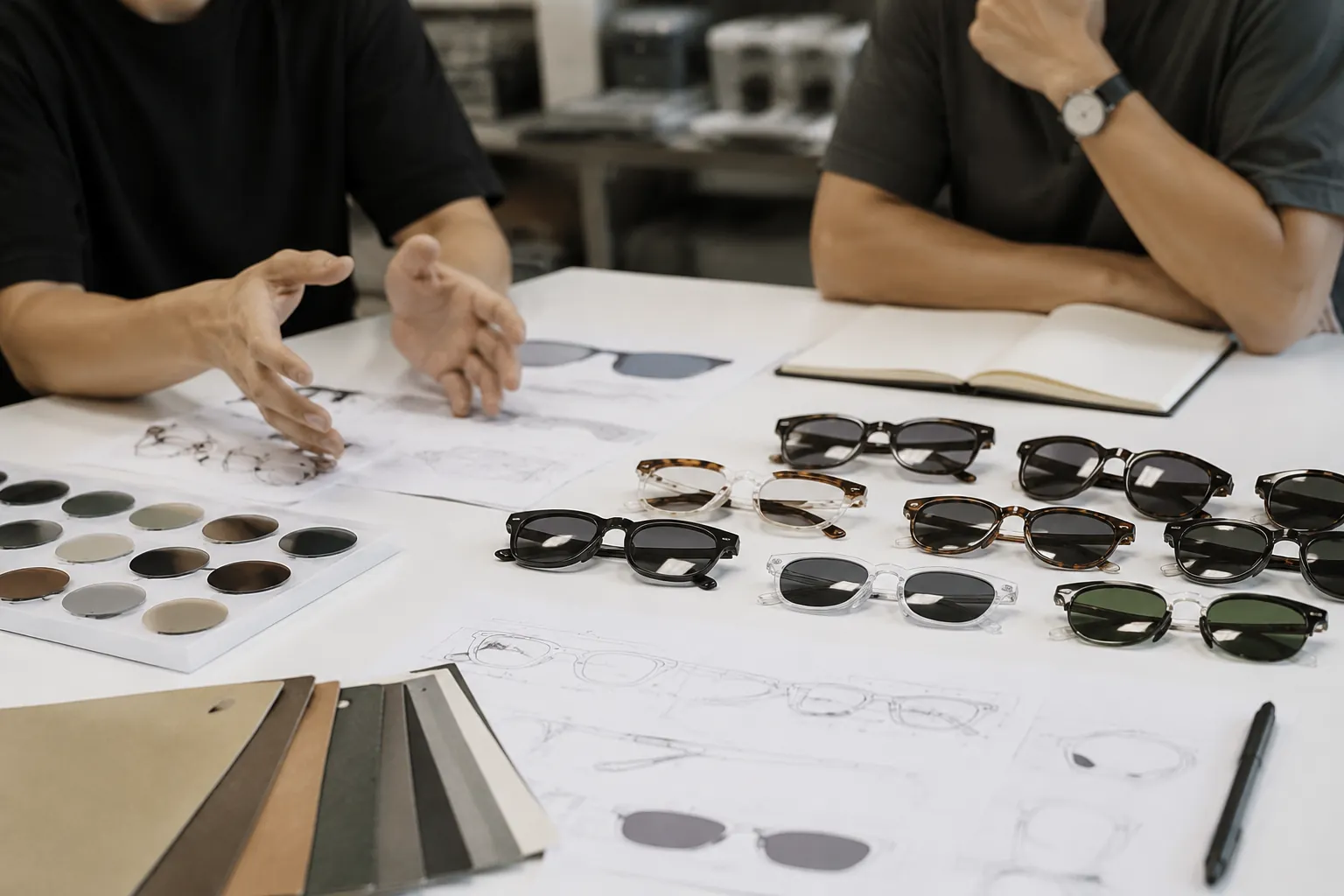
If you source sunglasses for retail, distribution, promotions, or private label, do not buy the most impressive spec sheet. Buy the right claim set for the channel, price point, and compliance risk. UV400 is often the baseline. Impact resistance can be a useful durability feature or a hard requirement, depending on who will wear the product and how it will be sold. This guide shows how to specify both clearly enough for factories to quote accurately, test correctly, and deliver consistent bulk quality without adding features that will not help sell-through.
Start with the sales channel, not the supplier brochure
The fastest way to overspend on lenses is to start with upgrade options instead of the SKU's commercial reality. A fashion rack style, a tourist-shop sunglass, a kids' private-label line, and a cycling accessory item do not need the same lens build. If buyers ask for "premium lenses" without defining the retail story, factories usually quote defensively. Cost goes up.
At brief stage, write down four non-negotiables: buyer type, destination market, hangtag claims, and target landed cost. Then link those to volume. The economics change at 300, 1,000, and 5,000+ pairs. A mirrored polarized PC lens may work at scale, but look expensive on a small order because setup scrap, coating stabilization, and sample approvals are spread across too few units.
Use a simple rule: specify only the claims your channel can explain in one sentence at point of sale. If the product will sit on a style-driven wall at $15 to $25 retail, UV400, clean cosmetics, and stable tint usually matter more than a stack of technical claims. If the line targets cycling, fishing, youth, or outdoor activity, impact resistance becomes more relevant. So does the risk profile.
- Fashion/value channel: prioritize UV400, color consistency, low distortion, frame fit, and low defect rate.
- Mid-market outdoor: add polarization or mirror finish only if shoppers will pay for it.
- Youth/sport channel: define material, thickness, and impact test expectations early because they affect tooling, yield, and QC.
That keeps feature creep under control and leaves less room for the factory to fill gaps with its own assumptions.
What UV400 means in buying terms
UV400 means the lens blocks ultraviolet radiation up to 400 nanometers, covering UVA and UVB. In sourcing, treat that as a tested performance requirement, not a printed claim. A dark lens is not automatically UV protective. Visible light transmission and UV transmission are different variables. A category 3 smoke lens can still fail UV performance if the material formula or coating package is wrong.
For most mainstream sunglasses, UV400 should be baseline, not premium. The more important question is which market standard applies. For the EU, CE EN ISO 12312-1 is a common anchor. For U.S. fashion eyewear, ANSI Z80.3 is a common reference. Australia and New Zealand often require AS/NZS 1067 alignment. If one style will be sold across multiple regions, say that at quote stage. Otherwise the factory may build near-matching variants with different compliance files. That creates confusion later.
Process detail matters. UV performance can come from the base resin, additives, or the coating stack. Injection-molded PC lenses often achieve UV performance through the material itself. Other builds may rely more on absorbers or surface treatments. Ask the supplier which applies. In general, inherent material performance is easier to repeat than a coating carrying a functional load.
If color matters, specify visible light transmission as a range, not a vague shade name. For example, a general fashion smoke might target 12% to 18% VLT, while a medium fashion tint might target 18% to 30%. Without a range, approved samples can drift in bulk production and still be defended as "close."
Impact resistance: separate everyday durability from formal claims
This is where buyers often get misled. Suppliers use the same words for very different outcomes. A lens can survive normal handling, transit vibration, and retail use without meeting a formal impact test tied to sport or safety-adjacent products. For many fashion programs, what buyers actually need is a lens that resists cracking during assembly, survives carton drop stress, and does not chip easily in normal wear.
Formal impact performance depends mainly on three variables: material, lens thickness, and geometry. Polycarbonate usually performs better on impact than CR-39 or decorative acrylic-type builds, but it can cost more, scratch more easily if left unprotected, and demand tighter process control during edging or mounting. TAC is common in polarized consumer sunglasses and works well in many retail programs, but it should not be described casually as equal to a dedicated safety lens. Curvature matters too. A deeply wrapped lens distributes stress differently and may need thicker edges or more careful frame seating.
Discuss thickness in millimeters. Not adjectives. A thin fashion lens built for low cost will not behave like a more robust lens built for youth or sport-oriented product. Even a small increase in center or edge thickness affects material use, weight, and reject rate over a large order. The same applies to high-wrap frames, where assembly stress can expose hidden weakness.
The cost effect is simple: every added claim narrows the process window. Combine impact-oriented material, polarization, mirror coating, tight color match, and a curved frame, and QC becomes more sensitive. Rejects rise when coating adhesion, tint consistency, or lamination quality drifts. Piece price is only part of the story.
A practical lens spec ladder: what to buy and when
| Spec level | Typical lens build | Best fit channel | Common tolerances and notes | Cost and lead-time effect |
|---|---|---|---|---|
| Basic retail | UV400 tinted lens, standard cosmetic finish, no premium coating stack | Fashion retail, promo, tourist, high-volume wholesale | VLT within agreed range, acceptable minor cosmetic limits, standard assembly durability | Lowest cost and fastest path. Best for 50-300 pair tests and large style-driven programs. |
| Mid-tier commercial | UV400 plus polarized or mirror option, tighter tint control, documented batch testing | Chain retail, e-commerce, giftable outdoor, private label mid-market | Tighter color consistency, lower tolerance for haze and coating defects, more sample rounds likely | Moderate cost increase. Usually efficient from 300 pairs upward. |
| High-performance consumer | UV400, impact-oriented material selection such as PC, stricter QC, named standard verification | Youth, sport, activity-based programs, more technical outdoor lines | Material and thickness become critical; frame-lens fit must be controlled closely | Higher material and process cost. Less design flexibility and more testing burden. |
| Over-spec risk zone | Impact-oriented material + polarization + mirror + complex wrap + tight cosmetic standard on low-price SKU | Usually none unless channel supports premium story | High reject risk from coating, lamination, warpage, and assembly stress | Margin erosion, slower approvals, more rework, and often no better sell-through. |
This is where buyers lose money. They buy the third row for a first-price fashion line, then find the retailer does not explain the difference to shoppers. In that case, the extra spend would usually do more if it went into frame finish, hinge stability, packaging, or better color merchandising.
How to write a lens spec a factory can execute
A good lens spec is short, measurable, and testable. It should fit on one controlled page and avoid sales language. The factory needs parameters. Not aspirations. If you leave gaps, the supplier fills them with internal defaults, and those defaults may not match your quality target.
- Name the destination market and standard. Example: CE EN ISO 12312-1 for EU, ANSI Z80.3 for U.S. fashion eyewear, AS/NZS 1067 for Australia/New Zealand.
- Define lens material. State PC, TAC, CR-39, or another agreed material. If polarized, specify construction type.
- Define UV requirement. State UV400 and require test documentation tied to the production lot or approved material batch.
- Set color and VLT. Example: smoke grey, target VLT 15% with acceptable production range of ±3 percentage points.
- Define impact requirement clearly. If needed, state the applicable standard or an internal impact protocol. Do not use words like "strong" or "durable."
- Set cosmetic tolerances. Define what is acceptable for haze, bubbles, flow marks, rainbowing, edge chips, wave distortion, coating pinholes, and scratch visibility at inspection distance.
- Define inspection method. For example, visual check under standardized light, fixed viewing distance, and agreed sample size per lot.
- Approve both pre-production and bulk reference samples. Samples should be approved in the final lens color and finish before bulk starts.
Be specific on cosmetics. A practical method is to prohibit defects in the primary field of view and allow only minor defects outside it under normal inspection conditions. If mirror uniformity matters, say so. If exposed-lens frame designs make edge chips more visible, define the maximum acceptable size. If a gradient tint must fit a fashion story, define top-to-bottom shading against the approved standard sample.
Also keep lens spec separate from frame spec. Frame drawings rarely capture the issues that trigger lens disputes, especially color drift, coating marks, and optical cleanliness.
Cost drivers buyers can control before the quote climbs
Lens pricing is driven by material, process complexity, and volume stability. The main levers are material choice, coating count, polarization, tint-matching difficulty, and test burden. A simple UV400 tinted lens is easier to make and repeat than a mirrored polarized lens with tight color targets. Every added process step increases handling, curing time, reject exposure, and final QC effort.
Volume changes the math. On small orders, setup time and sample approval are spread across very few units, so a complex lens build looks disproportionately expensive. At medium and larger volumes, factories can batch materials and stabilize process flow more efficiently. That is why a quote can look workable at first but feel expensive after the landed-cost calculation is done.
- Material choice: PC usually costs more than basic fashion lens constructions but brings stronger impact behavior.
- Polarization: useful only when the retail channel can sell glare reduction as a feature.
- Mirror and decorative coatings: add visual appeal but also increase coating defect risk and color-control workload.
- Custom tint matching: often requires extra sampling, more lab checks, and tighter incoming QC.
- Wrap geometry: highly curved lenses can reduce yield and complicate assembly if fit is tight.
If you sell across multiple channels, split the assortment. Keep the volume core simple and stable. Put advanced features on a smaller premium subset where the retail price can absorb them. That usually protects margin better than loading every SKU with every feature.
Why process control matters for UV, impact, and repeatability
The more of the production chain a supplier controls internally, the fewer variables sit between approved sample and shipped bulk. That matters because lens performance depends on more than the lens blank. Frame front geometry, groove consistency, finishing quality, and decoration heat exposure can all affect how the finished sunglass performs and looks.
Poor frame tolerances can create lens seating stress, especially on wrapped or tightly fitted styles. That can lead to cracking, distortion, or coating edge damage during assembly. Inconsistent tint batching can create visible lot-to-lot shift on repeat orders. Decoration methods such as spray effects, heat-transfer accents, foil stamping, or logo printing also add handling steps. Each step adds cosmetic risk if process flow is weak.
Strong in-house QC helps because root-cause analysis is faster. If a batch shows color drift, the supplier can check tint records, material lot data, and finishing conditions directly instead of chasing subcontractors. For buyers, that usually means fewer handoffs, quicker corrective action, and more reliable reorders.
Lead time matters too. Late changes to polarization, mirror color, or impact-oriented material often trigger new samples, fresh testing, and revised packaging claims. That can hurt a launch more than choosing a slightly simpler lens spec in the first place.
Buyer checklist before approving the PO
Before you release the purchase order, check the commercial logic against the technical file. This is where preventable cost is either trapped or removed.
- Does the channel truly need only UV400, or does the market require a named standard to support the product claim?
- Is impact resistance a retail selling feature, a compliance necessity, or just a line copied from another brief?
- Have you locked material, tint, VLT range, and any polarization or mirror requirement in writing?
- Are cosmetic tolerances defined for haze, scratches, bubbles, coating defects, and color variation?
- Has the supplier documented the applicable compliance set, such as CE EN ISO 12312-1, ANSI Z80.3, AS/NZS 1067, REACH, FDA registration, ISO 9001, and BSCI where relevant?
- Have you approved a physical sample with final lens color and finish, not just a rendering or photo?
- Does pricing still work at your actual order break?
- Does the total timeline still fit your season once testing, packing, and shipment are added?
The cheapest lens is not the one with the fewest claims. It is the one that meets the right claim set the first time, ships on schedule, and does not create returns.
Use that logic and the decisions get clearer. UV400 becomes the baseline it should be. Impact resistance becomes a deliberate choice, not a vague upgrade. Lens cost starts to match what the market will actually pay for.
Have a custom sunglasses project in mind?
Send us your styles, target market and quantities and we will return a detailed quote with MOQ, lead time and a sample plan.
Get a QuoteWhy source this from Wenzhou with LumiShades
Wenzhou in Zhejiang Province is widely regarded as China’s eyewear manufacturing capital, producing a large share of the world’s sunglasses. That concentration matters to buyers: a deep local supply chain for acetate sheet, hinges, lens blanks, plating and packaging means shorter component lead times, easier color and material matching, and a workforce with decades of eyewear-specific skill. LumiShades has manufactured in this ecosystem since 2009, and our vertical integration — in-house injection molding, acetate cutting, CNC milling, lens tinting, decoration and quality control — means no part of your order is quietly subcontracted to a workshop you cannot audit.
For international buyers, that vertical control translates into accountability. When a single factory owns every step, defects are traced and fixed at source rather than bounced between vendors, and your specifications survive intact from first sample to bulk. We back this with 15+ years of experience, shipments to 60+ countries, more than 5 million pairs produced per year and a 98.5% on-time delivery rate. Our certifications — CE EN ISO 12312-1, FDA registration, ANSI Z80.3, AS/NZS 1067, REACH, ISO 9001 and BSCI audit — mean the compliance documentation your market requires already exists. Explore our manufacturing capabilities and quality control process to see how this works in practice.
Frequently asked questions
Is UV400 enough for most fashion sunglasses orders? Usually yes, if the product is a general fashion, promo, or private-label sunglass and you are not making a sport or safety-oriented claim. For most channels, the buyer should still require the relevant market standard for the destination market, such as CE EN ISO 12312-1, ANSI Z80.3, or AS/NZS 1067, and ask for test documentation tied to the production lot or approved batch. If the retailer needs a stronger claim set for its own compliance file, UV400 by itself is not enough.
Do I need impact resistance on every sunglass SKU? No. Specify impact-oriented material or an impact test only when the end use, age group, or sales channel justifies it, such as youth, sport, or activity-based programs. For basic fashion sunglasses, impact resistance may add cost and reduce process flexibility without improving sell-through. If you do need it, define the standard or internal protocol in writing so the factory can quote and test to the same requirement.
What is the safest way to avoid spec drift between samples and bulk? Lock the lens material, tint, visible light transmission range, UV requirement, cosmetic tolerances, and any impact standard in writing before the PO. Approve a physical pre-production sample in the final lens color and finish, then keep that sample as the master reference for bulk inspection. Photos are not enough for color, coating texture, or optical defects. If the style has mirror or polarization, approve those features on the same physical sample as well.
Which certifications or standards are relevant for export sunglasses? Use only the standards that apply to the destination market and the claims on the product. Common references include CE EN ISO 12312-1 for the EU, ANSI Z80.3 for the U.S. fashion eyewear market, AS/NZS 1067 for Australia/New Zealand, REACH for chemical compliance in the EU, FDA registration where applicable for U.S. manufacturing or importing requirements, ISO 9001 for quality management, and BSCI if your buyer requires social compliance documentation. Do not list standards that do not apply to the order.
How do MOQ and volume affect lens feature cost? Smaller orders carry more setup cost per pair because sample approval, material changeovers, and process scrap are spread over fewer units. As volume increases, factories can batch materials and stabilize process control, which usually improves pricing. The practical takeaway is simple: keep the core SKU straightforward at low volume and reserve more complex lens features for styles with enough demand to absorb the extra process cost.
Ready to start?
Explore our shield & oversized sunglasses or request a quote — our sales team replies within 12 hours.
Request a Quote