
UV400, Polarized, or Tint: Pick the Right Lens
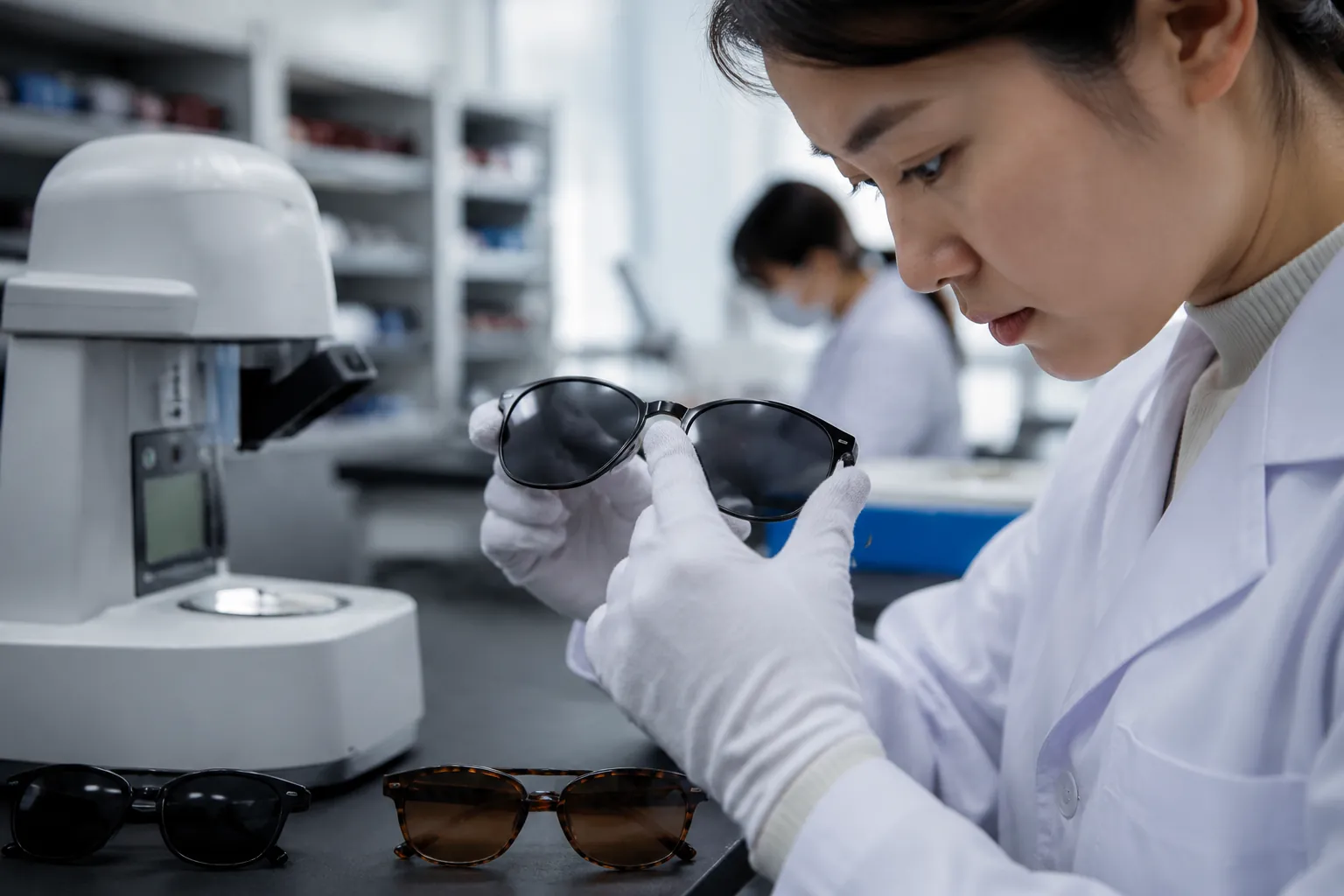
If you buy sunglasses for retail, distribution, or private label, the lens package is where cost, compliance, and complaints show up fast. This guide helps overseas B2B buyers choose between UV400, polarization, and tint based on market need, use case, and target price. It also shows where LumiShades' in-house tinting, decoration, and QC can help keep sample approval and bulk production consistent.
Start with the market, not the lens catalog
Most buying mistakes happen before a spec sheet exists. A fishing channel in Florida, a fashion chain in Spain, and a kids' program in Australia do not need the same lens package. One spec for every market is a bad habit. It creates waste or weak products.
Start with three questions: who wears it, where they wear it, and what they will pay. A commuter in bright city sun wants glare control. A beach customer wants comfort under strong UV and reflected light. A fashion buyer may care more about color and margin than maximum optical performance. These are different jobs. Treat them that way.
UV400, polarization, and tint are not the same thing. A polarized lens helps with reflected glare. UV400 means the lens is designed to block UVA and UVB up to 400 nm. Tint changes visible light transmission and the look of the lens. Keep those specs separate in your mind and in your PO.
LumiShades manufactures in Wenzhou and keeps injection molding, acetate cutting, CNC milling, lens tinting, decoration, and QC in-house. That matters because lens choice affects frame style, tooling, and assembly timing. Fewer handoffs. Fewer surprises. You also have one reference point for sample approval and bulk production.
MOQ starts at 50 pairs per design. Pricing usually improves at 300, 1000, and 5000+ pairs. Samples are typically ready in 7–10 days. Bulk lead time is usually 25–35 days, depending on approval speed, material availability, and whether the design needs new tooling. If you are testing a market, do not start with premium optics you cannot sell through. Start with the level that fits the channel.
What UV400 covers, and what it does not
UV400 is the baseline most adult sunglasses should meet. It means the lens is designed to block ultraviolet radiation up to 400 nanometers, covering UVA and UVB. That is the safety function. It is not the same as darkness. A very dark lens without UV protection is a poor product. A light lens with UV400 can still be correct.
For compliance, buyers should request test support aligned with the destination market. Common references include CE EN ISO 12312-1 for the EU, ANSI Z80.3 for the US, and AS/NZS 1067 for Australia and New Zealand. Buyers may also need support for REACH, FDA registration, ISO 9001, and BSCI, depending on the market and program requirements. Tie the paperwork to the exact lens and frame build you are buying. One report does not cover every color, coating, or construction change.
UV claims and cosmetic tint claims are not the same. Tint changes visible light transmission. UV protection is a separate requirement. If the buyer wants a fashion lens only, say that clearly in the spec. If the buyer wants real sun protection, make UV400 non-negotiable.
| Lens spec | What it does | Best for | Common mistake |
|---|---|---|---|
| UV400 only | Designed to block UVA/UVB up to 400 nm | General retail, kids, everyday wear | Assuming it reduces glare |
| Polarized + UV400 | Blocks UV and reduces reflected glare | Driving, fishing, boating, beach | Using it for every fashion channel |
| Fashion tint + UV400 | Color style with sun protection | Apparel-led retail, promo, seasonal drops | Picking a tint too dark for indoor-outdoor use |
Polarized lens: buy it for glare, not for hype
Polarization helps when the problem is reflected light. Water, asphalt, snow, glass, and hood reflections are the usual cases. If the customer drives, fishes, boats, or spends time around bright reflective surfaces, polarized lenses can help. If the customer is buying a low-cost fashion piece for occasional wear, polarization may not improve sell-through enough to justify the extra cost.
Polarized lenses can also make LCD screens and some dashboards look darker or harder to read. That is not a defect. It is a use-case issue. If your market includes delivery drivers, commuters, or outdoor workers, request samples and check them against real screens before you place a bulk order.
In sourcing terms, polarization adds cost and needs tighter visual consistency. The lens still has to meet the optical and UV requirements of the target standard. For a 50-pair MOQ test order, keep the color count low. One polarized gray and one non-polarized fashion tint is usually enough to read demand in most markets. Six tints do not teach you more. They just create dead stock.
Simple rule: buy polarization when the product promise is "better vision in glare." Buy tint when the promise is "style and brightness control." Buy both only when the channel can support both on price and story.
Tint choices: dark is not always better
Tint controls how bright the world looks through the lens. That affects comfort, color perception, and how the frame reads on the face. Gray is the safest general-purpose tint because it keeps color perception more neutral. Brown or amber can improve contrast and may feel better in hazy or variable light. Green sits between gray and brown in visual feel. Mirror coatings are separate. They reflect light outward, but they do not replace tint or UV protection.
There is also a production angle. At LumiShades, lens tinting is done in-house, which helps when a buyer needs a specific visible light transmission target or a brand color that must stay inside a narrow range. That matters because two tints with the same name can still look different on the shelf. If the color shifts between sample and bulk, complaints follow. Or rework does.
For mixed retail programs, use this simple logic:
- Gray tint for general sunwear and broad-market retail.
- Brown/amber tint for outdoor activity, contrast, and warmer styling.
- Green tint for classic fashion plus balanced visual comfort.
- Fashion light tint for style-led drops where sun intensity is not the only concern.
Do not spec an ultra-dark tint for a market that wants all-day wear. Customers complain they cannot see indoors or in shade. Too light, and the product may feel decorative instead of functional. The right answer depends on the market. Not the mood board.
Match the lens package to the customer segment
The same lens package does different work in different channels. A distributor selling into convenience and gift channels needs a simple, low-return SKU. A retail chain with outdoor and travel sections can support a higher spec if the story is clear. Brand owners need the package to fit the price ladder, not just the technical ideal.
| Customer segment | Recommended package | Why it works | Watch-out |
|---|---|---|---|
| Fashion retail | UV400 + fashion tint | Good margin, simple story, lower cost | Do not over-spec polarization if shoppers buy on look |
| Outdoor lifestyle | Polarized + UV400 | Clear functional benefit for glare | Color consistency must be tight |
| Travel / commuter | Gray or brown tint + UV400, optional polarization | Works for city sun and variable conditions | Screen visibility matters |
| Kids / family | UV400 only or UV400 + light tint | Safety first, simpler price point | Keep lens darkness moderate |
If your price target sits near the lower volume tiers, do not force a premium feature stack into a market that will not support it. At 300 pairs, you may still be testing demand. At 1000 or 5000+ pairs, pricing usually improves and you can justify more variants. The package has to earn its shelf space.
A simple spec ladder that avoids overbuying
A good lens program usually has three rungs. It is the fastest way to build a line without bloating SKUs.
- Entry: UV400 + single tint. Use this for price-sensitive retail and test orders. Keep one frame shape, one lens color, one finish.
- Core: UV400 + better tint control, maybe mirror. Use this for the main retail offer. This is where most programs should sit.
- Premium: Polarized + UV400 + tighter cosmetic QC. Use this only where the buyer can sell the glare-control story.
For a new program, ask the factory to quote all three rungs at once. Because frame production, lens tinting, decoration, and QC are under one roof, LumiShades can help compare the real cost difference between options instead of rough estimates. In many cases, the premium step is not only the lens cost. It can also mean stricter visual inspection, higher rejection risk, and sometimes packaging changes if the SKU positioning changes.
Watch package creep. A buyer says yes to polarization, then asks for mirror, then gradient, then anti-scratch, then logo plate, then custom case. The unit price moves quickly. The SKU gets harder to manage. If the product is meant for a mid-range retail slot, stop adding features once the value is clear.
What to ask for in a sample and bulk order
Do not approve a lens package from photos alone. Ask for a sample set that shows the actual result in hand.
- One pair in the target frame color with the target tint.
- One polarized sample if polarization is being considered.
- One reference sample signed off for color and darkness.
- QC photos or notes showing lens color consistency, surface quality, and any logo decoration placement.
For sample timing, 7–10 days is realistic when the spec is clear and the order does not require new tooling. For bulk, 25–35 days is common, but only if approvals are fast. Delays usually come from changes after sample approval: a different tint, a shifted logo position, or a second round of color matching.
If you want laser engraving or pad printing on the temple, tell the supplier before sample production. Decoration can affect how the product looks on shelf and how buyers read the lens shade. It is not just cosmetic. It affects merchandising and presentation.
Decision checklist before you sign off the spec
Use this checklist before PO release. It keeps the lens package aligned with the market and avoids paying for features you cannot sell.
- Is the market buying on function, fashion, or both?
- Will the customer wear the product around water, roads, snow, or glass?
- Do you need polarization, or just UV400?
- Is the tint dark enough for comfort but not so dark it hurts all-day wear?
- Does the destination require CE EN ISO 12312-1, ANSI Z80.3, or AS/NZS 1067 support?
- Are color, glare performance, and decoration all signed off on the same master sample?
- Does your target price justify a premium lens package?
Short version: buy glare control for glare problems, buy tint for style and brightness control, and buy UV400 because sun protection should not be optional.
If you are sourcing through LumiShades, start with one frame, two lens options, and one target market. Get the sample set right, confirm the compliance path for that destination, and only then expand the range. That is how you avoid waste. It is also how you keep a 50-pair test from turning into a messy inventory problem.
Have a custom sunglasses project in mind?
Send us your styles, target market and quantities and we will return a detailed quote with MOQ, lead time and a sample plan.
Get a QuoteWhy source this from Wenzhou with LumiShades
Wenzhou in Zhejiang Province is widely regarded as China’s eyewear manufacturing capital, producing a large share of the world’s sunglasses. That concentration matters to buyers: a deep local supply chain for acetate sheet, hinges, lens blanks, plating and packaging means shorter component lead times, easier color and material matching, and a workforce with decades of eyewear-specific skill. LumiShades has manufactured in this ecosystem since 2009, and our vertical integration — in-house injection molding, acetate cutting, CNC milling, lens tinting, decoration and quality control — means no part of your order is quietly subcontracted to a workshop you cannot audit.
For international buyers, that vertical control translates into accountability. When a single factory owns every step, defects are traced and fixed at source rather than bounced between vendors, and your specifications survive intact from first sample to bulk. We back this with 15+ years of experience, shipments to 60+ countries, more than 5 million pairs produced per year and a 98.5% on-time delivery rate. Our certifications — CE EN ISO 12312-1, FDA registration, ANSI Z80.3, AS/NZS 1067, REACH, ISO 9001 and BSCI audit — mean the compliance documentation your market requires already exists. Explore our manufacturing capabilities and quality control process to see how this works in practice.
Frequently asked questions
Is UV400 enough for a retail sunglasses program? Often yes, if your program is basic sun protection or fashion-led retail. UV400 addresses ultraviolet protection, but it does not reduce reflected glare. If buyers expect driving, fishing, boating, or beach performance, add polarization only when that use case is real and worth the extra cost.
Should I choose polarized lenses for every market? No. Polarization is most useful when reflected glare is part of the problem. Use it for driving, fishing, boating, snow, or water-facing retail. For fashion-led channels, UV400 plus a good tint is often the better balance of cost, style, and sell-through.
Which tint is the safest neutral option for broad retail? Gray is usually the safest neutral choice because it keeps color perception more natural. If you want more contrast or a warmer appearance, brown or amber is a good second option. Always approve tint on a physical sample, not just a color name.
What compliance documents should I ask for? Ask for the standards that match the destination market and the exact product build. Common references are CE EN ISO 12312-1, ANSI Z80.3, AS/NZS 1067, REACH, FDA registration, ISO 9001, and BSCI. Do not rely on a report from a different lens color, coating, or frame version.
What order size makes pricing more efficient? In this program, MOQ starts at 50 pairs per design. Pricing usually improves at 300, 1000, and 5000+ pairs. If you are testing demand, keep the SKU count low. If you are scaling, quote the same design at several volumes so you can see the real price break between entry, core, and premium specs.
Ready to start?
Explore our square sunglasses or request a quote — our sales team replies within 12 hours.
Request a Quote