
Polycarbonate vs Nylon vs TAC Lenses by Channel
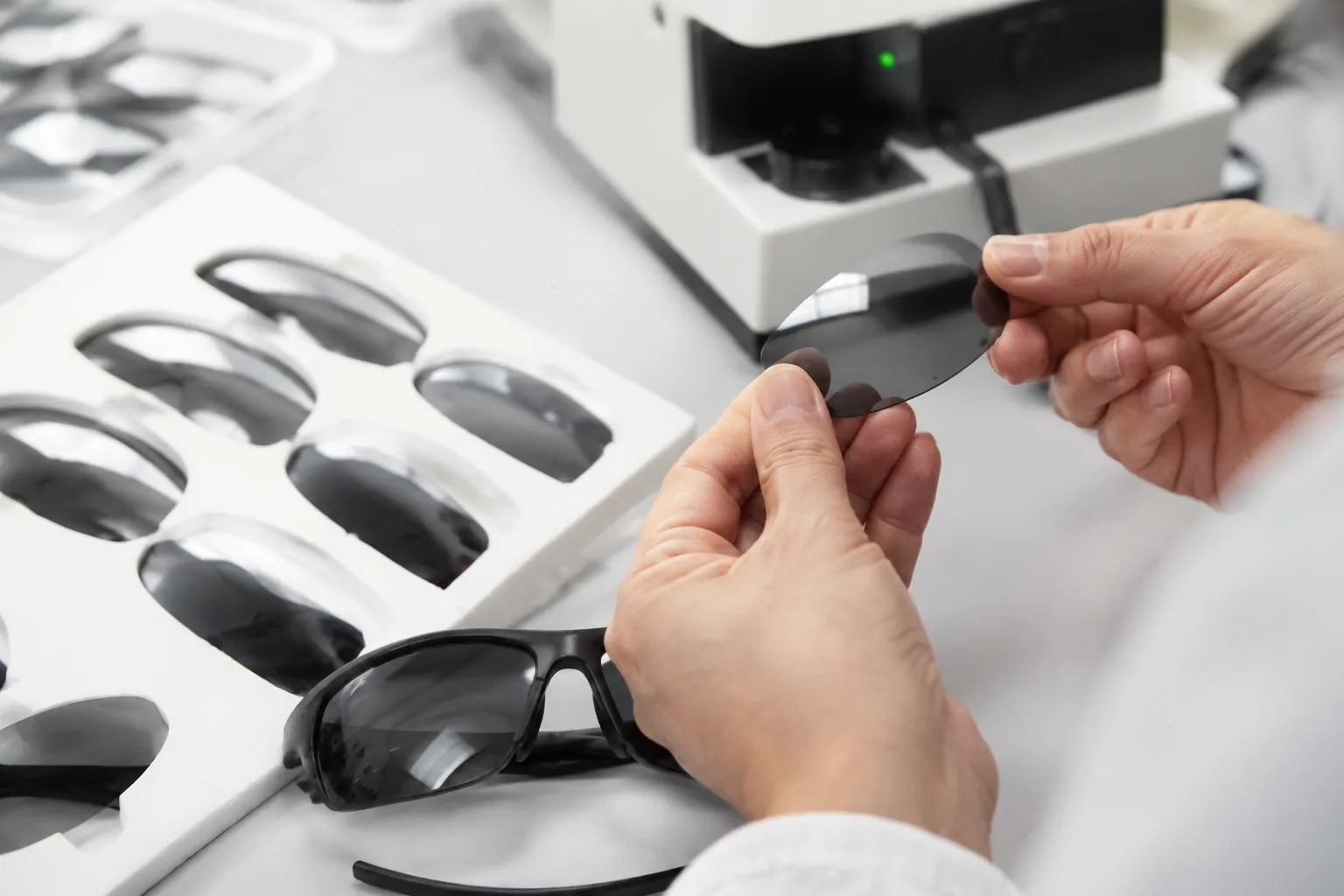
If you buy sunglasses for a chain, distributor, brand, or private-label program, lens material is a commercial choice. It affects landed cost, reject rate, impact resistance, optical performance, curve fit, coating stability, and returns after launch. This guide compares polycarbonate, nylon, and TAC lenses by sales channel and sourcing logic, with practical trade-offs on MOQ, process control, tolerances, and lead times. It is written for buyers who need a lens spec that fits the channel, not just the lowest quote.
Start with the sales channel, then lock the lens spec
Most sourcing mistakes happen because buyers ask, "Which lens is best?" The better question is, "Which lens fails least in my channel?" Those are not the same.
A convenience-store sunglass, a department-store private label, a boutique fashion drop, and a sport-chain program all tolerate different weaknesses.
Start with three filters:
- Use intensity: impulse retail, travel retail, and mass retail need a lens that can survive handling, transport, and shelf abuse.
- Visual expectation: fashion and premium channels are less tolerant of haze, edge distortion, uneven gradients, and color drift between runs.
- Return tolerance: a program that can absorb a small complaint rate has more room than one where even a modest return level hurts margin.
Unit price is only part of the picture. A cheap lens can become the expensive option after rework, rejects, and store complaints. The real test is whether the product stays inside your defect and return thresholds once it reaches the market.
Frame construction, base curve, target retail price, and compliance market all matter. A flat 4-base fashion frame and a 6-base wrap frame should not be forced into the same lens family just to simplify purchasing. A factory with in-house tinting, CNC milling, decoration, and QC can build the spec around the channel instead of pushing one stock option across every SKU.
Simple rule: mass retail wants stable supply and low breakage risk. Fashion wants appearance and color consistency. Sport wants curve accuracy, impact tolerance, and secure fit.
Polycarbonate: the default choice for high-volume retail
Polycarbonate is the commercial default for a reason. It is lightweight, impact resistant, widely accepted by retail QA teams, and usually the safest all-purpose lens choice for programs that span multiple stores or countries.
If you need one lens family that performs reliably across broad retail without obvious field failures, polycarbonate is usually the starting point.
It fits supermarkets, drugstores, department stores, travel retail, tourist locations, and broad e-commerce assortments. These channels care about landed cost, transit durability, and a low visible-defect rate. They do not usually pay extra for premium optics. They pay for reliability.
Its main limit is optical refinement. Depending on lens design, edge polish, tint control, and coating quality, polycarbonate may show more chromatic aberration or feel less premium than higher-end materials. On a lower-ticket pair, that is often fine. On a premium fashion wall, it can become a complaint trigger. Customers notice. So do store teams.
Process discipline matters. Polycarbonate responds best when tint time, bath temperature, and coating cure are controlled consistently. Poor tinting can create cloudiness, uneven density, or left-right mismatch. Typical QC checks should include lens color comparison between pairs, visible scratch inspection under bright light, and fit checks after insertion. Cutting tolerance should be defined in the drawing and agreed before production. Do not leave it vague.
Price-wise, polycarbonate is often positioned between TAC and nylon, but the exact relationship depends on polarization, mirror coating, hard coating, design complexity, and order volume. It is a practical choice when a buyer wants one durable spec across many SKUs without making supply harder than it needs to be.
Best fit: general retail, entry fashion, travel retail, chain store programs, and mixed-channel private label where impact complaints matter more than premium optics.
Nylon: better for wrap frames and sport programs
Nylon is usually the better choice when the frame is curved, technical-looking, or sold on performance cues. It handles wrap geometry well, often looks slimmer in profile, and can give a cleaner result on stronger-curve sunglass designs.
That is why nylon shows up more often in sport, outdoor, golf, fishing, cycling-inspired fashion, and premium active retail. Buyers use it when the product needs a more technical look and when the lens must follow a stronger curve without appearing thick or unstable at the edge.
The caution is process complexity. Nylon is less forgiving than polycarbonate on heating, tint consistency, and cut accuracy. If cutting tolerance drifts, the lens edge can sit unevenly. On wrap shapes, that becomes a repeat complaint fast.
In practice, nylon jobs need tighter CNC control and cleaner edge finishing than simpler low-cost builds. Buyers should require the factory to confirm the production tolerance it can hold on the actual frame and lens combination. That matters most on curved designs. Do not assume it will fit because a sample did.
Lead times can extend when the project includes mirrored coatings, flash coatings, polarized versions, or unusual lens shapes. In-house CNC milling helps. Outsourced cutting on curved lenses may lower unit cost a little, but it can raise rework if fit consistency is weak. Cheap can turn into slow.
Commercially, nylon makes sense when the channel can justify a premium in exchange for better fit perception and fewer shape-related complaints. If your retail chain sells on technical styling and active use, nylon can reduce returns tied to curve and fit. If you are selling into value mass retail, the added cost often is not worth it.
Best fit: sport, outdoor, wrap fashion, premium private label, and programs where curve accuracy and technical appearance matter more than the lowest unit cost.
TAC: low-cost option for promo and value fashion
TAC lenses are common in low- to mid-priced sunglasses because they are lightweight, economical, and can deliver acceptable clarity when lamination quality and edge finishing are controlled properly. They are especially common in promotional programs, seasonal fashion drops, discount retail, and entry-level polarized sunglasses.
TAC is often used in laminated constructions, including polarized builds. That gives it commercial value: a buyer can offer a polarized story at a lower ticket price than many higher-cost alternatives. But TAC is not forgiving. If lamination pressure, edge sealing, or cutting quality is weak, defects may not show up during final inspection. They can appear later as edge lifting, visible layers, or visual complaints after handling in the market.
That delayed failure pattern makes TAC risky in the wrong channel. It can pass sample approval and then create after-sale issues. For that reason, TAC works best where price is the first buying criterion and where the retailer is not promising premium optical performance.
From a sourcing perspective, TAC usually makes sense when the order is large enough for scale pricing to matter. Its value improves as setup costs are spread across more pairs, but the margin advantage is real only if rejects stay low. A low-cost lens with a high defect rate is not a low-cost lens.
Best fit: promotion, value fashion, discount chains, seasonal programs, and private-label ranges where price pressure is stronger than lens pedigree.
Head-to-head: cost, tolerance, lead time, and return risk
The short version is simple: polycarbonate lowers impact-risk exposure, nylon improves fit and visual performance on curved frames, and TAC helps hit the lowest retail target. The wrong choice often passes sample review and then fails later in stores.
| Lens material | Typical unit-cost position | Best geometry/channel | Key process requirement | Main field risk | Typical lead-time effect |
|---|---|---|---|---|---|
| Polycarbonate | Mid | Mass retail, travel retail, general e-commerce, entry fashion | Stable tinting, coating cure, and agreed cutting tolerance | Less premium optical feel on higher-end programs | Usually the most stable for volume planning |
| Nylon | Higher | Sport, outdoor, wrap fashion, premium private label | Tighter CNC cutting, stronger curve control, cleaner edge finish | Fit inconsistency if cut or curve control is weak | Can add time on curved or coated custom jobs |
| TAC | Lowest | Promo, value fashion, seasonal and discount retail | Lamination stability, edge quality, careful visual QC | Delamination, visual complaints, edge-layer issues | Stable on basic builds, but risk rises if QC is weak |
Do not choose only on ex-factory price. Saving a small amount per pair means little if it creates returns, rework, or extra warehouse inspection. For branded retail, watch color consistency across replenishment runs. If a smoke lens in one shipment looks different from the "same" smoke lens later, store staff may treat it as a defect even if the paperwork is correct.
What production control changes the result
Lens material is only half the decision. Manufacturing control matters just as much. A factory with in-house control over key steps can reduce handoff risk between suppliers and make it easier to hold the same lens appearance across repeat orders.
- Injection molding: helps maintain frame dimensions at scale. That matters because unstable frames can create false lens-fit complaints during insertion and wear.
- Acetate cutting: important for premium frames where the lens groove and visible edge line need cleaner alignment.
- CNC milling: especially important for nylon and wrap shapes, where lens geometry cannot be left to loose outsourced cutting.
- Lens tinting: controls density, gradient transition, and left-right color matching. This is often where budget programs either look acceptable or fail visually.
- Decoration: includes logo printing, hot stamping, laser marking, and packaging branding. Decoration can add lead time, especially with multiple placements or metallic finishes.
- QC: catches scratches, coating flaws, edge defects, color mismatch, and assembly fit before packing.
This kind of control matters when one customer needs several lens strategies at once: polycarbonate for chain retail, nylon for a sport capsule, and TAC for a promotional bundle. That split is common. It is often smarter than forcing one material onto every SKU.
Lead times also move with the scope of the job. Straight repeat orders are usually faster than new development. New colorways, new tooling, or custom decoration usually take longer. Bulk production follows sample approval and deposit, but the exact timeline depends on lens material, coating, packaging, and order complexity. Get the lead time in writing for the exact spec you approved.
MOQ should be confirmed by design, colorway, and lens type. Do not rely on a general catalog minimum. The real question is where setup cost, yield loss, and packaging efficiency make sense at the scale you actually plan to buy.
Compliance, QA, and the return-risk checks buyers should not skip
For export programs, compliance is not just paperwork at the end of production. It affects what can be shipped, how easily retailers accept the product, and how exposed the buyer is if customs, retail QA, or marketplace teams request documents.
For sunglasses, work only with suppliers whose documentation matches the destination market. Commonly requested standards and registrations in this category include CE EN ISO 12312-1, ANSI Z80.3, AS/NZS 1067, REACH, FDA registration, ISO 9001, and BSCI. The exact requirement depends on where the product is sold and how the channel defines acceptable proof of compliance.
Material choice affects QA workload too. Polycarbonate usually gives the simplest risk profile for broad commercial programs because buyers and retail QA teams know it well. Nylon needs stricter dimensional control, especially on curved frames. TAC needs closer attention to lamination quality, edge condition, and any performance claims tied to polarization or coatings.
Before placing a PO, require a practical approval checklist:
- Confirm the final lens material in writing, not just "sun lens" on the artwork sheet.
- Lock lens color, gradient position, and acceptable shade range against an approved physical sample.
- Define cosmetic standards for scratches, pits, coating marks, and edge finish.
- Check frame-lens fit on actual assembled samples, especially on wrap or oversized styles.
- Review compliance documents for the destination market before mass production.
- Approve a pre-production sample on new tools, new colorways, or customized orders.
Buyer rule: the cheapest lens is the one that clears QA easily and stays out of the returns pile. If design signs off a sample without store, QA, or sourcing review, that is where expensive surprises begin.
A practical sourcing conclusion: when to choose each lens
If you need one lens family across a broad retail program, choose polycarbonate first and test from there. It gives a workable balance of cost, durability, and channel flexibility. If the frame is curved, technical, or sold on active-use credibility, move to nylon and budget for tighter cutting control. If the program is promotion-led, seasonal, or highly price-sensitive, TAC can work well as long as lamination and visual QC are managed carefully.
The buying sequence is straightforward: define the channel, estimate your actual tolerance for returns, match frame geometry to lens material, then decide whether the cost difference is worth the risk difference. That is better sourcing than arguing about material names in isolation.
Think beyond MOQ for long-term supply. Sample orders are useful for validation, but serious commercial decisions should be modeled at the scale you plan to replenish. That is where unit pricing, packaging efficiency, and reject-rate economics show up.
Final summary: polycarbonate is the safe default, nylon is the technical upgrade, and TAC is the price weapon. Pick the one your channel can sell repeatedly without extra QA work, extra store complaints, or extra margin leakage after launch.
Have a custom sunglasses project in mind?
Send us your styles, target market and quantities and we will return a detailed quote with MOQ, lead time and a sample plan.
Get a QuoteWhy source this from Wenzhou with LumiShades
Wenzhou in Zhejiang Province is widely regarded as China’s eyewear manufacturing capital, producing a large share of the world’s sunglasses. That concentration matters to buyers: a deep local supply chain for acetate sheet, hinges, lens blanks, plating and packaging means shorter component lead times, easier color and material matching, and a workforce with decades of eyewear-specific skill. LumiShades has manufactured in this ecosystem since 2009, and our vertical integration — in-house injection molding, acetate cutting, CNC milling, lens tinting, decoration and quality control — means no part of your order is quietly subcontracted to a workshop you cannot audit.
For international buyers, that vertical control translates into accountability. When a single factory owns every step, defects are traced and fixed at source rather than bounced between vendors, and your specifications survive intact from first sample to bulk. We back this with 15+ years of experience, shipments to 60+ countries, more than 5 million pairs produced per year and a 98.5% on-time delivery rate. Our certifications — CE EN ISO 12312-1, FDA registration, ANSI Z80.3, AS/NZS 1067, REACH, ISO 9001 and BSCI audit — mean the compliance documentation your market requires already exists. Explore our manufacturing capabilities and quality control process to see how this works in practice.
Frequently asked questions
Which lens material should I choose for general retail sunglasses? For general retail, polycarbonate is usually the safest starting point. It balances impact resistance, weight, and supply stability, which suits supermarkets, department stores, travel retail, and broad e-commerce. If the frame is highly curved or the channel is performance-led, review nylon instead. If the program is mainly price-driven, TAC may work, but only if lamination and QC standards are clear.
Is nylon worth the extra cost? Nylon is worth considering when the frame is wrap-style, strongly curved, or sold in sport and outdoor channels. It usually fits those shapes better and can look cleaner in profile. It is not the right choice for every program, because it needs tighter cutting and process control. Ask the factory to confirm whether it can hold the needed fit on the actual frame design before you commit.
When does TAC make the most sense? TAC makes the most sense in promotional, value-fashion, discount, and entry-level polarized programs where price is the main buying criterion. It can be a practical cost-saving option, but buyers should watch lamination quality, edge sealing, and visual QC closely. If the channel expects premium optics or long service life, TAC is usually the riskier choice.
What should I require during lens sample approval? Require the exact lens material, the approved physical color standard, the gradient position if applicable, the cosmetic standard for scratches and coating marks, assembled frame-fit confirmation, and the compliance documents for the destination market. Approve against a physical sample whenever possible. Do not approve lens color from photos alone; screen settings and lighting can hide differences.
How do lead times change by lens type and customization? Lead time depends on the exact specification, but custom sunglass programs usually take longer when they include new tooling, custom tinting, polarization, mirrored coatings, or complex decoration. Ask the supplier to quote samples and bulk separately for your exact material and lens finish. Also confirm whether the order needs special CNC work, because curved nylon lenses and custom lens shapes can require more processing time than standard low-curve builds.
Which certifications matter for export sunglasses? Commonly requested standards and registrations include CE EN ISO 12312-1, ANSI Z80.3, AS/NZS 1067, REACH, FDA registration, ISO 9001, and BSCI. The exact set depends on your destination market and sales channel. Ask the supplier for current documents that match the item you are buying, and verify that the product specification on the documents matches your approved sample.
Ready to start?
Explore our sport wrap sunglasses or request a quote — our sales team replies within 12 hours.
Request a Quote