
Sunglass Lens VLT Tolerance: Shade Variation Limits
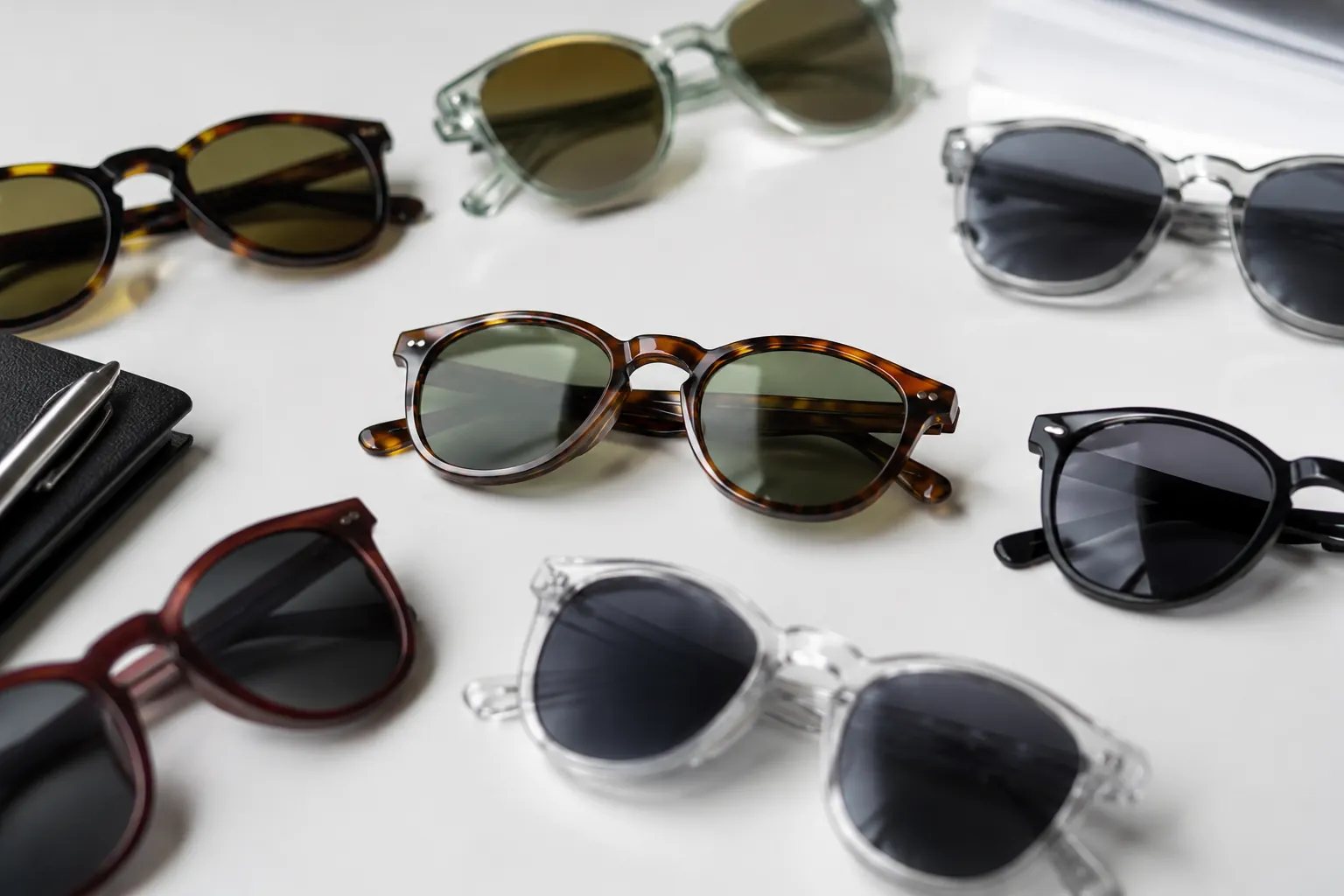
This guide is for brand owners, importers, distributors, and retail buyers who need sunglasses to match approved samples without repeat shade disputes. The key variable is visible light transmission, or VLT: the percentage of visible light a lens lets through. If your tolerance is too loose, bulk production can look uneven on shelf. If it is too tight for the process, you create avoidable rejects and delays. The goal is a specification that is measurable, commercially realistic, and simple for the factory and QC team to follow.
Start with the real issue: color match is not the same as transmission match
Buyers often ask for a lens to match the sample exactly. Reasonable request. In practice, it is incomplete. Two lenses can look close in color and still differ in visible light transmission. The reverse also happens: a lens can fall within the agreed VLT range while the tint tone shifts warmer, cooler, greener, or smokier than the approved sample.
That is why shade disputes show up even after a factory says the lenses are "the same shade." They are not always talking about the same thing.
For purchasing, you need two separate controls:
- VLT tolerance: the measurable transmission range allowed around the approved target.
- Visual shade standard: the approved physical sample used for appearance comparison under defined lighting.
If you only specify color by eye, you invite argument. If you only specify VLT, you may get lenses that test correctly but look wrong to the buyer or end consumer. Good buying uses both.
A practical spec line is: 14% VLT ±2% against signed production sample, compared under controlled daylight-equivalent lighting. That is clearer than "dark gray lens, same as sample."
Variation can come from dye concentration, tint time, bath temperature, rinse consistency, lens thickness, base curve, coating build, and raw-material batch differences. These are normal process variables. The job is not to remove every difference. It is to define what difference is acceptable before bulk production starts.
Simple flat-tint lenses are usually easier to control than gradient, polarized, mirrored, or multi-layer fashion lenses. More layers mean more chances for drift. So the spec needs to be tighter, not looser, on how the lens is judged.
Set a tolerance that fits the product, not just the sample
Not every sunglass program needs the same tolerance. A low-cost promotional order and a premium fashion launch should not be managed the same way. Use product type, price point, finish complexity, and sales channel to set the spec.
As a working commercial framework, many buyers use three bands:
- Loose commercial control: ±3% VLT, suitable for simple promo programs or entry-price products where perfect carton-to-carton matching is less critical.
- Standard branded control: ±2% VLT, a common practical target for repeat orders and core retail programs.
- High-precision control: ±1% to ±1.5% VLT, generally for premium fashion, coordinated sets, or tightly merchandised assortments.
| Program type | Typical target VLT | Suggested tolerance | Typical commercial logic | Buyer risk if too loose |
|---|---|---|---|---|
| Promo or entry-price fashion | 12% to 20% | ±3% | Lower unit value and less need for exact lot-to-lot matching | Visible rack variation and repeat complaints |
| Mid-market branded sunglasses | 10% to 18% | ±2% | Balanced control for retail reorders | Mismatch between approved sample and bulk, especially across colorways |
| Premium fashion or strict set programs | 8% to 15% | ±1% to ±1.5% | Higher sensitivity to appearance and merchandising consistency | Higher rejection risk if the process is not stable |
| Gradient lenses | Define top and bottom separately | Point-by-point spec | Appearance depends on distribution, not just average darkness | Top too dark or bottom too pale even when the average VLT looks acceptable |
These are commercial guidance ranges, not legal limits. Legal compliance is separate and depends on the target market and product classification. The finished lens still needs to meet the relevant standard for the destination market, such as CE EN ISO 12312-1, ANSI Z80.3, or AS/NZS 1067.
Bluntly: if you demand very tight tolerance on a low-cost lens without a stable process, expect delays or rework. If you allow a broad range on a fashion collection sold side by side, expect visible inconsistency. The right tolerance sits between those two mistakes.
Know what drives shade variation in production
Most bulk sunglass lens variation does not happen randomly. It usually comes from a few predictable process points. Buyers who understand them write better specs and ask better questions.
- Material response: Polycarbonate, TAC polarized constructions, nylon, and CR-39 style lenses do not absorb tint in the same way. TAC polarized lenses often read darker because the polarizing film and laminated layers affect both measured and perceived density. Polycarbonate can tint efficiently but may show more lot-to-lot variation if the base resin changes.
- Tint bath control: Time, temperature, and dye concentration must stay stable. Even small drift can change the result enough to matter, especially on darker lenses.
- Lens thickness and curve: Thicker lenses often read darker because the light path is longer. Base curve and wrap style can also change apparent shade even when the dye recipe stays the same.
- Gradient positioning: Top-to-bottom consistency depends on fixture placement, dip depth, and withdrawal speed. A small setup shift can move the transition band.
- Mirror or flash coating: These coatings may not change core VLT much, but they do change perceived shade, especially under retail lighting or direct sunlight.
- Printing, laser engraving, and logo decoration: Decoration usually does not materially change measured VLT, but heavy or high-contrast decoration can alter how dark the lens looks to the eye.
- Rework and mixed lots: If a factory completes a short shipment from a later tint batch, shade differences can appear at retail. Even when each batch is within spec, mixed presentation can look inconsistent on shelf.
The real question is not only what is the target? It is also which step creates the biggest variation? That tells you where to tighten control.
In-house tinting and QC can improve response time because the production team can compare sample and bulk on the same floor. That does not remove variation. It just cuts avoidable drift, especially for mirrored finishes, logo printing, or multiple lens colors in one program.
Write the spec sheet so the factory can actually follow it
The spec must be measurable. Match approved sample is not enough on its own. A usable lens transmission spec should state the target, the allowed tolerance, the test method reference, and the visual approval rule. If the factory can interpret the line in more than one way, it eventually will.
A practical purchase-order or tech-pack entry can include:
- Lens target VLT: for example, 14%.
- Allowed tolerance: for example, ±2% from approved production sample.
- Applicable standard: CE EN ISO 12312-1, ANSI Z80.3, or AS/NZS 1067 depending on market.
- Visual standard: compare against signed approval sample under specified lighting.
- Sampling rule: test a defined number of lenses per batch and hold shipment if any batch is outside tolerance.
- Gradient rule: define top and bottom transmission points if using gradient lenses.
- Decoration rule: state whether logos are printed, laser-etched, hot-stamped, or pad-printed, and whether decoration may overlap the optical zone.
Also state whether the approved sample is a sales sample, a lab dip sample, or a pre-production sample. Buyers get into trouble when bulk is judged against an early prototype made by a different process than production. If the prototype used one-off lab tinting and the bulk uses a production bath, exact visual matching is often unrealistic.
Best practice is to approve a production-representative sample after the process is fixed. For custom sunglass programs, sample lead time varies by product complexity and factory workflow, so the point is not a universal number. The point is to approve the right sample before bulk starts.
If your brand uses PMS references, photography swatches, or retail mockups, treat them as supporting references only. They should not replace a physical master sample. Lighting, screen calibration, and print reproduction all vary.
Use checkpoints from approval to shipment
Most shade disputes start because no one defined control points between approved sample and shipment. You need checkpoints. Not many. Just the right ones.
- Development sample check: confirm the target look, approximate VLT range, material, and market standard. This is the time to decide whether the lens should be 15% or 18%, not during bulk packing.
- Pre-production check: test a production-made lens set before full bulk starts. This catches process drift early and confirms that the line setup reproduces the approved sample.
- In-line batch check: measure lenses from each tint batch, not only the final packed goods. For larger orders, this should happen at the end of each color run or at a defined output interval.
- Final QC check: compare lenses across cartons so one darker batch is not hidden inside a shipment average. Averages can mask real retail problems.
For larger orders, ask the factory to keep tint batches segregated and recorded. That matters when multiple colors or finish types are involved. The order may be low-cost, but claims still create real costs in freight, warehouse labor, relabeling, and markdowns.
If your MOQ is 50 pairs per design, the exposure is smaller and a slightly wider tolerance may be commercially acceptable. At that level, many factories quote a higher per-unit price because setup time is spread across fewer pairs. As order quantity rises, unit pricing usually improves and tighter process control becomes more realistic.
A practical buyer rule is this: under 100 pairs, prioritize visual acceptance and clear sample approval. From 100 to 1,000 pairs, use both visual and instrumental checks. Above 1,000 pairs, insist on batch records, carton sampling, and a defined hold/release process.
Tighter tolerance changes cost, yield, and lead time
Buyers sometimes ask for the tightest possible transmission tolerance without thinking about yield. Every tint process has a spread. The tighter the allowed range, the more pieces may need rework or sorting.
| Tolerance setting | Production effect | Likely buyer impact | Lead-time pressure | Commercial fit |
|---|---|---|---|---|
| ±3% | Higher pass rate, easier batching, fewer retints | More visible variation on shelf | Lowest risk to the planned bulk window | Promo, entry-price, or less sensitive channels |
| ±2% | Balanced control for most branded programs | Good consistency if the visual standard is clear | Usually manageable with normal in-line QC | Core retail, repeat orders, standard fashion programs |
| ±1% to ±1.5% | Lower yield, more sorting, possible re-tinting | Tighter appearance match | Higher risk of delay if material or tint conditions shift | Premium fashion, tight merchandising sets, flagship lines |
Decoration method also affects timing. Pad printing or laser engraving may add only a small step if artwork is simple, but multi-color printing, metallic logos, soft-touch coatings, or UV-cured decoration can add inspection and curing steps. Mirrored lenses and polarized lenses often need more control than plain tint because they add coating or lamination variables. Gradient lenses need inspection at multiple positions, not just one.
This matters in planning. A factory with in-house molding, lens cutting, tinting, decoration, and QC has more control over the whole path, but no factory can promise zero shade spread. If you write an unrealistic tolerance and keep the same ship date, one of three things usually happens: the factory ships variation anyway, the date slips, or cost rises because of added sorting and remakes.
For standard programs, bulk production often falls in a multi-week window after sample approval and deposit, but lead time depends on the exact product, finish, and order size. Tight transmission specs, mirrored finishes, gradients, logo decoration, or multiple colorways can push a job toward the longer end of the planned schedule. If a supplier promises the same lead time for a plain single-color lens and a multi-layer mirrored gradient lens, ask which process step is being skipped.
Keep compliance separate from commercial appearance rules
Buyers often mix up two different questions: Is the lens legally compliant? and Does the bulk match the approved shade closely enough to sell?
Compliance is about meeting the relevant standard and chemical requirements for the destination market. For sunglasses, that can involve CE EN ISO 12312-1, ANSI Z80.3, AS/NZS 1067, and REACH. Some buyers also request FDA registration records as part of supplier qualification. Factory systems such as ISO 9001 and social compliance such as BSCI can support process control, but they do not define your product's shade tolerance.
A lens can pass the applicable sunglass standard and still create a retail complaint because one shipment lot looks darker than the previous one. That is a commercial quality issue, not necessarily a compliance failure. Two lenses can both be acceptable under the relevant standard and still look different enough to cause returns if they are displayed side by side.
So write both into your documents. One line for regulatory requirements. Another line for VLT and visual match tolerance. Keep them separate. That avoids a lot of confusion later.
If your customer base is especially sensitive to appearance, add a simple acceptable-difference statement such as: "Bulk must be visually consistent with the signed sample under controlled daylight-equivalent lighting, with no obvious step change between cartons." Plain language works. Factories understand it.
Use a short checklist before shipment
If you do nothing else, use this checklist on every custom sunglass order.
- State target VLT as a number, not only a color description.
- Set an allowed tolerance that matches your price point and channel.
- Approve a production-representative sample, not just an early prototype.
- Define the visual master sample and the lighting condition for comparison.
- For gradients, specify at least top and bottom transmission targets.
- Ask for in-line tint batch records on larger orders.
- Do not mix partial remakes from different batches without approval.
- Align tolerance with delivery plan: tighter spec usually means more sorting time.
- Keep compliance requirements separate from commercial appearance standards.
- Confirm the decoration method, because print or coating can change perceived shade.
Good buying is not about demanding perfection. It is about removing ambiguity. If the factory knows the target, the allowed spread, the approval sample, the decoration method, and the test rule, most shade arguments disappear before goods are packed. The best sunglass programs are not the ones with impossible tolerances. They are the ones where the tolerance matches the product, the price, and the process.
Have a custom sunglasses project in mind?
Send us your styles, target market and quantities and we will return a detailed quote with MOQ, lead time and a sample plan.
Get a QuoteWhy source this from Wenzhou with LumiShades
Wenzhou in Zhejiang Province is widely regarded as China’s eyewear manufacturing capital, producing a large share of the world’s sunglasses. That concentration matters to buyers: a deep local supply chain for acetate sheet, hinges, lens blanks, plating and packaging means shorter component lead times, easier color and material matching, and a workforce with decades of eyewear-specific skill. LumiShades has manufactured in this ecosystem since 2009, and our vertical integration — in-house injection molding, acetate cutting, CNC milling, lens tinting, decoration and quality control — means no part of your order is quietly subcontracted to a workshop you cannot audit.
For international buyers, that vertical control translates into accountability. When a single factory owns every step, defects are traced and fixed at source rather than bounced between vendors, and your specifications survive intact from first sample to bulk. We back this with 15+ years of experience, shipments to 60+ countries, more than 5 million pairs produced per year and a 98.5% on-time delivery rate. Our certifications — CE EN ISO 12312-1, FDA registration, ANSI Z80.3, AS/NZS 1067, REACH, ISO 9001 and BSCI audit — mean the compliance documentation your market requires already exists. Explore our manufacturing capabilities and quality control process to see how this works in practice.
Frequently asked questions
What VLT tolerance is realistic for most branded sunglasses? For many mid-market branded programs, ±2% around the approved target is a practical starting point. It is usually tight enough to control shelf appearance without creating unnecessary rework risk. If your product is very price-sensitive or visually simple, ±3% may be acceptable. If it is premium or sold as a set, you may need ±1% to ±1.5%.
Can I use one VLT number for a gradient lens? No. A single average number is not enough for a gradient lens because the top and bottom are meant to differ. Specify at least a top transmission target and a bottom transmission target, and state where each measurement is taken. If you want consistent results, include a visual reference sample as well.
Why did my repeat order look darker even though the factory said it matched? The repeat order may have been within the factory's tolerance but still looked different because of material batch, tint bath conditions, thickness, coating, or mixed lot handling. Ask the supplier for the batch record, the measured VLT results, and the comparison sample used for approval. On repeat orders, always compare bulk against the signed production sample, not memory or photos.
Does compliance under CE EN ISO 12312-1 guarantee shade consistency? No. CE EN ISO 12312-1 addresses sunglass performance and product requirements, but it does not guarantee that every batch will match your approved commercial shade. You still need a separate VLT tolerance, a visual approval standard, and a batch control process in the PO or spec sheet.
Should tighter tolerance always be my goal? No. Tighter tolerance can improve consistency, but it also lowers yield and can increase sorting, remake risk, and lead-time pressure. The right tolerance is the narrowest range your product positioning actually needs and your factory can hold reliably. Match tolerance to the customer channel. Do not pick the smallest number just because it sounds strict.
Ready to start?
Explore our aviator sunglasses or request a quote — our sales team replies within 12 hours.
Request a Quote