
Polarized Sunglasses QC: Axis, VLT, Materials, Lots
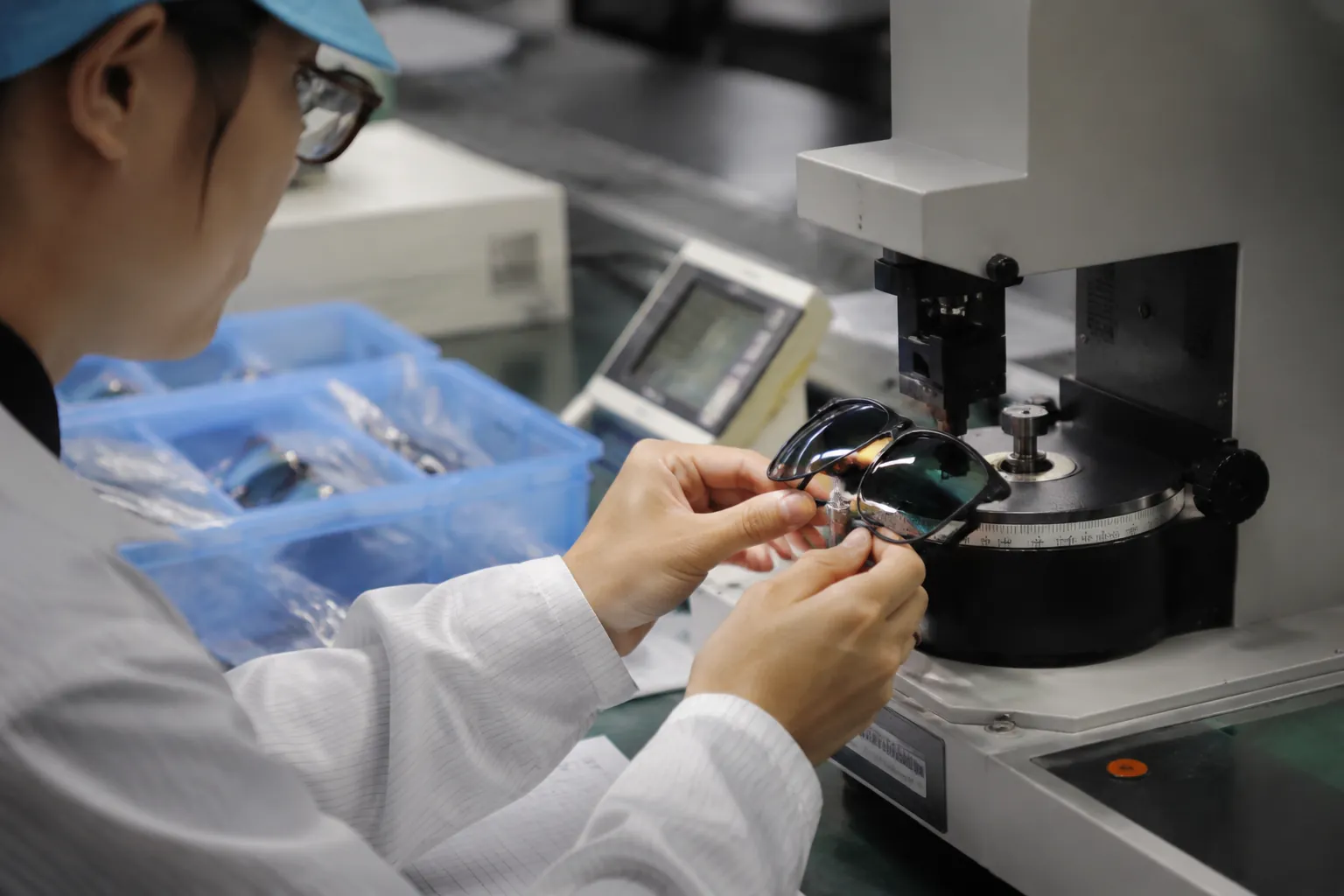
This guide is for brands, importers, distributors, and retail buyers ordering polarized sunglasses at OEM or wholesale scale. It explains the QC controls that belong in a purchase specification: polarization axis, glare-reduction checks, VLT and filter category, UV requirements, lens material risks, left-right matching, decoration durability, packaging accuracy, compliance documents, and batch sampling. Use it to approve samples against measurable criteria and to hold production lots to clear acceptance rules before shipment.
The QC Problem: Polarized Lenses Can Fail Quietly
Polarized sunglasses can look right and still fail in use. The frame finish may be clean. The logo may be sharp. The lens color may match the approved sample. Then the wearer drives toward low sun, looks across water, or sees reflection from a road surface and still gets glare.
That is not a styling issue. It usually points to weak polarization, axis error, poor lens matching, or assembly stress.
For wholesale buyers, the bigger risk is batch spread. If the polarizing film, laminated sheet, injected lens, cutting direction, edging process, or left-right pairing is not controlled, the same defect can repeat across many cartons. The cost comes later through returns, marketplace complaints, retailer chargebacks, or failed incoming inspection.
A practical QC system uses three gates: incoming lens or sheet inspection, in-process checks after cutting, injection, or edging, and final random inspection after assembly but before carton sealing. These gates matter because polarization performance can be affected by film orientation, cutting angle, heat, frame pressure, lens curve, coating, storage conditions, and lot mixing.
A purchase order should not only say "polarized lens." It should define lens material, lens color, VLT range or filter category, UV requirement, polarization axis target and tolerance, left-right matching rule, inspection method, sampling plan, packaging standard, and corrective action if a lot fails. Numbers reduce disputes. They also make inspection repeatable.
Axis Alignment: A Small Angle With a Big Effect
Polarization axis is the orientation of the polarizing filter inside the lens. For most polarized sunglasses, the axis should sit close to vertical so the lens reduces horizontally reflected glare from roads, water, snow, dashboards, and vehicle hoods. If the axis rotates too far from the agreed target, the lens may still look dark. Glare reduction can still be poor.
Buyers should state the axis tolerance in degrees and confirm how the factory measures it. A common commercial specification is a 90° target axis with ±3° tolerance per lens. Premium sport, fishing, driving, or snow programs may require tighter control, such as ±2°. That is not automatic. Feasibility depends on lens material, lens curve, cutting process, frame design, and scrap allowance.
Do not make strong performance claims if the order has no written axis tolerance.
Pair matching also matters. A left lens and right lens can both pass the single-lens tolerance but still feel uneven if their axes differ too much. Specify both the single-lens tolerance and the maximum left-right difference.
| QC item | Recommended target | Inspection point | Why it matters |
|---|---|---|---|
| Single lens axis | 90° target, commonly ±3° unless otherwise agreed | Incoming lens blank/sheet and finished pair | Controls whether the lens is aligned to reduce reflected glare |
| Premium axis control | 90° target, ±2° only if confirmed feasible | Pre-production sample, first article, and in-process sampling | Useful for performance-positioned sport, fishing, driving, and snow ranges |
| Left-right axis difference | Set a maximum difference, commonly ≤2° where feasible | Finished pair inspection | Prevents one eye from receiving noticeably different glare reduction |
| High-wrap lens risk | Confirm after fitting, not only before assembly | After lens seating in frame | Curve, heat, and frame pressure can affect practical optical performance |
Ask what equipment is used. A handheld polarized viewer is useful for screening. Documented production control should use a consistent reference method, such as an axis meter, calibrated jig, or fixed polarized reference setup under controlled lighting.
Records should identify lens lot, lens color, material, model, inspection date, and inspector. Photos alone are weak evidence. Camera angle, exposure, and light source can hide weak polarization or axis error.
Glare-Reduction Testing: Do Not Trust the Sticker
A "polarized" sticker is not a test result. It only proves that a sticker was applied.
Buyers should require a functional check that confirms each sampled lens changes as expected when viewed against a polarized source or measured with suitable equipment. A basic shop-floor check can use a polarized test card, LCD screen, or controlled reflective setup. A stronger method compares light transmission through the lens at different rotation angles against a known polarized source.
For normal wholesale production, require a pass-fail glare-reduction check on both lenses in sampled pairs. For higher-volume or performance-positioned programs, request recorded results or a documented pass/fail log by lot. Inspector comments are not enough.
- Rotation check: The lens should visibly darken and brighten as it rotates against a polarized test source. A weak change suggests poor polarization efficiency, incorrect axis, or non-polarized material.
- Left-right comparison: Both lenses in the same frame should show similar extinction and similar apparent darkness.
- Final assembly check: Test after the lens is seated, especially in tight full-rim, semi-rimless, TR90, PC, metal, or high-wrap frames.
- Grid distortion check: View a printed grid through the center and edge. Wavy or displaced lines may indicate optical distortion, poor edging, incorrect base curve, or frame compression.
- Storage-condition check: Inspect for bubbles, delamination, haze, edge lifting, and coating marks after lenses have been stored under normal workshop and warehouse conditions.
For a new program, approve the test method during sampling. Buyer and factory should agree on the equipment or reference card, the pass/fail rule, whether both lenses are tested, and whether results are recorded. If glare-reduction criteria are left open, the problem may appear only after bulk production has started.
Lens Material Changes the QC Plan
Polarized sunglasses are not one generic product. TAC, PC, nylon, and CR-39 lenses behave differently during lamination, tinting, injection, cutting, edging, coating, fitting, and testing. The QC plan should match the selected lens material and construction.
TAC polarized lenses are common for fashion, promotional, and price-sensitive wholesale programs. They are light and cost-effective. Control lamination quality, moisture exposure, edge condition, film bubbles, haze, surface scratches, color consistency, and axis variation after cutting.
PC polarized lenses are often chosen for impact resistance, thin profiles, or sport styling. PC can show stress patterns when the frame fit is too tight or when lens notches, screw holes, or high-wrap curves create pressure points. Inspect PC lenses with a polarized viewer after assembly, not only before fitting.
Nylon polarized lenses are often used for higher-performance sport, wrap, fishing, cycling, and outdoor styles. When processed correctly, nylon can offer good toughness and optical stability. QC should focus on base-curve accuracy, optical distortion, decentration, tint uniformity, coating quality, and axis behavior on curved lenses.
CR-39 polarized lenses can provide good optical quality but are heavier than many plastic sunglass alternatives. They also need careful edge finishing. QC should include thickness balance, chipping, robustness, coating quality, and fit with the target frame design.
| Lens type | Typical use | Key QC risks | Buyer guidance |
|---|---|---|---|
| TAC polarized | Fashion, promo, volume wholesale | Lamination bubbles, edge peeling, haze, axis variation, moisture sensitivity | Good cost option; require lot control, storage rules, and finished-pair checks |
| PC polarized | Impact-focused, sport-inspired, kids or active styles | Stress marks, warpage, coating defects, tight-frame pressure | Check after assembly and inspect pressure points carefully |
| Nylon polarized | Premium sports, fishing, cycling, wrap frames | Curve accuracy, optical distortion, decentration, axis behavior on curved lenses | Use for performance-positioned lines; confirm tooling and inspection capability |
| CR-39 polarized | Selected optical-quality sunglass styles | Weight, thickness balance, chipping, edge quality | Use where optical quality is prioritized and the frame design supports it |
Batch Consistency: Match the Approved Sample
The approved sample is the production reference. For polarized sunglasses, the signed sample should cover frame color, lens color, polarization performance, VLT or filter category, lens curve, logo position, hinge feel, temple alignment, nose fit, packaging, barcode label, and carton mark. Keep at least one retained sample at the factory and one with the buyer or inspection agent when possible.
Visible light transmission, or VLT, should be specified as a range or by a named filter category under the applicable destination-market standard. The VLT must match the product use and marketing claim. Do not pair a very dark lens with night-driving claims. Do not use a category or label that testing does not support.
Color drift also needs control. Gray lenses can shift blue, green, or brown depending on film lot, tint process, coating stack, or mirror layer. Brown lenses can look too red or too yellow. For larger orders, ask for retained lens chips, batch panels, or production reference samples. Compare under consistent daylight-equivalent lighting or a standard light box. Warehouse lighting is not a reliable basis for color approval.
- Lens color: Compare every production lot to the signed sample under consistent lighting.
- VLT: Confirm the category or target range before bulk production, then spot-check during production and final inspection.
- Lens curve: Verify base curve against the approved frame; high-wrap frames need tighter control.
- Pair matching: Left and right lens tint, axis, and darkness should match visually and functionally.
- Frame fit: Lenses should not rattle, pop out, or sit under excessive compression.
- Hinge and temple balance: Check opening force, temple symmetry, end-piece alignment, and rocking on a flat surface.
MOQ, price, and lead time should be confirmed in the quotation and purchase order. Do not assume them from a generic product page. For LumiShades orders, confirm the current MOQ by design, quoted lead time after sample approval, price breaks by quantity, lens material, coating, decoration method, packaging requirement, testing requirement, and acceptable defect standard.
Larger batches also need tighter lot labeling. One order may use more than one lens or component lot. If a problem appears, traceability decides whether you isolate a few cartons or hold the full shipment.
Decoration, Coating, and Packaging Need Inspection
Custom decoration can create defects even when the lens and frame are acceptable. A logo may look good during sample review and still fail after abrasion, sweat exposure, alcohol wipe, UV exposure, or packaging friction. Decoration belongs in the QC plan and in the approved sample. It is not a cosmetic afterthought.
Common OEM decoration methods include laser engraving, pad printing, hot stamping, metal logo plates, and temple plaques. Laser engraving can be durable on suitable materials, but position must be controlled and the mark should not weaken thin temples. Pad printing works well for color logos and lower MOQs, but adhesion should be checked after full curing. Metal plates and plaques can create a premium look, but glue, rivets, inserts, and edges must be controlled so the decoration does not lift during transport or wear.
Lens coatings add another risk layer. Mirror coating, gradient tint, anti-scratch coating, and hydrophobic coating can change appearance and may reveal process variation. Mirror lenses need checks for pinholes, edge chipping, uneven color, coating scratches, and left-right shade mismatch. Gradient lenses need height alignment: the darker area should sit at the same level on both lenses after assembly.
Packaging is also part of final quality. Microfiber pouches, printed boxes, hangtags, UPC or EAN labels, warning cards, instruction inserts, and polybags must match the destination-market requirements and the buyer's SKU system. Final inspection should check sunglass defects and packing details: SKU mix, barcode readability, carton quantity, carton marks, carton strength, and whether lenses are protected from rubbing during shipment.
Compliance Checks Buyers Should Name in the PO
Compliance language should be specific. "Meets international standards" is too vague for a purchase order. Name the destination market, applicable standard, lens category or claim, and documents required before shipment. Sunglasses sold for fashion, driving, sport, children, or snow use may require different warnings, categories, and performance checks.
LumiShades' stated compliance scope may include CE EN ISO 12312-1, FDA registration, ANSI Z80.3, AS/NZS 1067, REACH, ISO 9001, and BSCI. Buyers should verify current certificates, registrations, audit status, and product-specific reports before relying on them. A factory certificate or system audit is useful. It does not replace a test report on the actual lens material, lens color, coating, filter category, and product configuration being shipped.
| Market or requirement | Relevant standard or item | What buyers should request |
|---|---|---|
| European Union | CE marking supported by EN ISO 12312-1, plus REACH where applicable | EU Declaration of Conformity, filter category, UV performance, labeling, user information, restricted-substance review |
| United States | FDA registration where applicable, ANSI Z80.3 as a common sunglass performance reference | Applicable sunglass test report, UV claim support, impact/robustness evidence, labeling review, importer/manufacturer registration status where required |
| Australia / New Zealand | AS/NZS 1067 | Lens category, UV and VLT results, required warnings, traffic-signal recognition where relevant |
| Factory management | ISO 9001, BSCI | Current certificate or audit record, scope, validity date, and order-level inspection records |
Polarization is only one part of compliance. UV transmittance, VLT category, optical power, prismatic imbalance, robustness, flammability where applicable, nickel release, restricted chemicals, user warnings, traceability labels, and packaging labels may all matter. If the brand changes lens material, lens color, mirror coating, tint, supplier lot, or product claim, confirm whether the existing report still applies.
A Practical Sampling Plan for OEM Polarized Orders
Inspection should match order size and product risk. A small pilot run does not need the same paperwork as a large retail program. Both still need written acceptance rules. Without them, final inspection becomes subjective.
For a pilot run, inspect every pair if the products will be used for buyer presentations, launch seeding, product photography, or key account review. For commercial bulk orders, use random sampling with extra checks on axis, glare reduction, tint matching, VLT or filter category, decoration, hinge tension, frame alignment, and packing accuracy.
For large or multi-lot orders, add incoming lens lot checks, first-article approval, mid-line inspection, final random inspection, and retained samples from each production lot.
- Before sample approval: Confirm lens material, lens color, VLT range or filter category, UV requirement, axis target and tolerance, frame material, logo method, packaging, barcode rules, and destination-market compliance.
- At first article: Check finished pairs made with actual production materials, tools, and decoration process before full production continues.
- During production: Pull samples from different times, operators, lines, cartons, and lens lots. Do not inspect only the top layer of one carton.
- Before carton closure: Check axis, glare reduction, UV/VLT records if required, lens color, frame defects, hinge function, logo position, barcode, polybag, warning card, and carton marks.
- Before shipment: Review the defect list, measurement records, photos, failed samples, corrective action, and retained samples before authorizing release.
Define major and minor defects in the PO. Weak or absent polarization, axis outside tolerance, left-right mismatch, wrong VLT or filter category, failed UV requirement, cracked lens, heavy optical distortion, wrong logo, wrong SKU, incorrect warning label, and unsupported compliance claim should be major defects. Small cosmetic specks outside the primary viewing area may be minor only if they fall within the agreed size, location, and quantity limits.
Before placing an order with LumiShades, send a technical pack and request written confirmation of feasibility, MOQ, lead time, price breaks, production method, and QC method. Include frame reference, lens material, lens color, VLT target or filter category, axis tolerance, UV requirement, logo artwork, packaging dielines, barcode rules, destination market, and required documents. Approve the performance standard, not only the look of the sample.
Have a custom sunglasses project in mind?
Send us your styles, target market and quantities and we will return a detailed quote with MOQ, lead time and a sample plan.
Get a QuoteWhy source this from Wenzhou with LumiShades
Wenzhou in Zhejiang Province is widely regarded as China’s eyewear manufacturing capital, producing a large share of the world’s sunglasses. That concentration matters to buyers: a deep local supply chain for acetate sheet, hinges, lens blanks, plating and packaging means shorter component lead times, easier color and material matching, and a workforce with decades of eyewear-specific skill. LumiShades has manufactured in this ecosystem since 2009, and our vertical integration — in-house injection molding, acetate cutting, CNC milling, lens tinting, decoration and quality control — means no part of your order is quietly subcontracted to a workshop you cannot audit.
For international buyers, that vertical control translates into accountability. When a single factory owns every step, defects are traced and fixed at source rather than bounced between vendors, and your specifications survive intact from first sample to bulk. For procurement review, buyers can request process records, approved samples, quality checkpoints and project-specific compliance files before placing a bulk order. Required testing and documentation are confirmed against the destination market and product specification rather than assumed from a generic certificate list. Explore our manufacturing capabilities and quality control process to see how this works in practice.
Frequently asked questions
What axis tolerance should I request for polarized sunglasses? Use a written target, not a general phrase. For many wholesale programs, specify a 90° target axis with ±3° tolerance per lens and a maximum left-right difference, commonly ≤2° where feasible. For premium driving, fishing, cycling, or snow styles, ask the factory whether ±2° can be achieved with the selected lens material, base curve, coating, and frame design. State the measurement method and required inspection records in the QC plan.
Can I approve polarization quality from pre-production samples only? No. Pre-production samples establish the target, but bulk production still needs control checks. Require incoming lens or sheet inspection, first-article inspection using production materials, in-process sampling, and final inspection after assembly. Axis error, stress marks, left-right mismatch, tint variation, and coating defects can appear during cutting, edging, fitting, or lot mixing even when the sample looked correct.
Which compliance standards should be named for export orders? Name the destination-specific requirements in the PO. For the EU, request CE documentation supported by EN ISO 12312-1 and consider REACH for restricted substances. For the U.S., verify FDA registration status where applicable and request testing to ANSI Z80.3 or the buyer's required protocol. For Australia/New Zealand, request AS/NZS 1067 documentation. Match every report to the actual lens material, color, coating, filter category, and product configuration being shipped.
Does polarized lens material affect lead time, price, and inspection? Yes. TAC, PC, nylon, and CR-39 have different cost, processing, and defect risks. TAC may suit cost-sensitive fashion programs but needs lamination and moisture control. PC requires stress inspection after assembly. Nylon is often used for sport and wrap designs but needs curve and optical checks. CR-39 can offer good optics but needs careful edge and robustness control. Confirm MOQ, lead time, and price breaks in the quotation because they depend on material, coating, decoration, packaging, testing, and order quantity.
What should be treated as a major defect in polarized sunglasses QC? Treat the following as major defects unless the buyer has approved a different rule in writing: weak or absent polarization, axis outside tolerance, excessive left-right axis difference, mismatched tint or darkness, wrong VLT or filter category, failed UV requirement, cracked or loose lenses, heavy optical distortion, coating delamination, wrong logo, wrong SKU, incorrect barcode, missing warning label, and any compliance claim not supported by the required document.
What documents should I ask for before shipment? Ask for the signed production sample record, lens material and color specification, VLT or filter category result, UV test evidence if required, axis inspection record, final inspection report, packing list, carton mark confirmation, barcode check, and destination-market compliance documents. For EU orders, request the EU Declaration of Conformity and supporting EN ISO 12312-1 evidence. For U.S. and Australia/New Zealand orders, request the applicable test reports and registration or labeling evidence relevant to the shipment.
How should I structure a first polarized OEM order? Start with a technical pack that fixes the performance requirements before bulk production: lens material, lens color, VLT range or filter category, UV requirement, axis target and tolerance, frame material, logo method, packaging, barcode rules, destination market, and required documents. For a pilot, inspect every pair if the order is for buyer review or launch seeding. For a larger first run, require first-article approval, in-process sampling, final random inspection, and retained samples from each lens or production lot.
Ready to start?
Explore our shield & oversized sunglasses or request a quote — our sales team replies within 12 hours.
Request a Quote