
When Lens Coatings Pay for Themselves
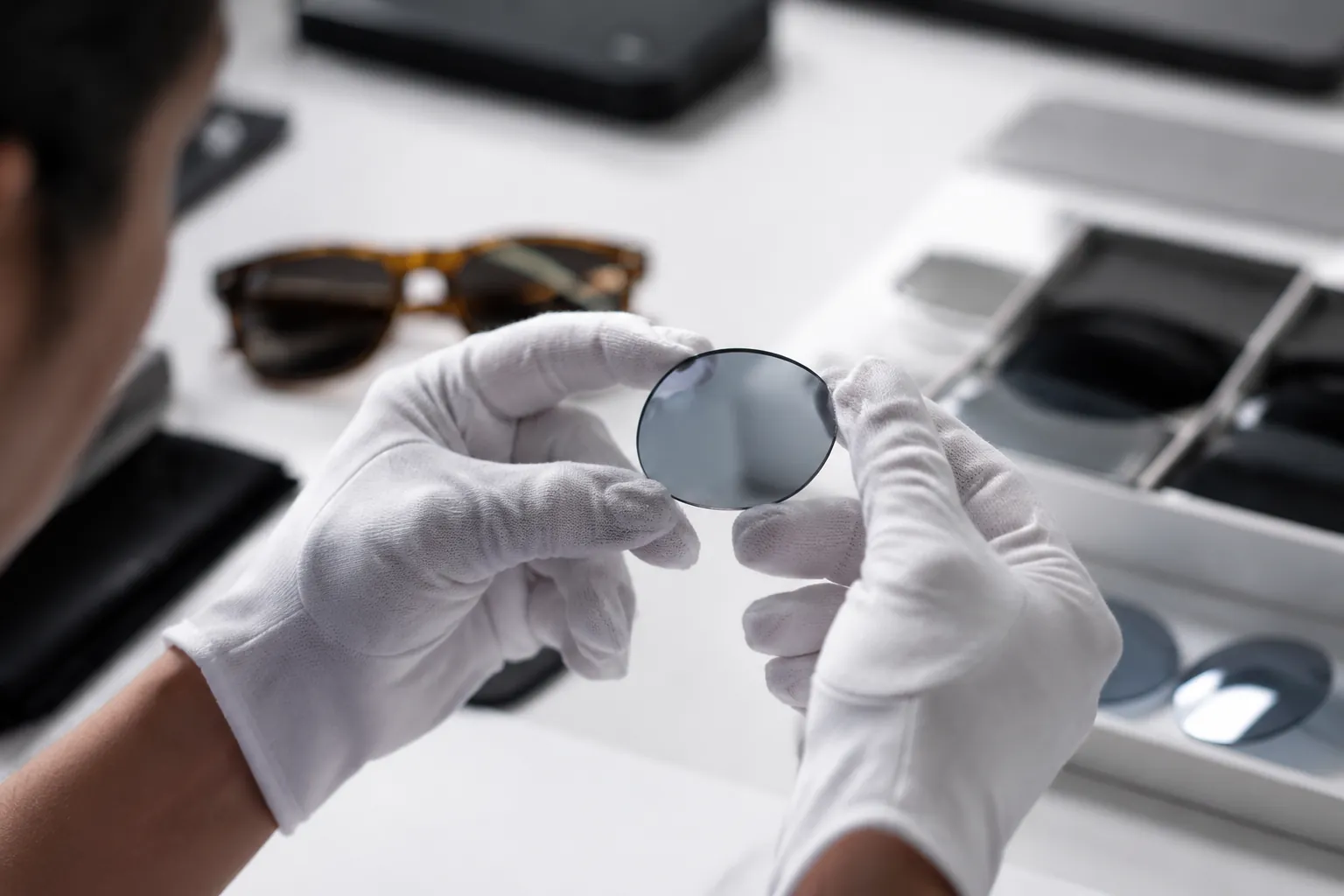
If you buy custom sunglasses for retail, wholesale, or private label, lens coatings are not a branding extra. They can cut wipe-down complaints, protect display stock, and make a low-cost frame feel more finished in hand. They can also add cost without improving sell-through if you choose the wrong stack. This guide shows where scratch, hydrophobic, and oleophobic coatings pay back, where a plain lens is still the smarter FOB, and how to specify the upgrade without creating QC problems.
Start With the Complaint
Buyers usually ask for lens coatings for one of three reasons: customers scratch lenses during normal use, lenses look dirty too fast, or the product feels too basic at retail. Those are different problems. Each points to a different coating stack.
A scratch-resistant hard coat helps with abrasion from cleaning cloths, dust, salt spray, and ordinary handling. Hydrophobic and oleophobic layers help with water, sweat, skin oil, sunscreen, and fingerprints. None of them make a lens scratch-proof. None of them save a lens that is thrown in a bag with keys, coins, or a metal phone stand.
That matters because the coating should match the channel. A fashion sunglass sold in a sealed box to a wholesale account has different needs from a sporty style sold in beach towns, golf shops, convenience stores, or travel retail. If the main complaint is returns for cloudy, smudged lenses after the first wipe, the upgrade is usually worth discussing. If the product is a short-run promo where the buying team is fighting to hold FOB under a ceiling, the answer may be no. Cheap is not always bad. Wrong is bad.
Material matters too. Polycarbonate lenses are light and impact-resistant, but they scratch more easily than glass or higher-hardness materials, so they usually benefit most from a hard coat. TAC polarized lenses often wear better on their own, but they still show fingerprints and surface haze if the coating stack is weak. If you are ordering custom sunglasses in a 50-pair sample run, the first question is not "Which coating sounds premium?" It is "Which finish solves the customer complaint without creating a new production risk?"
At LumiShades, the right comparison starts at the sample stage. A 7-10 day sample lead time is enough to compare a base lens, a scratch coat, and a full coated stack side by side before bulk. A good sample should show the real lens build, the exact tint, the final decoration method, and the coating behavior under bright light. That beats guessing from a spec sheet.
Scratch Coat Is the Workhorse
Scratch-resistant coating is the first upgrade most serious buyers should consider. On polycarbonate and other softer lenses, a hard coat reduces the everyday wear that turns a new pair into a used pair before it reaches the shelf. It improves resistance to fine wipe marks, dust abrasion, and display scuffing, especially when the lens sees repeated handling during merchandising. It does not make the lens indestructible. It just slows the visible wear that triggers complaints and returns.
For custom sunglasses, hard coat performance usually comes down to coating thickness and cure control. In production, many suppliers target a film that is thin enough to stay optically clean but robust enough to survive handling. If the coating is too thin, abrasion resistance drops. If it is too heavy or cured unevenly, you can get haze, edge buildup, color shift, or slight distortion under angled light. Typical checks include adhesion after cure, surface clarity, and a close visual inspection under a lamp before packing.
Where it pays back: lower-end fashion lines, children's styles, travel accounts, and any program where stock is handled often before sale. Retailers notice lens clarity. A display pair with visible micro-scratches hurts conversion. Returns also drop when the lens survives routine cleaning better. That is the part buyers feel in the P&L, not the coating line item itself.
The trade-off is process discipline. A hard coat needs good adhesion, stable cure time, and repeatable cleaning before packing. If the factory rushes curing, you get uneven hardness, smudge retention, or edge failure. The safer spec is to request the exact coating type, the lens material it is intended for, and the test standard the supplier uses for appearance. Ask how many visual inspectors touch the lens after cure. A coating that is technically fine but packed with dust or fingerprints still fails the retail test.
For most mainstream orders, scratch coat is the default upgrade. It is usually easier to justify than a full hydrophobic-oleophobic stack because it solves a universal problem: lenses get handled. If you want a simple rule, use this one: scratch coat first, then add surface-behavior coatings only when the channel or retail price supports them.
Hydrophobic and Oleophobic Solve Smudges
Hydrophobic coating changes how water behaves on the lens. Instead of clinging in a film, water beads and rolls off faster. That helps in rain, humidity, beach use, boating, and active outdoor wear. Oleophobic coating is about oils. Fingerprints, skin oils, sunscreen, and makeup smears wipe off more easily. In practice, buyers usually notice oleophobic performance more than the term itself. A lens that cleans with one pass feels premium. A lens that needs repeated rubbing feels cheap.
These coatings are most useful on darker tints, mirrored lenses, and styles sold in hot climates or active channels. They also matter on open retail displays, where fingerprints show under bright store lights within hours. If a lens is mirrored, the coating stack matters even more because the mirrored layer makes smudges and wipe trails more visible. In a premium setting, that visual cleanliness can shape the customer's first impression before they even try the frame on.
There is a catch. Buyers sometimes assume hydrophobic and oleophobic performance lasts forever. It does not. Coating life depends on cleaning habits, cloth quality, and whether the end user uses harsh solvents. Alcohol-heavy sprays, abrasive paper tissues, and dirty microfiber cloths shorten performance. A coating can still be effective after months of normal wear, but the effect is not permanent armor. If the product is meant for the beach, include handling guidance in the carton insert or sleeve card so the customer does not grind sand into the lens during cleaning.
From a production point of view, these layers are most stable when the supplier keeps the stack simple and consistent. Too many decorative or functional layers can increase rework risk. For example, a lens with a mirror finish, a tint step, a hard coat, and a top surface treatment needs tighter control than a plain dyed lens. The supplier should confirm the cure window, the coating sequence, and whether one side or both sides receive treatment. If the process is unclear, the upgrade is probably too ambitious for the price point.
Hydrophobic and oleophobic coatings make the most sense when the customer is likely to wipe the lens often, care about feel, or judge the product by how easy it is to keep clean. They matter less for low-cost promo sunglasses where speed to shelf matters more than a premium wipe experience.
Pick the Stack by Order and Channel
The right answer depends on order size, target FOB, and channel. At 50 pairs per design, every extra process matters because setup and scrap are spread across a small run. At 300 pairs, the add-on becomes easier to absorb. At 1,000 and 5,000+ pairs, the question stops being "Can we afford it?" and becomes "Does the market expect it, and can the coating improve sell-through enough to pay for itself?" If your base FOB can move down with volume, as it can at LumiShades from 50 pairs up through 300, 1,000, and 5,000+ units, coating choices should be priced as a separate sell-through lever, not just a cost line.
| Stack | Best use case | Buyer benefit | Trade-off |
|---|---|---|---|
| Base lens only | Promo programs, tight FOB targets, short shelf life | Lowest cost, simplest spec, fastest approval | More complaints about smudging and visible wear |
| Scratch coat only | Everyday fashion, travel, kids, wholesale cartons | Better day-to-day durability and fewer display marks | Small cost increase; still easy to fingerprint |
| Scratch + hydrophobic | Outdoor, beach, sport, humid markets | Cleaner lens after rain, sweat, and salt spray | Good wipeability, but oil marks can still show |
| Scratch + hydrophobic + oleophobic | Premium retail, mirrored lenses, higher complaint risk | Best cleaning feel and strongest customer perception | Highest unit cost and the most reason to demand tight QC |
A blunt rule works well here. Choose base lens only when the order is a price fight or a short-cycle promotion. Choose scratch coat for most commercial programs. Choose the full stack only if the retail price, channel expectation, or brand positioning can support it. On a low-ticket sunglass, an extra coating that nobody notices is wasted spend. On a premium-looking style, the same coating can save margin by reducing returns, replacement requests, and store-level complaints.
MOQ logic matters too. With a 50-pair minimum, a small coating surcharge can noticeably change your per-pair landed cost because there is less room to spread setup and inspection time. Once you are at 300 pairs or more, the add-on becomes easier to justify if the lens is touch-prone or display-facing. By the time you are quoting 1,000 pairs or 5,000+ pairs, ask the supplier to price the coating as a separate line item so you can compare the incremental FOB against the expected retail benefit.
The Factory Has to Hold the Line
Coating quality is not only about chemistry. It is also about process discipline. LumiShades handles injection molding, acetate cutting, CNC milling, lens tinting, decoration, and QC in-house, which matters because coating choices affect the rest of the line. A lens edge that is poorly finished, a frame cavity that holds dust, or a rushed assembly step can ruin an otherwise good coating. If the decoration method is pad printing, laser marking, hot stamping, or UV print, the factory also has to keep overspray, heat, and solvent residue away from coated lens surfaces.
A sensible flow is simple: make the lens, finish the edge, tint to target color, apply the coating stack, cure it properly, then run final visual checks before packing. If the style uses polarized film, mirrored decoration, or special gradient tinting, the sequence should be locked so the top layer does not interfere with clarity or adhesion. A good factory should tell you the cure window in minutes or hours, the ambient conditions it needs, and whether the lens is handled by gloved staff after final cure.
The sample stage should confirm three things: appearance under light, wipe feel, and any effect on tint uniformity. For example, a coating that slightly deepens the gray tint may be acceptable on a fashion style but not on a model matched to a specific brand color chip. Bulk production should then follow the approved sample, not a close enough version. A 1-2 shade drift, a different reflective tone, or a change in lens gloss can be enough to trigger a buyer rejection when the product hits the warehouse.
Lead time matters here. If the factory says samples take 7-10 days and bulk runs 25-35 days, the buyer should use that window to lock the coating spec early. Changing the stack after approval can move the line, force re-cure, and create rework. In volume, rework is where margin disappears. It is also where good coatings get blamed for problems caused by poor handling upstream.
Write the Spec So Nobody Guesses
The cleaner the spec, the fewer disputes later. Do not write "premium coating" and expect the factory to guess what you mean. Spell out the function, the lens type, the surface coverage, and the approval point. That is especially important for overseas B2B buyers who need one spec to work across a brand team, an importer, and a retailer.
- State the coating stack by function: scratch-resistant, hydrophobic, oleophobic.
- Identify the lens material and tint category, especially if the style is polycarbonate, TAC, or CR-39.
- Define the coated surface: front only or both sides.
- Specify the decoration method on the frame or lens, if any, so curing and heat limits are clear.
- Ask for sample approval under bright light before bulk starts.
- Require the final pack-in to include cleaning guidance and handling notes.
- Confirm that the coating does not interfere with the compliance route for your market.
Be precise about tolerances where possible. If you are buying a tinted lens, ask the supplier what color tolerance it holds between sample and bulk. If you care about visual clarity, ask for the acceptable haze limit or at least the supplier's internal standard for lens appearance after cure. If a mirrored finish is involved, ask about reflectivity consistency from pair to pair. The more specific the spec, the less room there is for an expensive interpretation dispute later.
For the U.S., ask how the product fits the applicable pathway for FDA registration and whether it still meets the needed optical and impact expectations for the target model. For Europe and Australia, the same lens has to stay aligned with CE EN ISO 12312-1, ANSI Z80.3 if applicable, and AS/NZS 1067 where required. REACH matters for chemicals used in the coating or decoration stages. The coating is not separate from compliance. It sits inside it.
Use Payback, Not Hype
The coating upgrade is worth it if it changes buyer behavior, not if it only sounds better in a catalog. Use a simple filter. First, ask whether the target customer will clean the lens often. Second, ask whether the product will be handled before sale. Third, ask whether the retail price leaves room for a small FOB increase without breaking margin. If the answer is yes to two or more, a coating upgrade is usually worth testing.
Use the strongest stack on styles with high fingerprint visibility, higher retail pricing, or active use. Use scratch coat alone on most mainstream orders. Skip hydrophobic and oleophobic when the product is short-cycle, price-driven, and unlikely to be judged on lens feel. That is the honest answer. Not every order needs the top stack.
It also helps to think in terms of return cost. If a complaint, replacement, or markdown costs more than the coating delta across the run, the upgrade is probably justified. In many wholesale programs, the coating add-on is easiest to absorb when it helps move the product from acceptable to nice. That shift may sound small, but in retail it can mean better conversion at the display, fewer wipe complaints, and fewer post-sale emails from customers who think the lens arrived dirty.
A practical buyer will sample both versions, compare cleaning behavior after repeated handling, and then decide based on complaints, returns, and channel fit. That approach is better than chasing a longer spec line. Buyers who do that tend to order the right coating once, then repeat it. That saves time and avoids re-quoting every season.
Ask These Questions Before Approval
Before signing off, ask for the actual coating stack, the sample photos under light, the cure method, and the final packing standard. Ask whether the coating is applied on one side or both. Ask whether the supplier can keep the same finish across 300, 1,000, and 5,000+ piece runs. Ask for a clear explanation of what happens if the finish fails visual QC. Those are normal questions. They are not aggressive.
It is also worth asking about the failure points. Does the supplier reject lenses for haze, dust, edge peel, or color shift? What is the rework path if a batch comes out uneven? How many pieces per carton are inspected before shipment? If the answer is clean and specific, the coating is probably doing real work. If the answers are vague, the upgrade is probably just adding cost.
For brands and importers sourcing from Wenzhou, the best result is simple: a coating stack that reduces wipe complaints, protects display stock, and stays within the compliance and lead-time plan. That is the goal. Everything else is noise.
Bottom Line for Buyers
Lens coatings are worth the upgrade when they solve a real handling problem or improve the way the product feels at first touch. Scratch coat is the workhorse option for most commercial sunglasses. Hydrophobic and oleophobic layers make sense when the channel is hot, humid, premium, or highly display-driven. Base lens only still wins when price is the whole story and the product will not be judged on cleanability or long shelf life.
If you want a reliable decision process, keep it simple: match the coating to the complaint, lock the spec early, sample under bright light, and compare the expected FOB increase to the cost of returns or lost sell-through. That keeps coating upgrades useful instead of decorative.
Have a custom sunglasses project in mind?
Send us your styles, target market and quantities and we will return a detailed quote with MOQ, lead time and a sample plan.
Get a QuoteWhy source this from Wenzhou with LumiShades
Wenzhou in Zhejiang Province is widely regarded as China’s eyewear manufacturing capital, producing a large share of the world’s sunglasses. That concentration matters to buyers: a deep local supply chain for acetate sheet, hinges, lens blanks, plating and packaging means shorter component lead times, easier color and material matching, and a workforce with decades of eyewear-specific skill. LumiShades has manufactured in this ecosystem since 2009, and our vertical integration — in-house injection molding, acetate cutting, CNC milling, lens tinting, decoration and quality control — means no part of your order is quietly subcontracted to a workshop you cannot audit.
For international buyers, that vertical control translates into accountability. When a single factory owns every step, defects are traced and fixed at source rather than bounced between vendors, and your specifications survive intact from first sample to bulk. For procurement review, buyers can request process records, approved samples, quality checkpoints and project-specific compliance files before placing a bulk order. Required testing and documentation are confirmed against the destination market and product specification rather than assumed from a generic certificate list. Explore our manufacturing capabilities and quality control process to see how this works in practice.
Frequently asked questions
Does scratch-resistant coating make lenses scratch-proof? No. It reduces everyday abrasion from cleaning and handling, but sand, keys, and hard impact can still scratch or damage the lens. A hard coat is insurance, not armor.
Is oleophobic coating worth it on matte or dark lenses? Usually yes if the lens shows fingerprints easily or the product sells in a premium retail channel. On low-cost promo pairs, it is often not worth the add-on because the customer is less likely to value the wipe feel.
Can hydrophobic and oleophobic coatings be used on polarized lenses? Yes, if the supplier applies and cures the stack correctly. The buyer should approve the exact sample, because coating feel, reflectivity, and appearance can vary by lens build and mirror finish.
Will coatings affect CE EN ISO 12312-1 or ANSI Z80.3 compliance? The coating itself should not change the standard, but it must not interfere with the lens optical and impact requirements. Ask the factory to confirm the final build is still compliant for your target market.
What MOQ makes the upgrade easier to justify? At 50 pairs, the coating cost is noticeable because setup and inspection are spread across a small run. At 300 pairs and above, it is easier to absorb if the market values cleaner lenses or fewer complaints.
What should I ask for in a sample before bulk approval? Ask for the exact coating stack, visual photos under bright light, cleaning performance after handling, the cure method, and confirmation that the bulk line will match the approved sample.
Ready to start?
Explore our shield & oversized sunglasses or request a quote — our sales team replies within 12 hours.
Request a Quote