
Sourcing Polarized Sunglasses for Outdoor Brands
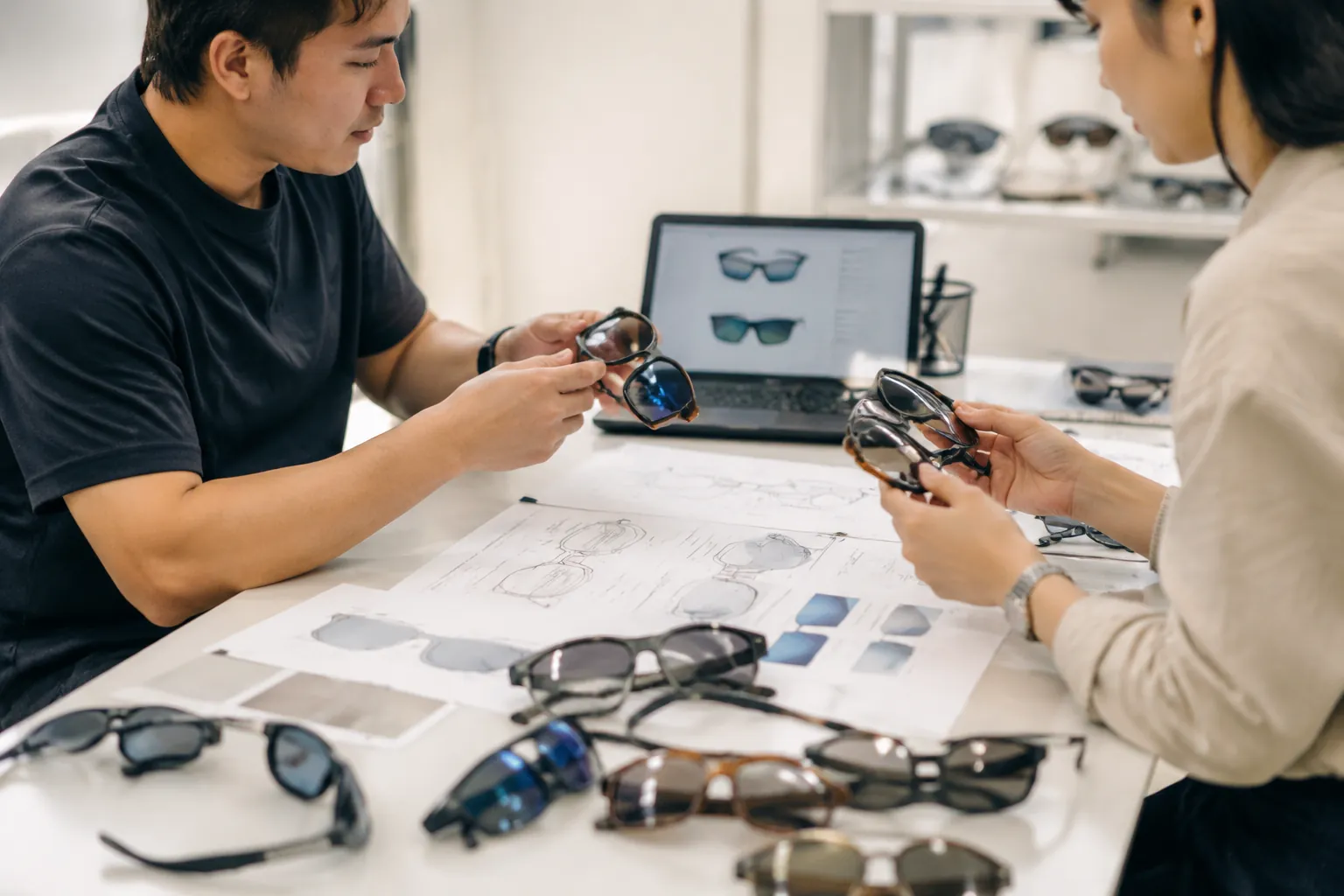
This guide is for outdoor brands, fishing tackle companies, importers, and retailers buying polarized sunglasses in volume. It explains how to specify lens material, polarization performance, tint, frame durability, decoration, compliance, MOQ, cost drivers, and inspection requirements before money is committed. The aim is simple: approve better samples, reduce avoidable returns, and build sunglasses that work outside—not just in a catalog.
Start With the Use Case, Not the Shape
Performance polarized sunglasses are not one product. A flats fishing guide, kayak brand, marina retailer, and general outdoor store may all ask for "polarized sunglasses." The right specification can still be very different.
Start with the wearing condition and sales channel. Not the frame silhouette. For fishing, glare control, wrap coverage, lens color, temple grip, and long-wear comfort usually matter more than fashion detail. For hiking and travel retail, weight, scratch resistance, fit range, and neutral color may matter more. For resort or promotional programs, price control, repeatability, and fast replenishment often drive the order.
If the buyer does not define the channel first, many suppliers will quote the easiest build: an existing frame mold, TAC polarized lenses, a standard hinge, one logo position, and basic pouch packaging. That may be fine. Or it may be wrong for the product.
A useful sourcing brief should state the retail channel, target FOB price range, expected order quantity, lens material, tint, frame material, packaging level, destination market, and testing requirements. Include the intended retail price if possible. A low-cost promotional sunglass and a premium fishing sunglass should not share the same lens, hinge, coating, or packaging unless the brand has chosen that trade-off on purpose.
- Fishing specialty retail: prioritize high polarization efficiency, brown or copper lens options, wrap coverage, anti-slip contact points, secure hinges, and outdoor wear testing.
- Outdoor lifestyle retail: balance appearance, comfort, UV400 protection, scratch resistance, color consistency, and broad face fit.
- Promotional outdoor programs: control unit price, reduce SKU complexity, use proven molds, and test logo adhesion before mass production.
- Private label e-commerce: confirm packaging quality, barcode accuracy, SKU color matching, carton labels, and replacement-part expectations before bulk production.
Choose Lens Material Before Pricing
Lens material drives weight, impact behavior, optical clarity, curve stability, processing method, and cost. Do not treat all polarized lenses as equal. The lowest quote is often based on a thin TAC polarized lens in a low-cost plastic frame. That can work for entry-level outdoor retail, but it is not automatically right for fishing, boating, or active outdoor use.
For basic outdoor programs, TAC is a common starting point because it is lightweight, available in many colors, and cost-efficient. For sport and boating styles, PC polarized lenses can offer stronger impact resistance and work well in wrap frames. But optical quality depends on molding, curve control, lamination quality, and edging pressure. Nylon polarized lenses usually cost more. They are often used for premium fishing and sport collections because they can offer good optical clarity, heat resistance, and dimensional stability when processed correctly.
| Lens option | Typical thickness | Best use | Strengths | Watch points |
|---|---|---|---|---|
| TAC polarized | 0.74-1.1 mm | Entry to mid-range outdoor retail | Lightweight, cost-efficient, common colors, relatively fast sampling when materials are available | Lower impact resistance than PC or nylon; coating, lamination, and edge quality vary by supplier |
| PC polarized | 1.8-2.2 mm | Sport, boating, active outdoor | Good impact resistance, light weight, suitable for many wrap-frame designs | Can show optical distortion if molding, curve control, or edging pressure is poorly managed |
| Nylon polarized | 1.8-2.0 mm | Higher-end fishing and sport | Good optical clarity, heat resistance, and dimensional stability when processed well | Higher cost; needs tighter QC limits and experienced lens processing |
| Polarized clip or insert | Varies by design | Optical shops and prescription-ready concepts | Useful for Rx-related programs and layered product ranges | More parts, more assembly checks, and higher fit-complaint risk if tolerances are loose |
Ask the supplier to quote two or three lens options on the same frame where possible. Then compare weight, haze, edge quality, polarization performance, coating quality, distortion, and FOB price side by side. This is where hidden compromises show up.
If the frame mold and lens color already exist, sampling is usually faster. New lens colors, custom mirror coatings, and unusual base curves add time. For any custom lens or coating, approve a physical sample before bulk production.
Control Polarization, UV, and Optics
A polarized lens should reduce horizontally reflected glare from water, wet roads, snow, and glass. A phone-screen check is useful as a quick screen. It is not enough for purchase approval.
For commercial orders, define measurable checks: UV400 protection, polarization efficiency, visible light transmission, lens filter category, surface defects, and optical distortion. Put these in the order file before production starts.
For most outdoor sunglasses, request UV400 protection that blocks UVA and UVB radiation up to 400 nm. For fishing and water-sport retail, specify the required polarization efficiency and ask the supplier or test lab to confirm the method used. Visible light transmission depends on tint and coating. Many gray or brown full-sun outdoor lenses fall into filter category 3, often around 8-18% VLT. The actual value should still be measured and matched to the product label. Low-light yellow or amber lenses may fall into category 1 or 2. Do not position them as full-sun fishing lenses unless the transmission and labeling support that claim.
- Rotate the sample over a polarized test card or LCD screen. Darkening should be strong and even across both lenses.
- Check left and right lenses separately. A weak or mismatched lens can cause discomfort and complaints.
- Look through the lens at a grid, door frame, or window line. Move the lens slowly. Lines should not bend, swim, or blur heavily.
- Inspect the lens edge after assembly. Chips, whitening, stress marks, or forced fitting point to poor edging or a lens/frame mismatch.
- Wear the sample outdoors for at least 20 minutes near water, road glare, or bright pavement. Indoor approval is not a performance test.
For bulk orders, write an inspection standard before production starts. A practical plan is 100% visual checking for scratches, stains, loose screws, logo defects, frame deformation, and packaging errors, plus sampled checks for UV performance, polarization, hinge function, lens category, and barcode accuracy. For AQL inspection, define critical, major, and minor defects in writing. Match the acceptance levels to the buyer's quality manual or retailer requirement.
Match Tint and Mirror to the Environment
Lens tint is not just decoration. It changes contrast, perceived brightness, color recognition, and how useful the sunglass feels outdoors. Do not approve tint from a render alone. Screen color rarely matches lens transmission, mirror coating, or daylight appearance.
Gray is the safest all-purpose tint because it keeps color perception relatively neutral. It works well for driving, beach, travel, boating, and general outdoor retail. Brown and copper can increase contrast and are common for fishing, shallow water, variable clouds, and trail use. Green can feel comfortable in bright sun and often fits sport-lifestyle ranges. Yellow and amber can improve contrast in low light, but they may feel too bright in full sun unless VLT is controlled and the product is labeled correctly.
Mirror coating adds shelf appeal and can reduce visible light transmission. It also exposes weak process control fast. Poor mirror coating may scratch, flake near the lens edge, or shift color between left and right lenses.
For fishing shops, marine stores, and outdoor chains, ask for a rub check, tape adhesion check, and daylight color comparison before bulk approval. Set a visual tolerance that your inspector can use: left and right mirror color should match under daylight at arm's length. Obvious rainbow patches, pinholes, scratches, and edge burn should be rejected.
- Gray polarized: broad use; suitable for driving, beach, boating, and general outdoor collections when VLT and labeling are correct.
- Brown or copper polarized: stronger contrast; useful for fishing, shallow water, trails, and mixed-cloud conditions.
- Green polarized: comfortable in bright sun; common for sport-lifestyle and resort retail.
- Blue mirror over gray: popular for water sports; inspect mirror adhesion, edge quality, VLT, and color consistency.
- Green mirror over brown: common for fishing styles; confirm the base tint, mirror color, and final light transmission together.
Specify Frames, Hinges, and Decoration
Outdoor sunglasses fail in predictable places. Hinges loosen. Temples warp in heat. Nose pads detach. Lens coatings scratch. Screws back out. Printed logos wear off.
Many of these problems can be reduced with a clear specification. PC frames are cost-efficient and suitable for many entry-level programs. TR90 is lighter and more flexible, which makes it common for wrap shapes that need temple spring and face comfort. Acetate gives higher perceived value and richer color, but it is heavier and usually better for lifestyle designs than hard sport use unless the frame is engineered carefully. Metal parts can look premium, but plating quality and corrosion resistance matter for marine and high-humidity retail.
For fishing and boating, ask for hinge cycling, screw torque checks, nose pad pull checks, drop checks, and humidity or salt-spray evaluation where relevant. Practical factory checks may include repeated temple open-close cycling, screw tightness verification after assembly, nose pad pull testing, and frame alignment checks before packing. On wrap frames, confirm that both temples sit evenly and that lens stress does not create visible distortion.
Decoration should match the use case. Laser engraving is durable and clean on many temple materials. Pad printing is cost-effective for simple logos but needs adhesion testing, especially on rubberized, coated, or textured surfaces. Heat transfer can show detailed artwork, but edge lifting must be checked. Metal logo plates look premium but add assembly steps, weight, and possible snag points. For outdoor retail, a smaller durable mark is often better than a large logo that flakes or rubs away after short use.
Before approval, ask which processes are done in-house and which are outsourced. This may include injection molding, acetate cutting, CNC milling, lens tinting, mirror coating, laser engraving, pad printing, and metal logo decoration. Outsourced steps can affect sample timing, color consistency, rework speed, and accountability when frame, lens, or logo details miss the approved standard.
Plan MOQ, Cost, and Lead Time
Low MOQ helps when testing a new outdoor line. It also has limits. A pilot run may be enough for fishing clubs, retail tests, and SKU validation, but it is usually less efficient than a larger commercial run.
Unit cost typically improves as order quantity increases because material purchasing, machine setup, lens cutting, decoration, inspection, and packing labor are spread across more units. Ask the supplier to quote clear price breaks instead of one blended price. Compare the same specification at pilot quantity, commercial quantity, and replenishment quantity.
A basic PC frame with TAC polarized lenses and pouch packaging will price very differently from a TR90 wrap frame with nylon polarized lenses, mirror coating, rubber nose pads, metal logo plates, hard case, printed box, and retailer labeling. Keep the comparison clean. Same frame. Same lens. Same packaging. Then change one variable at a time.
| Order stage | Typical quantity | Main purpose | Price and timing logic |
|---|---|---|---|
| Prototype sample | 1-10 pairs | Check fit, tint, logo, and basic construction | Highest unit cost; timing depends on existing tooling, material availability, and custom work |
| Pilot run | 50-300 pairs/design | Test retail response, packaging, and SKU assumptions | MOQ-friendly; less efficient for material buying, setup, inspection, and packing |
| Commercial run | 1,000+ pairs | Lower unit cost and more stable replenishment | Better material planning; more efficient decoration, inspection, and packing |
| Volume program | 5,000+ pairs | Best cost position and production planning | Allows material forecasting, line scheduling, and stronger cost control |
Sampling time depends on existing tooling, available lens colors, and standard decoration methods. Bulk production time should be counted only after sample approval, deposit, packaging files, compliance requirements, and shipment details are confirmed. New molds, unusual lens colors, custom mirror coatings, metal parts, or complex packaging can extend the calendar.
The production clock starts when the supplier has clear approvals. Not when the first inquiry is sent.
Match Compliance to the Market
Compliance depends on the selling market. Do not copy another buyer's supplier file and assume it fits your order.
For sunglasses, common documents and test references include CE EN ISO 12312-1 for Europe, FDA registration for the United States, ANSI Z80.3 for U.S. eyewear performance expectations, AS/NZS 1067 for Australia and New Zealand, REACH for chemical restrictions, ISO 9001 for quality management, and BSCI for social compliance.
For outdoor and fishing brands, the core issues are UV protection, filter category, traffic signal recognition where applicable, optical quality, labeling, and restricted substances. If you sell into Europe, confirm the CE marking basis and keep the test report tied to the actual product type. If you sell into Australia or New Zealand, confirm AS/NZS 1067 requirements with the final lens category and labeling. If you sell into the U.S., keep FDA registration information and ANSI Z80.3-related test documentation organized for retailers, marketplaces, and internal records.
Buyer rule: request compliance documents before bulk production, then keep the shipped construction aligned with the tested construction. Changing lens material, tint, mirror coating, frame material, or labeling after testing can weaken the paperwork and may require retesting.
Use a Pre-Production Checklist
A polarized sunglass order should not rely on a nice sample and a short invoice. Write the key decisions into the purchase order, sample approval sheet, and inspection file. This protects both sides and gives the QC team a real standard.
- Lens: material, thickness, tint, mirror color, UV400 requirement, polarization efficiency target, filter category, coating, and defect limits.
- Frame: material, color code or approved physical sample, base curve, hinge type, screw color, nose pad material, and temple length tolerance.
- Decoration: logo file, position, size, method, color, adhesion requirement, and approved production sample.
- Packaging: pouch, case, cloth, hangtag, barcode, carton mark, inner quantity, master carton quantity, warning text, and label language.
- Inspection: AQL level or sampling method, critical defects, major defects, minor defects, rework rules, retained samples, and photo-report requirements.
- Schedule: sample approval date, production start date, inspection window, shipping date, document deadline, and late-delivery handling.
Confirm version control too. The approved sample should match the purchase order, packaging artwork, compliance file, and inspection checklist. If the buyer changes a lens color, logo method, packaging component, barcode, or destination market after approval, the supplier should confirm the effect on price, lead time, testing, and labeling before production continues. It is cheaper to solve these details before assembly than to repack or rework finished goods.
Have a custom sunglasses project in mind?
Send us your styles, target market and quantities and we will return a detailed quote with MOQ, lead time and a sample plan.
Get a QuoteWhy source this from Wenzhou with LumiShades
Wenzhou in Zhejiang Province is widely regarded as China’s eyewear manufacturing capital, producing a large share of the world’s sunglasses. That concentration matters to buyers: a deep local supply chain for acetate sheet, hinges, lens blanks, plating and packaging means shorter component lead times, easier color and material matching, and a workforce with decades of eyewear-specific skill. LumiShades has manufactured in this ecosystem since 2009, and our vertical integration — in-house injection molding, acetate cutting, CNC milling, lens tinting, decoration and quality control — means no part of your order is quietly subcontracted to a workshop you cannot audit.
For international buyers, that vertical control translates into accountability. When a single factory owns every step, defects are traced and fixed at source rather than bounced between vendors, and your specifications survive intact from first sample to bulk. For procurement review, buyers can request process records, approved samples, quality checkpoints and project-specific compliance files before placing a bulk order. Required testing and documentation are confirmed against the destination market and product specification rather than assumed from a generic certificate list. Explore our manufacturing capabilities and quality control process to see how this works in practice.
Frequently asked questions
What is the best polarized lens material for a fishing sunglasses line? There is no single best material for every fishing line. TAC polarized lenses are usually the cost-effective option for entry and mid-range programs. PC polarized lenses are worth comparing when impact resistance and wrap-frame durability are priorities. Nylon polarized lenses are often used for premium fishing sunglasses where optical clarity, heat behavior, and curve stability matter. Ask for the same frame with each lens option, then compare polarization efficiency, UV400 performance, VLT, distortion, edge quality, coating durability, weight, and FOB price before approving the specification.
Can I start with only 50 pairs per design? Yes, if the supplier supports that MOQ and the project uses suitable existing molds, materials, and decoration methods. A 50-pair pilot run is useful for retail testing, fishing club drops, influencer seeding, and SKU validation. Before placing the order, ask for price breaks at higher quantities, confirm whether packaging and logo setup fees are included, and check whether the same approved materials will be available for replenishment.
How long should I plan from sample to bulk shipment? Plan from confirmed approvals, not from the first inquiry. Sampling is fastest when the frame mold, lens color, coating, and logo method already exist. Bulk production should start only after the buyer approves the physical sample, packaging files, deposit, compliance needs, and shipping details. New molds, custom lens colors, special mirror coatings, metal logo parts, retailer labels, or complex packaging can add time. Ask the supplier for a written timeline that separates sampling, sample approval, material purchasing, production, inspection, and shipment booking.
Which compliance documents should I request for outdoor sunglasses? Request documents according to the selling market. For Europe, ask for CE documentation based on EN ISO 12312-1. For the U.S., keep FDA registration information and ANSI Z80.3-related performance records organized. For Australia and New Zealand, confirm AS/NZS 1067 requirements. For chemical restrictions, request REACH documentation where relevant. ISO 9001 and BSCI are supplier-level management or social compliance references, not substitutes for product testing. Make sure the tested product matches the final lens material, tint, coating, frame, and labeling.
How do I reduce returns on polarized sunglasses? Approve physical samples in real outdoor conditions before bulk production. Check UV400 performance, polarization consistency, VLT, lens category, optical distortion, hinge tightness, screw security, logo adhesion, mirror coating quality, frame alignment, nose pad fit, barcode accuracy, and packaging. Put the approved sample, defect limits, and inspection method in writing. For bulk shipment, use visual inspection plus sampled functional checks, and keep retained samples from approved production for comparison if complaints occur.
Should I use mirror coating for fishing sunglasses? Mirror coating can be a good choice for fishing and water sports because it adds shelf appeal and can reduce visible light transmission, but it must be controlled. Common combinations include blue mirror over gray and green mirror over brown. Before mass production, check scratch resistance, tape adhesion, edge quality, left-right color matching, pinholes, rainbow marks, and final VLT. Do not approve mirror color from a render alone; approve a physical lens under daylight.
Ready to start?
Explore our aviator sunglasses or request a quote — our sales team replies within 12 hours.
Request a Quote