
Build a Private Label Sunglasses Lens Color Ladder
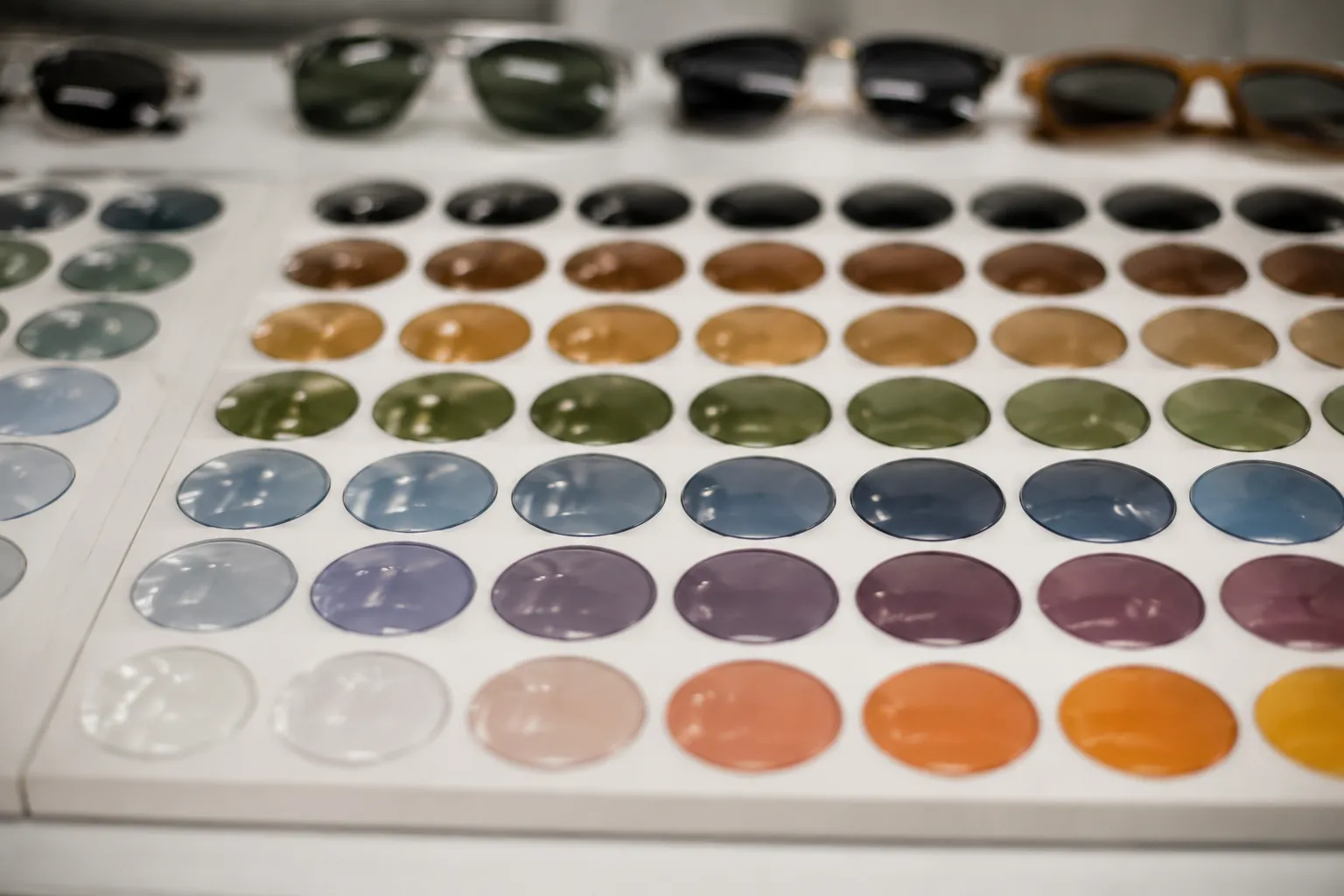
This article is for brand owners, importers, distributors, and retail buyers building a private label sunglasses line at volume. The point is not to pick lens colors by taste alone. The point is to build a lens color ladder that supports sell-through, gives sales teams clear good-better-best options, and keeps MOQ, compliance, and production complexity under control. If you source from China and need a practical range plan, this framework helps reduce dead stock, avoid unnecessary color splits, and place a first PO that can actually reorder.
Start with a commercial ladder, not a mood board
Weak sunglass assortments usually fail for one simple reason: buyers approve too many lens colors as if every SKU carries the same inventory risk. It does not. A commercial ladder separates low-risk core colors from selective fashion colors, then assigns each one to a channel, an expected sell-through speed, and an opening order depth.
For most private label collections, the base ladder starts with four lens families: smoke, brown, green, and blue. Smoke usually has the widest appeal and the lowest return risk because the view is neutral. Brown works well in driving, lifestyle, and warm-tone frame programs. Green suits heritage styling and brands that want a classic look without defaulting to grey. Blue is usually the fashion or seasonal upsell, not the volume anchor.
That matters even if MOQ looks flexible. A factory may offer a low minimum per design. Fine. That still does not mean every frame should launch in four lens colors. Split one style into smoke, brown, green, and blue at shallow depth and you create more batch handling, more approval points, and weaker replenishment logic. For most opening buys, the better move is simple: build around one anchor tint that can reorder fast, one secondary tint on proven shapes, and one higher-risk fashion tint only where channel margin can support slower turn.
- Core colors: smoke, brown, and selected green on commercially safe shapes and basic frame colors such as black, tortoise, crystal, gunmetal, or gold.
- Upsell colors: blue, gradient versions, deeper fashion tints, flash mirror, or other premium finishes where the target retail price can absorb the added complexity.
- Channel specials: selected tints reserved for resort, boutique, online drop, influencer capsule, or region-specific programs.
Smart buyers are not really buying lens colors. They are buying inventory behavior, forecast accuracy, and a clean reorder path.
Know what each lens color does for the wearer
Lens color is partly aesthetic, but B2B planning should start with wearer effect and sales clarity. Each tint changes perceived contrast, brightness handling, and color balance. If your sales team cannot explain the difference in one sentence on a line sheet, the assortment is not ready.
| Lens color | Commercial role | Typical visible light transmission target | Wearer effect | Range risk |
|---|---|---|---|---|
| Smoke | Core volume color | Often placed in Category 3 ranges for everyday sun use | Neutral color perception, broad outdoor use | Lowest |
| Brown | Core plus premium | Often placed in Category 3 ranges for bright conditions | Warmer visual tone, often perceived as stronger contrast | Low |
| Green | Core heritage color | Often used in Category 3 programs depending on tint depth | Balanced brightness control with moderate color shift | Medium-low |
| Blue | Fashion upsell | Varies widely by tint depth and decorative treatment | Cool visual tone, style-led purchase | Medium-high |
Smoke is the safest starting point because buyers expect a neutral view and broad usability. Brown often gives retail staff a stronger feature story because they can link it to comfort in bright conditions and stronger perceived contrast. Green works when the brand wants a more classic presentation. Blue often wins on shelf. But function is usually secondary to looks, so returns and reorder rates need closer tracking.
Material matters too. Polycarbonate lenses are common in volume programs because they are lightweight and impact-resistant, but color consistency can drift if process control is weak. TAC polarized lenses support a more premium retail story, but they also add cost and more inspection points. Nylon and CR-39 appear in premium programs, though they are less common in price-driven private label projects.
The short version is blunt. If one lens color must carry the collection, use smoke. If you want a second dependable seller, add brown. Green comes next. Blue should earn its place.
Build good-better-best around margin
A useful lens ladder needs price logic. Without it, the line sheet may look tidy while margin stays flat. At factory level, lens color decisions affect batching, scrap, inspection time, and whether components can be shared across multiple SKUs.
In practical manufacturing terms, the cost gap between a standard smoke lens and a standard brown or green lens is often smaller than buyers expect when volume is consolidated. The bigger problem is MOQ fragmentation. A program of 1,000 pairs split across seven lens-color combinations usually performs worse than a program of 1,000 pairs built around three combinations with cleaner depth.
A typical good-better-best structure works like this:
- Good: stock-friendly frame with smoke lens. Highest forecast volume. Use this to hit opening retail and protect turns.
- Better: same frame or best-selling shape with brown or green lens. Minimal tooling change, broader choice, controlled risk.
- Best: selective blue tint, gradient, mirror, or decorated frame using the same lens base curve where possible. Run lower depth and higher markup.
That shared lens base matters. If several SKUs can use the same base curve, the same lens thickness window, and the same edging specification, production is easier to control. Tight thickness tolerance also helps color look more consistent, especially on brown and green tints where shade depth can look uneven if lens body variation is too wide.
Decoration choices shape the ladder too. Pad print logos are usually the simplest branding method for entry-price programs. Laser engraving can create a cleaner premium effect on temple cores or lenses but needs tighter placement control. Hot foil and metal logo plaques add perceived value, yet they also add handling and QC steps. Keep that stack of upgrades selective. Otherwise margin gets diluted across weak SKUs.
Match the ladder to the channel
The right color ladder for an optical chain is not the right ladder for a beach kiosk, fashion distributor, or ecommerce launch. Buyers often reuse one assortment because it is easier to approve across departments. That is convenient. It also creates slow movers.
Channel planning should be direct:
- Mass retail and distributors: lead with smoke, then brown. Keep blue limited unless past sell-through supports it.
- Fashion retail: keep smoke as the base, but allow stronger blue penetration, crystal frame pairings, and selective gradients.
- Resort and summer seasonal: blue and green can take a larger share because the shelf context supports color-led purchase.
- Online-first brands: use smoke as the default hero SKU, then one or two visually clear upsell shades that photograph well under consistent lighting.
- Corporate or promotional programs: stay with smoke unless there is a strong brand-color brief and the compliance path is already clear.
Channel also affects packaging and presentation. A basic polybag plus carton pack may be enough for volume wholesale. Boutique and online programs usually need cleaner retail-ready presentation, such as a printed pouch, folding case, barcode label, and ship-safe outer packing. Once those costs are added, a premium lens color can make more sense because the final retail story is already moving upmarket.
If you ship to multiple countries, plan document management with the range. Common checkpoints may include CE EN ISO 12312-1, ANSI Z80.3, AS/NZS 1067, REACH, FDA registration, ISO 9001, and BSCI, depending on the product, market, and factory setup. These are not the same thing as product testing. But they do frame the compliance and supply-chain review that should happen before final sample approval.
Let production reality set the color count
On paper, adding one more tint looks easy. On the factory floor, every extra lens color can mean more batch separation, more tray identification, more first-article checks, and more chances to mix components. The risk grows fast when one range also includes multiple frame colors, polarized and non-polarized options, and several logo methods.
A common production flow for custom sunglasses looks like this: silhouette confirmation, counter-sample approval, frame-color approval, lens color standard approval, material preparation, frame production by injection or acetate or CNC route, trimming and polishing, lens tinting or lamination, assembly, logo application, inspection, packing, and final audit. Every extra colorway adds more control points. Simple as that.
Frame material affects planning too. Injection-molded PC or TR90 styles are efficient for larger-volume, cost-sensitive programs, but color matching between translucent frames and lens tints can be less forgiving. Acetate programs carry higher perceived value and better pattern depth, yet lead times may stretch because cutting, CNC shaping, barrel polishing, and manual finishing add steps. Metal frames bring plating, soldering, and coating variables that can shift the final look of lens-frame combinations.
Lead-time planning should reflect that reality. A custom lens color can move fairly quickly when the supplier is matching an existing tint standard, but a new fashion tint usually needs more review and adjustment. Bulk production timing after final approval depends on materials, order depth, and packaging complexity. One rule helps: keep the lens base shared across as many SKUs as possible, and vary tint only where the commercial case is strong.
Check compliance before approving the color story
Some buyers approve a nice-looking tint board first and ask about compliance later. Bad order. Lens darkness, UV performance, visible light transmission category, market labeling, and product declarations should be checked before the color program is locked.
For private label sunglasses sold in export markets, common checkpoints may include CE EN ISO 12312-1 for applicable markets, ANSI Z80.3 for the US, AS/NZS 1067 for Australia and New Zealand, REACH for chemical compliance, and FDA registration in the broader US supply chain context. ISO 9001 and BSCI are factory and supply-chain management references, not substitutes for product testing. The exact route depends on the product claim, material set, and destination market.
Color matters because visible light transmission can shift meaningfully from one tint to another even when two samples look similar on a screen. A deep smoke may sit comfortably in one category window, while a fashion blue or gradient treatment may move the product into a different transmission range and require different labeling. Small production variation matters too. If a target lens is approved around a specific transmission range, the supplier still needs process control tight enough to keep bulk production aligned with the intended standard and test method.
- Approve a physical color standard, not only a digital render.
- Confirm destination market before test paperwork is prepared.
- Record target transmission range and lens category in the sample file.
- Check whether mirror, gradient, or decoration creates extra review points.
- Keep declarations, reports, and artwork tied to final SKU codes.
This work is not glamorous. It does prevent rework, relabeling, and blocked shipments.
Use MOQ and pricing breaks to build the first PO
Most opening orders are either too cautious or too fragmented. Both mistakes hurt margin. A low MOQ per design is useful for market tests, sales samples, influencer seeding, or small pilot runs. It is rarely the most efficient way to build a stable first production order.
| Order level | Best use | Color strategy | Commercial note |
|---|---|---|---|
| Low MOQ trial | Market test, sales sample, small trial | One core color only | Useful for validation, weak for unit-cost efficiency |
| Mid-sized opening order | Early production run | Two-color ladder on proven shapes | Better control of cost, packaging, and inventory depth |
| Larger launch order | Channel launch | Core plus one upsell family | Usually where assortment logic starts to improve margin |
| Scaled distributor or chain program | Large replenishment program | Full ladder with strict depth planning | Best suited to repeat orders and tighter cost control |
These levels are not only about lens cost. They reflect how material purchasing, line efficiency, packaging consolidation, and inspection planning improve as volume deepens. In real sourcing, pricing often gets cleaner as quantity rises because suppliers can batch raw materials more efficiently and reduce setup loss per unit. Spread an opening order across too many lens colors and you push yourself back up the cost curve.
If the opening collection includes four frame shapes on a controlled budget, a safer PO often looks like four smoke SKUs, two brown extensions on the strongest shapes, one green SKU on a heritage style, and one blue fashion SKU only if the channel supports it. That mix gives commercial coverage without spraying quantity across too many slow movers. The sample room can always create more combinations than the market can absorb. The buyer has to be stricter than the factory.
A practical launch template for a first range
If you are building a first or second private label sunglasses collection, keep the tint menu disciplined. Most buyers do not need maximum variety. They need a range that can sell, reorder, and stay manageable in QC.
- Select 3 to 5 frame shapes with broad fit, proven category demand, and shared construction where possible.
- Assign smoke to every key shape as the anchor lens and baseline forecast driver.
- Add brown to the two strongest lifestyle shapes where warm-tone presentation supports the story.
- Add green to one heritage or metal style if the brand identity can explain it clearly.
- Add blue to one fashion-led SKU only for visual contrast and markup opportunity.
- Keep lens base, thickness range, and core material consistent across most SKUs to simplify edging, assembly, and QC.
- Define which colors are permanent and which are seasonal before launch so the sales team knows what can be replenished.
This structure fits how factories actually run. It uses sampling time efficiently, keeps bulk production inside normal planning windows for straightforward programs, and gives buyers a cleaner path into smaller, mid-sized, and larger quantity breaks. It also creates a line sheet that buyers can understand fast: one safe anchor, one dependable extension, one heritage option, and one visual risk.
The best lens color ladder is usually a boring one with one or two deliberate risks on top. That is how private label collections reorder.
That is the target. Not maximum variety. Repeatable sales, cleaner compliance, and better margin control.
Have a custom sunglasses project in mind?
Send us your styles, target market and quantities and we will return a detailed quote with MOQ, lead time and a sample plan.
Get a QuoteWhy source this from Wenzhou with LumiShades
Wenzhou in Zhejiang Province is widely regarded as China’s eyewear manufacturing capital, producing a large share of the world’s sunglasses. That concentration matters to buyers: a deep local supply chain for acetate sheet, hinges, lens blanks, plating and packaging means shorter component lead times, easier color and material matching, and a workforce with decades of eyewear-specific skill. LumiShades has manufactured in this ecosystem since 2009, and our vertical integration — in-house injection molding, acetate cutting, CNC milling, lens tinting, decoration and quality control — means no part of your order is quietly subcontracted to a workshop you cannot audit.
For international buyers, that vertical control translates into accountability. When a single factory owns every step, defects are traced and fixed at source rather than bounced between vendors, and your specifications survive intact from first sample to bulk. For procurement review, buyers can request process records, approved samples, quality checkpoints and project-specific compliance files before placing a bulk order. Required testing and documentation are confirmed against the destination market and product specification rather than assumed from a generic certificate list. Explore our manufacturing capabilities and quality control process to see how this works in practice.
Frequently asked questions
Which lens color should carry the highest opening order quantity? Smoke is usually the safest anchor for an opening order because it has the broadest acceptance, the most neutral wearer experience, and the lowest assortment risk. If you want a second volume color, brown is typically the next choice because it adds a stronger feature story without becoming too fashion-led.
How many lens colors should a first private label collection launch with? For most buyers, three to four lens colors are enough: smoke, brown, green, and a limited blue option. That gives you range structure without splitting MOQ too thin across slow-moving combinations. If the channel is conservative, start with two colors and add the rest after real sell-through data comes in.
Does changing lens color affect compliance testing? Yes. Different tints can produce different visible light transmission results, which may affect lens category, labeling, and the required test confirmation. Buyers should confirm the destination market, target transmission range, and approved physical color standard before locking final production.
Is a low MOQ the right level for a first production order? A low MOQ is useful for trials, sample selling, and small market tests, but it is rarely the most efficient level for a real launch. Buyers usually get better unit economics and cleaner assortment logic at a mid-sized opening order with a tighter color mix and fewer weak combinations.
How should buyers handle custom lens color development timing? Start by approving one physical reference sample for each tint and confirm whether the supplier is matching an existing standard or creating a new one. Build extra time into the schedule if the range includes gradients, mirror finishes, polarized construction, or market-specific compliance review. The more variations you add, the longer the timeline can stretch.
Ready to start?
Explore our shield & oversized sunglasses or request a quote — our sales team replies within 12 hours.
Request a Quote