
Polarized Lens Sourcing for Private Label Sunglasses
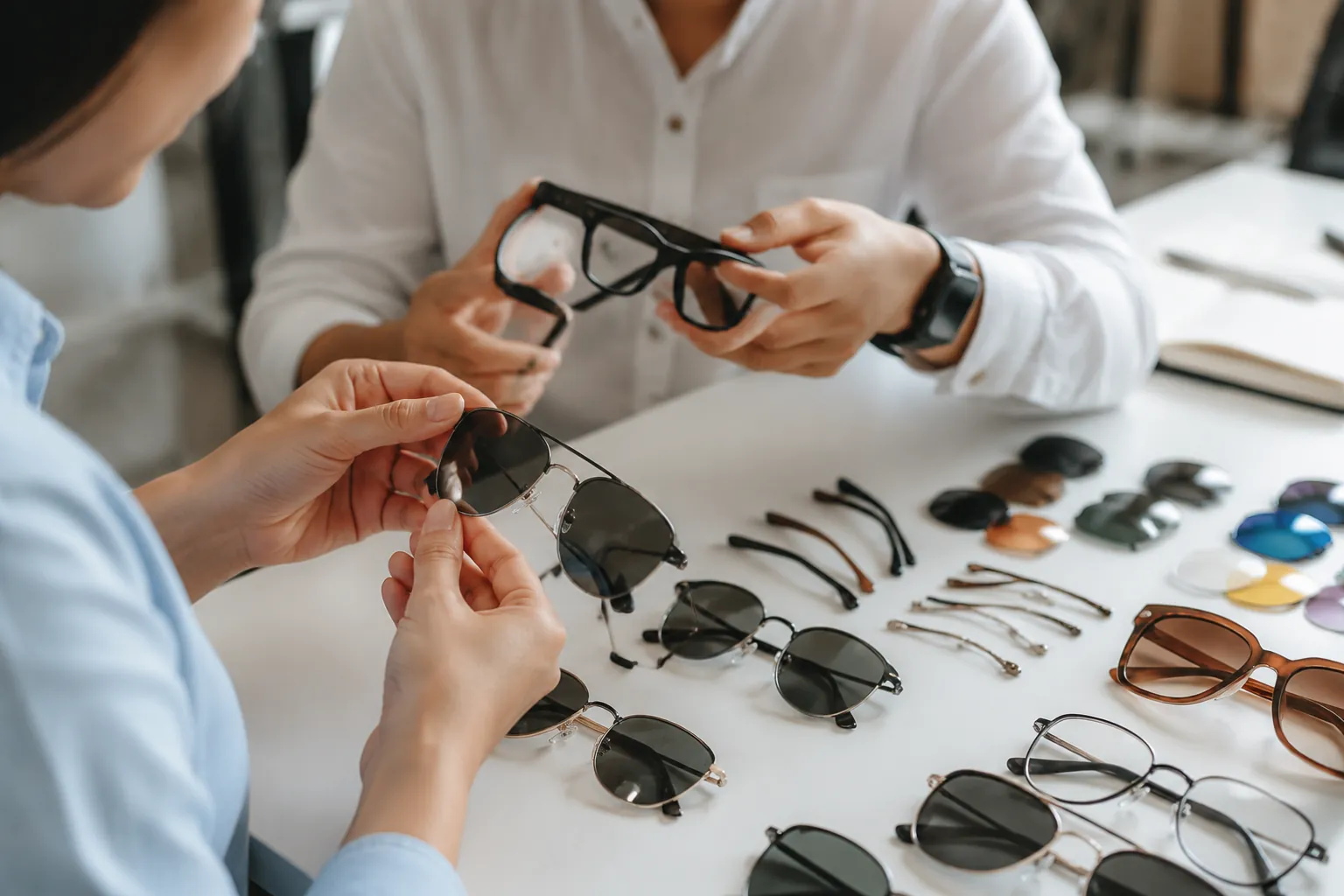
This guide is for importers, retail buyers, distributors, and brand teams sourcing polarized private label sunglasses in volume. It explains what polarization does, where cost comes from, what to specify on a purchase order, and what can go wrong before shipment. The goal is practical: fewer sample loops, clearer lens performance expectations, and order plans that match your target market and price point.
Start With the Lens Job
Polarization is a function, not a style detail. A polarized lens reduces reflected glare from horizontal surfaces such as water, snow, wet roads, glass, and bright pavement. In daily use, that can improve comfort and contrast for fishing, driving, beach retail, travel, and outdoor sports.
The first sourcing question is not whether a factory can make polarized lenses. Most experienced suppliers can. The real question is what the end user needs the lens to do and what retail price the market can support. A beach-shop lens, a driving lens, and a wrap sports lens may all be polarized, but they can differ in material, base curve, tint, coating stack, and fit tolerance.
Start with three decisions: lens material, lens color or visible light transmission target, and destination-market compliance. Do that before decoration or packaging. It avoids a common mistake: approving a sample that looks right but later fails UV, fit, labeling, or market checks. Also state whether the sunglasses are for general fashion retail, active outdoor use, or a use case that needs stronger impact performance. That choice drives the rest of the spec.
Polarized sourcing works as a system. Frame material, lens curvature, tint density, coating stack, and logo method all affect the result. Change one variable late, and cost and lead time usually change with it.
Lens Options and Cost Logic
Most private label polarized orders use TAC, polycarbonate, CR39, or nylon. Each material behaves differently. Each has its own tolerance and fitting risk. TAC is common because it is light and cost-efficient. It is widely used for polarized fashion and lifestyle sunglasses. Polycarbonate is tougher and more impact resistant, but it is more sensitive to stress, heat, and poor fitting. CR39 gives good optical clarity and works well for classic sunglass styles, but it is heavier and is not usually chosen for higher-impact positioning. Nylon is often used for wrap and sport frames because it handles higher base curves and curved fronts better.
Cost depends on more than the material name. A stock polarized TAC lens in standard grey, brown, or green is usually easier to source because the sheet, film, and color are already established. Ask for a custom tint, gradient fade, mirror coating, anti-reflective back coating, or special base curve, and the factory usually needs extra setup, more inspection, and a higher scrap allowance. A small laser mark on the lens edge is usually simpler than a centered visible lens logo. The visible mark is easier to miss by a millimeter. That is enough to trigger rejects.
| Lens build | Typical use | Buyer advantage | Watch point |
|---|---|---|---|
| TAC polarized | Mass retail, beach, promo, lifestyle | Low-cost polarized option; easy to source in standard colors | Edge sealing, delamination control, and humidity storage matter |
| Polycarbonate polarized | Driving, sport, youth, higher-durability lines | Better impact resistance than TAC; lighter than CR39 | Stress whitening, tight frame fit, and coating adhesion need attention |
| CR39 polarized | Classic acetate, optical-style sunglasses | Good clarity and stable tint appearance | Heavier lens and lower impact performance limit some claims |
| Nylon polarized | Wrap sports frames and active outdoor use | Handles higher base curves and curved fronts well | Higher cost and tighter molding control are usually required |
Simple polarized programs can sometimes reach a low per-pair lens and assembly cost at large volumes, but only when the frame, lens, coating, and decoration stay standard. Small test orders almost always cost more per unit. Setup, cutting, labor, and QC are spread across fewer pieces. Pricing usually improves as volume rises. Factories can buy materials and schedule production more efficiently.
Separate lens cost from finished-frame cost. That matters. Mirror coating, custom tint, logo engraving, and high-curvature fitting can turn a basic lens into a more expensive assembly. Ask the right question: what lens build can meet the performance target at the retail price you need?
How Polarization Affects Performance
A polarized lens should reduce glare without creating distortion, uneven color, or discomfort after a few minutes of wear. The polarizing axis must be aligned correctly during lamination and cutting. If the film is rotated during assembly, glare reduction drops immediately. The customer may not know why. They will notice the result near water, car hoods, wet roads, or glossy floors.
Do not stop at a label that says "polarized." The purchase order should specify UV400 protection, lens category or visible light transmission target, lens color, coating type, base curve, and destination market standard. A dark lens is not automatically UV-protective. A mirror finish is not automatically durable. A lens that looks fine in a showroom may still fail in heat, salt air, or repeated fitting pressure.
Useful control points include a polarization tester, a spectrophotometer, and a fit check on the actual frame model. The factory should verify that the polarizing axis is aligned consistently, that UV transmission sits within the target range, and that coating layers do not peel or haze after light abrasion. For general sunglasses, CE EN ISO 12312-1, ANSI Z80.3, and AS/NZS 1067 are the main performance frameworks, depending on market. FDA registration matters in the U.S. business context, but it does not replace product testing. REACH matters for restricted chemicals in materials, coatings, and decoration sold into the EU.
- Glare control: test with a polarization setup or reflected-glare source, not by eye under office lighting.
- UV protection: verify by spectrophotometer; lens darkness alone proves nothing.
- Optical quality: check for waves, bubbles, color banding, and left-right consistency.
- Coating durability: mirror, hard coat, and tint layers should survive handling, assembly, and light abrasion.
- Frame fit: confirm the lens seats without forced pressure, especially on polycarbonate and nylon.
Repeatability is the point. One good prototype is not the goal. You need a production lens that keeps the same tint, axis, and fit from the first sample to the final carton.
Cost Adders Buyers Miss
The lens is only one line on the costing sheet. Polarized private label sunglasses often pick up cost in places that are easy to miss. A factory may quote a low unit price on the lens, then add charges later for custom cutting, logo placement, special color matching, tighter QC, or slower assembly because the lens shape is not standard.
Stock polarized lenses are usually cheaper because the sheet, tint, and coating already exist. Ask for a custom color, gradient transition, mirror flash, anti-reflective back coating, oleophobic coating, or unusual base curve, and scrap rate plus setup time rise. The same logic applies to lens branding. A small logo near the temple or on the edge is usually straightforward. A large visible lens mark can increase rejects because drift is easy to see and hard to hide.
Frame material also changes total cost and risk. Injection frames often accept standard lens shapes with relatively fast fitting. Acetate frames require cutting, tumbling, CNC milling, polishing, and then lens mounting. If the eyewire groove is inconsistent, a polarized lens can chip during insertion or sit under stress. That can later cause stress marks or cracking. Metal frames add another variable: temple alignment and rim symmetry need to stay stable enough that the lens is not forced sideways during assembly.
Pay first for the feature that sells the product. If the commercial story is fishing performance, prioritize lens quality, polarization consistency, and scratch resistance. If the story is a fashion acetate frame, do not overbuy a sports lens the customer will never notice. That is an easy way to lose margin.
Samples, MOQ, and Timing
Polarized orders usually take longer than simple fashion lens orders because the buyer has to approve appearance and performance. A practical sample cycle is 7-10 days once the spec sheet, artwork, and frame selection are locked. Bulk production usually needs 25-35 days after pre-production approval, assuming no late changes. If the buyer changes lens color, mirror finish, logo position, packaging claims, or frame decoration after sampling, the schedule often resets.
The fastest sample path is to lock technical choices in the first round. Decide the destination market, lens material, tint family, and required standard before asking for decorative options. Review the sample outdoors, not just under showroom LEDs. Grey and brown lenses can look different in natural light. Some mirror finishes also shift once exposed to sunlight. If the buyer is ordering for driving, sport, or premium retail, one extra day of outdoor review is cheaper than fixing a production run later.
- Confirm destination market and required standard before sampling.
- Select frame material and lens build together, not separately.
- Approve lens color under outdoor light, not only under showroom LEDs.
- Check polarization axis, UV result, and visible light transmission target.
- Freeze artwork for temple logos, lens marks, packaging, and barcodes.
- Approve a pre-production sample before mass cutting and fitting.
MOQ changes the economics. At small quantities, a buyer can test a concept and validate retail response, but the cost per pair will be higher because setup and QC overhead are large relative to output. At larger quantities, the factory can usually plan material buying and cutting more efficiently, which improves pricing and scheduling. If demand is likely to repeat, say so on the RFQ. Factories price differently when they expect a one-time test versus a replenishable program.
QC Checks That Catch Failures
Polarized lens defects are often missed because cartons look clean and the frame feels fine in hand. Problems show up in use: rainbow stress patches, peeling mirror, loose lenses, one lens darker than the other, weak glare blocking, or a customer complaint that the view feels different from one eye to the other. The right QC plan catches issues before packaging closes.
Inspection should happen in stages. Incoming lens sheets or blanks should be checked for film uniformity, scratches, bubbles, and correct polarizing axis direction. During cutting, the factory should verify shape tolerance and edge quality. During frame fitting, the lens should seat without forced pressure and without visible stress marks. Final inspection should combine cosmetics with function: UV, polarization, hinge tension, coating quality, and logo position. A pair that passes visual inspection alone is not enough.
| QC stage | What to check | Why it matters |
|---|---|---|
| Incoming lens sheets or blanks | Film uniformity, scratches, bubbles, axis direction | Bad material cannot be saved after cutting |
| Lens cutting | Shape tolerance, edge quality, left-right consistency | Poor edges cause chipping, gaps, or frame stress |
| Frame fitting | Lens seating, pressure marks, groove match | Forced lenses can distort polarization or crack later |
| Final inspection | UV, polarization, cosmetics, hinge tension, logo position | Confirms the finished product matches the approved sample |
For bulk orders, inspection should combine AQL-style sampling with specific lens performance checks. If the order is going to a market with compliance rules, ask for test reports tied to the exact model and color, not a generic family report. ISO 9001 supports documented process control, and BSCI covers social compliance expectations, but neither replaces product-specific buyer requirements. A clean process only helps if the purchase order defines what "good" means.
Compliance by Market
Compliance language must match the destination market. For Europe, CE EN ISO 12312-1 is the core sunglass standard. For the United States, ANSI Z80.3 is commonly used for non-prescription sunglasses, and FDA registration is part of the broader U.S. regulatory picture. For Australia and New Zealand, AS/NZS 1067 applies. REACH matters for chemical restrictions when selling into the EU, especially for plastics, coatings, nose pads, temple tips, and printed packaging that can introduce restricted substances.
Do not reuse one generic hangtag for every region unless it has been reviewed for that market. Lens category, warnings, manufacturer or importer details, and usage limits can differ by region. Category 4 lenses, for example, are not suitable for driving. If a product is sold as a driving sunglass, that matters. If it is sold for leisure wear only, the packaging should not imply performance it cannot support. Overclaiming is a fast path to chargebacks and compliance trouble.
Buyer rule: ask for test reports that match the lens build and destination market, then make sure the packaging claims do not go beyond the report.
Use only certifications and standards the factory can support with model-specific testing or documented process control. Keep the compliance package tied to the actual lens color, material, and frame model. If a supplier adds badges without paperwork, pause the order and request the report numbers, issue dates, and model references.
Spec Sheet to Send Before Quoting
A clear RFQ saves time and stops suppliers from quoting the cheapest interpretation of your idea. For polarized private label sunglasses, the best spec sheet combines commercial intent with technical detail. The factory should know not only what you want to sell, but also how the product will be checked and where it will be sold.
- Frame: material, model reference, size, color, hinge type, nose pad style, and decoration method.
- Lens: material, polarized requirement, color, visible light transmission range, UV400, base curve, coating, and thickness target.
- Branding: temple logo, lens logo, metal logo plate, pad print, laser engraving, pouch, case, cloth, and carton marks.
- Compliance: destination markets and required standards such as CE EN ISO 12312-1, ANSI Z80.3, AS/NZS 1067, REACH, or U.S. FDA-related needs.
- Order plan: MOQ test quantity, expected reorder level, target price, sample deadline, bulk delivery window, and inspection requirement.
Include tolerance targets. State whether the lens edge should sit within a defined fit tolerance for the eyewire, whether logo placement can vary by a stated amount, and whether color acceptance is based on one signed master sample or a measured range. If the lens is mirrored or gradient, specify which side faces outward and what level of visible transition is acceptable. If the frame is acetate, note whether polishing changes the final opening size. Those details prevent expensive assumptions.
Send the RFQ before asking for the best price. A factory quoting blind will either protect itself with a high number or underquote and recover later through change orders. Neither helps you. If the order is a small test, say so. If the real annual opportunity is larger, say that too. Honest volume and honest standards produce cleaner pricing, cleaner samples, and faster decisions.
Have a custom sunglasses project in mind?
Send us your styles, target market and quantities and we will return a detailed quote with MOQ, lead time and a sample plan.
Get a QuoteWhy source this from Wenzhou with LumiShades
Wenzhou in Zhejiang Province is widely regarded as China’s eyewear manufacturing capital, producing a large share of the world’s sunglasses. That concentration matters to buyers: a deep local supply chain for acetate sheet, hinges, lens blanks, plating and packaging means shorter component lead times, easier color and material matching, and a workforce with decades of eyewear-specific skill. LumiShades has manufactured in this ecosystem since 2009, and our vertical integration — in-house injection molding, acetate cutting, CNC milling, lens tinting, decoration and quality control — means no part of your order is quietly subcontracted to a workshop you cannot audit.
For international buyers, that vertical control translates into accountability. When a single factory owns every step, defects are traced and fixed at source rather than bounced between vendors, and your specifications survive intact from first sample to bulk. We back this with 15+ years of experience, shipments to 60+ countries, more than 5 million pairs produced per year and a 98.5% on-time delivery rate. Our certifications — CE EN ISO 12312-1, FDA registration, ANSI Z80.3, AS/NZS 1067, REACH, ISO 9001 and BSCI audit — mean the compliance documentation your market requires already exists. Explore our manufacturing capabilities and quality control process to see how this works in practice.
Frequently asked questions
Does polarized always mean better sunglasses? No. Polarization improves reflected glare control, but it adds cost and can interfere with visibility on some screens, including phones and some car displays. For fashion-only low-price styles, UV400 non-polarized lenses may be the better fit if glare reduction is not a key selling point. For retail decisions, compare the intended use case, the target price, and the need for screen compatibility before you choose polarized or non-polarized.
What MOQ should I use for a first polarized private label order? Use the smallest quantity that still gives you useful sample feedback and realistic factory pricing. A small test order can validate fit, color, and retail response, but it will usually cost more per pair because setup and QC are spread across fewer units. Ask the factory to quote at multiple quantities so you can see how price changes at your test volume and at your expected reorder volume.
How long should sampling and bulk production take? Plan about 7-10 days for samples and 25-35 days for bulk after sample approval if the design is already defined and no late changes are made. Custom lens colors, mirror coatings, logo placement changes, or frame fit corrections can extend both timelines. Lock the destination market, lens build, and artwork before requesting the first sample to avoid resets.
Which standards should I request for polarized sunglasses? Match the destination market and the actual product type. Use CE EN ISO 12312-1 for Europe, ANSI Z80.3 for the U.S. market, and AS/NZS 1067 for Australia and New Zealand. Use REACH when selling into the EU and ask for model-specific reports whenever possible. FDA registration is relevant in the U.S. context, but it does not replace product testing for the sunglasses themselves.
Can I use the same polarized lens for every frame? Usually not. Wrap sports frames, acetate fronts, and injection frames place different stress on lenses. Lens material, base curve, thickness, and fitting tolerance should match the frame geometry, or the lens may stress, chip, haze, or distort during wear. Ask the factory to confirm fit on the exact frame model, not on a similar style.
What is the most common polarized lens sourcing mistake? Approving color and logo first, then skipping performance checks. Confirm UV protection, polarization axis, visible light transmission target, coating quality, and lens fit before bulk production, and make sure the packaging claims stay within what the report actually covers. If the factory cannot show model-specific evidence for the build you ordered, treat that as a risk and stop before mass production.
Ready to start?
Explore our shield & oversized sunglasses or request a quote — our sales team replies within 12 hours.
Request a Quote