
Mirrored Sunglass Lenses: OEM Spec & QC Guide
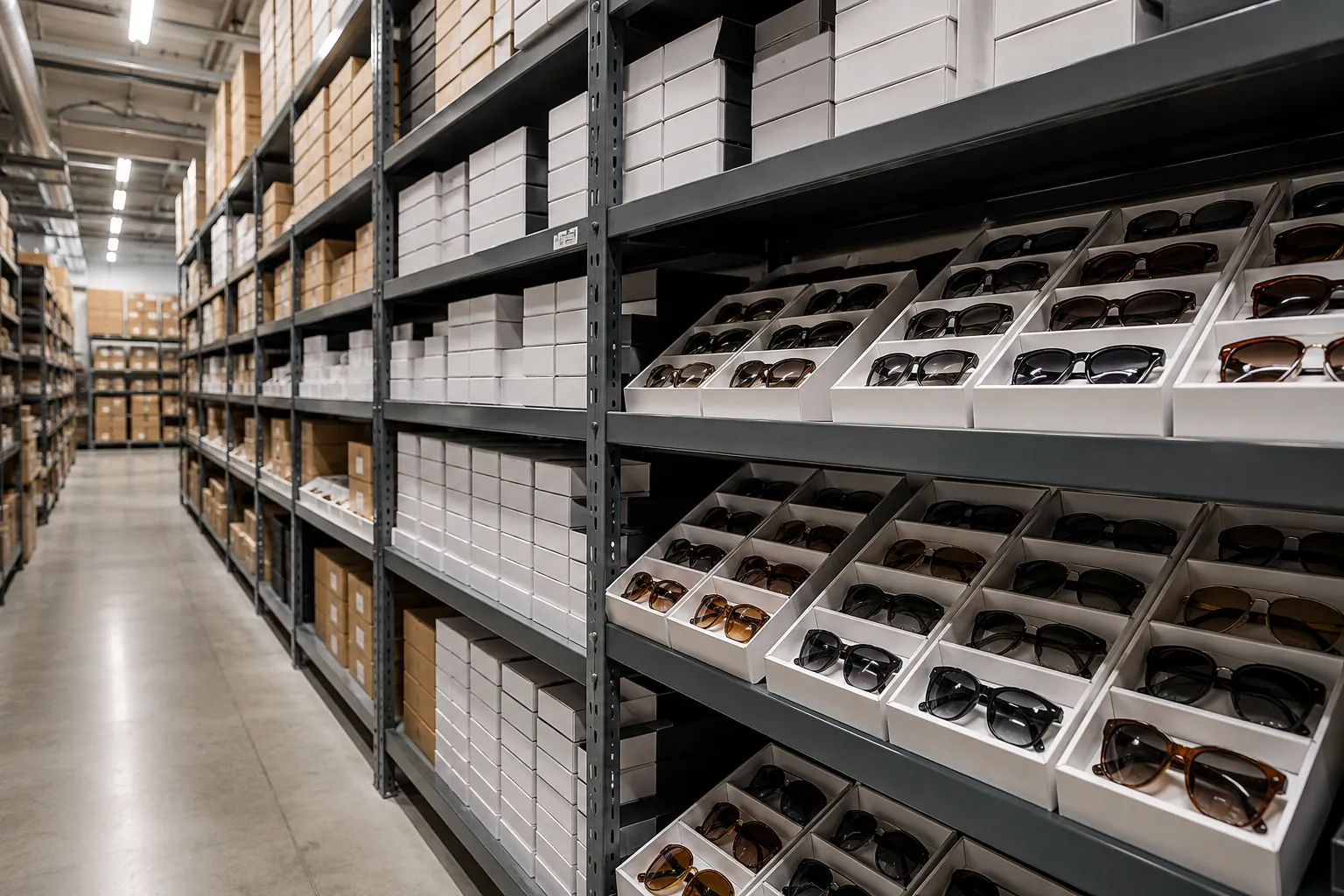
Mirrored lenses can make private-label sunglasses look stronger on the shelf. They can also expose weak specifications fast. Most defects do not come from the word "mirror." They come from vague base tint, unstable coating, loose decoration tolerances, poor packing, or incomplete inspection. This guide is for brands, importers, distributors, and retailers that need mirrored sunglass lenses with repeatable color, realistic scratch standards, and factory-ready instructions.
What a mirrored lens really is
A mirrored sunglass lens is a tinted or absorptive lens with a reflective coating applied to one surface, usually the front. The mirror layer changes the outside appearance and may affect visible light transmission. It does not replace the base tint. Two lenses called "blue mirror" can look very different if the substrate, tint, coating process, or viewing light changes.
For OEM production, treat a mirrored lens as a stack, not a single finish. The stack may include lens material, base tint or polarized film, hard coat or protective coat, mirror layer, and sometimes a topcoat. The exact order depends on the material and the supplier's process. If one layer changes, the final color, reflectance, adhesion, or scratch visibility can change too.
Material matters. Polycarbonate is common where impact resistance and low weight are priorities, but it needs the right surface preparation. TAC is widely used in polarized and fashion sunglass programs, and the edge must be handled carefully to reduce lifting or delamination risk. Nylon and other materials can suit specific designs, but coating adhesion still depends on cleaning, preparation, cure control, and coating chemistry. Your supplier should be able to identify the lens material and coating sequence used for the approved sample.
Buyer rule: Do not approve mirror color from one good-looking sample alone. Approve the full lens specification: material, base tint, mirror color, coating side, coating sequence, appearance standard, packing method, and inspection criteria.
How to specify mirror color clearly
Mirror colors are often sold as silver, gold, blue, green, red, copper, smoke, or rainbow. These names help people talk. They are not enough for production. A gold mirror over a gray base will not match a gold mirror over a brown base. A blue mirror may read as bright blue, navy, purple, or pale blue depending on tint, coating, and light source.
Specify color in layers. A usable specification includes the mirror color name, a signed physical master sample, lens material, base tint family, polarized or non-polarized construction, and finish. If the supplier can measure visible light transmission, set a target or approved range. If color measurement is available, agree on a tolerance against the master sample. If not, define the viewing conditions and use signed samples for visual inspection.
At minimum, define these items together:
- Mirror color name and signed physical master sample
- Lens material, such as polycarbonate, TAC, nylon, or another specified material
- Base tint color, such as gray, brown, green, smoke, or approved custom tint
- Polarized or non-polarized construction
- Target darkness or visible light transmission requirement, if measured
- Mirror side: front surface, back-side effect, or specified decorative area
- Surface character: high-gloss mirror, muted mirror, gradient mirror, or flash mirror
- Approved light source for comparison, such as daylight booth, D65-equivalent light, or another agreed inspection condition
Keep the master sample in the technical file. Reference it on the purchase order or product specification. If the same program uses different materials, lens shapes, curvatures, or decoration methods, approve each version separately. A color approved on one lens shape may shift on another because curvature, thickness, and coating angle affect appearance.
Base tint drives the final look
The base tint affects mirror appearance, darkness, eye coverage, and wearer comfort. It is not just a background color. Gray is usually the most neutral choice and is often easier to control in broad sunglass programs. Brown gives a warmer view and can increase perceived contrast. Green gives a classic sunglass look. Blue, red, and other fashion tints can work, but variation is easier to see.
Choose the base tint for both style and production control. A neutral gray base can make silver, blue, and smoke mirrors easier to manage. Brown pairs well with gold, copper, and outdoor-style assortments, but too much amber can make the finished lens look heavy. Green can look balanced and commercial, but tint depth must be checked on larger lenses. Bright blue and red effects need tighter sample approval. Small shifts are obvious.
| Base tint | Visual result | Typical use | Recommended control points |
|---|---|---|---|
| Gray | Neutral view and clean mirror appearance | Core retail SKUs, broad market programs | Confirm visible light transmission if measured; compare each lot against the signed master sample |
| Brown | Warmer tone and stronger perceived contrast | Driving-style, outdoor, and lifestyle assortments | Check under agreed daylight and indoor lighting to avoid unwanted amber or red drift |
| Green | Balanced tone with a classic sunglass appearance | Fashion and general-purpose sunglasses | Control tint depth, left-right matching, and edge consistency on larger lens blanks |
| Blue | Fashion-led look with a more visible mirror effect | Seasonal, promotional, and private-label fashion lines | Watch for coating unevenness, haze, banding, and color shift against the approved sample |
For a small assortment, approve each mirror color with its intended base tint. Do not force several mirror colors over one generic tint unless you have tested the result. This reduces batch surprises and makes retail inspection easier.
Coating stack and process control
Mirror-lens failures usually come from process variation: contamination, weak cleaning, poor adhesion between layers, incomplete cure, uneven coating thickness, or rough handling before the coating is stable. A lens may look fine right after coating and later show haze, edge lifting, rubbing marks, or patchy mirror loss. That is a process problem.
A typical OEM route may include substrate preparation, tinting or lamination, hard coating, mirror application, curing, and protective handling or topcoat application. The order is not universal. It depends on material, polarization, coating chemistry, and equipment. Vacuum deposition and sputtering are common for reflective coatings. Other decorative coating methods may be used for fashion effects, but they should be validated before bulk production.
Buyers do not need to demand one fixed process for every factory. They do need the approved process documented and protected from unapproved changes. The supplier should state which surface is coated, how the surface is prepared, when the lens is cured, and how coated lenses are handled before packing. This does not require disclosure of private formulas. It does require enough detail to repeat the order and solve problems.
Practical process controls to request include:
- Lens material confirmation and finished lens thickness tolerance as agreed for the product
- Surface cleaning method and any primer, plasma, or other preparation step if used
- Cure or drying conditions controlled by time, temperature, or supplier-defined process parameters
- Mirror coating process settings controlled against the signed master sample
- Adhesion and rub checks after cure, especially for new colors, new materials, or first production lots
If the supplier changes coating sequence, coating supplier, cure profile, lens material, or base tint without notice, your approval may no longer apply. Put change-control language in the specification or purchase order. Any material, coating, decoration, or packing change should require buyer approval.
Decoration methods can change the result
Mirrored sunglasses are often combined with logos, gradient effects, partial mirrors, color fades, or laser marks. These details affect appearance and durability. A back-side printed logo, a laser mark through the mirror layer, and a masked gradient mirror can all produce different results, even with the same mirror color name.
A back-side logo may look clean from the front, but it must be protected from rubbing during packing and handling. A gradient mirror can look premium, but the start and stop points need control or the left and right lenses will not match. Laser marking may be more durable than surface print in many uses, but visibility depends on mirror color, base tint, and placement.
For decorative details, define measurable rules:
- Logo size, artwork file, and placement in millimeters
- Print color, opacity, and whether the decoration is on the front or back surface
- Gradient start and stop points, measured from a defined lens edge, lens top, or other agreed reference point
- Acceptable left-right alignment difference and overall placement tolerance
- Any prohibited zones near the optical area, drill holes, hinge side, edge groove, or high-curvature area
Decorative mirror features raise rejection risk because they add inspection points. Approve a physical pre-production sample before bulk production. Do not rely only on a rendering. Renderings do not show real reflectance, edge behavior, or viewing-angle color shift.
Scratch expectations and defect limits
Mirrored lenses show fine marks more easily than plain tinted lenses. The reflective surface makes small scratches, handling marks, and packing rub more visible. That does not mean all marks are acceptable. Set the inspection distance, light, viewing angle, defect limits, and packing method before production.
The practical question is not whether every lens can look perfect under extreme side lighting. The question is what is acceptable under agreed inspection conditions. For some fashion sunglasses, very fine hairline marks that are not visible at normal inspection distance may be allowed. For premium, sport, or stricter retail channels, the limit should be lower. Write it down.
Use practical acceptance rules:
- Very fine hairline marks visible only under harsh side light may be acceptable only if the agreed quality standard allows them and they are not visible at the defined normal inspection distance
- Deep scratches, mirror coating loss, pinholes, haze, edge flaking, obvious patchiness, and left-right color mismatch should be treated as defects
- Rub marks caused by poor interleaving, loose pouch packing, lens-on-lens contact, or contaminated cleaning cloths should be treated as packing or handling failures
Ask which durability checks the supplier runs internally. Common checks include visual inspection, tape adhesion checks, crosshatch adhesion checks where applicable, rub testing, and simulated handling or packing abrasion. Agree on the exact method before the order. Appearance inspection and regulatory compliance are separate. A lens can look good and still need market testing. A lens can meet a standard and still fail your cosmetic limit.
Lead time, MOQ, and cost logic
Mirror lenses affect setup, color approval, coating control, yield, inspection time, and packing labor. Quantity and specification stability matter. Small trial orders can help test color and sell-through, but unit cost is often higher because setup and inspection are spread over fewer pairs.
No MOQ, lead time, or unit price is universal. It depends on lens material, coating process, frame style, number of colors, decoration, packing requirement, and supplier capacity. If a quote is very low, check what is included: lens material, polarization if required, mirror coating, hard coat or protective coat, logo decoration, individual packing, compliance support, and inspection level.
Lead time also changes with approval complexity. Standard colors using existing materials are usually faster. Custom base tints, new mirror colors, gradient effects, and decorated lenses take longer. If you change mirror color, tint, material, or artwork after approval, expect more sampling or validation.
| Order level | Typical production logic | Price trend | Lead-time risk |
|---|---|---|---|
| Trial or MOQ order | Best for checking color, fit, packing, and sell-through before committing to scale | Highest unit cost because setup is spread over fewer pairs | Low volume exposure, but approval delays can still be significant |
| Small private-label run | Useful for first commercial launch or limited-channel testing | Better than trial pricing if materials and process are stable | Medium risk if color, artwork, or packing approval is late |
| Repeat or mid-volume order | Better for replenishment and planned retail programs | Improved efficiency if the specification is unchanged | Requires lot-to-lot color and packing control |
| Large-volume program | Best for stable SKUs, chain programs, or seasonal rollouts | Best opportunity for scale efficiency, subject to yield and specification | Most sensitive to batch drift, inspection consistency, and packing damage |
The real cost is not just the lens price. Count approvals, rejects, rework, inspection, packing protection, compliance paperwork, and the risk of one batch looking different from the signed standard.
QC checks and compliance documents
Quality control for mirrored lenses should start before final inspection. Check incoming material, pre-coating cleanliness, in-process coating or decoration, final assembly, and final packing. End-of-line inspection alone is weak for a product where color, adhesion, cleanliness, and scratch visibility are shaped by earlier steps.
A practical buyer checklist includes visual comparison against the signed master sample, left-right matching, mirror uniformity, edge coverage, haze, pinholes, surface cleanliness, decoration placement, and packing protection. If the supplier can measure visible light transmission or color, add those measurements to the control plan. If not, define the visual inspection method: light, distance, viewing angle, sample reference, and acceptance criteria.
Useful factory checkpoints include:
- Incoming lens material check for material type, surface condition, and visible defects
- Pre-coating cleanliness check under agreed inspection light
- In-process comparison against the signed master sample during each batch or color change
- Adhesion or rub check after cure, especially for new mirror colors or new substrates
- Final pack audit to verify interleaving, pouch fit, cleaning cloth compatibility, carton fill, and protection from lens-on-lens contact
For compliance, ask which standard applies to the target market and whether testing covers the exact lens material and construction you are buying. Common requests may include CE EN ISO 12312-1 for sunglasses sold in markets that require CE marking, ANSI Z80.3 for non-prescription sunglasses in the United States, AS/NZS 1067 for Australia and New Zealand, REACH chemical compliance for the European market, FDA registration where applicable for the supplier or product category in the United States, and supplier-level system or audit documents such as ISO 9001 or BSCI. Do not treat FDA registration, ISO 9001, or BSCI as product performance certification for the lens. They serve different purposes.
Most mirror-lens mistakes start with weak paperwork. A strong one-page specification should include lens material, base tint, polarization status, mirror color, finish, decoration, packing method, inspection method, defect limits, and applicable compliance requirements. Attach the signed physical sample. Require approval for any material, coating, decoration, or packing change.
Bottom line: To repeat mirrored lenses across seasons, specify the look, lens stack, decoration, QC method, packing, and compliance documents. Do not stop at the color name.
Have a custom sunglasses project in mind?
Send us your styles, target market and quantities and we will return a detailed quote with MOQ, lead time and a sample plan.
Get a QuoteWhy source this from Wenzhou with LumiShades
Wenzhou in Zhejiang Province is widely regarded as China’s eyewear manufacturing capital, producing a large share of the world’s sunglasses. That concentration matters to buyers: a deep local supply chain for acetate sheet, hinges, lens blanks, plating and packaging means shorter component lead times, easier color and material matching, and a workforce with decades of eyewear-specific skill. LumiShades has manufactured in this ecosystem since 2009, and our vertical integration — in-house injection molding, acetate cutting, CNC milling, lens tinting, decoration and quality control — means no part of your order is quietly subcontracted to a workshop you cannot audit.
For international buyers, that vertical control translates into accountability. When a single factory owns every step, defects are traced and fixed at source rather than bounced between vendors, and your specifications survive intact from first sample to bulk. We back this with 15+ years of experience, shipments to 60+ countries, more than 5 million pairs produced per year and a 98.5% on-time delivery rate. Our certifications — CE EN ISO 12312-1, FDA registration, ANSI Z80.3, AS/NZS 1067, REACH, ISO 9001 and BSCI audit — mean the compliance documentation your market requires already exists. Explore our manufacturing capabilities and quality control process to see how this works in practice.
Frequently asked questions
Can I match a mirrored lens color from one physical sample? Yes, but only if the sample becomes a signed master and the construction is locked. Record the lens material, base tint, polarization status, mirror side, finish, decoration, and packing method. Ask the supplier to confirm whether production will use the same material and coating process. If color measurement is available, add a tolerance. If not, define the visual inspection conditions and compare each lot with the signed master sample.
What mirror colors are safest for private-label programs? Silver, smoke, gray-based mirrors, green, and many brown or gold combinations are usually easier to control because small shifts are less obvious. Blue, red, rainbow, and strong gradient mirrors can still work, but they need tighter sample approval, clearer base-tint control, and more in-process checks. For a first program, approve fewer colors and avoid unnecessary tint changes.
How much scratch is normal on mirrored lenses? Mirrored lenses show fine marks more easily than plain tinted lenses, so the acceptable level must be set before production. State the inspection distance, lighting, viewing angle, and defect limits. Very fine marks that are not visible under agreed normal inspection conditions may be acceptable for some fashion programs. Deep scratches, visible coating loss, haze, pinholes, edge flaking, and packing rub should be rejected or investigated.
Does a low MOQ work for mirrored sunglass lenses? A low MOQ can work for sampling, color approval, market testing, or a small private-label launch. Expect higher unit cost and more approval work per pair. Before ordering, confirm whether the price includes the same lens material, mirror finish, decoration, compliance support, and packing method planned for bulk production. If you scale later, compare the new lot with the original signed master sample.
What compliance documents should I ask for? Ask for documents that match your sales market and product type. For sunglasses, this may include CE EN ISO 12312-1, ANSI Z80.3, AS/NZS 1067, REACH documentation, and FDA registration where applicable. Supplier-level documents such as ISO 9001 and BSCI may also be relevant, but they do not replace product testing. Confirm that the report covers the exact lens material, tint, mirror coating, and construction you are ordering.
Ready to start?
Explore our wayfarer sunglasses or request a quote — our sales team replies within 12 hours.
Request a Quote