
Photochromic Sunglasses Sourcing Guide
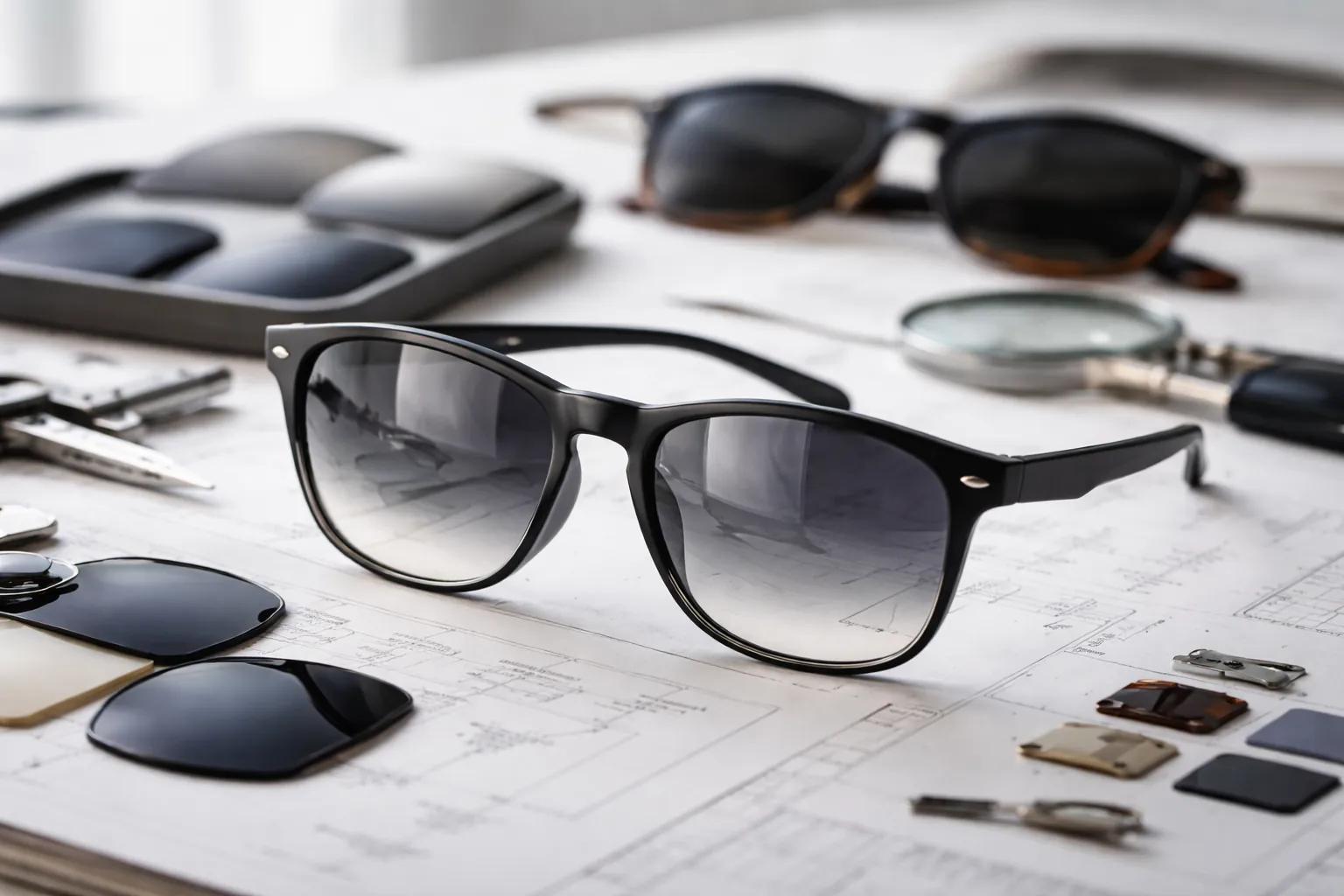
This guide is for private label eyewear brands, importers, distributors, promotional buyers, and retailers deciding whether photochromic sunglasses belong in the next range. It covers where adaptive lenses make commercial sense, what to put in an RFQ, how to judge samples, and how to keep compliance files and product claims defensible. The aim is simple: clearer quotes, fewer sample rounds, fewer compliance surprises, and a product story customers can grasp fast.
Start with the wearing scenario
Photochromic sunglasses are not automatically better sunglasses. They solve one problem: changing light. If the wearer moves between sun, shade, indoor-adjacent spaces, car parks, trails, cafés, boats, or commuter routes, an adaptive lens can support a higher retail price. If the product is mainly for beach racks, festivals, giveaways, or very low-price fashion drops, a fixed-tint UV400 lens may be easier to sell and cheaper to control.
The first sourcing mistake is asking a factory for "the best photochromic lens" without defining use. A cycling buyer may care about activation behavior, optical consistency, fit, and comfort in shade. A fashion account may care more about whether the lens already looks like sunglasses before activation. An optical or outdoor retailer may ask for visible light transmission data, UV protection reports, lens category, and packaging wording before discussing colors.
Use a five-second commercial test before adding cost: will the end customer understand why this lens is better? If not, stop. Avoid premium lens combinations, extra mirror coatings, or polarized photochromic builds until a simpler version proves demand. Spend first on frame fit, hinge quality, packaging copy, product images, and a lens color the channel can explain.
- Strong fit: commuter sunglasses, travel retail, hiking, fishing, golf, running, outdoor lifestyle ranges, and prescription-ready sun frames.
- Conditional fit: driving lifestyle products, kids' outdoor eyewear, safety-inspired sunglasses, and sports-fashion ranges where usage claims must be controlled.
- Weak fit: one-day event merchandise, low-cost giveaways, mirror-only fashion stories, and ranges sold without staff support or clear packaging explanation.
Know the lens packages and material behavior
Most private label sourcing discussions come down to five lens packages: clear-to-grey, clear-to-brown, light tint-to-dark tint, photochromic plus polarized, and photochromic plus mirror. The right choice depends on target retail price, climate, sales channel, and whether the product must look like sunglasses before activation.
Most standard photochromic lenses darken in response to ultraviolet radiation. That matters. Many lenses activate strongly outdoors but only partially inside a vehicle because modern windshields can block a large share of UV. This is normal for many photochromic lenses. It is not a defect unless the approved specification promised different performance. If the product is marketed for driving, test the exact sample in real vehicles. Do not promise full darkening behind every windshield unless you have proof.
Visible light transmission, or VLT, is the buyer's key control point. It states how much visible light passes through the lens. Lower VLT means a darker lens. Typical clear-to-dark photochromic lenses may start around 70% to 85% VLT and darken to roughly 12% to 35%, depending on material, lens color, temperature, UV intensity, coating, and test method. Light tint-to-dark tint products may start around 35% to 55% VLT and darken to roughly 10% to 25%. Treat these as planning ranges only. The approved product should be backed by supplier data or test results for the lens family or finished product.
| Lens package | Typical use case | Commercial upside | Risk to control |
|---|---|---|---|
| Clear-to-grey photochromic | Outdoor lifestyle, travel, optical-adjacent retail | Simple story: one lens adapts from low light to brighter outdoor conditions | May look too clear on shelf; needs clear hangtag copy and before/after images |
| Clear-to-brown photochromic | Golf, hiking, driving lifestyle, casual outdoor ranges | Warmer contrast and a more classic sunglass appearance | Color matching between sample and bulk must be checked under the same lighting |
| Light tint-to-dark tint | Fashion sunwear, beach-to-street, sports casual | Looks like sunglasses before activation | Not suitable if buyers expect a clear indoor lens |
| Photochromic plus polarized | Fishing, water sports, outdoor retail, glare-heavy use | Stronger value story: glare reduction plus light adaptation | Higher cost; polarization axis, lamination quality, and optical consistency need tighter QC |
| Photochromic plus mirror | Sports fashion, premium promotional programs, online retail | Better product photography and stronger shelf impact | Mirror can reduce visible evidence of the color change and complicate claims |
Put measurable specifications into the RFQ
A one-line RFQ such as "photochromic sunglasses, best price" produces weak quotes. Factories will fill the gaps with different assumptions about lens material, VLT, UV performance, coatings, frame material, logo method, packaging, and testing. Then you are not comparing suppliers. You are comparing assumptions.
For sunglasses, specify VLT in both states, UV protection requirement, lens category target, material, coating, curvature, approximate thickness, and selling region. Also clarify whether the lens is stock, semi-custom, or fully custom. Stock photochromic colors are usually faster and easier to quote. Custom color targets need more sampling and may require higher MOQ because the lens supplier must control color, activation behavior, and batch consistency.
Include these RFQ fields:
- Lens material: PC, TAC, nylon, CR39, or another agreed material. PC is common where impact resistance and lightweight sports styling matter. TAC is common in polarized laminated lenses. CR39 is known for optical clarity but is not usually selected for impact-focused sports products.
- VLT target: for example, non-activated 45% to 55% and activated 12% to 20%, or clear state 75%+ and activated below 30%. Ask how the supplier measures and verifies the range.
- UV requirement: UV400 or 100% UVA/UVB blocking, supported by a relevant report or lens performance data.
- Lens category: category target under the applicable sunglass standard for the selling market.
- Polarization: yes or no. If yes, specify axis control and request glare-reduction verification.
- Coatings: hard coat, mirror, hydrophobic, anti-scratch, anti-fog, or none. Do not request coatings you cannot sell or verify.
- Frame material: injection PC, TR90-style material, acetate, stainless steel, aluminum-magnesium, or combination frame.
- Decoration: pad printing, laser engraving, hot stamping, temple print, metal logo plate, embedded logo, or lens logo if acceptable for the market and retailer.
- Packaging: pouch, microfiber bag, printed box, barcode, warning text, CE/UKCA or other regional markings where applicable.
- Inspection plan: sample approval method, AQL level, carton drop test request if needed, and approved golden sample retention.
For projects produced with LumiShades, confirm which processes are handled in-house and which parts come from specialist suppliers before approving the timeline. Photochromic projects require coordination between lens selection, frame color, logo placement, packaging claims, and compliance documentation. The RFQ should identify every approved component and process.
Cost, MOQ, and price logic
Photochromic sunglasses cost more than standard tinted sunglasses because the lens package is more expensive and the testing burden is higher. The same frame, hinge, screw, and pouch can produce very different unit prices once the lens changes from fixed tint to adaptive, polarized adaptive, or mirrored adaptive.
LumiShades accepts custom sunglasses projects from 50 pairs per design, subject to frame, lens, decoration, and packaging requirements. That can work for boutique launches, influencer tests, sales presentations, and distributor samples. But be clear: 50 pairs will not deliver the best unit economics. Costs usually improve as order volume rises because lens purchasing, color setup, logo preparation, and packing labor are spread across more units. At higher volumes, buyers can also justify more formal testing, better packaging control, and structured inspection.
Do not compare unit prices unless the specification is identical. A low quote may exclude photochromic performance testing, use a different lens material, omit packaging, assume a stock frame, or quote a lighter lens category than expected. Ask suppliers to separate the price impact of the lens package, frame material, decoration, packaging, testing, and freight terms. Make the purchasing decision visible.
| Order level | Best use | Price behavior | Buyer caution |
|---|---|---|---|
| 50 pairs per design | Market validation, buyer presentation, boutique test | Highest unit cost because setup and labor are not diluted | Keep decoration simple and avoid custom packaging molds |
| 300 pairs per design | Small retail launch or online test | Better unit price and more realistic sourcing of lenses and packaging | Avoid too many SKUs or color splits |
| 1000 pairs per design | Core private label program | Commercial pricing becomes easier to evaluate | Freeze VLT, lens color, artwork, and packaging claims before production |
| 5000+ pairs | Distributor or chain retail program | Best opportunity for cost optimization and process control | Budget for formal testing, pre-shipment inspection, and carton compliance |
Sampling and QC: check more than color change
Typical custom sunglasses samples at LumiShades take about 7 to 10 days when the requested frame, lens, and decoration processes are already available. More complex photochromic lenses, new colors, custom packaging, or extra testing can extend the schedule. Use samples as engineering tools, not just sales props. A good-looking photochromic sample on a desk tells you little about activation behavior, hinge stability, lens fit, or packaging accuracy.
Test lenses in direct sun, open shade, indoors near a window, and inside a car if driving use is part of the story. Record the visual change at practical intervals: 30 seconds, 2 minutes, 5 minutes, and 10 minutes. Record temperature and weather too. Photochromic lenses can darken differently in cool and hot conditions. For commercial screening, you do not need a laboratory at every step. You do need repeatable observations, consistent photo angles, and a written comparison against the approved sample.
For frame QC, use clear tolerances. Temple alignment should be symmetrical with no obvious twist on a flat surface. Lens edge gaps should be visually consistent. If a gauge is used, agree the acceptable gap by frame style before production. Logo placement tolerance is commonly controlled by an agreed drawing or golden sample, not by verbal approval. Check hinge opening resistance, screw tightness, nose bridge finishing, injection marks, coating scratches, and lens stress after assembly.
For decoration, pad printing is economical for temple logos but needs rub resistance checks. Laser engraving is clean and durable on many metal or acetate parts but may appear subtle on dark materials. Metal logo plates look premium but require consistent glue, insertion depth, and edge finishing. Lens logos need caution because some retailers and markets dislike markings that interfere with vision or required labeling.
Factory-floor rule: if the pre-production sample has a lens fit, hinge, or logo-position problem, bulk production will not fix it by luck. Change the tooling, edging program, fixture, or assembly method before approval.
Compliance and claims: keep packaging defensible
Photochromic products create claim risk because buyers often want strong hangtag language: "instant change," "perfect for driving," "all-day adaptive," or "works anywhere." Avoid claims that exceed the evidence. "Light-adaptive lenses" or "darken in sunlight" is usually safer than promising exact activation times or full windshield activation unless that claim is supported by test data for the exact lens package.
For export programs, match the compliance file to the selling region. Relevant routes may include CE EN ISO 12312-1 for the European market, ANSI Z80.3 for the United States, AS/NZS 1067 for Australia and New Zealand, REACH for restricted substances in relevant materials, FDA registration information for U.S. import handling where applicable, and factory management or social compliance documents such as ISO 9001 and BSCI when requested by the buyer.
These documents are not interchangeable. FDA registration is not a substitute for sunglass lens performance testing. REACH does not prove UV protection. A CE claim should connect to the correct sunglass standard and product file.
Buyer-side documents usually include the approved product specification, lens performance information, material declarations where needed, a test report matching the lens family or finished product, approved packaging artwork, and a production inspection report. If the product has metal logo plates, rubberized temple tips, painted parts, soft nose pads, or special coatings, include those materials in restricted-substance review.
- European Union: request CE EN ISO 12312-1 support and REACH documentation for relevant materials.
- United States: request ANSI Z80.3 support and FDA registration information where applicable.
- Australia/New Zealand: request AS/NZS 1067 support and confirm labeling requirements.
- Multi-market orders: approve packaging text by region, especially if lens category, warnings, or claims differ.
Lead time planning and production control
Bulk production at LumiShades is usually planned after sample approval and order confirmation. A typical production window for standard custom sunglasses projects is about 25 to 35 days, but the actual schedule depends on lens availability, frame complexity, decoration, packaging, testing requirements, and current production loading. Photochromic orders may take longer if the lens material is not in stock, if the buyer changes tint after sampling, or if a new compliance test is required.
The cleanest schedule is built around a frozen specification. Before production starts, approve the frame material, frame color, lens VLT target, lens color, coating, logo method, logo position, packaging artwork, carton marks, barcode files, and inspection checklist. A late mirror-coating change is not a small change. It can affect lens appearance, activation visibility, test data, product photography, packaging copy, and retailer approval.
| Stage | Typical timing | Buyer approval point |
|---|---|---|
| RFQ and specification confirmation | 2 to 5 days if details are complete | Lens function, material, VLT target, frame, logo, and selling market |
| Sample production | About 7 to 10 days for typical available configurations | Fit, color, activation behavior, logo, and packaging direction |
| Pre-production confirmation | 2 to 4 days after sample feedback is complete | Golden sample, QC checklist, carton marks, and artwork |
| Bulk manufacturing | About 25 to 35 days after approval for standard projects | In-process checks for frame, lens, logo, and packaging consistency |
| Final inspection and shipment booking | 3 to 7 days depending on shipment method and documentation | AQL result, carton count, export documents, and shipping marks |
The practical lesson is simple: on-time delivery starts with complete specifications. A partially approved lens change during production can break the schedule and may require new samples, revised packaging, or updated test documents.
Build the range in stages
If you are unsure how much photochromic product your market can absorb, do not launch too many SKUs. Start narrow. Protect cash. Get sell-through data you can trust.
- Entry test: 50 to 300 pairs per design, one proven frame, one lens color, simple temple logo, pouch or microfiber bag. The goal is customer feedback, not perfect margin.
- Core program: 1000+ pairs, two frame colors, controlled VLT target, UV400, agreed compliance route, approved packaging claim, and a repeatable QC checklist.
- Premium extension: 5000+ pairs across proven shapes. Add polarization, mirror, acetate, custom case, or metal logo plates only after the basic adaptive story has sold through.
For brand owners, the safest first order is rarely the most technical lens. Choose one frame shape your customers already understand. Add a lens that visibly changes. Keep packaging direct: what the lens does, where it works best, which standard or documentation supports it, and what limitations apply. Then measure returns, reviews, customer questions, and reorder rate.
For importers and distributors, ask where the sunglasses will sit. On an unattended spinner rack, the lens must look attractive before activation and the hangtag must explain the benefit fast. Online, you need before-and-after images, short videos, and honest notes about car use. In optical or outdoor specialty retail, you can use more technical language and provide stronger documentation.
The blunt rule: do not overbuy technology. Buy the version your customer can notice, trust, and pay for.
Have a custom sunglasses project in mind?
Send us your styles, target market and quantities and we will return a detailed quote with MOQ, lead time and a sample plan.
Get a QuoteWhy source this from Wenzhou with LumiShades
Wenzhou in Zhejiang Province is widely regarded as China’s eyewear manufacturing capital, producing a large share of the world’s sunglasses. That concentration matters to buyers: a deep local supply chain for acetate sheet, hinges, lens blanks, plating and packaging means shorter component lead times, easier color and material matching, and a workforce with decades of eyewear-specific skill. LumiShades has manufactured in this ecosystem since 2009, and our vertical integration — in-house injection molding, acetate cutting, CNC milling, lens tinting, decoration and quality control — means no part of your order is quietly subcontracted to a workshop you cannot audit.
For international buyers, that vertical control translates into accountability. When a single factory owns every step, defects are traced and fixed at source rather than bounced between vendors, and your specifications survive intact from first sample to bulk. We back this with 15+ years of experience, shipments to 60+ countries, more than 5 million pairs produced per year and a 98.5% on-time delivery rate. Our certifications — CE EN ISO 12312-1, FDA registration, ANSI Z80.3, AS/NZS 1067, REACH, ISO 9001 and BSCI audit — mean the compliance documentation your market requires already exists. Explore our manufacturing capabilities and quality control process to see how this works in practice.
Frequently asked questions
What is the best MOQ for testing private label photochromic sunglasses? For market testing, 50 to 300 pairs per design is practical when the supplier can support that quantity. Use 50 pairs for buyer presentations, sample seeding, or small validation runs. Move toward 300 pairs when you need more realistic unit pricing, packaging execution, and sell-through data. Keep the first test narrow: one proven frame, one lens color, one logo method, and one packaging format.
Do photochromic sunglasses work inside a car? Often only partially. Many standard photochromic lenses rely on UV exposure, and many windshields block a large share of UV. If driving is a main selling point, test the exact approved sample in several real vehicles and record the result before approving packaging, product pages, or ads. Safer wording is "darkens in sunlight" unless the lens has documented performance behind windshields.
What VLT range should I request? Choose the VLT range based on the wearing scenario. For a clear-to-dark product, a planning target might be a clear state around 70% to 85% VLT and an activated state around 12% to 35%. For a light tint-to-dark product, a planning target might be around 35% to 55% before activation and 10% to 25% after activation. Put the target range in the RFQ, ask how it is measured, and confirm the final value with supplier data or a relevant test report.
Can I combine photochromic and polarized lenses? Yes. This combination is useful for fishing, water sports, boating, and other glare-heavy outdoor use. It costs more and needs tighter QC. In the RFQ, specify lens material, VLT range, UV400 requirement, lens color, polarization axis, coating, and compliance market. During sampling, check glare reduction, activation behavior, lamination quality, optical distortion, and consistency between left and right lenses.
Which compliance documents should I request for EU, U.S., and Australia sales? For the EU, request support for CE EN ISO 12312-1 and REACH documentation for relevant materials. For the U.S., request ANSI Z80.3 support and FDA registration information where applicable. For Australia and New Zealand, request AS/NZS 1067 support and confirm labeling requirements. Do not treat these as interchangeable: REACH is not proof of UV protection, and FDA registration is not the same as sunglass performance testing.
How long do samples and bulk production usually take? At LumiShades, typical samples for available custom sunglasses configurations take about 7 to 10 days. Bulk production for standard projects is usually planned at about 25 to 35 days after sample approval and order confirmation. The schedule can extend if the lens is not in stock, if the buyer changes VLT or coating after sampling, if custom packaging is added, or if new compliance testing is required.
What should I inspect before approving a photochromic sunglasses sample? Check more than the color change. Inspect frame fit, temple alignment, hinge resistance, screw tightness, lens seating, lens edge gaps, logo position, decoration durability, coating scratches, packaging text, barcode accuracy, and warning labels. For the lens, test the sample in direct sun, shade, indoor light, and inside a car if relevant. Record photos at consistent intervals and keep the approved sample as the golden sample for bulk comparison.
What is the easiest way to avoid overpaying for photochromic features? Start with the sales channel and customer benefit. If the customer cannot quickly see or understand the adaptive lens benefit, do not add polarization, mirror coating, custom lens colors, or premium packaging in the first order. Prove demand with a simple photochromic version, then upgrade only the features that improve sell-through, reduce returns, or support a higher retail price.
Ready to start?
Explore our square sunglasses or request a quote — our sales team replies within 12 hours.
Request a Quote