
Kids Sunglasses Wholesale: Fit, Safety, and Specs
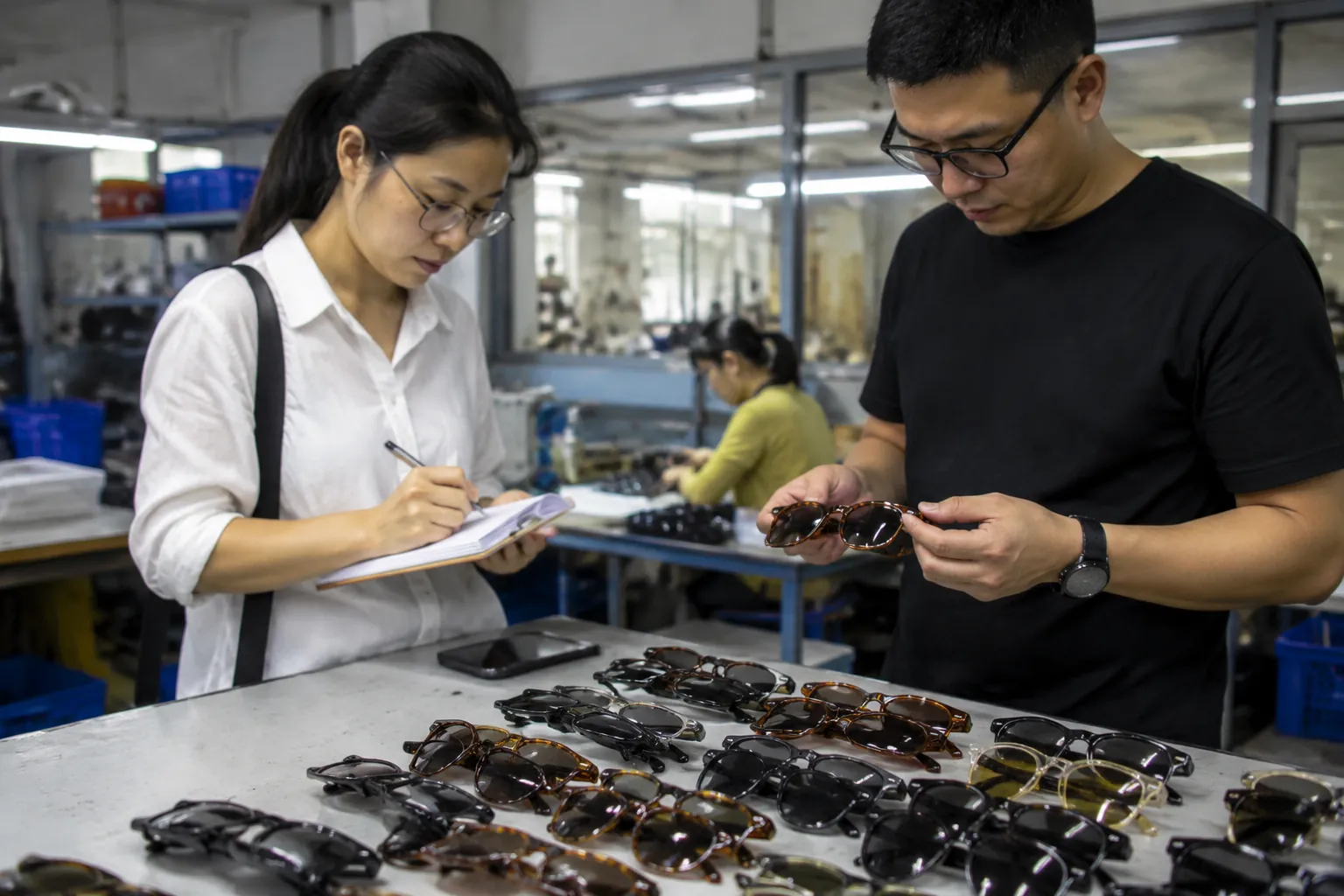
This guide is for brands, importers, distributors, and retail buyers sourcing kids sunglasses in bulk. It covers the specs to confirm before tooling, sampling, labeling, and production. The aim is simple: better fit, cleaner compliance checks, fewer returns, and safer products for children.
Start With the Child, Not the Rendering
Kids sunglasses often fail for basic reasons. They pinch the nose. They slide down. Hinges loosen. Lenses pop out. UV documents are weak. Labels arrive incomplete. A polished rendering does not prove fit, durability, or compliance.
Start with the child user. Define the age band, head width, bridge shape, temple length, activity level, lens category, and destination-market requirements before you approve the design.
A practical kids range is often split into 2–4 years, 4–7 years, 7–10 years, and 10–12 years. One universal kids frame rarely fits all four groups well. Younger children usually need lighter weight, rounded edges, secure retention, and soft contact points. Older children care more about style and may reject frames that look too juvenile. A 10-year-old usually needs a wider front, longer temples, and a different bridge solution than a 3-year-old.
For a first program, keep the launch narrow. Kids assortments expand fast because every age band, frame color, lens tint, logo method, and packaging version creates another SKU. A tighter launch reduces testing work and makes fit or quality problems easier to spot before they become inventory problems.
Sizing Specs to Put on the Purchase Order
A purchase order that says "kids size" is not a specification. It is a future return claim. The PO and tech pack should include frame front width, lens width, bridge width, bridge height where relevant, temple length, temple spread, pantoscopic angle, lens base curve, and the approved sample reference.
If you have a retail frame that fits well, send it to the factory. Mark which dimensions are fixed and which can be adjusted.
| Age band | Frame front width | Lens width | Bridge | Temple length |
|---|---|---|---|---|
| 2–4 years | 105–115 mm | 38–42 mm | 13–15 mm | 105–115 mm |
| 4–7 years | 115–125 mm | 42–46 mm | 14–16 mm | 115–125 mm |
| 7–10 years | 125–132 mm | 46–49 mm | 15–17 mm | 125–135 mm |
| 10–12 years | 132–138 mm | 48–52 mm | 16–18 mm | 130–140 mm |
These are practical starting ranges, not universal rules. Face shapes vary by market and channel. For low-bridge markets, reduce bridge height, soften the nose area, or use molded nose contact points where the design allows. For active children, specify a slight inward temple curve and check that the temple tips hold without pressing sharply behind the ear.
Ask for a measured sample report, not just photos. For molded frames, the supplier should state the production tolerance on the approved drawing. For acetate, final dimensions can shift after cutting, polishing, and heat adjustment, so confirm the accepted measurement point before production. For adjustable temples, define the measurement after final shaping, not before.
Choose Materials for Flex, Weight, and Safety
Buyers often ask for "unbreakable" kids sunglasses. Avoid that word. No children's eyewear is unbreakable.
Use clearer requirements instead: no sharp fracture under normal use, stable hinge retention, acceptable lens retention, low odor, compliant chemical profile, and no brittle cracking during reasonable bend tests.
| Material | Best use | Typical behavior | Buyer watchouts |
|---|---|---|---|
| PC frame | Entry-price, promotional, high-volume kids styles | Light and impact resistant; suitable for molded one-piece designs | Surface finish matters; poor molding can feel cheap and scratch easily |
| TR90-type nylon | Active kids, sports, better retail lines | Flexible, lightweight, and able to recover after bending | Use the exact resin name on the BOM; hinge design still matters |
| TPE/rubberized parts | Nose pads, temple tips, sports retention areas | Soft contact, better grip, child-friendly feel | Check odor, color migration, coating peel, and restricted substances |
| Acetate | Premium fashion kids frames | Rich color, good hand feel, polished finish | Heavier than molded plastic; poor balance is a problem for younger children |
| Metal components | Hinges, trims, logos, older-child styles | Premium appearance and strong mechanical parts when well made | Watch for sharp edges, plating defects, nickel exposure concerns, and detachable small parts |
If the frame combines several processes, document every part. The bill of materials should name the frame material, lens material, coating, screw type, hinge type, color masterbatch, logo method, and packaging version. That written BOM lets the buyer and factory compare samples against bulk production later.
Verify UV Protection, Lens Category, and Compliance
For children, UV protection is the product. It is not an optional feature. Specify UV400 or the exact performance requirement used in the target market. Then verify it with test data and incoming QC checks.
Do not treat dark tint as proof of protection. A dark lens without proper UV filtering can be worse than expected because it looks protective while failing the required transmission performance.
Standards depend on the destination market. For Europe, buyers commonly request EN ISO 12312-1 and may also need REACH chemical compliance. For the United States, buyers commonly request ANSI Z80.3 and may ask for FDA registration details if the supplier is registered. For Australia and New Zealand, buyers commonly request AS/NZS 1067. ISO 9001 and BSCI are useful factory-system and social-compliance references, but they are not product approvals.
- Category 0: very light tint, mainly fashion or indoor use.
- Category 1: light sunlight reduction, not enough for strong outdoor sun.
- Category 2: medium sunlight reduction, suitable for moderate outdoor use.
- Category 3: strong sunlight reduction and common for general children's outdoor sunglasses.
- Category 4: very dark; usually unsuitable for general kids retail and may require specific warnings depending on the market.
Ask for visible light transmission data and UV transmission data for each lens color, not only a report cover page. Grey, brown, smoke, gradient, mirrored, and pink lenses may perform differently. For polarized lenses, check axis alignment, haze, and stress marks after assembly. A lens can pass before assembly and still show distortion if the rim is too tight.
Run Durability Checks Before Bulk Production
Children twist sunglasses, drop them, sit on them, and throw them into bags with toys and keys. Your inspection plan should assume rough handling.
Durability checks belong at sample approval and pre-production approval, not only at final inspection. By final inspection, the mold, lens size, hinge seat, and assembly method are already locked. Corrections are slower then. And more expensive.
- Hinge cycle check: open and close the temples repeatedly to identify loose screws, weak spring hinges, cracking, or hinge pull-out.
- Temple bend check: flex the temples outward and inward within a defined angle. The frame should recover without whitening, cracking, permanent deformation, or hinge damage.
- Lens retention check: apply controlled pressure from the back using a defined fixture or agreed manual method. The lenses should not pop out during normal handling.
- Drop check: simulate a reasonable child-use drop from hand height or the agreed test height onto a hard surface, then inspect for lens chipping, frame fracture, hinge damage, and logo loss.
- Surface rub check: rub printed logos, painted finishes, and rubber coatings. Ink that fails in the sample room will fail faster in a child's hands.
- Small parts check: inspect screws, logo plates, charms, glued decorations, and nose pads. Anything detachable is a special risk for younger children's products.
Define defects before production starts. Critical defects should include failed UV performance, sharp edges, cracked lenses, loose small parts, wrong warning labels, wrong lens category, mixed SKUs, or missing importer information. Major defects can include visible frame warpage, poor hinge function, logo misplacement, deep scratches, color mismatch, and packaging errors.
Add Branding Without Adding Risk
Kids frames often use bright colors, playful shapes, character-style fronts, and larger logos. Branding can help sell the product, but every decoration method has a failure mode. Choose the method based on material, surface texture, order size, and age group.
Pad printing is economical and works well for color logos on temples, but ink adhesion must be tested on the actual frame material and coating. Laser engraving is durable on suitable surfaces, especially darker or coated materials, but it is subtle and may not work for brands that need high-contrast logos. Metal logo plates look premium, but they add a separate part that must be bonded, pinned, or inserted securely. For younger children, avoid raised metal parts near the cheek, temple pressure zone, or any area that may scratch skin.
Packaging needs the same discipline as the frame. Retail packaging should confirm the model number, age band if used, lens category, warnings, care instructions, country of origin, barcode, carton quantity, and importer or distributor details where required. Polybags are cheap, but some retailers restrict loose plastic packaging for children's products or require suffocation warning text. Check retailer rules before mass packing.
For private-label programs, send vector artwork, Pantone references, logo size in millimeters, exact placement drawings, and packaging dielines. Approve decoration on physical samples under indoor light and sunlight. Photos can hide color shift, gloss mismatch, ink thickness, and placement errors. Keep an approved golden sample with both the buyer and factory for production comparison.
Plan MOQ, Price, Samples, and Lead Time
Kids programs can become expensive quickly. Every age band, color, lens tint, and packaging format creates another SKU. The best way to control cost is to separate design validation from volume purchasing.
Do not use a large order to find out the bridge is too high or the temple is too short.
| Order stage | Typical purpose | Buyer focus |
|---|---|---|
| Sample set | Check fit, lens, color, logo, packaging | Measure every dimension and confirm compliance documents |
| Pilot order | Retailer presentation or market test | Limit colors and collect fit, quality, and sell-through feedback |
| Repeat order | Improve unit cost and production stability | Lock the BOM, labels, carton marks, and QC plan |
| Program order | Seasonal rollout or distributor stock | Negotiate pricing tiers and reserve production capacity |
Unit price depends on frame material, lens type, polarization, coating, logo process, packaging, testing, and inspection requirements. A simple molded frame with a standard UV lens will cost less than a TR90 polarized style with custom packaging, a metal badge, and retailer-specific testing. Ask the supplier to quote by SKU and show how each option changes the price.
Lead time depends on complexity. Ask the supplier to separate sample approval, tooling or mold work, lens development, production, testing, and freight into a written schedule. New molds, custom lens colors, custom cases, and extra testing add time. The cheapest unit price is not always the best landed cost. A rejected kids shipment costs more than saving a few cents on screws, lenses, ink, or carton labels.
Use a Pre-Order Compliance and QC Checklist
Before placing a bulk order, request documents and physical proof. Serious factories will accept clear requirements. Vague answers, old reports, missing lens data, or refusal to provide measured samples are warning signs.
- Confirm the destination market and the required standard: EN ISO 12312-1, ANSI Z80.3, AS/NZS 1067, REACH, and retailer protocols as applicable.
- Approve physical samples for every age band and lens type, not just one color in one size.
- Measure frame front, lens width, bridge, bridge height if relevant, temple length, temple spread, pantoscopic angle, and lens base curve.
- Check UV and visible light transmission data for each lens tint, mirror coating, and polarized option.
- Confirm material grade, color masterbatch, coatings, screws, hinges, logo method, and packaging in a written BOM.
- Review lens category marking, warnings, barcode labels, country of origin, carton marks, and importer information.
- Set AQL levels and define critical, major, and minor defects before production starts.
- Request pre-production samples after any mold adjustment, material change, lens supplier change, or packaging revision.
- If the supplier claims ISO 9001 or BSCI, ask for the current certificate or audit details, scope, issuing body, and validity period.
A strong sourcing workflow is direct: spec sheet, quotation, sample, measurement, lens test review, corrections, pre-production sample, bulk production, in-line QC, final inspection, and shipment. The more specific the spec, the fewer arguments you will have when mass production starts.
Have a custom sunglasses project in mind?
Send us your styles, target market and quantities and we will return a detailed quote with MOQ, lead time and a sample plan.
Get a QuoteWhy source this from Wenzhou with LumiShades
Wenzhou in Zhejiang Province is widely regarded as China’s eyewear manufacturing capital, producing a large share of the world’s sunglasses. That concentration matters to buyers: a deep local supply chain for acetate sheet, hinges, lens blanks, plating and packaging means shorter component lead times, easier color and material matching, and a workforce with decades of eyewear-specific skill. LumiShades has manufactured in this ecosystem since 2009, and our vertical integration — in-house injection molding, acetate cutting, CNC milling, lens tinting, decoration and quality control — means no part of your order is quietly subcontracted to a workshop you cannot audit.
For international buyers, that vertical control translates into accountability. When a single factory owns every step, defects are traced and fixed at source rather than bounced between vendors, and your specifications survive intact from first sample to bulk. We back this with 15+ years of experience, shipments to 60+ countries, more than 5 million pairs produced per year and a 98.5% on-time delivery rate. Our certifications — CE EN ISO 12312-1, FDA registration, ANSI Z80.3, AS/NZS 1067, REACH, ISO 9001 and BSCI audit — mean the compliance documentation your market requires already exists. Explore our manufacturing capabilities and quality control process to see how this works in practice.
Frequently asked questions
What is the best lens category for kids sunglasses? For general outdoor retail, Category 3 is usually the most practical choice. It suits strong daylight without being excessively dark. Category 4 is much darker and is generally better reserved for specialist glare-heavy use cases, if your market and labeling rules allow it. Whatever category you choose, confirm visible light transmission and UV transmission data for each lens color.
Can I order one kids frame for all ages? You can, but it usually fits poorly across the full age range. A better approach is to create separate size blocks for younger and older children, or at least validate bridge shape, front width, temple length, and retention for each age band. Fit testing on real heads is more reliable than a single rendering.
What documents should I request before bulk production? Ask for current compliance evidence for your target market, such as EN ISO 12312-1, ANSI Z80.3, AS/NZS 1067, REACH, or FDA registration details where relevant. Also request UV and visible light transmission data, a measured sample report, an approved BOM, label artwork, packaging proof, and current ISO 9001 or BSCI details if the supplier claims them.
How should I plan the timeline from sample to shipment? Do not rely on a generic promise. Ask the supplier to break the project into sample approval, tooling or lens-development work, production, testing, and freight. New molds, custom colors, special lens tints, extra packaging versions, and third-party testing all extend the schedule. Get the full timeline in writing before you approve the order.
Is polarized necessary for children's sunglasses? Not for every program. Polarized lenses are useful for glare-heavy use cases such as water, snow, or outdoor sport, but they add cost and can complicate sourcing. For general kids retail, UV performance, safe construction, good fit, and correct labeling matter more than polarization.
What MOQ makes sense for a first kids sunglasses order? Start with the smallest complete order that lets you evaluate fit, lens performance, decoration, and packaging without overcommitting inventory. Ask the supplier for MOQ by SKU because color, lens type, decoration, and packaging often affect the minimum. A pilot order should only happen after the sample set and compliance documents are approved.
Ready to start?
Explore our shield & oversized sunglasses or request a quote — our sales team replies within 12 hours.
Request a Quote