
Kids' Sunglasses Sourcing Guide for B2B Buyers
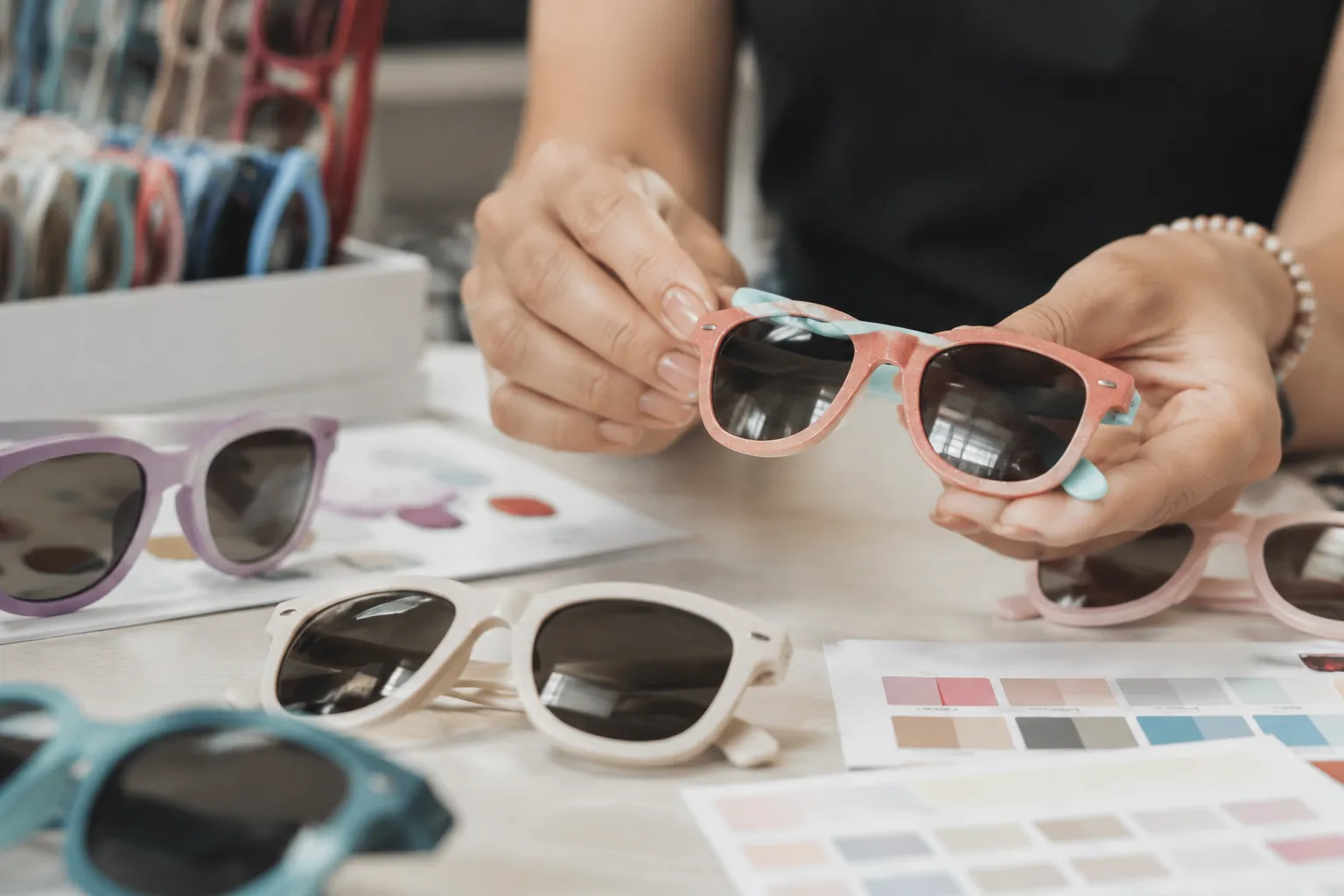
Children's sunglasses are not just adult frames made smaller. They need different bridge support, temple length, frame weight, hinge strength, lens coverage, and edge finishing. For B2B buyers, most problems start with a weak specification. Lens category, UV documentation, optical requirements, chemical compliance, hinge safety, decoration adhesion, labeling, and sample-to-bulk consistency all need to be defined before the purchase order. This guide is for brands, importers, distributors, and retailers sourcing custom kids' sunglasses from a factory such as LumiShades in Wenzhou. Use it as a practical checklist before sampling, testing, and bulk production.
1. Start With Age Band and Fit Measurements
The quickest way to create a poor kids' sunglasses SKU is to shrink an adult frame. It may look fine in a drawing. It may fail on a child's face.
A frame can slide down the nose, pinch behind the ears, sit too low for lens coverage, or feel too heavy for the age group. Children's face shapes also vary widely. Define the wearer before choosing colors, logos, or packaging.
Do not try to cover ages 2 to 10 with one mold unless you accept a broad and imperfect fit range. For a custom kids' sunglasses RFQ, state the target age band, destination market, front width, temple length, bridge design, lens width, frame material, strap requirement, and retail classification: toddler, child, youth, junior, or small adult.
| Age band | Common front-width planning range | Common temple-length planning range | Bridge and fit notes | Commercial advice |
|---|---|---|---|---|
| 2-4 years | Approximately 105-115 mm | Approximately 105-115 mm | Low or soft bridge support is often needed; avoid hard pressure at the nose | Prioritize flexible construction, low weight, strap-ready design, and minimal metal parts |
| 4-7 years | Approximately 115-125 mm | Approximately 115-125 mm | Bridge fit still needs careful checking; movement can cause slide-down | Strong age band for bright colors, beach retail, and character-style designs |
| 7-10 years | Approximately 125-132 mm | Approximately 125-135 mm | A more defined bridge may work; temple angle and weight remain important | Adult-inspired shapes can work if frame weight and coverage are controlled |
| 10-14 years | Approximately 132-140 mm | Approximately 135-145 mm | Often closer to small adult sizing, but styling and labeling may still be youth-specific | Confirm whether the retailer classifies the product as kids, youth, junior, or small adult |
These ranges are planning references, not universal sizing rules. Confirm fit with physical samples before paying for a new mold. Ask the factory for samples from existing kids' molds, then check the front view, side view, bridge contact, temple spread, temple-tip comfort, lens coverage, and stability during ordinary movement.
If your company runs wearer trials, get proper consent and follow local rules for testing products on children. Do not improvise here.
2. Choose Materials by Use, Age, and Failure Risk
Children drop, twist, bend, chew, and sit on sunglasses. Material choice affects breakage, hinge retention, comfort, color consistency, decoration quality, and chemical compliance.
A toddler beach frame and a youth fashion frame should not use the same material logic. Start with use case and age. Then choose the process.
For younger children, injection-molded PC and flexible injection materials are common. PC is light, impact resistant, and cost-effective. But thin hinge or rim areas can show stress marks if the design is too sharp or poorly supported. Flexible materials can improve comfort and reduce breakage risk. Still, check surface feel, dust pickup, dimensional stability, odor, and print adhesion. Acetate gives richer color and a more premium feel, but it is heavier, more labor-intensive, and usually better for older children or youth lines.
- PC injection: suitable for lightweight retail, promotional, travel, and beach programs. Check hinge stress, gate marks, color streaks, lens seating, and consistency across production cavities.
- Flexible injection material: useful for toddlers and preschool frames. Confirm surface tackiness, odor, color fastness, deformation after storage, and decoration adhesion on the actual production material.
- Acetate: suitable for older kids and youth lines where appearance matters. Expect more manual work, higher unit cost, and more sampling time for polishing, fitting, and shape adjustment.
- Metal components: use with care. Screws, pins, plates, and decorative hardware can create burr, edge, nickel-release, corrosion, or small-part concerns depending on design and market rules.
- Lens material: PC lenses are widely used for children's sunglasses because they are light and impact resistant. Confirm UV performance, visible light transmission, optical quality, tint uniformity, coating adhesion, and lens seating.
If LumiShades or another supplier offers several production routes, match the route to the retail position. An entry-level beach SKU may use an existing PC mold, standard lens tint, and one-color logo. A youth fashion SKU may justify acetate, custom color lamination, higher-grade packaging, and tighter polishing criteria.
Record the material in the purchase specification. "Plastic frame" is not enough.
3. Define Lens Compliance and Claims Before Sampling
The lens specification is central to children's sunglasses. A dark lens proves nothing. It does not prove UV protection.
Define UV performance, visible light transmission, lens category, optical quality, impact-related requirements, and the exact claim that will appear on packaging before approving samples. Common destination standards include CE / EN ISO 12312-1 for the EU, ANSI Z80.3 for the United States, and AS/NZS 1067 for Australia and New Zealand. Chemical requirements such as REACH may also apply in the EU.
For US sales, confirm with your regulatory adviser whether FDA registration and device-listing obligations apply to the supplier, importer, or product route. The buyer must tell the factory where the sunglasses will be sold and which claims will appear on the product, packaging, and online listing.
| Lens item | Buyer decision | What to verify before bulk |
|---|---|---|
| UV claim | UV400, 100% UVA/UVB, or other approved wording | Test report supports the exact wording used on packaging and listings |
| Lens category | Category selected for the intended use and market | Visible light transmission matches the stated category and label language |
| Category 4 | Only for very bright conditions where appropriate | Required warnings are present; not suitable for driving or road use |
| Polarized lens | Optional glare-reduction feature with added cost | Polarization function, axis consistency, optical distortion, and packaging claim |
| Mirror coating | Optional fashion or beach-retail feature | Color consistency, coating adhesion, scratch resistance, and handling marks |
Keep one approved lens sample with the buyer and one with the factory. Define acceptable color and tint variation, especially for mirror, gradient, or fashion-tint lenses. Small differences are obvious when goods are displayed together.
If the same model is sold in several countries, do not assume one hangtag works everywhere. Lens category wording, warnings, importer information, and language requirements may need market-specific versions.
4. Control Hinges, Edges, Small Parts, and Misuse
A children's frame often fails differently from an adult frame. Adults may notice discomfort or loose alignment. Children may twist the temples, chew the tips, open and close the frame repeatedly, pick at decorations, or drop the product.
Write the specification for foreseeable misuse. Avoid claims such as "unbreakable" or "childproof" unless they are legally reviewed and supported. Most are not worth the risk.
Traditional screw hinges are familiar and adjustable, but screws can loosen. Spring hinges may improve comfort and fit range, but they add cost and components. One-piece flexible frames reduce hardware risk for very young children, though they may limit styling. If screws are used, check screw seating, thread retention, sharp screw slots, exposed points, and burrs. A loose screw in a children's product is a safety-related defect, not just a cosmetic issue.
- Open and close both temples repeatedly during sample review and define an agreed cycle check for production inspection.
- Check hinge barrels for burrs, uneven plating, poor alignment, temple wobble, and inconsistent resistance.
- Run a fingertip across lens edges, temple tips, nose area, hinge area, and logo zones; no sharp edge should be felt.
- Pull and rub any logo plate, charm, badge, transfer, or glued decoration that a child could pick at.
- Check frame recovery after controlled temple spreading, especially on flexible materials.
- Inspect lens seating after flexing; lenses should not rattle, pop out, chip, or show stress cracks at the rim.
Decoration is often the weak point. Laser engraving is low risk because it does not add a separate component. Pad printing is common and economical, but adhesion must be tested on the actual frame material and finish. Heat transfer can create stronger graphic impact, but edge lift and rubbing resistance must be checked. Metal logo plates can look premium, but attachment method, edge finishing, corrosion resistance, and pull-check criteria must be defined before production.
5. Keep Labeling and Packaging Accurate
Children's sunglass packaging can become crowded with claims: UV400, polarized, shatterproof, safe for kids, BPA-free, blue-light blocking, beach-proof, unbreakable. Be careful. Every claim needs support.
Some claims are vague. Some are hard to prove. Some increase liability. Clean, accurate compliance language is usually easier to approve and defend.
Align the carton, polybag, pouch, hangtag, retail card, insert, and online listing. If the hangtag states a lens category, the insert and listing should not imply unrestricted use in all light conditions. If the product is sold in the EU, keep REACH documentation in the compliance file. Do not turn chemical compliance into consumer marketing unless the wording has been reviewed and supported. For US sales, keep ANSI Z80.3 documentation and any applicable FDA registration or listing records in the technical file.
- Required planning items: destination market, importer or distributor details, age grading, lens category, UV statement, warnings, barcode, SKU, country of origin, and carton marks.
- Artwork controls: version number, Pantone or color references, logo size, print method, approval date, and final locked artwork file before production.
- Packaging checks: barcode scan test, color transfer from pouch to frame, polybag warning if required, carton strength, moisture control, and insert-language match.
- Operational warning: distributors selling into multiple countries may need different hangtags, warnings, inserts, or importer details in the same production run. Confirm this before packing begins.
Repacking finished sunglasses is slow. It also raises the risk of scratches, lens marks, and SKU mix-ups. For multi-market orders, separate packing instructions by SKU and destination. Use carton labels that show model, color, lens type, quantity, destination market, and packaging version code.
6. Understand MOQ, Price, and Lead-Time Tradeoffs
Some factories, including LumiShades, may support low-MOQ orders for selected designs. That can help with fit trials, retailer presentations, influencer kits, and limited launches. But low MOQ does not make every customization economical.
Unit price depends on frame material, existing mold versus new mold, lens type, decoration method, packaging, testing, inspection requirements, color splits, SKU complexity, and Incoterms. Compare quotes only when these items match.
Use low-volume orders to validate fit, styling, and retail response. Use larger orders after the specification is stable and the buyer can spread testing, packaging setup, and inspection cost across more units.
| Order level | Best use | Sensible customization | Lead-time and cost logic |
|---|---|---|---|
| 50 pairs/design | Samples, small launch, channel test | Existing mold, standard lens, simple logo | Useful for validation, but setup, packaging, and freight cost are high per unit |
| 300 pairs/design | First sellable batch | Custom colors, pad print, pouch or retail card | Better production rhythm; avoid excessive color and packaging splits |
| 1,000 pairs/design | Retail account or distributor program | Color range, defined lens tint, market-specific labels | Testing, artwork control, and inspection become more important |
| 5,000+ pairs/design | Core item or seasonal promotion | Material optimization, refined packaging, tighter process control | Better buying leverage; forecasting, storage, and replenishment planning matter |
For available molds and simple decoration, sample timing is often quoted in working days rather than calendar weeks. Confirm the exact schedule with the factory before committing to a launch date. Bulk lead time should be confirmed after final sample approval, artwork approval, material availability, testing requirements, packaging approval, and deposit terms are clear.
New mold development, custom acetate, polarized lenses, mirror coatings, third-party testing, inspection booking, and late artwork changes can extend the schedule. Keep the first color range tight. Test demand, then scale.
7. Use a Sample-to-Bulk Workflow That Holds
Kids' sunglasses need a disciplined approval chain. Small decisions affect compliance, fit, safety, and retail acceptance. Photos are not enough.
The approval process should freeze construction, lens, decoration, artwork, labeling, and packing before bulk production starts.
- RFQ pack: send target age band, destination market, quantity by SKU, frame reference, lens category, UV claim, logo method, packaging, testing needs, expected retail channel, and required compliance documents.
- Factory review: confirm existing mold availability, material suitability, MOQ, estimated price tier, sample schedule, tooling cost if any, and whether the factory has relevant management or social-audit documents such as ISO 9001 or BSCI if your retailer requires them.
- Fit and construction sample: approve frame width, bridge contact, temple pressure, hinge feel, edge finish, weight, lens coverage, and strap compatibility if needed.
- Lens and color approval: check tint, lens category, UV support, mirror finish, polarization if used, optical quality, and acceptable color tolerance.
- Decoration approval: confirm logo size, position, method, adhesion, rubbing resistance, and whether the decoration creates a removable-part concern.
- Packaging approval: review warnings, barcodes, importer data, country of origin, carton marks, market-specific inserts, and artwork version codes.
- Pre-production sample: sign and date the final reference sample. Record model, color, lens, material, logo method, packaging version, and approval date.
- Bulk inspection: inspect against the signed sample, approved artwork, purchase specification, and test documentation, not against memory, renderings, or sales photos.
Keep one approved sample at the buyer's office and one at the factory. Mark each with SKU, color, version, approval date, and buyer approval. This simple control reduces disputes and gives production a physical reference for color, lens, fit, finish, and packaging.
8. Check Bulk Quality Before Shipment Release
A children's eyewear inspection should cover appearance, function, lens, fit, packaging, and documents. Standard AQL inspection can be used, but the checklist must include sunglass-specific risks.
Defects often appear in hinge movement, lens seating, edge finishing, decoration adhesion, and packaging version control. Do not release goods on carton count alone.
For first orders, arrange pre-shipment inspection before balance payment or shipment release. For stable repeat SKUs, keep final inspection and add stronger incoming-material and in-process checks. If a supplier has in-house injection molding, lens tinting, decoration, acetate cutting, CNC milling, or QC, use those process points to catch problems before final packing.
- Frame alignment: temples rest evenly on a flat surface; no obvious twist, uneven temple height, or distorted front shape.
- Lens seating: no rattling, gaps, rim stress, chips, visible distortion, or lens pop-out during normal handling checks.
- Hinge function: smooth open-close action, no loose screws, no sharp burrs, and consistent resistance between left and right temples.
- Surface finish: no heavy scratches, sink marks, oil stains, color streaks, rough polishing, unapproved flow marks, or residue.
- Logo durability: rub check for pad print, clarity check for laser engraving, edge-lift check for transfer graphics, and pull check for attached plates.
- Lens category and tint: match approved sample and test documents; do not mix lens categories or lens claims under one SKU.
- Packaging: correct SKU, barcode, warning, insert, country of origin, carton quantity, destination-market version, and carton marks.
- Documentation: retain test reports, approved artwork, signed samples, inspection records, PO, invoice, packing list, and applicable compliance documents in the technical file.
Ask for production photos during molding, lens fitting, decoration, and final packing. Photos do not replace inspection, but they can catch wrong colors, incorrect logos, mixed packaging, or missing inserts before goods are sealed. Release the shipment only when the product, packaging, and documents match the approved specification.
Have a custom sunglasses project in mind?
Send us your styles, target market and quantities and we will return a detailed quote with MOQ, lead time and a sample plan.
Get a QuoteWhy source this from Wenzhou with LumiShades
Wenzhou in Zhejiang Province is widely regarded as China’s eyewear manufacturing capital, producing a large share of the world’s sunglasses. That concentration matters to buyers: a deep local supply chain for acetate sheet, hinges, lens blanks, plating and packaging means shorter component lead times, easier color and material matching, and a workforce with decades of eyewear-specific skill. LumiShades has manufactured in this ecosystem since 2009, and our vertical integration — in-house injection molding, acetate cutting, CNC milling, lens tinting, decoration and quality control — means no part of your order is quietly subcontracted to a workshop you cannot audit.
For international buyers, that vertical control translates into accountability. When a single factory owns every step, defects are traced and fixed at source rather than bounced between vendors, and your specifications survive intact from first sample to bulk. We back this with 15+ years of experience, shipments to 60+ countries, more than 5 million pairs produced per year and a 98.5% on-time delivery rate. Our certifications — CE EN ISO 12312-1, FDA registration, ANSI Z80.3, AS/NZS 1067, REACH, ISO 9001 and BSCI audit — mean the compliance documentation your market requires already exists. Explore our manufacturing capabilities and quality control process to see how this works in practice.
Frequently asked questions
Can one kids' sunglasses model cover ages 3 to 10? Usually not well. Ages 3 to 10 can differ a lot in frame width, bridge fit, temple length, head shape, and comfort tolerance. One model may work for a narrower band such as 4-7 years if fit testing supports it. For broader age coverage, plan separate sizes, separate molds, or a clearly labeled youth fit. Before ordering bulk, request physical samples and check fit on the intended age group under proper consent and local testing rules.
What compliance documents should I request for children's sunglasses? Request documents that match your destination market and the claims printed on the product or packaging. For the EU, ask for CE / EN ISO 12312-1 documentation and REACH-related chemical compliance records where applicable. For the United States, ask for ANSI Z80.3 documentation and confirm whether FDA registration or device-listing obligations apply to the supplier, importer, or product route. For Australia and New Zealand, ask for AS/NZS 1067 documentation. Also keep the signed pre-production sample, approved artwork, purchase specification, inspection records, invoice, and packing list in your technical file.
Is UV400 enough to print on the package? Only if a valid lens test report supports that exact claim and the wording is acceptable in your sales market. UV400 is a UV-protection claim. It does not replace lens category, visible light transmission, warnings, or market-specific labeling. Do not use lens darkness as proof of UV protection. Match the test report, hangtag, insert, carton, and online listing wording before approving production.
Which material is best for toddler sunglasses? For toddlers, flexible injection materials or lightweight PC are often practical because they can reduce weight and improve comfort. The best option depends on frame design, hinge design, decoration, lens type, and target price. Avoid unnecessary metal components, sharp decorations, heavy acetate, and glued ornaments that a child may pick at. Ask for material identification, physical samples, decoration-adhesion checks, and chemical compliance documents needed for your market.
What is the safest decoration method for kids' frames? Laser engraving is generally low risk because it does not add a separate removable component. Pad printing is common and economical, but it should pass rubbing and adhesion checks on the actual production material and finish. Heat-transfer graphics need edge-lift checks. Metal plates, charms, badges, and glued ornaments require extra review for edge finish, attachment strength, corrosion, and small-part risk. Define the test or inspection method before bulk production.
How should I use a 50-pair MOQ without wasting money? Use a 50-pair order to validate fit, color, decoration, packaging appearance, or retailer response with an existing mold and simple specification. Keep the SKU count controlled. Do not split a small order across many frame colors, lens colors, or packaging versions. After the design is validated, move to a larger batch so testing, packaging setup, inspection, and freight costs are spread across more units. Compare quotations only when material, lens, packaging, testing, and Incoterms are the same.
How long should I plan from sampling to shipment? Ask the factory for a written timeline based on your exact specification. Available molds and simple decoration are usually faster than new molds, acetate work, polarized lenses, mirror coatings, custom packaging, or third-party testing. Build the schedule around sample approval, artwork approval, testing, pre-production sample sign-off, bulk production, inspection, balance payment, and freight booking. Do not confirm a retailer launch date until these steps and responsibilities are clear.
Should I ask whether the factory has ISO 9001 or BSCI? Yes, if your retailer, importer, or internal sourcing policy requires management-system or social-compliance documentation. ISO 9001 relates to quality management systems. BSCI relates to social-compliance auditing. These documents do not replace product testing to EN ISO 12312-1, ANSI Z80.3, AS/NZS 1067, or REACH where applicable. Treat factory certificates and product compliance reports as separate files and verify validity dates, company names, and audit scope.
Ready to start?
Explore our round sunglasses or request a quote — our sales team replies within 12 hours.
Request a Quote