
Private Label Polarized Sunglasses Sourcing Guide
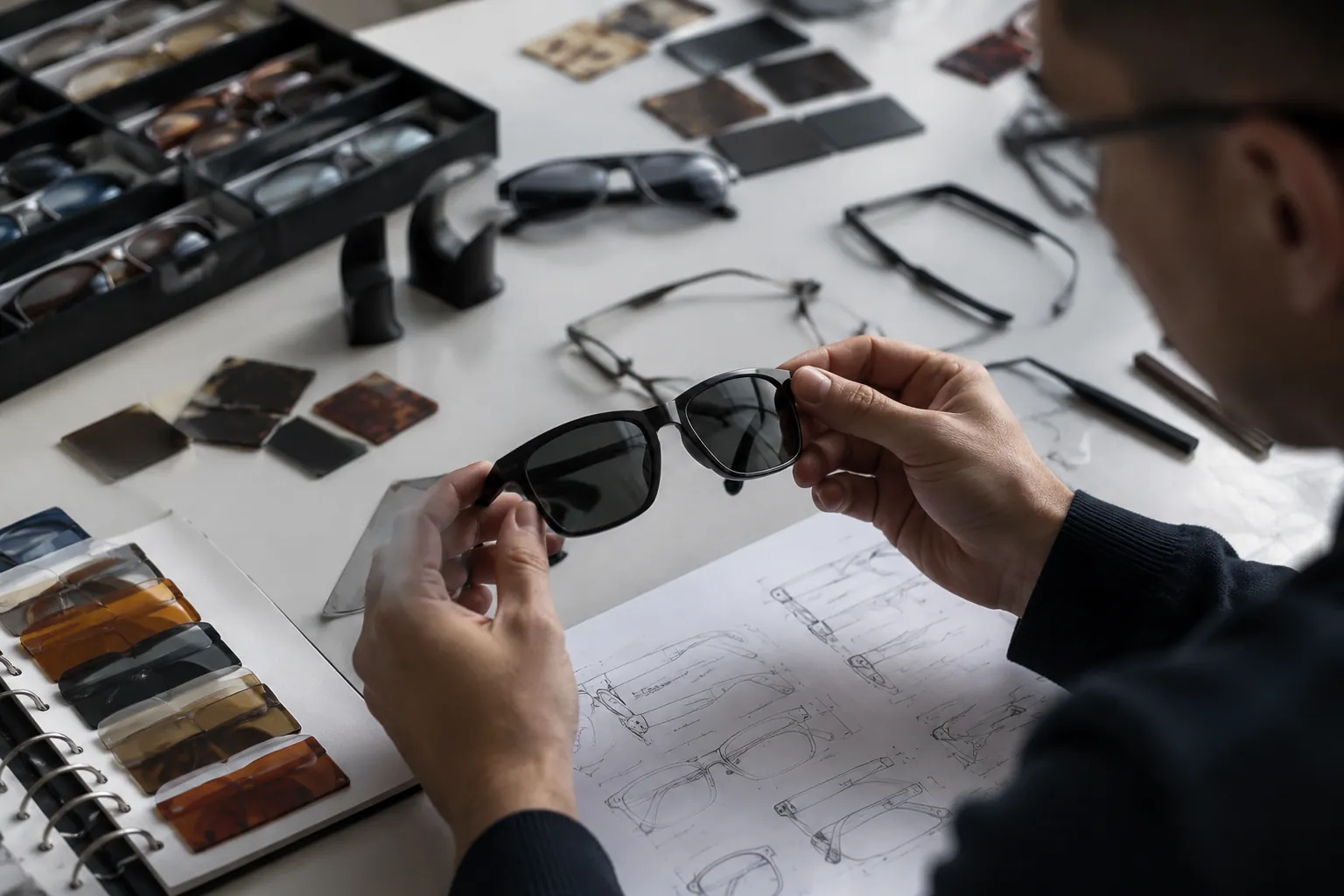
This guide is for overseas brands, importers, distributors, and retail buyers developing polarized sunglasses under their own label. It shows how to write measurable lens specifications, verify polarization and UV claims, choose frame and lens materials, control branding, compare MOQ-based pricing, and prepare compliance documents before placing an order. The aim is simple: cleaner quotes, fewer failed samples, better inspection records, and a polarized sunglasses program that can pass buyer review, marketplace checks, and destination-market requirements.
Start With a Retail Brief, Not a Photo
A best-selling frame photo is not a sourcing brief. For polarized sunglasses, the lens, label claims, warnings, and compliance file often carry more risk than the shape. Start with the sales channel: beach shop, driving accessory, fishing and boating, resort gift shop, pharmacy rack, fashion chain, outdoor specialty, or corporate promotion. Each channel needs different tint darkness, lens category, packaging, warning text, logo placement, and price control.
A useful brief names the frame material, lens material, lens category, polarization requirement, tint color, mirror or coating requirement, branding method, packaging, test standard, target MOQ, and target landed price. Be specific. If the supplier has to guess, they may quote the cheapest build that looks close in a photo. That build may fail later on UV protection, polarization, hinge feel, barcode accuracy, warning language, or retail packaging.
- Frame: PC injection, TR90, acetate, stainless steel, aluminum, or mixed material.
- Lens: TAC polarized, PC polarized, CR39 polarized, or nylon polarized.
- Lens category: category 3 is common for general sun use; category 4 needs clear warnings and is not suitable for driving.
- Core readings: visible light transmission, UV transmittance, polarization efficiency, axis alignment, base curve, and center thickness.
- Compliance: specify CE EN ISO 12312-1, ANSI Z80.3, AS/NZS 1067, FDA registration, and REACH according to the destination market and buyer requirements.
- Commercial target: list quantities by design, color, and shipment window instead of giving only one total order number.
For private label programs, ask which processes are handled in-house and which are outsourced. Injection molding, acetate cutting, CNC milling, lens tinting, decoration, assembly, and QC all affect the final result. Clear responsibility makes later problem-solving faster.
Write Polarization Specs in Numbers
Do not write only "polarized lens" on a purchase order. It is too vague for B2B sourcing. Define polarization efficiency, axis tolerance, UV protection, visible light transmission range, cosmetic limits, tint tolerance, and inspection method. The polarizing film must sit at the correct axis inside the lens or laminated structure. If the axis is wrong, glare reduction drops. Users may notice uneven brightness, screen distortion, or eye fatigue.
For most retail polarized sunglasses, buyers request high polarization efficiency for approved lens colors plus a defined axis tolerance. A common commercial target is 99 percent or higher polarization efficiency with axis tolerance within plus or minus 3 degrees. Still, the final requirement should match the brand's test method, destination market, claim language, and price level. For fishing, boating, and driving styles, add stricter checks for waves, stress marks, lens warpage, and left-right color mismatch. For category 3 lenses, confirm that measured visible light transmission supports both the category and the printed claim. UV protection must be backed by data if the packaging states UV400 or 100 percent UVA and UVB protection.
Buyer rule: if a supplier cannot explain how polarization, UV protection, and visible light transmission are checked before packing, do not approve bulk production.
Control marketing claims with the same discipline. "Polarized," "reduces reflected glare," and "100 percent UVA and UVB protection" need records for the tested lens color and construction. Do not print a precise glare-reduction percentage unless the test method, sample identity, and data support that exact number. Retail buyers, customs teams, marketplaces, and regulators may ask for proof.
Choose Lens Material by Use, Curve, and Price
Polarized sunglasses are not one product. TAC polarized lenses are common in value and mid-price retail because they are light, cost-effective, and available in standard grey, brown, green, and smoke tints. PC polarized lenses offer better impact resistance and are often used for sport, active, and children's styles, but stress marks and coating adhesion need tighter process control. CR39 polarized lenses can give good optical clarity for optical-style fashion frames, but they are heavier than TAC and need more careful edging. Nylon polarized lenses suit higher-performance wrap or sport styles where flexibility, forming stability, and optical quality matter.
| Lens Type | Best Use | Process Watch Point | Price Effect |
|---|---|---|---|
| TAC polarized | Mass retail, beach, fashion, promotional retail | Edge chipping, film quality, tint consistency, delamination risk | Usually the lowest polarized option |
| PC polarized | Sport, kids, safety-style outdoor, active frames | Stress marks, coating adhesion, injection or cutting distortion | Usually higher than TAC |
| CR39 polarized | Premium casual, optical-style fashion, low-base frames | Weight, breakage during edging, longer processing time | Mid to high, depending on design |
| Nylon polarized | Fishing, cycling, wrap frames, performance retail | MOQ, material cost, color availability, forming control | Often the highest common option |
Frame geometry changes the lens decision. A flatter fashion frame can often use TAC efficiently. A deep-base wrap frame needs better forming and stress control after cutting and assembly. Forcing a low-cost lens into a high-wrap frame can create waves, rainbow stress, rim gaps, poor fit, or optical discomfort. The sample may look fine in a front-view photo and still fail inspection.
Test Samples Before Bulk Approval
A polarized sample needs more than a desk check. Ask what equipment the factory uses to check polarization, UV protection, visible light transmission, lens category, and optical defects. Useful sample records include visible light transmission percentage, UV transmittance, polarization efficiency, axis angle, lens category, base curve, center thickness, coating type, and mirror or gradient notes. Ask for actual readings when possible. A "pass" mark is not enough.
For mirrored lenses, add adhesion and rub checks because mirror coatings can mark during handling or fail after packaging friction. For gradient lenses, measure the top, middle, and bottom zones, then confirm that labels and category claims still match the result. For paired lenses, inspect the left and right lens together under consistent light. Look for tint mismatch, waves, scratches, chips, and stress marks.
- Check polarization with a suitable polarization tester or controlled reference method.
- Measure UV protection with calibrated equipment instead of relying on a sticker claim.
- Record visible light transmission and confirm the lens category printed on tags and packaging.
- Inspect both lenses for color match, waves, scratches, chips, delamination, and stress marks.
- Wear the sample briefly to check for eye strain, uneven tint, distortion, and frame comfort.
- Confirm hinge opening, temple balance, nose fit, screw tightness, and frame alignment.
For LumiShades projects, sample timing is typically 7 to 10 days when materials are available, but timing should be confirmed for each design. Use the sample stage to reject weak specifications. Changing lens material, tint, coating, or packaging after bulk materials are ordered can add cost and delay shipment.
Understand MOQ, Price Tiers, and Lead Times
MOQ is not just a sales rule. Tooling setup, injection color changes, lens procurement, decoration jigs, packaging printing, barcode application, and QC paperwork all have to be spread across the order. LumiShades can support low-MOQ projects from 50 pairs per design for small launches, showroom tests, or limited color drops, subject to material and decoration feasibility. Unit pricing usually improves at higher quantities such as 300, 1000, and 5000 plus pairs because purchasing, scheduling, and packaging setup become more efficient.
| Order Level | Best Use | Cost Behavior | Lead-Time Risk |
|---|---|---|---|
| 50 pairs per design | Market test, showroom sample, small retail pilot | Highest unit price because setup is spread thinly | Limited custom color, lens, and packaging flexibility |
| 300 pairs per design | First retail drop or regional distributor order | Better decoration and frame pricing may be possible | Forecast errors can still damage margin |
| 1000 pairs per design | Stable seasonal SKU | Lens and packaging procurement become more efficient | QC plan must be fixed before bulk starts |
| 5000 plus pairs per design | Chain retail, importer stock, program business | Strongest negotiation point for suitable repeatable builds | Late artwork, labels, or carton changes can create real delays |
Do not compare quotes unless the frame, lens, decoration, packaging, reports, and shipping terms match. A PC frame with TAC polarized lenses and a polybag is not comparable to a TR90 sport frame with PC polarized mirror lenses, microfiber pouch, barcode sticker, warning card, and retail box. Ask the supplier to separate the assumptions behind frame, lens, decoration, packaging, testing, and logistics. You may not need full cost disclosure. You do need to know what is driving the price.
Lock Compliance by Destination Market
Compliance is not decoration. The destination market decides which standard, label language, warnings, and documents matter. In Europe, CE compliance for sunglasses is commonly supported by testing to EN ISO 12312-1 and the required product information. In the United States, buyers often request FDA registration information and ANSI Z80.3 alignment for non-prescription sunglasses. Australia and New Zealand buyers need AS/NZS 1067 category and labeling control. REACH matters for chemical restrictions in frame materials, coatings, inks, nose pads, packaging, and accessories when selling into relevant markets.
LumiShades can support projects requiring CE EN ISO 12312-1, FDA registration, ANSI Z80.3, AS/NZS 1067, REACH, ISO 9001, and BSCI documentation where applicable. Use current documents that match the product, factory, and destination market. Do not pad a vendor file with irrelevant certificates. Procurement teams notice. Retailers may reject the compliance file if the paperwork does not match the ordered sunglasses.
- EU: confirm CE marking, lens category, UV claim, warnings, user information, and Declaration of Conformity requirements.
- US: request FDA registration details and ANSI Z80.3 test alignment for non-prescription sunglasses when required by the buyer.
- Australia/New Zealand: check AS/NZS 1067 category language, warning text, and driving restrictions.
- Chemicals: maintain REACH documentation for frames, coatings, inks, nose pads, packaging, and accessory components.
- Factory systems: ISO 9001 and BSCI support process and audit confidence, but they do not replace product testing.
Put compliance requirements on the purchase order, sample approval sheet, and packaging artwork approval. If the wrong category, UV claim, warning, or market language is printed, the sunglasses may be physically acceptable but commercially unsellable.
Control Branding Without Creating Rejects
Private label buyers often spend too much time on logo size and too little time on production risk. Laser engraving can be stable on many PC, TR90, metal, and acetate temples, especially for small marks. Pad printing works for larger visible logos but needs ink adhesion testing on the actual surface. Metal logo plates can look premium, but they add assembly steps and can create rejects if the recess, glue, rivet, or plating process is weak. Hot stamping and foil effects can work on selected surfaces, but rub resistance must be tested.
For polarized collections, keep lens decoration conservative. A removable lens sticker is usually lower risk than printing directly on the lens unless the process has been validated for the selected coating. Mirror lenses can scratch or mark during handling, so worker gloves, trays, pouch material, and packing sequence matter. Acetate frames need polishing control after CNC milling and logo work. Injection frames need clean parting lines, stable hinge insertion, and consistent temple opening force.
For LumiShades projects, available branding and production processes may include laser engraving, pad printing, metal logo plates, lens tinting, injection molding, acetate cutting, and CNC milling, depending on the selected frame and order details. Approve a physical golden sample with exact logo position, Pantone or color reference, lens tint, hinge feel, temple opening, pouch, case, barcode, warning card, and carton mark. Keep one approved sample with the factory and one with the buyer. If a dispute happens, those samples become the shared reference.
Run Production With Approval Gates
A polarized sunglasses program should move through clear gates: written brief, quotation, sample, test records, artwork, pre-production sample, bulk production, inspection, and shipment. LumiShades sample timing is typically 7 to 10 days when materials are available. Bulk production is usually 25 to 35 days after sample approval, artwork approval, and deposit. The actual timeline depends on material availability, order size, decoration, packaging complexity, testing requirements, and the final inspection plan.
Do not approve bulk production from photos alone. For first orders, use a pre-production sample made with production materials and approved decoration. Then set the inspection plan. At minimum, inspect cosmetic defects, lens scratches, hinge function, screw tightness, polarization, UV protection, visible light transmission, lens category, barcode, packing count, polybag warnings, retail box artwork, and carton marks. For larger or repeat programs, add in-line checks during production instead of waiting until final inspection.
- Send the written specification and target quantity by design and color.
- Confirm quotation tiers at 50, 300, 1000, and 5000 plus pairs if relevant.
- Approve physical samples and record lens readings.
- Freeze artwork, labels, warnings, barcodes, and packaging.
- Approve a pre-production sample before bulk production starts.
- Run final inspection against the signed specification, not memory.
Even experienced factories make mistakes when details change late. The best programs are predictable before production starts: stable specifications, measurable checks, approved artwork, and no last-minute changes before shipment.
Have a custom sunglasses project in mind?
Send us your styles, target market and quantities and we will return a detailed quote with MOQ, lead time and a sample plan.
Get a QuoteWhy source this from Wenzhou with LumiShades
Wenzhou in Zhejiang Province is widely regarded as China’s eyewear manufacturing capital, producing a large share of the world’s sunglasses. That concentration matters to buyers: a deep local supply chain for acetate sheet, hinges, lens blanks, plating and packaging means shorter component lead times, easier color and material matching, and a workforce with decades of eyewear-specific skill. LumiShades has manufactured in this ecosystem since 2009, and our vertical integration — in-house injection molding, acetate cutting, CNC milling, lens tinting, decoration and quality control — means no part of your order is quietly subcontracted to a workshop you cannot audit.
For international buyers, that vertical control translates into accountability. When a single factory owns every step, defects are traced and fixed at source rather than bounced between vendors, and your specifications survive intact from first sample to bulk. For procurement review, buyers can request process records, approved samples, quality checkpoints and project-specific compliance files before placing a bulk order. Required testing and documentation are confirmed against the destination market and product specification rather than assumed from a generic certificate list. Explore our manufacturing capabilities and quality control process to see how this works in practice.
Frequently asked questions
What polarization efficiency should I require for retail sunglasses? Set a measurable requirement in the purchase order instead of writing only "polarized." A common commercial target is 99 percent or higher polarization efficiency with axis tolerance within plus or minus 3 degrees, but the exact requirement should match your test method, lens color, market claim, and price level. Ask the supplier to record polarization efficiency and axis alignment on approved samples and to repeat checks during bulk inspection.
Is TAC polarized good enough for retail? Yes. TAC polarized lenses can work well for many fashion, beach, mass retail, and promotional sunglasses when tint, UV protection, polarization, edge quality, and delamination control are acceptable. Choose PC polarized when impact resistance is more important, CR39 polarized when optical-style clarity is the priority, and nylon polarized for higher-performance wrap or sport frames. Confirm the choice with physical samples and lens readings, not only a quotation.
What is a realistic MOQ for custom polarized sunglasses? For LumiShades projects, 50 pairs per design may be possible for small pilots or launch tests, subject to material, color, lens, decoration, and packaging feasibility. Pricing usually improves at higher quantities such as 300, 1000, and 5000 plus pairs because setup, purchasing, and packaging costs are spread across more units. Ask for tiered quotes using the same frame, lens, decoration, packaging, testing, and shipping assumptions so the comparison is fair.
How long do samples and bulk production take? Samples typically take 7 to 10 days when materials are available and the design does not require unusual tooling, lens colors, or packaging. Bulk production is commonly 25 to 35 days after sample approval, artwork approval, and deposit, but timing should be confirmed for each order. Lens material, mirror coating, custom packaging, test reports, order size, and inspection requirements can all extend the schedule.
Which compliance documents should I request? Match documents to the destination market and buyer requirement. For Europe, request CE documentation supported by EN ISO 12312-1 testing and the required user information. For the United States, request FDA registration details and ANSI Z80.3 alignment when required. For Australia and New Zealand, request AS/NZS 1067 category and labeling support. For chemical restrictions, request REACH documentation for relevant materials, coatings, inks, accessories, and packaging components.
Can I print a glare reduction percentage on packaging? Only print a specific glare-reduction percentage if you have test data that supports that exact claim for the same lens construction, color, and coating. If you do not have that evidence, use safer claim language such as "polarized" or "reduces reflected glare," and support UV claims such as UV400 or 100 percent UVA and UVB protection with UV test results. Make sure the claim, lens category, warnings, and destination-market language are consistent across tags, inserts, boxes, and online listings.
Ready to start?
Explore our shield & oversized sunglasses or request a quote — our sales team replies within 12 hours.
Request a Quote