
OEM Polarized Sunglasses Sourcing Guide
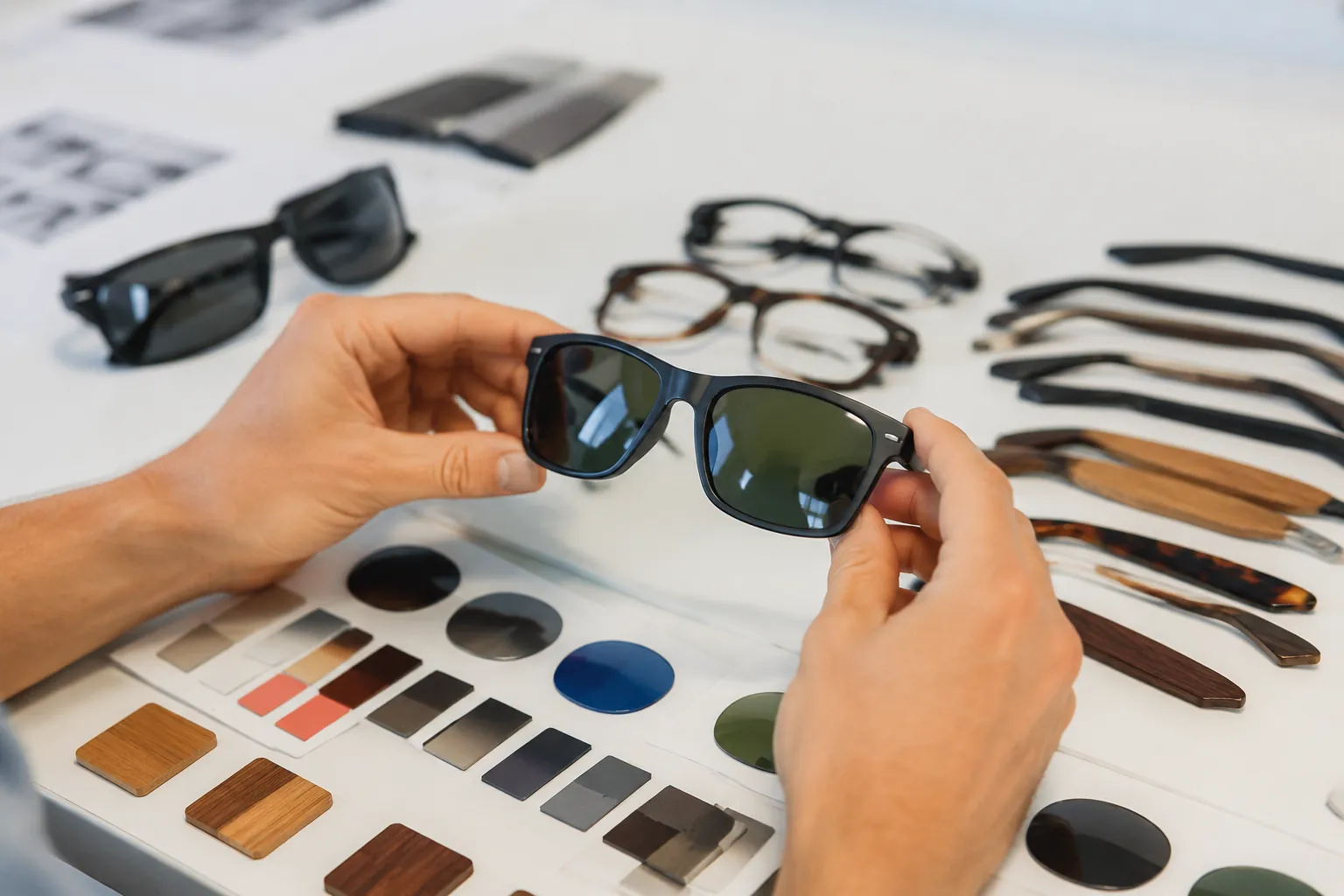
This guide is for overseas brands, importers, distributors, and retail buyers sourcing polarized sunglasses in volume. It explains where polarization adds value, how to write a factory-ready lens specification, which tolerances to confirm, and what to check before bulk production. The aim is simple: clearer quotations, fewer disputes, and a safer move from approved sample to shipment.
Start With the Use Case, Not the Label
Polarized lenses are not the right choice for every sunglasses program. They reduce reflected glare from horizontal or near-horizontal surfaces such as water, wet roads, snow, glass, and polished car hoods. That makes them useful for fishing, boating, driving, beach retail, ski resorts, outdoor work, and premium lifestyle lines. For a low-cost fashion giveaway, the extra lens cost may not improve sell-through enough to justify the upgrade.
Do not treat "polarized" as one simple checkbox. A weak polarizing film can pass a demo card and still show uneven color, poor extinction, loose axis control, or stress marks after edging and mounting. A driver may see screen distortion on a dashboard. A fisherman may still see glare on water. A retailer may get returns because the left and right lenses do not match.
Define the consumer situation first. Then choose the lens. For driving, check road glare reduction and LCD visibility. For fishing, prioritize polarization efficiency, lens color consistency, and corrosion resistance on metal parts. For snow retail, confirm visible light transmission category and mirror coating durability. For kids' sunglasses, UV protection, impact resistance, fit, and safe construction may matter more than a polarized claim.
Separate the pilot-order decision from the production-order decision. Small quantities help with market testing, influencer drops, or retail validation. They rarely give the best unit cost. Lens buying, decoration setup, packaging, and production scheduling are spread across fewer pairs. Ask the supplier for real price breaks instead of assuming one unit price fits every volume.
Where Polarization Changes Cost
Polarization usually affects cost in three places: the polarizing film or finished lens blank, tighter control during cutting and assembly, and higher rejection risk during inspection. The frame itself does not become more expensive just because the lens is polarized. Injection molding, acetate cutting, CNC milling, hinge fitting, pad printing, laser engraving, and metal logo plate installation still follow the same basic route.
The cost impact is often clearest on low-cost PC injection frames because the lens can represent a larger share of the finished product cost. On acetate frames with upgraded hinges, metal trims, custom packaging, and added decoration, the polarized premium may be a smaller share of the total FOB price. Compare the full bill of materials, not only the lens upgrade line.
| Buyer Scenario | Recommended Lens Direction | Cost Sensitivity | Critical QC Point |
|---|---|---|---|
| Fishing or boating line | TAC polarized, grey/green/brown, category 3 common | Medium; function can support premium pricing | Axis alignment, polarization efficiency, corrosion resistance on metal parts |
| Driving sunglasses | Polarized grey or brown with controlled VLT | Medium | LCD dashboard, phone, fuel pump, and POS screen visibility |
| Low-cost fashion promo | Non-polarized UV400 may be sufficient | High; lens upgrade may not pay back | Fit, color consistency, hinge security, packaging presentation |
| Snow or ski retail | Case by case; mirror coating and category accuracy matter | Medium to high | EN ISO 12312-1 or AS/NZS 1067 category claim accuracy |
| Premium acetate line | Polarized TAC or nylon depending on optical target | Lower as a percentage of total FOB | Groove fit, lens stress, coating scratches during assembly |
For quotation, ask for the same frame in non-polarized UV400 and polarized versions at several quantities, such as 300, 1000, and 5000 pairs. This shows whether polarization is a small premium or a major cost driver for that design. Also confirm whether the price includes packaging, barcode labels, carton marks, compliance testing, third-party inspection support, and required documents.
Specify Lens Material, Category, and Tolerances
A purchase order that says "polarized UV400 lens" is too vague. It gives the supplier room to choose a low-cost option that may pass a sales demonstration but fail in use. A factory-ready specification should define lens material, color, base curve, center thickness, visible light transmission, UV performance, polarization efficiency, coating stack, decoration, and the applicable compliance standard.
For many OEM polarized sunglasses, TAC is common because it can combine acceptable optics, good polarization performance, and efficient cost when sourced and processed correctly. PC is common for sport and budget frames because it offers impact resistance, but polarized PC construction and coating quality need close control. Nylon may suit higher-end programs that need better optical clarity, lighter weight, or more stable performance on wrapped frames.
- Lens material: Define TAC, PC, nylon, or another agreed material. Do not allow substitution during production.
- Visible light transmission: State the target category and acceptable range, such as category 3 within the range required by the applicable standard.
- Polarization efficiency: Set a measurable target and specify how it will be checked. A demo card is not enough.
- Axis tolerance: Define the intended axis and acceptable deviation, for example within ±3 degrees if it matches the product target and inspection capability.
- Thickness and curve: Confirm center thickness and base curve so lens fit does not change between sample and bulk production.
- Coatings: List mirror, hard coat, hydrophobic, oleophobic, or backside anti-reflective treatment if required.
- Decoration: Confirm whether lens logos are printed, laser-marked, or avoided to reduce optical complaints.
Approve color with a physical standard under consistent lighting, not from a phone photo. Grey, brown, green, and smoke gradient lenses can shift from batch to batch. Small shifts are visible. If the lens category or retail claim depends on visible light transmission, request measurement data from the approved sample and confirm whether the same check will be repeated during production or final inspection.
Document decoration and color matching separately from optical performance. Frame color, lens color, pouch fabric, case material, printed logos, and carton artwork can use physical or digital standards. Lens performance still needs written tolerances for UV protection, VLT category, polarization, and fit.
Build Sample Approval Around Production Reality
Sample approval should not depend on one attractive handmade pair. Ask for pre-production samples made with the intended frame mold, lens supplier route, decoration method, hinge type, and packaging structure. Showroom samples can hide problems that appear only after bulk cutting, edging, mounting, and packing.
Start with function. Rotate each lens against a polarized tester or known polarized light source. The lens should darken strongly at the correct angle. Both lenses should behave the same way. Then check left-right color matching, edge condition, coating surface, lens seating, hinge tension, temple opening, frame balance, and logo placement.
- Record polarization axis for both lenses and compare against the approved tolerance.
- Inspect lens edges for delamination, bubbles, chips, white stress marks, or film separation after mounting.
- Measure or confirm UV400 performance and visible light transmission category using the agreed test method.
- View water, glass, car windshield glare, and wet road reflection outdoors when the product use case requires it.
- Check phones, dashboards, POS terminals, and fuel pump screens at multiple viewing angles, especially for driving styles.
- Open and close temples at least 20 times, then recheck screw tightness, hinge feel, and frame alignment.
- Pack the sample into the final pouch, case, polybag, inner box, and master carton format to check pressure marks and lens contact.
For acetate frames, lens fitting pressure matters. A groove that is too tight can create stress around the rim, especially after temperature change. For injection frames, mold shrinkage and rim consistency affect seating and can cause lens pop-out or uneven gaps. Fix frame-lens fit before bulk cutting. Final inspection is too late.
Keep one signed approval sample with the buyer and one with the factory. Add boundary samples where possible: maximum acceptable color variation, logo position shift, hinge tension, lens gap, and minor cosmetic marks. Physical standards reduce subjective arguments during production and inspection.
Control Bulk Production Failure Modes
Most polarized sunglasses failures are not dramatic. They are small defects repeated across cartons: one lens slightly warmer than the other, axis drift after a lens batch change, coating scratches from assembly handling, or pressure marks from packaging. Prevent them before production starts.
Axis drift can happen when lens sheets are cut in the wrong orientation or when production changes lens batches without rechecking. Delamination can appear near drilled holes, rim edges, or high-curve shapes if the material is pushed beyond its processing range. Color variation can occur when grey, brown, green, or gradient lenses are sourced across batches without a controlled master sample. Coating scratches often come from trays, gloves, wiping cloths, or contact between temples and lenses during packing.
Set acceptance limits for visible defects. Define whether tiny dust inside a rim is acceptable, how many minor surface dots are allowed outside the central vision zone, and whether any coating mark in the viewing area is an automatic reject. Be stricter on optical and functional items. Wrong lens category, failed UV performance, severe axis mismatch, loose lens fit, sharp burrs, unstable hinges, and incorrect warning labels should not pass.
For bulk orders, keep approved limit samples at the factory: one ideal sample and several boundary samples for lens color, logo placement, hinge tension, frame alignment, lens fit, and cosmetic marks. This trains line QC and reduces arguments during final inspection. A production worker cannot inspect against words like "nice," "premium," or "acceptable" unless those words are tied to physical examples.
Keep Compliance Claims Narrow and Provable
Compliance is shipment risk control. It is not decoration for a product page. The correct standard depends on the destination market and the claim made on the product, hangtag, website, instruction sheet, and carton. Common routes for sunglasses include CE EN ISO 12312-1 for the EU, ANSI Z80.3 for the United States, AS/NZS 1067 for Australia and New Zealand, FDA registration where applicable in the U.S. supply chain, REACH for restricted substances, and management or social-audit references such as ISO 9001 and BSCI when requested by the buyer.
For Europe, CE marking should be supported by EN ISO 12312-1 testing, and the lens category must match actual visible light transmission. For the United States, ANSI Z80.3 is a common reference for non-prescription sunglasses, and FDA registration may apply to the relevant manufacturer or importer role. For Australia and New Zealand, buyers usually address AS/NZS 1067. REACH matters for restricted substances in plastics, coatings, inks, rubber parts, metal trims, and packaging components that contact the consumer.
Polarization is not UV protection. A dark polarized lens with poor UV blocking creates safety and commercial risk. Specify UV400 or 100 percent UVA and UVB blocking, then keep supporting test data for the actual product or representative production lot. Also check warning language for lens categories not suitable for driving, especially very dark or special-purpose lenses.
Review compliance wording before hangtags, instruction sheets, barcode labels, and carton marks are printed. A late wording change can delay packing even when the sunglasses are ready. Do not ask a supplier to print marks or claims that are not supported for the exact product, lens category, and destination market.
MOQ, Price Breaks, and Lead-Time Logic
Polarized programs do not have to move slowly, but the approval sequence must be realistic. Lead time depends on frame complexity, lens material, decoration, packaging, testing, material availability, and buyer response time. Do not start the bulk production clock while lens color, logo size, carton marks, compliance wording, or inspection criteria are still open.
| Stage | Typical Timing | Buyer Must Confirm | Risk If Skipped |
|---|---|---|---|
| RFQ and initial quotation | After a clear brief is received | Frame style, lens spec, quantity, market, packaging | Wrong price basis and later cost changes |
| Sample production | Varies by frame, lens, and decoration | Artwork, lens color target, logo method, material choice | Attractive sample that cannot scale |
| Pre-production confirmation | Before bulk materials are locked | Signed sample, limit standards, carton marks, inspection plan | Factory starts without clear QC boundaries |
| Bulk production | After sample, PO, deposit, and components are approved | Deposit, final PO, approved components, packaging files | Delays from late artwork, material, or testing changes |
| Final inspection and shipment | Depends on inspection result, booking, and documents | AQL level, shipping instruction, documents, labels | Rework, carton holds, or missed vessel date |
Discuss MOQ by design, color, lens type, and packaging version. A low MOQ may work for a pilot run, but it often carries a higher unit cost because setup, material purchasing, sample work, and packaging preparation are spread across fewer units. At higher quantities, suppliers may have more room to improve pricing through lens purchasing, decoration efficiency, packaging procurement, and production scheduling.
Approval Checklist for OEM Buyers
Before approving bulk production, freeze the parts that affect function first: lens material, polarization, UV protection, VLT category, frame fit, hinge performance, packaging pressure, and compliance language. Colors and logos matter. A wrong optical claim or failed lens test is harder to fix than a small print-position adjustment.
Blunt rule: if the supplier cannot show how polarization, UV protection, lens category, and frame-lens fit are checked, do not approve the order yet.
- Confirm the exact destination requirement: CE EN ISO 12312-1, ANSI Z80.3, AS/NZS 1067, FDA registration route, REACH documentation, ISO 9001, or BSCI where applicable.
- Approve physical lens and frame color standards under controlled light.
- Record polarization axis, visible light transmission category, and UV result from the approved sample.
- Check lens fitting after repeated temple opening, closing, and light frame twisting.
- Review decoration durability for pad printing, laser engraving, heat transfer, or metal logo plates.
- Pack real sunglasses into the final pouch, case, polybag, inner box, and master carton before approval.
- Set inspection rules for scratches, bubbles, coating marks, dust, axis mismatch, loose screws, sharp edges, warpage, and incorrect labels.
A serious factory should accept clear standards. Written specifications and physical limit samples make production easier, reduce rework, and help both sides resolve inspection questions with evidence. Good polarized sunglasses sourcing is not guesswork. It is a controlled sequence, documented before bulk production begins.
Have a custom sunglasses project in mind?
Send us your styles, target market and quantities and we will return a detailed quote with MOQ, lead time and a sample plan.
Get a QuoteWhy source this from Wenzhou with LumiShades
Wenzhou in Zhejiang Province is widely regarded as China’s eyewear manufacturing capital, producing a large share of the world’s sunglasses. That concentration matters to buyers: a deep local supply chain for acetate sheet, hinges, lens blanks, plating and packaging means shorter component lead times, easier color and material matching, and a workforce with decades of eyewear-specific skill. LumiShades has manufactured in this ecosystem since 2009, and our vertical integration — in-house injection molding, acetate cutting, CNC milling, lens tinting, decoration and quality control — means no part of your order is quietly subcontracted to a workshop you cannot audit.
For international buyers, that vertical control translates into accountability. When a single factory owns every step, defects are traced and fixed at source rather than bounced between vendors, and your specifications survive intact from first sample to bulk. For procurement review, buyers can request process records, approved samples, quality checkpoints and project-specific compliance files before placing a bulk order. Required testing and documentation are confirmed against the destination market and product specification rather than assumed from a generic certificate list. Explore our manufacturing capabilities and quality control process to see how this works in practice.
Frequently asked questions
How much more should I expect to pay for polarized lenses? There is no reliable universal surcharge. Cost depends on lens material, film quality, coatings, lens curve, frame type, order quantity, packaging, testing, and inspection requirements. Ask the supplier to quote the same design in non-polarized UV400 and polarized versions at the same quantities, then compare the full FOB breakdown, not only the lens line.
Is UV400 the same as polarized? No. UV400 refers to ultraviolet protection, usually meaning the lens blocks UV up to 400 nm. Polarization reduces reflected glare from surfaces such as water, roads, snow, and glass. A lens can be UV400 without being polarized, and a polarized lens still needs UV protection verified by testing.
What tolerance should I use for polarization axis? Set the tolerance before sample approval and make sure the factory can measure it. Many commercial programs use a defined target axis with an allowed deviation such as ±3 degrees. Technical or premium programs may require tighter control. Record the approved sample result and require the same check during production or final inspection.
Can I start with a small pilot order? Yes, if the supplier supports the quantity and the materials are available. Use a pilot order to test fit, packaging, retail response, and lens feedback before committing to a larger run. Do not expect pilot-order pricing to match mass-production pricing, because setup, sourcing, and packaging costs are spread across fewer units.
Which compliance standards should I mention in my RFQ? State the destination market and sales channel first. For the EU, ask about CE EN ISO 12312-1. For the U.S., ask about ANSI Z80.3 and FDA registration where applicable. For Australia and New Zealand, ask about AS/NZS 1067. Add REACH if chemical compliance is required, and request ISO 9001 or BSCI information only if your company needs factory-level documentation.
Do polarized lenses cause problems with digital screens? They can. Polarized lenses may darken or distort LCD screens depending on the screen orientation and viewing angle. During sample approval, test phones, car dashboards, navigation screens, POS terminals, and fuel pump displays, especially if the sunglasses are marketed for driving.
Ready to start?
Explore our aviator sunglasses or request a quote — our sales team replies within 12 hours.
Request a Quote