
Polarized Sunglasses OEM Specs Before Sampling
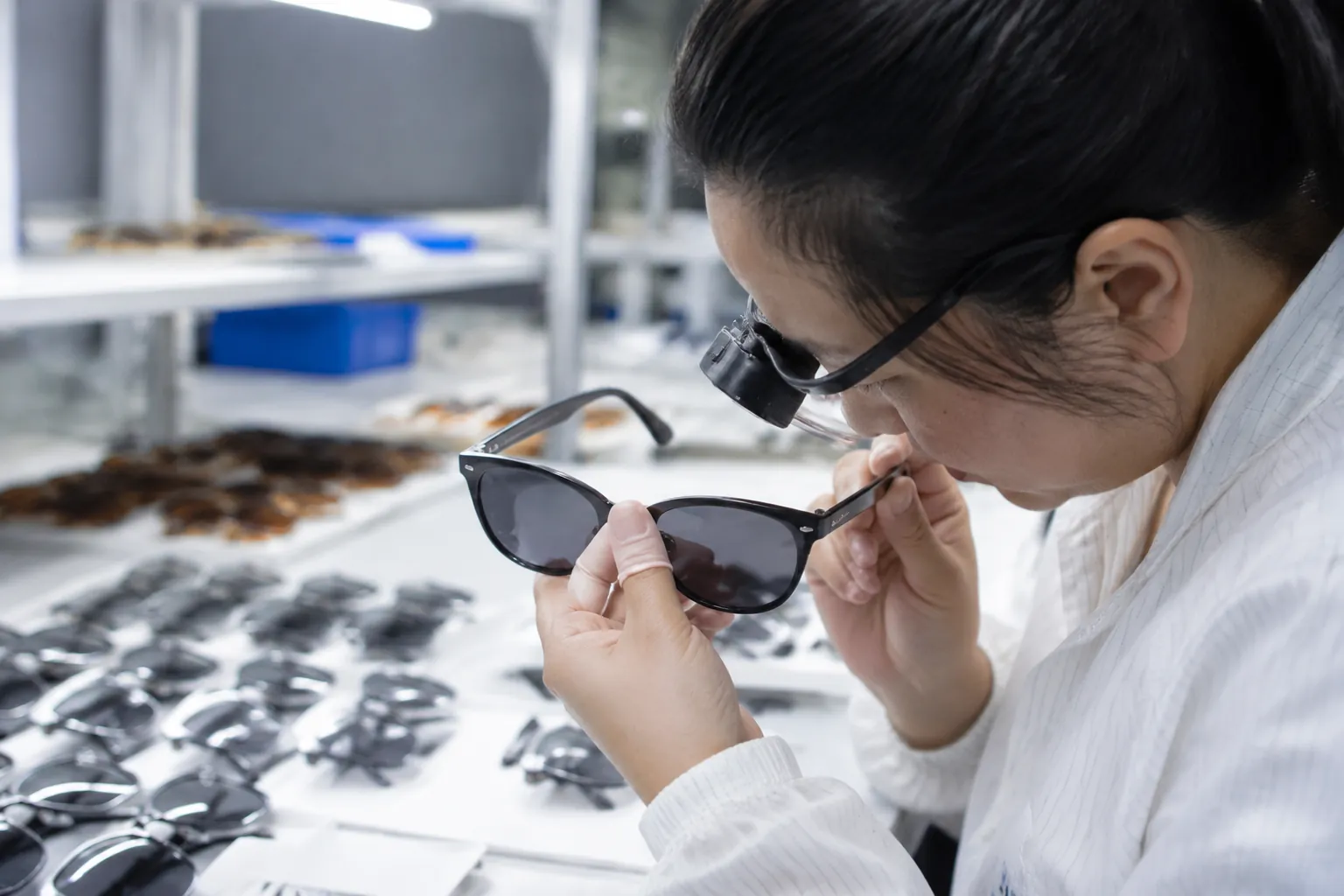
This guide is for overseas brands, importers, distributors, and retailers sourcing polarized sunglasses from China. It covers the buyer-side specs to confirm before paying for samples: lens material, polarizing axis, haze and distortion limits, tint standards, compliance documents, MOQ, pricing, decoration, packaging, and inspection rules. The aim is simple: reduce rejected samples, avoid shipment disputes, and decide whether polarization is worth the added cost.
First Decide If Polarization Is Worth Paying For
Polarized lenses are not just darker lenses. They use a polarizing film or layer to reduce glare from horizontal reflective surfaces such as water, roads, snow, glass, and wet pavement. That extra structure adds processing, inspection, and rejection risk. It usually raises the unit cost compared with non-polarized sun lenses.
Before requesting samples, decide whether polarization fits the product's use case and retail price. It is easier to justify for fishing, driving, boating, beach, snow, travel, outdoor retail, and sport-inspired collections. The benefit is clear: less glare. It is harder to justify for short-life promotional sunglasses, giveaways, or low-price souvenir programs where color, logo exposure, and low landed cost matter more than optical performance.
A useful RFQ should state the intended use, target retail range, target EXW or FOB cost, order quantity, frame material, lens material, lens category or transmission target, tint, compliance market, logo method, and packaging. Do not bury the requirement in a vague phrase like "best quality lens." The supplier cannot quote accurately unless the commercial target and technical lens requirement are clear.
For LumiShades OEM projects, polarized orders follow a similar flow to standard sunglasses: frame production or preparation, lens preparation, tinting or coating when needed, logo decoration, assembly, QC, and packing. The key difference is lens control. MOQ, pricing, and lead time must be confirmed in writing for each project because they depend on frame type, lens material, coating, decoration, packaging, and available materials.
Specify the Lens Stack, Not Just "Polarized"
Buyers often request "polarized lenses" as if every option performs the same. They do not. The lens stack affects clarity, impact behavior, color stability, heat resistance, curve performance, weight, and price. Before sampling, define the base material, polarizing structure, lens thickness, base curve, tint, mirror or coating requirement, UV claim, and frame structure.
| Lens Choice | Typical Use | Buyer Check | Cost Effect |
|---|---|---|---|
| TAC polarized | Volume fashion, beach, casual outdoor sunglasses | Check haze, film waves, edge finish, heat behavior, coating quality, and delamination risk | Often the most economical polarized option for fashion OEM programs |
| PC polarized | Sport, kids, active lifestyle, and impact-conscious styles | Check optical stress, distortion, coating adhesion, injection or cutting marks, and frame fit | Usually higher than TAC; useful where toughness is important |
| Nylon polarized | Premium sport, shield, cycling, and high-wrap frames | Check curve stability, optical clarity, tint uniformity, edge quality, and assembled-frame distortion | Higher cost; better suited to curved performance styles |
| CR-39 polarized | Classic optical-quality sun styles and premium fashion frames | Check weight, thickness, breakage risk, edge finish, and lead time | Can cost more and may be less suitable for rough handling |
For many private-label sunglasses programs, TAC and PC are the first materials to compare. TAC is common for cost-controlled polarized fashion sunglasses because it is light and economical. PC is tougher, but poor processing can leave stress marks, distortion, or coating defects. Nylon is better for curved sport designs, especially higher-base frames. CR-39 can give good optical clarity, but it is heavier and more brittle than PC or nylon.
Confirm the lens in measurable terms: material, thickness, base curve, tint, visible light transmission target or lens category, coating, and any impact or market-specific requirement. A loose flat lens may look fine. The same lens may distort after edging and mounting into a curved frame. Approve the polarized lens in the actual frame, not only on a lens card.
Write Down Axis Tolerance and Polarization Efficiency
The polarizing axis controls whether the lens blocks glare as intended. If the axis is wrong, glare may still pass through from water, road surfaces, snow, or other reflective surfaces. If the left and right lenses are mismatched, the wearer may feel uneven vision or discomfort. This is not a small detail. It belongs in the sample approval standard.
For commercial OEM sunglasses, ask the supplier what polarizing axis tolerance they can hold for the selected lens material, frame shape, and order quantity. Some programs use a tolerance such as ±3 degrees per lens. Stricter fishing, sport, or driving lines may need tighter control. Do not copy a number blindly. Confirm the tolerance, inspection method, acceptance rule, and yield or cost impact before sample approval.
- Before cutting: confirm the intended axis direction and how it is marked or controlled on lens blanks.
- During sampling: check loose lenses and assembled sunglasses with a polarization tester or controlled LCD-screen method.
- After assembly: inspect both lenses again because cutting, edging, or fitting errors can affect the finished product.
- For bulk QC: define sample size, acceptance criteria, and whether axis errors are major or critical defects.
- For disputes: keep one approved golden sample with confirmed axis, tint, logo, frame fit, and packaging.
Polarization efficiency also needs a clear standard. Buyers do not always need lab reports for small orders, but the supplier should identify the lens grade and inspection method. For retail or outdoor-use programs, request test data or a third-party report if the destination market or retailer requires it. LumiShades can include polarization checks during lens preparation and final QC, but the required tolerance and method must be written into the sample approval sheet. Verbal approval is weak evidence.
Define Haze, Distortion, Film Defects, and Heat Risk
Polarized lens problems do not always show in product photos. A lens can look dark, glossy, and sellable on a white background but still show haze, film wrinkles, bubbles, oil marks, edge separation, coating stains, or stress lines under sunlight, point light, or a straight-line check.
Haze reduces perceived clarity. It can come from film quality, lamination control, coating contamination, storage, or handling. Do not write only "clear lens." Define the inspection condition: viewing distance, light source, background, defect limits, and whether the check applies to loose lenses, assembled sunglasses, or both.
Distortion needs separate attention. High-wrap frames, shield lenses, rimless frames, and half-rim structures are more sensitive than flatter full-rim fashion frames. If lens material, thickness, or base curve does not match the frame, the wearer may see straight lines bend near the edge or feel visual discomfort. For curved designs, approve the lens and frame as one assembled product.
Heat and humidity behavior also matter, especially for sunglasses sold in cars, beach markets, or hot climates. TAC polarized lenses can be sensitive if the film, adhesive, coating, or storage control is poor. Ask what heat or humidity checks are used and what defects are rejected after testing, such as delamination, warping, coating change, bubbles, or edge separation. Match the test to the product risk.
Blunt rule: if a lens bends straight lines, shows film waves, or looks cloudy under a simple controlled check, do not approve it because the frame looks good.
Use Physical Standards for Tint and Mirror Color
Lens color can derail an OEM sunglasses project fast. Smoke grey, brown, amber, G15 green, blue mirror over smoke, silver mirror over grey, and gradient tints can shift between materials, coating runs, and suppliers. A phone photo is not a color standard. Lighting, screen brightness, camera processing, and compression all change the result.
Before sampling, approve a physical master lens when possible. If the buyer cannot provide one, the brief should define the base tint, visible light transmission target or lens category, mirror color, gradient direction, coating requirement, and whether backside anti-reflective coating is required. For regulated markets, lens darkness is not only a style choice. The lens category and transmission must match product claims, user information, packaging text, and intended use.
- Smoke grey: supports neutral color perception and is common for general outdoor use.
- Brown or amber: can increase perceived contrast and is common for fishing, driving, and outdoor sport styles.
- G15 green: has a classic retail look, but the exact shade must be approved by physical sample.
- Mirror coating: check color shift, scratch resistance, fingerprint visibility, and edge durability.
- Gradient tint: confirm top density, bottom density, transition smoothness, and left-right consistency.
If the buyer changes lens color, mirror finish, coating, or lens category after approval, treat it as a revised sample. It is not a small message-thread adjustment. Color approval should be tied to a dated physical standard or signed sample so bulk production can be checked against the same reference.
Match Compliance Claims to the Destination Market
Polarized does not mean compliant. Polarization describes glare reduction. Sunglasses still need the right UV protection, optical performance, lens category marking, labeling, restricted-substance control, and supporting documents for the destination market. Be strict here. Customs, retailers, online platforms, and distributors may ask for evidence.
LumiShades can work with buyer requirements related to CE EN ISO 12312-1, ANSI Z80.3, AS/NZS 1067, REACH, FDA registration, ISO 9001, and BSCI. Use these terms accurately. CE EN ISO 12312-1, ANSI Z80.3, and AS/NZS 1067 are product performance or market standards. REACH concerns restricted substances. FDA registration is not product approval. ISO 9001 and BSCI relate to management systems and social compliance, not proof that every sunglass model meets every market rule.
| Market | Common Requirement | Buyer Action Before Sampling |
|---|---|---|
| European Union | CE EN ISO 12312-1 and REACH considerations | Confirm lens category, UV claim, CE marking, user information, and restricted-substance requirements |
| United States | FDA registration and ANSI Z80.3 reference | Confirm importer requirements, labeling, UV claim, impact expectations, and available test documents |
| Australia and New Zealand | AS/NZS 1067 | Confirm lens category, warning text, UV claim, and packaging language before artwork is printed |
| Multi-market order | Different label, language, and document needs | Create market-specific packaging and document files instead of using one generic version |
Do not print unsupported claims such as "UV400," "impact resistant," "driving lens," or "professional sport lens" unless the product file supports them. The cheapest time to fix compliance wording is before sampling. The expensive time is after hangtags, barcode stickers, retail boxes, or online listings are already made.
Clarify MOQ, Price Breaks, Decoration, and Timing
The first polarized sample should prove more than shape. It should prove lens stack, axis control, tint, coating, decoration, hinge feel, frame fit, packaging, and QC standard. Sample time and bulk lead time must be confirmed project by project because they depend on material availability, frame complexity, lens type, coating, logo method, packaging, inspection requirements, and whether tooling or molds are needed.
MOQ should be confirmed by design, color, lens option, and packaging version. A low MOQ can help with market tests, influencer kits, small retail drops, or buyer presentations. It also usually raises the unit price because setup, sample handling, material preparation, decoration, and inspection are spread across fewer units. Larger quantities usually improve cost efficiency, but only if the specification stays stable.
Decoration choices affect price, lead time, and reject rate. Laser engraving can be clean and durable on suitable materials, but visibility depends on base color and surface finish. Pad printing is common for temple logos, but adhesion should be checked by rub or tape testing. Metal logo plates can improve retail appearance but add component cost, positioning control, and assembly labor. Hot stamping or foil effects can look premium, but color and durability need approval.
Ask for a stepped quote, not one blended number. The quote should show frame material, lens material, polarization requirement, UV claim, coating, logo method, packaging, carton packing, sample cost, tooling cost if any, lead time, payment terms, and price breaks at the quantities you are actually considering. If one price is far below the rest for the same specification, ask what is missing: lens grade, coating durability, packaging, compliance documents, inspection level, or after-sales responsibility.
Use a Controlled Sample Approval Checklist
The first sample is not a souvenir. Treat it as a controlled approval part. Mark it, photograph it under stable lighting, record the specifications, and keep it as the reference for bulk production. If approval lives only in a message thread, disputes become harder to settle.
- Frame: confirm material, color, finish, hinge tension, temple alignment, nose fit, and wearer comfort.
- Lens: confirm material, thickness, base curve, tint, polarization axis, UV claim, haze, and distortion.
- Decoration: confirm logo size, location, color, engraving depth, print adhesion, or metal plate fit.
- Compliance: confirm CE EN ISO 12312-1, ANSI Z80.3, AS/NZS 1067, FDA registration, REACH, or other destination-market needs.
- Packing: confirm pouch, case, polybag, barcode, warning text, carton mark, and destination labeling.
- Bulk control: confirm AQL level, defect classification, golden sample storage, and pre-shipment inspection timing.
LumiShades has in-house capabilities for frame production, lens tinting, decoration, assembly, and QC, which can shorten correction loops when the specification is clear. But capability does not replace a controlled brief. A supplier can control what is defined, measured, and approved. The best sampling result comes from a buyer who confirms the commercial target, technical lens requirements, decoration standard, compliance market, packaging file, and inspection method before the first sample is made.
Have a custom sunglasses project in mind?
Send us your styles, target market and quantities and we will return a detailed quote with MOQ, lead time and a sample plan.
Get a QuoteWhy source this from Wenzhou with LumiShades
Wenzhou in Zhejiang Province is widely regarded as China’s eyewear manufacturing capital, producing a large share of the world’s sunglasses. That concentration matters to buyers: a deep local supply chain for acetate sheet, hinges, lens blanks, plating and packaging means shorter component lead times, easier color and material matching, and a workforce with decades of eyewear-specific skill. LumiShades has manufactured in this ecosystem since 2009, and our vertical integration — in-house injection molding, acetate cutting, CNC milling, lens tinting, decoration and quality control — means no part of your order is quietly subcontracted to a workshop you cannot audit.
For international buyers, that vertical control translates into accountability. When a single factory owns every step, defects are traced and fixed at source rather than bounced between vendors, and your specifications survive intact from first sample to bulk. For procurement review, buyers can request process records, approved samples, quality checkpoints and project-specific compliance files before placing a bulk order. Required testing and documentation are confirmed against the destination market and product specification rather than assumed from a generic certificate list. Explore our manufacturing capabilities and quality control process to see how this works in practice.
Frequently asked questions
What polarizing axis tolerance should I ask for before sampling? Ask the supplier to state the axis tolerance they can hold for your lens material and frame shape, then write it into the sample approval sheet. Many commercial programs use a tolerance such as ±3 degrees per lens. Stricter fishing, driving, or sport lines may need tighter control. Also define the inspection method, sample size, left-right consistency rule, and whether axis failure is a major or critical defect.
Can I use the same polarized lens for every frame shape? No. Lens material, thickness, and base curve must match the frame. High-wrap, shield, rimless, and half-rim frames can create distortion if a flat or unsuitable lens is forced into the design. Approve the polarized lens in the actual assembled frame, then check axis, haze, tint, edge quality, and straight-line distortion before bulk production.
Does polarized mean the sunglasses meet CE or ANSI requirements? No. Polarization only describes glare reduction. Compliance still depends on UV protection, optical performance, lens category, labeling, restricted substances, and destination-market rules such as CE EN ISO 12312-1, ANSI Z80.3, AS/NZS 1067, REACH, or FDA registration. Ask for style-specific documents or test evidence when the market, retailer, or platform requires them.
What should I send the factory before requesting polarized samples? Send the frame style or drawing, target use, order quantity, target cost, lens material, lens category or transmission target, tint standard, mirror or coating requirement, logo method, packaging artwork, destination market, compliance requirements, and inspection expectations. If color matters, send or approve a physical lens standard instead of relying on photos.
At what order quantity does polarized pricing start to make sense? There is no universal break point. Pricing depends on lens material, frame structure, coating, logo method, packaging, inspection level, and available materials. Ask for price breaks at realistic quantities and compare the polarized upgrade against the product's retail position. Polarization usually makes more commercial sense for outdoor, fishing, driving, sport, travel, and retail programs than for giveaways or very low-price souvenir sunglasses.
Ready to start?
Explore our sport wrap sunglasses or request a quote — our sales team replies within 12 hours.
Request a Quote