
Photochromic Sunglasses OEM Fit Guide
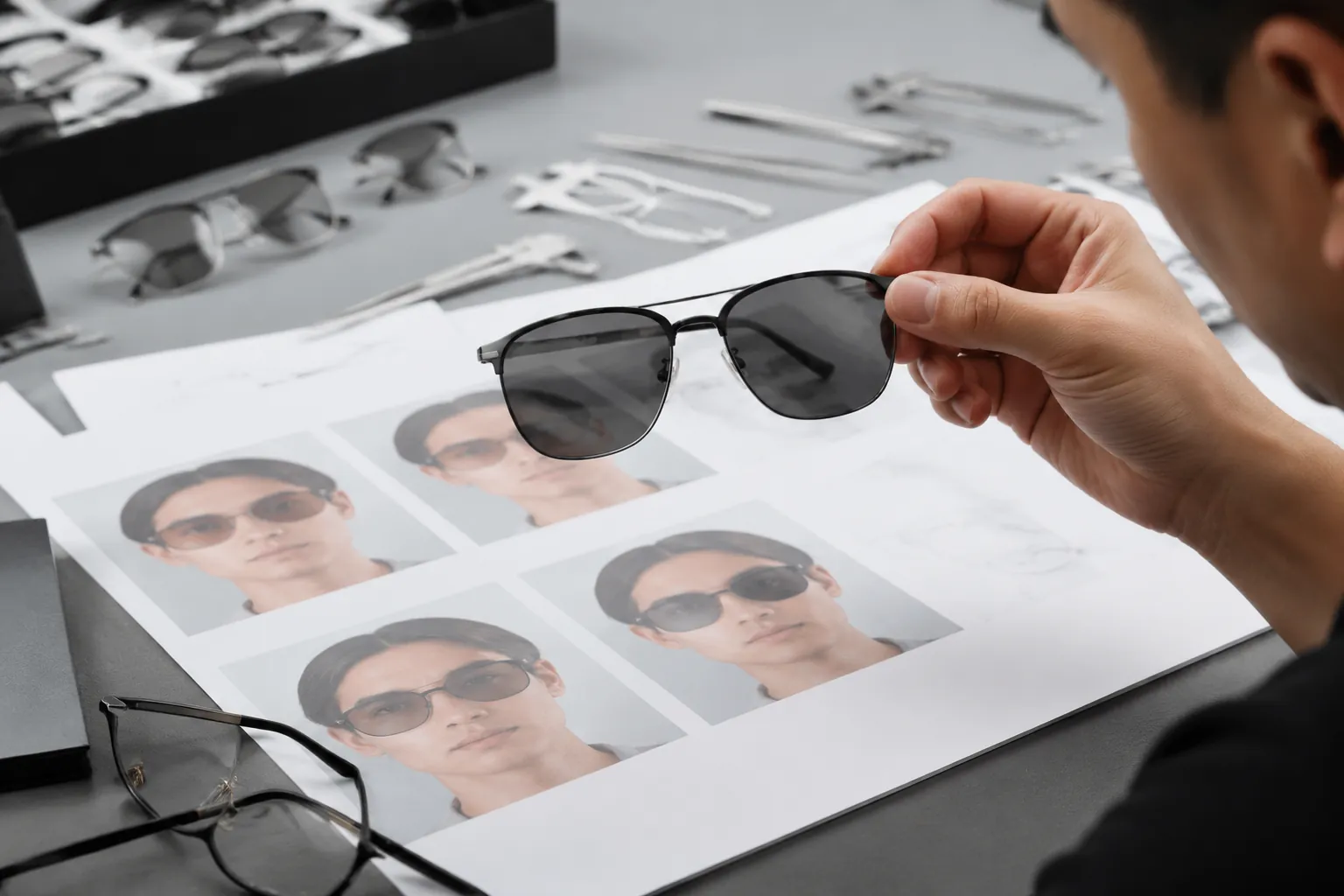
This guide is for brands, importers, distributors, and retail buyers deciding whether photochromic sunglasses belong in a custom eyewear program. It explains where the technology fits, where it disappoints, which specifications belong in the purchase brief, and how MOQ, testing, decoration, and lead time affect approval risk. The aim is practical: measurable specs, cleaner sample approvals, and fewer disputes after tooling, lenses, packaging, or bulk materials are committed.
Should This SKU Use Photochromic Lenses?
Photochromic sunglasses are not a universal premium upgrade. They work best when the wearer moves between changing light conditions and does not want to switch between two pairs. Good candidates include cycling, golf, hiking, fishing, travel retail, resort programs, outdoor work, and staff eyewear for people moving between indoor and outdoor zones. A beach fashion SKU may not need this feature. A fixed dark category lens can be easier to sell, easier to test, and cheaper to produce.
Start with the use case, not the lens color. Does the customer need variable visible light transmission, or would a standard smoke, brown, green, mirror, or polarized lens solve the problem at lower cost? Photochromic performance depends on lens chemistry, base material, UV exposure, temperature, lens thickness, coatings, and production consistency. Do not copy a supplier brochure range into the final spec. Test the exact lens construction, color, and coating stack planned for production.
Set expectations early. Most photochromic lenses react to UV exposure, so many versions darken less behind a car windshield because automotive glass blocks part of the UV that activates the lens. Darkening is not instant. Fade-back is usually slower than activation. Temperature matters too: some lenses become darker in cooler conditions and less dark in high heat. If sales copy says "instant," "works perfectly in cars," or "one tint for all conditions" without proof, returns become more likely.
For OEM planning, a pilot order can reduce risk. Use it to check lens behavior, frame fit, decoration, packaging, and market response before scaling. Larger quantities usually improve cost efficiency because lenses, frame parts, logo decoration, packaging, and inspection can be batched. Still, photochromic lenses cost more than standard tinted lenses. Prove the business case on the intended SKU before converting a whole range.
Where Photochromic Lenses Work Best
The strongest use cases involve mixed light. A runner starting before sunrise. A cyclist moving from forest shade to open road. A warehouse manager walking between loading bays and outdoor yards. A traveler moving from indoor shops to bright streets. These users value comfort across changing conditions more than a fixed fashion tint.
- Outdoor sport: Suitable for cycling, trail running, golf, hiking, and training eyewear where cloud, shade, and sun exposure change often.
- Work and utility eyewear: Suitable for site visitors, logistics teams, and outdoor staff when impact resistance, optical quality, lens retention, and warnings are specified correctly.
- Travel retail: Easier to explain when hangtags state activation limits, UV protection claims, care instructions, and any restrictions on driving or night use.
- Optical-style plano sunglasses: Appropriate for fashion-optical channels when the product is positioned as non-prescription plano eyewear and tested under the relevant sunglass standard.
- Junior ranges: Possible only after hinge strength, screw security, lens safety, labeling, age positioning, and market-specific requirements are reviewed.
The weak cases matter just as much. If the SKU needs a uniform dark look for beach photography, a stable mirror color, or the lowest possible promotional price, photochromic lenses may add cost without improving sell-through. If the sales channel cannot explain that the lens reacts mainly to UV and may not darken strongly indoors or inside vehicles, customer service will pay for that gap.
Lens Materials, Performance, and Cost Tradeoffs
Photochromic lenses can be supplied in different base materials and constructions. The right choice depends on target retail price, frame design, destination market, intended claim, and required test route. Polycarbonate is common for sport and youth eyewear because it is lightweight and impact resistant. CR-39 is valued for optical clarity in many fashion and optical-style plano frames, but it is less impact resistant than polycarbonate. TAC is widely used for polarized sunglasses. If photochromic and polarization functions are combined, validate VLT, color, polarization efficiency, and lamination durability together.
| Option | Typical Use | Buyer Watchpoint | Cost Logic |
|---|---|---|---|
| Photochromic polycarbonate | Sport, youth, travel, utility eyewear | Check optical power, prism, impact performance, tint uniformity, and stress after edging or mounting | Usually higher than standard tinted PC; more efficient when lenses and inspections are batched |
| Photochromic CR-39 | Optical-style plano sunglasses and fashion frames | Good optical clarity, but avoid unsupported sport or impact claims unless the exact product passes the required tests | Moderate to high depending on coating, color, and supplier process |
| Photochromic polarized | Fishing, water use, glare-control lifestyle eyewear | Confirm polarization efficiency, VLT, activation behavior, color, haze, and delamination resistance together | Higher than non-polarized photochromic; best for SKUs with a proven retail price band |
| Standard tinted PC | Mass retail, promo, entry sport | No adaptive tint, but stable color and simpler quality control | Lower and easier to manage for price-sensitive programs |
| Standard polarized TAC | Beach, fishing, general retail | Strong glare-reduction story, but no UV-reactive tint change | Often simpler and lower risk than photochromic polarized lenses |
A useful sourcing rule: add photochromic lenses only when the wearer has a real light-change problem and the retail price can absorb the added lens cost. For many buyers, one or two photochromic SKUs inside a wider sunglasses range is safer than converting the full program before field feedback and test results are available.
Specs Buyers Should Put on the Sheet
Vague lens specs cause disputes. "Photochromic gray lens" is not enough. A usable OEM specification should define base material, clear-state appearance, activated appearance, VLT target before and after activation, UV protection requirement, lens thickness, coating requirements, frame material, logo method, packaging, destination market, and test standard. If the destination is the EU, US, Australia, or New Zealand, name the applicable standard before quotation. The supplier then has a real basis for confirming whether the lens and frame construction are suitable.
- Define frame material first: injection PC, TR-type material, acetate, stainless steel, aluminum, or mixed construction.
- State lens material, nominal lens thickness, base curve, and whether the design is rimmed, semi-rimless, or rimless.
- Set measurable VLT targets for the clear and activated states, and define the test condition used to measure activation.
- Confirm UV protection requirements under the destination standard instead of relying only on a generic "UV400" marketing claim.
- Specify whether polarization is required; do not assume it is included with photochromic lenses.
- List decoration method: pad print, screen print, laser engraving, heat transfer, metal logo plate, temple inlay, or lens mark.
- Define packing: microfiber pouch, EVA case, paper box, hangtag, barcode label, carton marks, and instruction leaflet language.
Ask which processes are handled in-house and which are outsourced. This may include frame molding, acetate cutting, CNC work, lens tinting, coating, logo application, packaging, and final inspection. The answer matters. Photochromic projects often need corrections after the first sample, such as lens seating pressure, hinge tension, temple balance, nose-pad fit, logo position, or color matching against the approved sample.
Fit Tolerances and Decoration Details
Photochromic lenses make fit problems easier to see. Buyers often inspect and photograph the same sample in clear, partly activated, and fully activated states. A frame that looks acceptable with a dark fixed lens may show stress, gaps, or uneven lens seating when the lens is lighter. For injected frames, the lens groove, frame curve, and lens base curve must match. If they do not, expect stress marks, lens popping during handling or drop tests, or visible distortion near the rim.
Common checks include bridge width, lens groove depth, hinge alignment, temple opening angle, screw torque, lens retention, frame symmetry, and temple balance. Agree tolerances during sample approval and write them into the inspection standard where possible. There is no universal tolerance that fits every design. The correct range depends on material, frame construction, tooling condition, logo method, and the surface being measured.
Decoration also affects lead time and QC. Pad printing is economical for simple one- or two-color temple logos, but curved or textured temples need artwork trials. Laser engraving is durable on metal parts and some coated surfaces, but contrast depends on the substrate. Metal logo plates can look premium, but they need placement control plus adhesive or mechanical fixing checks. Lens marks should stay small and be tested for abrasion, haze, optical interference, and compliance impact. Late logo changes are not harmless. A new size, color, or position can require new films, plates, fixtures, or inspection references.
Cost, MOQ, and Lead-Time Reality
Photochromic programs cost more than comparable fixed-tint programs. The lens cost is higher. Performance checks take longer. Approval samples require more review. A small pilot order may still be the right move, but it cannot carry the same unit cost as a larger run because setup time, lens sourcing, artwork preparation, packaging checks, and inspection labor are spread across fewer units.
| Order Stage | Typical Quantity | What Happens | Timing Risk |
|---|---|---|---|
| Market test | Small pilot quantity | Confirm frame fit, lens behavior, decoration, packaging, and sales copy | Higher unit cost; limited batching and fewer spare lenses |
| Small wholesale run | Low-volume production | Better material purchasing and line setup efficiency than a pilot | Artwork, packaging, lens approval, and document review still drive schedule |
| Retail launch | Scaled production | More stable cost planning, fuller QC sampling, carton planning, and compliance review | Reports, labels, warnings, and packing files must be ready before shipment |
| Volume program | Repeat or large-volume order | Best batching efficiency for lenses, frames, decoration, packaging, and inspection | Late changes can waste lenses, printed packaging, labels, and production time |
Quote lead time against the actual specification, not a previous fixed-tint order. Samples move faster when frame parts, materials, and compatible lens blanks already exist. New frame colors, special molds, custom metal parts, uncommon lens combinations, and third-party testing can add time. Bulk production should start only after sample approval, deposit, artwork confirmation, packaging files, labels, carton marks, and compliance requirements are complete. Approve slowly. Then produce fast. A weak approved sample will be copied at scale.
Testing Before Production
Photochromic sunglasses need standard sunglass testing plus activation-specific checks. Common references include CE EN ISO 12312-1 for many EU sunglass programs, ANSI Z80.3 for non-prescription sunglasses in the US, AS/NZS 1067 for Australia and New Zealand, and REACH for EU chemical compliance. FDA registration may be relevant to the US eyewear regulatory environment, but it does not replace product testing. ISO 9001 and BSCI provide management system or social-compliance context. They do not prove that a specific pair of sunglasses meets optical or chemical requirements.
- UV protection: Confirm UV transmittance under the relevant standard and make sure labels and sales pages match the test result.
- Visible light transmission: Measure clear-state and activated-state VLT, then confirm the lens category, warning label, and intended use are consistent.
- Activation and fade: Test under defined UV exposure and record darkening and fading behavior, not only final color.
- Optical quality: Check refractive power, astigmatism, prism imbalance, haze, distortion, and tint uniformity.
- Mechanical fit: Inspect lens retention, hinge strength, screw torque, temple alignment, frame deformation, and any market-specific durability requirements.
- Chemical compliance: For EU programs, review REACH relevance for frame material, coatings, paint, adhesives, logo parts, nose pads, and packaging contact points.
Reports should identify the exact model, lens material, lens color, coating, frame color, and tested sample where possible. A report from another model, another lens construction, or another production period may not support the current order. Confirm before production whether testing is performed by the supplier, an external lab, or both. Also confirm who pays for retesting if the specification changes.
Sampling Workflow and Sales Claims
A good photochromic project moves in stages. The first sample proves the basic construction. The pre-production sample proves the exact production intent. Inspect the lens in clear, partly activated, and activated states. Keep one sealed physical sample as the reference for bulk production. If possible, test the sample in the main selling climate and use condition, not only beside an office window.
- Send target market, order quantity, retail price band, customer type, and intended claim to the supplier.
- Confirm frame type, lens material, photochromic color, logo method, packaging, barcode, and compliance route.
- Request samples using the same lens construction, color, coatings, and decoration method intended for production where possible.
- Test outdoors and under defined UV exposure, then record VLT, activation appearance, fade behavior, and any driving or night-use limitations.
- Approve a sealed physical sample with signed notes for color, logo, fit, packaging, labeling, and inspection criteria.
- Start bulk production only after artwork, carton marks, barcode files, labels, warnings, and inspection standard are final.
- Run incoming lens checks, in-process QC, final inspection, and document review before shipment.
Sales language must be accurate. A defensible claim is: "Lenses darken in outdoor UV light and fade back in lower UV conditions. Activation speed and final darkness vary with UV strength, temperature, and use environment." It is less aggressive than "instant adaptive lenses," but customer-service teams can support it. Photochromic sunglasses can work well as an OEM product when the use case is real, the lens spec is measurable, and the buyer accepts the added cost and testing work. Used only as a vague premium label, they are a poor choice.
Have a custom sunglasses project in mind?
Send us your styles, target market and quantities and we will return a detailed quote with MOQ, lead time and a sample plan.
Get a QuoteWhy source this from Wenzhou with LumiShades
Wenzhou in Zhejiang Province is widely regarded as China’s eyewear manufacturing capital, producing a large share of the world’s sunglasses. That concentration matters to buyers: a deep local supply chain for acetate sheet, hinges, lens blanks, plating and packaging means shorter component lead times, easier color and material matching, and a workforce with decades of eyewear-specific skill. LumiShades has manufactured in this ecosystem since 2009, and our vertical integration — in-house injection molding, acetate cutting, CNC milling, lens tinting, decoration and quality control — means no part of your order is quietly subcontracted to a workshop you cannot audit.
For international buyers, that vertical control translates into accountability. When a single factory owns every step, defects are traced and fixed at source rather than bounced between vendors, and your specifications survive intact from first sample to bulk. For procurement review, buyers can request process records, approved samples, quality checkpoints and project-specific compliance files before placing a bulk order. Required testing and documentation are confirmed against the destination market and product specification rather than assumed from a generic certificate list. Explore our manufacturing capabilities and quality control process to see how this works in practice.
Frequently asked questions
What MOQ should I use to test a photochromic sunglasses design? Use a small pilot when the goal is to verify lens behavior, frame fit, decoration, packaging, and customer response before committing to a larger run. Ask the supplier to quote the pilot and the next production tier separately so you can see how setup, lens sourcing, packaging, and inspection affect unit cost. Do not approve a larger order until the pre-production sample, VLT targets, labels, and inspection criteria are confirmed.
Do photochromic sunglasses get dark inside a car? Usually they darken less inside a car than outdoors because many windshields block part of the UV that activates photochromic lenses. If vehicle use is important, test the exact lens inside the vehicle types your customers use and record the result before writing the claim. Do not promise full outdoor-level darkness in cars unless you have test evidence for that exact lens construction.
Can photochromic lenses also be polarized? Yes. Photochromic and polarized functions can be combined, but the construction is more complex and usually costs more than either feature alone. Before bulk production, confirm polarization efficiency, clear-state VLT, activated-state VLT, color, haze, activation behavior, fade behavior, lamination durability, and compliance with the destination standard. Also check that the final lens category and warning label match the measured VLT.
Which standards should overseas buyers ask for? Ask for the standard that matches the destination market and product claim. Common references include CE EN ISO 12312-1 for many EU sunglass programs, ANSI Z80.3 for non-prescription sunglasses in the US, AS/NZS 1067 for Australia and New Zealand, and REACH for EU chemical compliance. FDA registration may be relevant in the US context, while ISO 9001 and BSCI provide factory-management or social-compliance context rather than proof that a specific sunglass model passed optical testing.
How long does a custom photochromic sunglasses order take? Lead time depends on whether the frame, lens blanks, colors, coatings, packaging, and test route are already available. Ask the supplier to separate sample timing, pre-production sample approval, bulk production, packaging production, inspection, testing, and shipping preparation in the schedule. Treat the clock for bulk production as starting only after the sample, deposit, artwork, labels, carton marks, and compliance requirements are approved.
What is the biggest production risk with photochromic sunglasses? The biggest risk is approving vague lens specs. Define the lens material, clear-state VLT, activated-state VLT, activation test condition, UV protection requirement, lens color, coatings, polarization requirement, destination standard, decoration method, packaging, labels, and inspection method before production starts. Keep a sealed approved sample and make sure final inspection compares production against that sample and the written specification.
Ready to start?
Explore our square sunglasses or request a quote — our sales team replies within 12 hours.
Request a Quote