
Polarized Sunglasses Cost Guide for Buyers
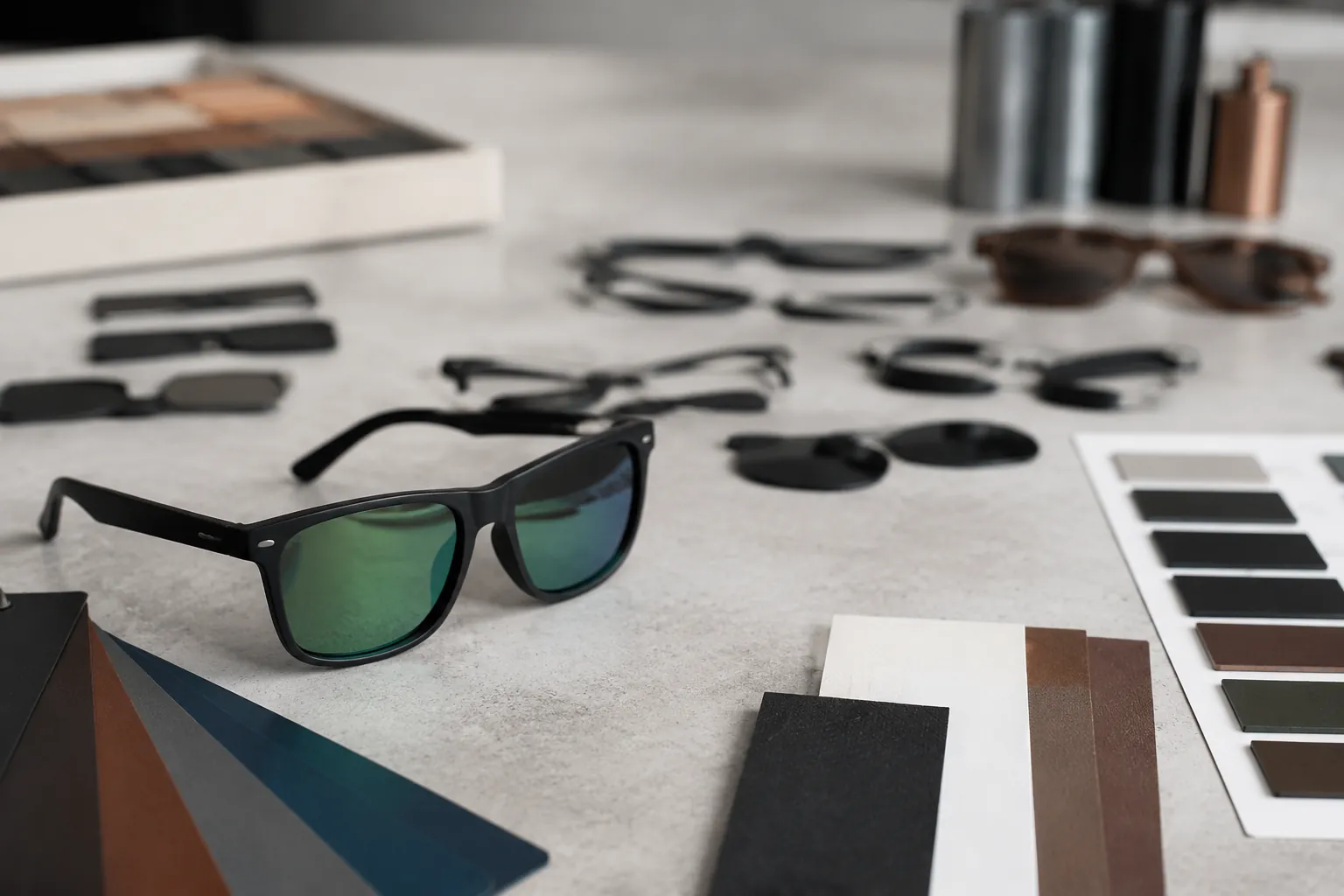
This guide is for brands, importers, distributors, and retail buyers deciding whether polarized lenses belong in a custom sunglasses program. It explains what adds cost, which lens and frame choices affect performance, what QC checks reduce returns, and how MOQ, price breaks, and lead times should be reviewed before purchase order approval. Use it before you approve samples, compare factory quotes, or freeze a bulk specification.
Use Polarization Where Buyers Can Feel It
Polarized lenses earn their keep when the wearer clearly notices glare reduction. They fit fishing, driving, boating, beach retail, outdoor sports, resort shops, and premium travel ranges. These users face reflected horizontal glare from water, roads, snow, wet pavement, car hoods, and glass.
They are not always worth the money. For low-cost festival eyewear, short-life promotions, novelty frames, or fashion drops, color, shape, logo, and price often matter more than optical performance. A compliant UV400 non-polarized lens may be the smarter choice.
The buying question is simple: will your customer pay for the difference, and can your supplier prove the lens works? A controlled TAC, PC, or nylon polarized lens may support a retail claim. A vague "polarized" promise without checks creates return risk.
For LumiShades programs in Wenzhou, polarized projects should follow the same approval path as other custom sunglasses: open-mold selection or tooling review, material confirmation, lens color approval, logo sampling, assembly, inspection, and packing approval. The extra control point is the lens. Check polarizing film direction, left-right axis consistency, optical distortion, coating adhesion, tint matching, and lens fit before bulk release.
Cost Stack: Where the Extra Money Goes
Polarization costs more because the lens is not just tinted plastic. A polarizing film layer is laminated or embedded in the lens, then the lens is cut, edged, tinted or coated, inspected, and mounted. More steps mean more risk.
Compared with basic non-polarized lenses, polarized lenses can have higher rejection from film bubbles, delamination, axis errors, coating defects, scratches, or left-right mismatch. The factory must check function, not only appearance.
| Cost Driver | Standard UV400 Lens | Polarized Lens | Buyer Control Point |
|---|---|---|---|
| Lens material | PC, acrylic, TAC, nylon, or another approved material based on price target and claim | Commonly TAC polarized, PC polarized, or nylon polarized | Match material to retail price, frame curve, impact claim, and required testing |
| Film control | Not required for non-polarized lenses | Polarizing axis should be consistent between left and right lenses | Require axis checks on approved samples and during random bulk inspection |
| Scrap allowance | Usually driven by cosmetic, tint, fitting, or coating defects | Can increase because film lines, bubbles, delamination, scratches, coating marks, and axis rotation are less forgiving | Ask whether the quote reflects realistic rejection risk for the selected lens |
| QC time | UV, tint, fitting, hinge, decoration, and cosmetic checks | UV, polarization effect, axis, distortion, tint, fitting, decoration, coating, and cosmetic checks | Add functional lens checks to the inspection plan, not only visual inspection |
| Packaging risk | Normal rubbing, scuffing, and carton damage risk | Higher risk when mirror or coated lenses touch bags, tags, hard cases, or metal trims | Confirm lens protection film, pouch material, divider method, and inner packing |
For LumiShades open-mold custom programs, MOQ may start at 50 pairs per design depending on frame, lens, decoration, and packaging requirements. Pricing usually improves at higher quantities because material purchasing, logo setup, packing preparation, and line changeover are spread across more units.
Do not accept a vague "premium lens" line. Ask the supplier to quote the same frame in polarized and non-polarized versions. Make the cost delta visible.
Lens Choices: TAC, PC, Nylon, Coatings, and VLT
Most buyers do not need to manage resin chemistry. They do need to understand how lens choices affect cost, feel, optical quality, and claims. The wrong lens can make a good frame feel cheap. It can also cause distortion on curved sport shapes or destroy the margin on a budget program.
- TAC polarized: Common for lifestyle and mid-market polarized sunglasses. It can provide good clarity and stable polarization when laminated, cut, and mounted correctly. Do not use it for impact claims unless the finished product is tested to the applicable requirement.
- PC polarized: Often selected when impact resistance is part of the positioning. It can suit sportier frames, but curved lenses may show distortion if molding, edging, lens thickness, and frame tension are not controlled.
- Nylon polarized: Often used for higher-performance curved eyewear. It can offer better flexibility and optical quality on wrap frames, but cost, material availability, and MOQ planning may be stricter than for common TAC options.
- Mirror coating: Adds a premium look and can reduce visible brightness, but it increases scratch, fingerprint, handling, and adhesion risk during assembly and packing. Require adhesion, rub, and visual checks on approved samples.
- Gradient tint: Useful for fashion and some driving-oriented ranges, but left-right tint balance must be checked against an approved master sample under consistent lighting.
- VLT category: Visible light transmission must be defined before sampling. Do not assume every dark, mirrored, or fashion-colored lens suits every market, driving statement, or product claim.
For many distributor and retail programs, TAC polarized lenses with confirmed UV protection are a practical middle option. For sport positioning, PC or nylon may justify the added spend when the frame design and claim require it.
If a product page, hangtag, or buyer file mentions impact performance, driving suitability, or special protection, put the requirement in the spec sheet. Then test it. Claims need evidence.
Factory Checks Before Bulk Approval
A polarized sample can look good in photos and still fail a functional check. Approval must cover lens performance, fit, coating, and packing. Color and logo approval are not enough.
Ask the factory to show how each lens requirement is checked, where the check happens, and what record is kept for incoming lenses, in-line assembly, and final random inspection.
Use a written pre-production checklist. For a controlled polarized order, the supplier should confirm UV protection, polarization effect, axis direction, tint, lens fit, coating, decoration, and packing method. Agree tolerances before production. For example, logo placement tolerance should match the decoration method and surface shape; lens color should match an approved master sample; and left-right lens appearance should be checked as a pair, not as loose components.
- Confirm UV protection: Test the finished sunglasses against the required market standard or buyer requirement. CE EN ISO 12312-1, ANSI Z80.3, AS/NZS 1067, REACH, and FDA registration or import documentation may apply depending on destination and product type.
- Check polarization effect: Use a polarization tester or LCD screen for quick screening, then request formal inspection or lab confirmation if required by the buyer file. Left and right lenses should behave consistently.
- Verify axis alignment: Film direction should remain correct after cutting, edging, and mounting. A rotated lens can reduce glare control and may feel visually uneven to the wearer.
- Inspect optical distortion: View a grid or straight-line pattern through the lens and rotate the frame. Distortion is more likely on cheap curved lenses, over-tight rims, or unsuitable lens materials.
- Check cosmetic defects: Reject visible bubbles, film lines, coating pinholes, deep scratches, dirt trapped near the rim, and obvious color mismatch between left and right lenses.
- Test lens fit after handling: Open and close temples, flex the bridge lightly where appropriate, and check whether lenses pop out, rattle, chip, or show stress marks near the rim.
Set an AQL plan before production starts. Cosmetic inspection alone is weak for polarized sunglasses. Add UV, polarization, axis, distortion, lens fit, coating, decoration, and packing checks to the workflow. If the supplier cannot explain how polarization is verified, you are buying a claim without enough proof.
Compliance: Match Destination, Lens, and Claim
Compliance language should be exact. Depending on destination and selling channel, sunglasses files may need CE EN ISO 12312-1 for Europe, ANSI Z80.3 for the United States, AS/NZS 1067 for Australia and New Zealand, REACH for restricted substances, and FDA registration or import documentation where relevant.
ISO 9001 and BSCI can support factory quality management and social compliance review. They do not replace finished-product lens testing. Do not treat them as substitutes.
Ask for current reports that match the actual product being ordered. A report for a non-polarized black lens does not automatically support a brown gradient polarized mirror lens. Changes in lens material, tint, coating, transmission category, frame material, or component supplier may require review by your compliance team, test lab, retailer, or importer of record.
If restricted substance testing is required, confirm the scope. It may need to cover frame material, lenses, coatings, nose pads, metal trims, screws, adhesives, printed packaging, and accessories.
Be careful with driving and sports claims. Polarized lenses can reduce road glare, but lens darkness, color recognition, and screen visibility still matter. Some fashion tints may affect signal color recognition. Polarization can also make some LCD displays harder to read, including dashboards, phones, boat screens, fuel pumps, and payment terminals. Define VLT category, UV requirement, polarization claim, destination market, and any driving or sport statement in the signed specification, not in a chat thread.
Lead Times, Samples, and Price Breaks
For a normal custom polarized sunglasses project, LumiShades samples usually take about 7 to 10 days after frame, lens, logo, and packaging details are confirmed. Bulk production is typically about 25 to 35 days after sample approval and deposit, subject to material availability, order size, decoration method, testing requirement, and packing complexity.
This schedule depends on early decisions. Freeze lens color, logo position, compliance requirements, and packaging artwork before production planning. Timelines stretch when tint approval repeats, mirror coating changes, barcode files arrive late, or retailer testing is added after production starts.
| Stage | Typical Time | Main Risk | Buyer Control Point |
|---|---|---|---|
| Spec confirmation | 1 to 3 days after complete buyer input | Unclear lens category, logo method, destination market, or claim | Send frame reference, lens color, VLT target, logo file, packing list, and destination market |
| Sample making | About 7 to 10 days for many open-mold projects | Tint mismatch, logo scale issue, lens fit problem, or coating difference | Approve against a written checklist and retain a signed master sample |
| Material preparation | Varies by lens, frame, coating, and packaging availability | Polarized lens stock shortage, coating delay, frame color mismatch, or accessory delay | Freeze lens material, color, coating, and packaging before deposit |
| Bulk production | About 25 to 35 days for many standard programs after approval and deposit | Lens scrap, decoration rejects, mixed SKUs, or late artwork changes | Request in-line QC updates and confirm any change in writing |
| Final QC and packing | Usually included inside the bulk production window | Wrong labels, mixed cartons, failed lens checks, or scuffed lenses | Use barcode, carton mark, SKU, inspection, and packing checklists |
MOQ and price breaks have practical logic. At 50 pairs, an order can support market testing, influencer seeding, boutique validation, or sample sales. Unit cost is higher because setup is spread across fewer units.
At higher quantities, open-mold programs usually become more efficient through better material planning, decoration setup, packaging preparation, and line scheduling. Do not compare a small polarized order with a large non-polarized order and assume the difference is only lens cost.
Frame and Decoration Choices Affect Lens Quality
The lens is only half the product. Frame geometry can support or weaken polarized performance. Too much curve can create edge distortion if the lens material does not suit the base curve. A loose rim can let the lens move. A tight rim can stress the lens and create edge marks.
For semi-rimless or shield-style designs, edging precision and screw pressure matter even more. Small assembly errors are easy to feel on the face.
Confirm the processes used for the actual order, such as injection molding, acetate cutting, CNC machining, lens tinting, laser engraving, pad printing, or metal logo application. Each process affects cost, tolerance, appearance, and lead time. Injection frames can be efficient for larger plastic programs and consistent color runs. Acetate can provide a heavier hand feel and richer pattern depth, but it involves cutting, tumbling, polishing, hinge installation, and more manual finishing. CNC details can improve precision for special shapes or components but may add time. Metal logo plates can look more permanent than printing, but they require stable placement, clean edges, plating control, and adhesion checks.
Decoration should support the product, not consume the budget needed for lens quality. Pad printing on temples is often practical when the surface is suitable. Laser engraving can look clean on metal parts or selected plastics, but depth and contrast should be approved on a physical sample. Hot stamping and metal badges can add perceived value, but they need adhesion checks and packaging protection so they do not scratch lenses in transit.
Do not spend the premium on decoration while using an uncontrolled lens. Buyers may accept a modest logo. They will not accept glare, distortion, coating scratches, or lens mismatch after paying for polarization.
Buyer Approval Checklist
Use one written specification sheet per SKU. This prevents sales, design, production, compliance, and QC teams from working from different versions. Keep the sheet specific, dated, and signed off before deposit.
- Frame: material, color, finish, hinge type, lens size, bridge, temple length, base curve, approved mold, and tooling status.
- Lens: polarized or non-polarized, material, color, VLT target, UV requirement, coating, mirror, gradient, base curve, and approved master sample.
- Decoration: logo file, position, size, Pantone or metal finish, method, artwork version, and placement tolerance.
- Compliance: destination market and required files such as CE EN ISO 12312-1, ANSI Z80.3, AS/NZS 1067, REACH, and FDA registration or import documentation where relevant.
- Packaging: polybag, pouch, case, cleaning cloth, hangtag, barcode, warning text, carton marks, inner pack quantity, and lens protection method.
- Inspection: AQL level, UV check, polarization check, axis check, distortion review, lens fit, hinge function, decoration adhesion, coating review, and carton or packing test if required.
For a first order, do not chase the lowest MOQ and the most complicated specification at the same time. LumiShades can support small open-mold programs from 50 pairs per design where suitable, but pricing and production efficiency usually improve at higher quantities.
Use small runs to validate fit, tint, logo placement, packaging, compliance files, and sell-through. Scale after the lens and frame combination proves itself.
Blunt rule: polarization is worth paying for when the end user can feel the glare reduction and the buyer has a QC plan to prove it. Without both, it is only a more expensive claim.
Have a custom sunglasses project in mind?
Send us your styles, target market and quantities and we will return a detailed quote with MOQ, lead time and a sample plan.
Get a QuoteWhy source this from Wenzhou with LumiShades
Wenzhou in Zhejiang Province is widely regarded as China’s eyewear manufacturing capital, producing a large share of the world’s sunglasses. That concentration matters to buyers: a deep local supply chain for acetate sheet, hinges, lens blanks, plating and packaging means shorter component lead times, easier color and material matching, and a workforce with decades of eyewear-specific skill. LumiShades has manufactured in this ecosystem since 2009, and our vertical integration — in-house injection molding, acetate cutting, CNC milling, lens tinting, decoration and quality control — means no part of your order is quietly subcontracted to a workshop you cannot audit.
For international buyers, that vertical control translates into accountability. When a single factory owns every step, defects are traced and fixed at source rather than bounced between vendors, and your specifications survive intact from first sample to bulk. For procurement review, buyers can request process records, approved samples, quality checkpoints and project-specific compliance files before placing a bulk order. Required testing and documentation are confirmed against the destination market and product specification rather than assumed from a generic certificate list. Explore our manufacturing capabilities and quality control process to see how this works in practice.
Frequently asked questions
How much more do polarized lenses usually add to a sunglasses order? The increase depends on lens material, coating, tint, curvature, VLT target, rejection rate, and inspection requirements. Ask the factory to quote the same frame in two versions: UV400 non-polarized and UV400 polarized. Require the quote to separate lens cost, coating, decoration, packaging, testing, and any special inspection so you can see whether the increase is justified.
Can I start with 50 pairs per polarized design? Yes, for many LumiShades open-mold custom programs, 50 pairs per design may be possible depending on the frame, lens, logo, and packaging specification. Treat that quantity as a validation run, not the best-cost production run. Before approving bulk, use the small order to check lens fit, polarization effect, tint, logo placement, packaging protection, carton labels, and customer feedback.
Which polarized lens material is best for custom sunglasses? TAC polarized is often practical for lifestyle and mid-market sunglasses. PC polarized is more suitable when impact resistance is part of the positioning, provided the finished eyewear is tested for the claim. Nylon polarized is usually selected for higher-performance curved or wrap eyewear where optical quality and flexibility matter. Choose based on frame curve, retail price, use case, compliance requirement, and approved test plan.
What documents should I request for polarized sunglasses sold overseas? Request documents that match the destination market and the exact production specification. Depending on the market, this may include CE EN ISO 12312-1, ANSI Z80.3, AS/NZS 1067, REACH, and FDA registration or import documentation where relevant. Check that reports match the lens material, tint, coating, VLT category, frame material, and product claim. If any key component changes, ask your compliance team or test lab whether the file must be updated.
How do I check if a sample is really polarized? For a quick check, rotate the lens in front of a polarization tester or LCD screen and confirm the light changes as expected. For buyer approval, go further: inspect left-right consistency, axis alignment, UV protection, optical distortion, coating quality, lens fit, and cosmetic defects. Keep the approved sample as the master reference and require bulk inspection records against it.
Will polarized lenses delay production? Polarized lenses do not have to delay production if the lens material, tint, coating, VLT target, logo, packaging, and compliance requirements are fixed before deposit. Samples for many open-mold projects take about 7 to 10 days, and bulk production is often about 25 to 35 days after approval and deposit. Delays usually come from repeated tint changes, special coatings, unavailable lens stock, late artwork, or new testing requirements added after production begins.
Are polarized sunglasses always better for driving? No. Polarized lenses can reduce road glare, but driving suitability also depends on VLT category, lens color, color recognition, and local market requirements. Very dark lenses or some fashion tints may be unsuitable for certain driving conditions. Polarization can also make some LCD screens harder to read. Define any driving claim in the specification and confirm it against the applicable standard or buyer requirement before production.
Ready to start?
Explore our sport wrap sunglasses or request a quote — our sales team replies within 12 hours.
Request a Quote