
Polarized vs Non-Polarized Sunglasses: Buyer Mix Guide
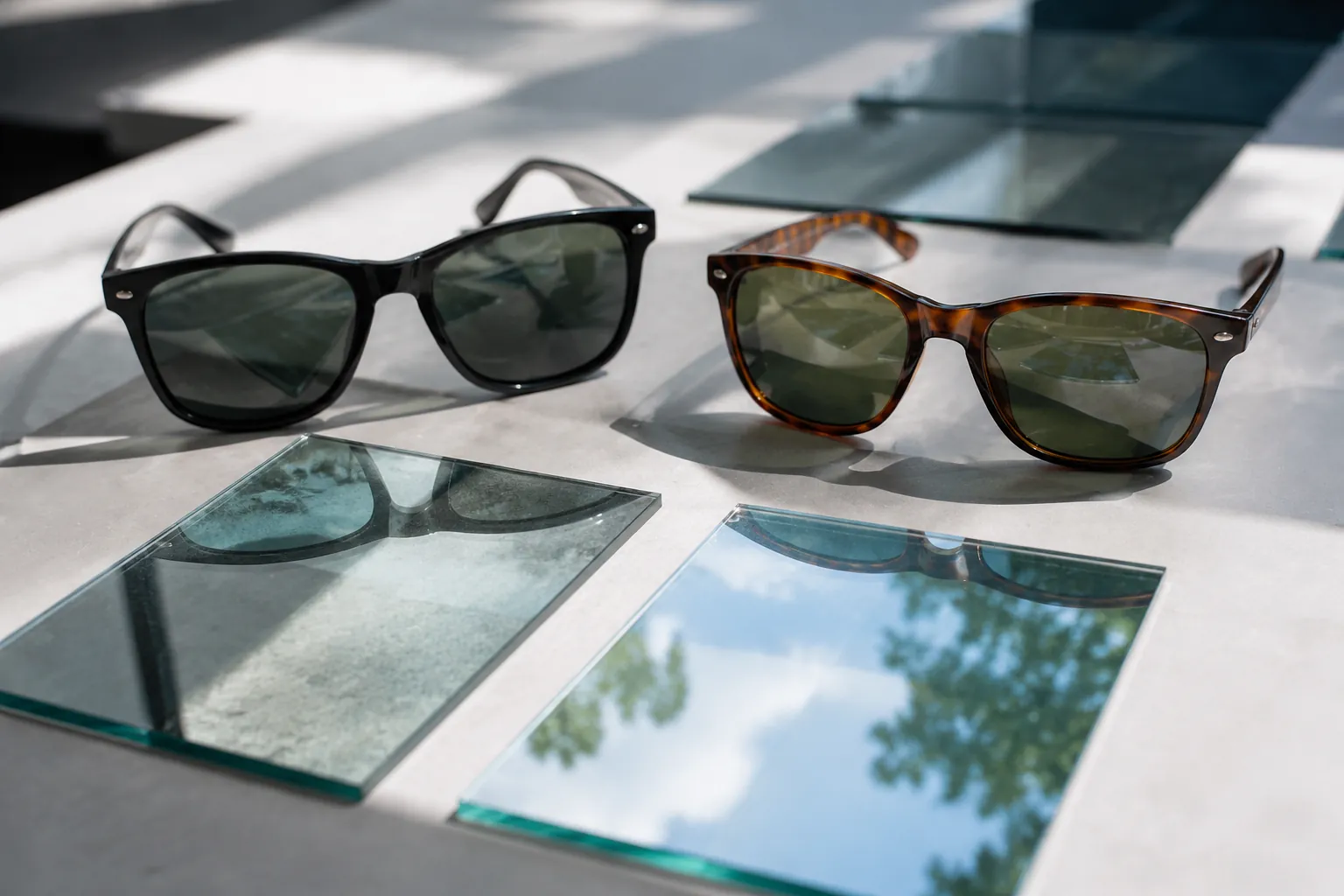
Retail buyers do not need a lecture on polarization. They need a clear way to decide which SKUs earn shelf space, which SKUs protect margin, and which SKUs create returns when the channel is wrong. This guide is for brands, importers, distributors, and retailers buying sunglasses at volume. It shows where polarized lenses improve conversion, where non-polarized lenses move faster, and how to set a mix without overbuying the wrong lens type.
Start With the Channel, Not the Lens
The most common mistake is treating polarized and non-polarized sunglasses as a simple quality ladder. They are not. The right mix depends on the channel, the shopper mission, and the price point. A customer buying fishing sunglasses wants glare control. A customer buying a fashion frame wants style. Different jobs. Different SKUs.
Polarized lenses reduce reflected glare from water, roads, glass, chrome, and snow. That makes them useful for boating, fishing, driving, cycling, skiing, travel, and other outdoor uses where reflected light is the problem. Non-polarized lenses are easier to place in fashion, promotional, and entry-price programs where the buyer wants a clean look, a lower ticket, and fast turnover.
For general retail, polarization should be a planned feature. Not a default. It adds cost and can complicate the sale if the staff cannot explain it quickly. In sport and outdoor programs, the opposite is true. Leaving polarization out of the hero SKUs can weaken the story.
A simple starting point is to divide the business into three buckets. Utility-led channels usually need more polarized options. Fashion-led channels need a stronger non-polarized base. Mixed channels need a clear split so staff can explain the difference in one sentence. If the salesperson cannot do that, the feature will not carry the sale.
At volume, that channel-first discipline matters even more. Production decisions get locked early. If you are placing 300, 1,000, or 5,000+ pairs, the wrong lens mix can sit in inventory longer than the margin it was meant to protect.
What Polarization Actually Changes
Polarization does one job: it blocks horizontally reflected glare. It does not automatically make a lens darker. It does not make a pair more fashionable. A polarized gray lens can sit in the same darkness range as a non-polarized gray lens. The difference is glare control.
That distinction matters on the sales floor and in the catalog. A shopper may say a polarized lens feels clearer or more comfortable, but the feature is really about reducing reflected light from shiny surfaces. In practice, that can make driving, open water, and bright pavement feel easier on the eyes. It does not mean every shopper will prefer it.
Polarized lenses can also interact with LCD screens, some vehicle dashboards, smartwatch displays, and phone screens. Depending on the viewing angle, shoppers may see dimming, banding, or a rainbow effect. That is not a defect. It is part of the optical behavior. In automotive, travel, and mixed-use retail, the issue should be disclosed early.
Non-polarized lenses stay useful because they are predictable, usually lower cost, and easier to merchandise across broad fashion assortments. They also avoid screen interaction entirely. If your customer tries on sunglasses while checking a phone or reading a dashboard display, non-polarized lenses behave more consistently.
Buyer takeaway: polarization is a use-case feature, not a universal quality upgrade. If the channel does not value glare reduction, you may be paying for a feature that does not move units.
The Assortment Split That Usually Works
There is no single correct ratio, but there is a useful starting point by channel. Use the table below as a first buying model, then adjust based on sell-through, returns, and retailer feedback.
| Channel | Recommended Mix | Why It Works | Risk If You Overbuy |
|---|---|---|---|
| Fashion boutiques | 70% non-polarized / 30% polarized | Style, color variety, and entry price matter more than glare control | Polarized SKUs can sit if the feature story is weak |
| Sport and outdoor | 30% non-polarized / 70% polarized | Customers expect glare reduction for fishing, driving, cycling, and travel | Too many fashion-only lenses reduce conversion |
| Mass retail and chain stores | 50% non-polarized / 50% polarized | Broad customer base, mixed use, and a wider price ladder | Assortment becomes muddled if signage does not explain the difference |
| Promotional or private label volume | 80% non-polarized / 20% polarized | Lower landed cost and easier entry pricing | Weak differentiation if every frame looks too similar |
For most buyers, the answer is not 100% polarized unless the channel is purpose-built. A balanced assortment gives you entry price, mid-tier margin, and a clear upgrade path. That matters when one range must serve several store types or markets with different shopping behavior.
The buying logic gets sharper when you separate the assortment by price tier. For example, an entry tier may stay mostly non-polarized to protect opening price points, while the core and premium tiers carry more polarized options to justify higher retail. That keeps the wall from feeling repetitive. It also gives shoppers a real upgrade path.
Where Polarized Lenses Improve Sell-Through
Polarized lenses sell best when the customer already has a reason to care. Usually that means glare, not style. Fishing programs, boating shops, coastal retail, driving accessories, travel stores, and outdoor chains are the strongest examples. In those channels, the feature is not decorative. It solves a problem, and shoppers can often test it immediately.
They also perform well in regions or seasons where reflected light is obvious. Strong sun on water, snow, asphalt, wet pavement, and glass-heavy city streets makes the benefit easier to understand. If a sales associate can demonstrate glare reduction by holding the lens over a reflective surface or comparing it against a phone screen, conversion usually improves. If the team cannot explain the difference in one sentence, the benefit gets lost.
Polarized SKUs also support premium positioning when the pack, hanger card, and merchandising materials reinforce the feature. A retail price increase is easier to defend when the shopper sees a real use case. But the presentation must be honest. A commodity frame with weak merchandising will not justify a premium just because the lens is polarized.
From a manufacturing standpoint, polarized programs work best when the factory keeps the frame tooling consistent and changes only the lens spec. That lets you keep one family look across channels without building separate factories or entirely different frame lines. In practice, keep the same base frame design, then control lens type, tint density, and decoration by SKU.
Buyers should also confirm that the manufacturer can support the required market certifications and documents. For sunglass programs, that can include CE EN ISO 12312-1, ANSI Z80.3, AS/NZS 1067, REACH, FDA registration, ISO 9001, and BSCI where applicable. The paperwork does not sell the lens. It does reduce launch risk.
Where Non-Polarized Lenses Win
Non-polarized sunglasses win in three places: price-sensitive retail, fashion-led stores, and assortments where the customer buys style first. They are also the safer choice when the assortment depends on a wide color wall and fast seasonal turnover.
They cost less. Not always by a huge amount per pair. But enough to matter at 300, 1,000, or 5,000+ pairs. In volume programs, a small lens cost difference becomes a real gross-margin difference. That matters more when the frame already carries higher costs from acetate, CNC milling, metal hardware, gradient finishing, mirrored coatings, or complex decoration.
Non-polarized lenses are also easier when you want broad tint variety. Light smoke, brown, amber, gradient, mirrored, and fashion colors are simpler to stock when you are not also managing polarization film behavior. Less complexity means fewer surprises in approval samples and less chance of a buyer rejecting a good-looking color because it changes under display lighting.
They are also useful when fast reorder speed matters more than optical feature depth. If the retailer wants to chase a trend by color or silhouette, a simpler non-polarized program is easier to repeat across seasons and store formats. That flexibility matters in mixed retail, where some doors want the same frame in multiple lens colors and others only want the best entry price.
At the low end, a clean non-polarized program helps you hit entry price targets without overengineering the product. If the channel does not need polarization, spending budget on frame finish, logo decoration, or packaging is often a better return than adding a feature the shopper will not use.
Cost, Lead Time, and Spec Trade-Offs
Polarization affects more than lens performance. It affects sourcing, sample review, and how tightly you need to control the spec. The cost difference is not just the film itself. It can also change scrap risk, color matching work, and approval time if the buyer is specific about the final look.
| Item | Polarized | Non-Polarized |
|---|---|---|
| Typical use case | Outdoor, driving, fishing, travel | Fashion, promo, broad retail |
| Buyer perception | Performance feature | Lower price, simpler offer |
| Cost pressure | Higher | Lower |
| Screen interaction | May affect LCD visibility | No polarization-related screen effect |
| Assortment complexity | Higher | Lower |
Lead time is usually driven more by factory capacity and finishing complexity than by the lens label alone. If the spec is frozen early, both lens types can move through a normal development cycle. If you keep changing tint density, lens base curve, logo decoration, or frame finish after sample approval, the timeline slips. That is true for polarized and non-polarized programs alike.
For tolerance control, serious buyers should care more about consistency than marketing language. Lens tint density should match across the order. Coating appearance should not drift from batch to batch. Frame color should be stable enough that reorders match prior production. A practical rule: request pre-production approval on the exact frame, lens, and decoration combination that will ship, not just a representative sample.
Material behavior matters too. Injection frames usually support high volume and more stable repeatability. Acetate can deliver a richer finish and stronger perceived value, but it needs tighter control on polish and color consistency. Metal and mixed-material frames can sharpen the premium look, yet they also raise the number of finishing checks. Polarized or not, the more complex the material stack, the more important it is to lock the spec before mass production.
Decoration methods should be chosen at the same time as the lens type. Laser engraving gives a clean, permanent mark. Pad printing is flexible for logos and brand color, but it needs adhesion and rub testing. Metal logo plates add perceived value, but they can complicate placement and cost. If decoration is decided late, the risk of mismatch rises across the whole order.
A Practical Buying Process
Build the assortment before you place the order. That sounds obvious, but many programs fail because the buyer thinks in products instead of channels. The right process is simple, repeatable, and specific enough to avoid production drift.
- Define the channel first: sport, fashion, promo, retail chain, or private label.
- Set the price ladder: entry, core, and premium.
- Assign polarization only where the shopper can feel the benefit.
- Choose frame materials that fit the price ladder: injection for volume, acetate for higher perceived value, metal or mixed material for a different look.
- Approve one master sample per lens type before mass production.
- Lock decoration methods early: laser engraving, pad printing, or metal logo plates.
- Confirm compliance by market before release: CE EN ISO 12312-1, FDA registration, ANSI Z80.3, AS/NZS 1067, REACH, ISO 9001, and BSCI as required.
Factories with in-house injection molding, acetate cutting, CNC milling, lens tinting, decoration, and QC can control this process better because fewer steps are outsourced. That matters when you are balancing polarized and non-polarized variations in one program. More handoffs usually mean more inconsistency, especially when the order includes multiple tints, frame finishes, or pack styles.
For overseas buyers, ask for a production plan that separates lens type by SKU and carton code. Mixed programs are fine. Mixed labels are not. If the same frame is sold in both lens types, the outer carton, inner pack, and barcode should make the difference obvious to warehouse staff and retail teams. That prevents fulfillment errors and keeps inventory clean.
A good process also defines acceptable variation before the order starts. Decide how much tint drift is acceptable, whether mirrored finish needs a gloss target, and whether the lens color should match a control sample under daylight and indoor retail lighting. The more precise the buying brief, the fewer surprises in the first shipment.
Set the Mix by Sales Objective
Your final mix should match the business problem you are solving. If you need traffic and fast sell-through, keep the assortment broad and inexpensive, with non-polarized as the base. If you need higher perceived utility or a premium outdoor angle, shift the mix toward polarized and train the channel on why it matters.
Use this blunt checklist:
- Choose polarized if the buyer expects glare reduction and will pay for it.
- Choose non-polarized if price, color choice, or fashion trend is the main driver.
- Do not overuse polarized in channels where customers shop by frame shape alone.
- Do not underuse polarized in outdoor or driving programs where the feature is obvious.
- Keep at least one clear hero SKU per lens type so the sales story stays simple.
Retail assortments fail when they try to make every SKU do every job. A better plan is to let polarized lenses carry the function story and non-polarized lenses carry the fashion and entry-price story. That split is easier to buy, easier to explain, and usually easier to reorder. It also creates clearer replenishment logic, because you can see which lens type is pulling weight by channel rather than forcing every frame to compete on the same feature set.
If you are sourcing at volume, the important part is not the factory slogan. It is whether the lens spec, decoration, compliance, and delivery dates stay consistent from sample to shipment. When those pieces are controlled, the mix becomes a planning tool instead of a gamble.
FAQs
Polarized vs non-polarized is not just a taste question. It is a channel, cost, and merchandising decision that should be made before the order is locked. The answers below cover the most common buying concerns.
Have a custom sunglasses project in mind?
Send us your styles, target market and quantities and we will return a detailed quote with MOQ, lead time and a sample plan.
Get a QuoteWhy source this from Wenzhou with LumiShades
Wenzhou in Zhejiang Province is widely regarded as China’s eyewear manufacturing capital, producing a large share of the world’s sunglasses. That concentration matters to buyers: a deep local supply chain for acetate sheet, hinges, lens blanks, plating and packaging means shorter component lead times, easier color and material matching, and a workforce with decades of eyewear-specific skill. LumiShades has manufactured in this ecosystem since 2009, and our vertical integration — in-house injection molding, acetate cutting, CNC milling, lens tinting, decoration and quality control — means no part of your order is quietly subcontracted to a workshop you cannot audit.
For international buyers, that vertical control translates into accountability. When a single factory owns every step, defects are traced and fixed at source rather than bounced between vendors, and your specifications survive intact from first sample to bulk. For procurement review, buyers can request process records, approved samples, quality checkpoints and project-specific compliance files before placing a bulk order. Required testing and documentation are confirmed against the destination market and product specification rather than assumed from a generic certificate list. Explore our manufacturing capabilities and quality control process to see how this works in practice.
Frequently asked questions
Should I make my best-selling sunglasses polarized by default? Not by default. Make them polarized only if the channel values glare reduction and the sales team can explain the feature clearly. In fashion-led retail, non-polarized often sells faster because the price and look are simpler to understand and easier to compare.
Does polarization justify a higher retail price? It can, if the customer is buying for outdoor use, driving, fishing, boating, or travel. The premium should be tied to the use case and the merchandising story. If the store is mostly fashion-led, the customer may not pay more just because the lens is polarized.
Can polarized lenses hurt sell-through? Yes. They can hurt sell-through in channels where shoppers do not care about glare reduction, where screen visibility matters, or where staff cannot explain the feature quickly. If the channel does not need the function, the added cost may not improve conversion.
What should I request from the factory before approving production? Ask for a sample of the exact frame, lens type, tint, and decoration combination that will ship. Confirm the compliance documents needed for your target market, such as CE EN ISO 12312-1, ANSI Z80.3, AS/NZS 1067, REACH, or FDA registration where applicable. Also lock carton labeling, SKU codes, and barcode logic before bulk order release.
How should I split polarized and non-polarized SKUs for a mixed retail chain? Start with a 50/50 split and then adjust by door type. Use more polarized SKUs in outdoor-heavy locations and more non-polarized SKUs in fashion-heavy stores. Review sell-through by door after the first shipment and rebalance the mix based on actual demand, not assumptions.
Ready to start?
Explore our wayfarer sunglasses or request a quote — our sales team replies within 12 hours.
Request a Quote