
Polarized Sunglasses: Sell-Through Guide for Buyers
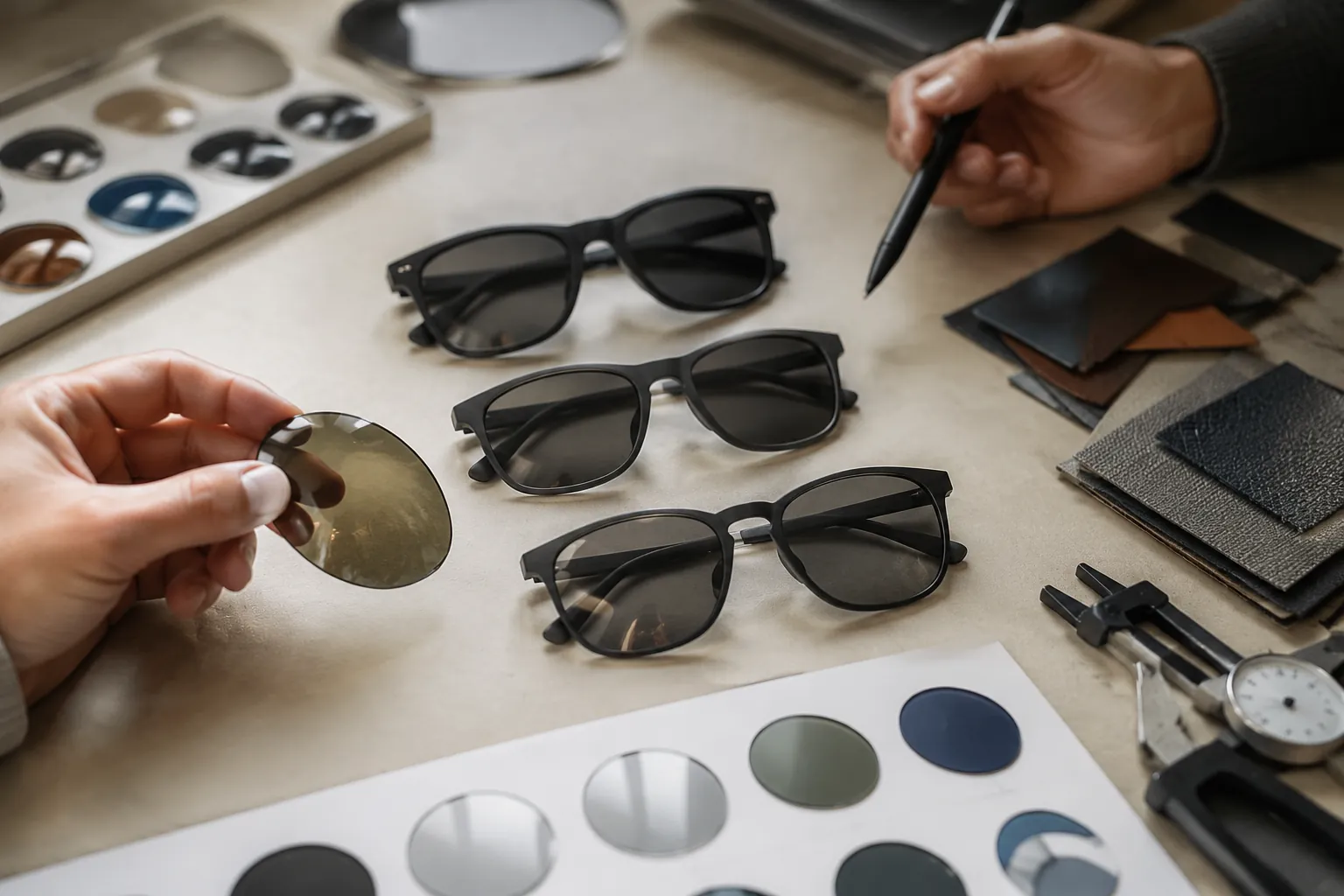
Polarized lenses are not always the right choice. For importers, distributors, and retailers, the real question is whether the added cost improves sell-through, cuts returns, and fits the target price point in the channel. This guide shows where polarization pays back, where it just adds cost, and how to spec it without causing fit, QC, or compliance problems.
Start with the channel
Polarization sells best when the buyer already wants glare control. Fishing, driving, boating, snow, outdoor sports, and staff-led retail all fit that pattern. In those channels, the feature is easy to explain. It does a job.
In fashion-led or impulse-heavy channels, the story is weaker. If the customer is choosing mainly on shape, finish, tint, or entry price, polarized lenses often add cost without changing the decision. That matters. Even a small cost increase can push a program out of its target retail band.
A simple rule helps: if the channel cannot explain glare reduction clearly at shelf or online, the feature may not earn its place. Do not overspec the lens and underspec the frame. On many custom sunglasses programs, frame geometry, temple finish, logo work, and packaging drive conversion more than an invisible lens feature.
Use polarization only when it supports the sell story. Otherwise, treat it as cost.
Where it usually pays off
Polarized lenses tend to earn their keep in buyer scenarios where performance already matters. The shopper expects a functional reason to pay more.
- Outdoor sports and hobby retail: fishing, sailing, cycling, golf, hiking, and snow categories where reflected light is part of the use case.
- Driving-focused assortments: especially in markets where wet roads, bright sun, or long commutes make glare a daily complaint.
- Mid- to upper-tier sunglasses: where functional optics help justify a higher shelf price.
- Private label programs with a clear use story: the lens is part of the SKU, not a late add-on.
In these channels, polarization can help sell-through because the benefit is visible and easy to demonstrate. A sample lens or light box can show the difference fast. That often works better than a long spec sheet.
It also reduces price resistance. The buyer is not being asked to infer value. The value is obvious.
For distributors, polarization can also reduce direct comparison pressure. If two similar black square frames look alike, the polarized one is easier to defend when the use case is clear. The lens becomes part of the reason to buy.
Match the lens to the channel's language. Sport and driving buyers ask about performance. Fashion buyers ask about look and price. Use the same lens only if the sales story is just as strong.
Where it adds cost without conversion
Do not add polarized lenses just because the assortment feels incomplete without them. In fashion-forward, promo-heavy, or price-sensitive retail, most customers buy on frame design first. They want the look, the fit, and the price.
That is where polarization often becomes wasted spend. In discount chains, seasonal fashion drops, private-label promos, and giveaway items, the customer is comparing style against budget. A polarized lens raises landed cost, and the staff may not know how to sell it. Better product. Same shelf. No better conversion.
There is also a price-band trap. A retail program may support a low entry price, but polarization can push it into a higher bracket. If the frame, packaging, and display do not look more premium, the shopper often chooses the cheaper non-polarized pair next to it.
For private label buyers, the risk is sharper because the upgrade may not be visible enough to justify the higher ask. If the use case is vague, the customer sees only a higher price.
In short: do not pay for a functional lens on a fashion SKU unless you have evidence that it changes conversion, reduces returns, or supports a higher price tier the market already accepts.
Polarized vs non-polarized
| Option | Typical best use | Cost impact | Buyer risk | Sell-through logic |
|---|---|---|---|---|
| Non-polarized tinted lens | Fashion, promo, low-to-mid price retail | Lowest | Lower feature value | Wins on price, silhouette, and colorway |
| Polarized TAC lens | Outdoor, driving, sport, mid-market | Moderate | Can push retail price too high if the channel is weak | Works when the channel can explain glare reduction clearly |
| Polarized nylon or premium lens stack | Premium outdoor and performance programs | Higher | More spec control and tighter QC needed | Works when brand positioning supports premium optics |
| Polarized mirrored lens build | Sport-fashion crossover and lifestyle premium | Moderate to high | Decoration and coating defects can raise scrap risk | Works when visual appeal and function are both important |
For custom sunglasses, the key question is not which lens is technically best. It is whether the shelf can absorb the added cost. A polarized lens may improve satisfaction, but if it pushes the SKU out of the target price band, sell-through can still fall.
Material choice matters too. TAC is common because it gives polarized performance at a manageable cost, but it is not the only option. Nylon can fit premium positioning, and some programs use layered constructions with mirrored finishes or anti-reflective treatments. Each choice changes thickness, optical clarity, scratch resistance, and processing behavior.
That also affects fit. A tightly wrapped frame or aggressive curve can make insertion harder. The lens decision is not just a retail decision. It is a production decision too.
Compare the full package: lens material, frame geometry, decoration, packaging, and target shelf price. The best option balances all five.
What changes in manufacturing
Polarized lenses are not just tinted lenses with a better label. The polarizing film has to be oriented correctly, laminated consistently, and protected from heat, pressure, and solvent exposure during processing. That creates a different manufacturing profile from a standard tinted lens.
In a factory with in-house injection molding, acetate cutting, CNC milling, tinting, decoration, assembly, and QC, the production flow has to stay controlled. Lens orientation must match the frame design. Edge trimming must stay accurate. Insertion pressure has to stay low enough to avoid stress whitening, wave distortion, or delamination risk.
If the frame uses a steep base curve, a tighter wrap, or a thicker brow, the lens pattern should be validated early. Not after bulk approval.
Decoration matters too. Hot stamping, laser marking, pad printing, and metal logo application all change where the product can be stressed and how it should be packed. Mirrored lenses and printed logos can show rub marks if protective films, separators, or tray stack height are not handled correctly.
For volume buyers, the checks are straightforward:
- MOQ: confirm the factory's minimum by design before quoting.
- Sample lead time: confirm based on the exact frame, lens, and decoration combination.
- Bulk lead time: confirm after sample approval and packaging lock.
- Volume pricing: ask for tiered quotes at the quantities you actually plan to order.
Those numbers only hold if the lens build is stable. A custom wrap, unusual tint, mirrored finish, or decorative process can extend sample validation and raise rejection risk. One failed batch can cost more than the gap between a standard and premium lens quote.
Polarization also calls for tighter QC on clarity, alignment, insertion fit, surface defects, and color consistency. A good factory checks batch uniformity, edge polish, and lens orientation under controlled lighting, then verifies frame fit at the same time. If those variables are unstable, simplify the spec before production ramps.
Compliance is not optional
Polarized does not mean compliant. Buyers still need the correct market markings, test path, and documentation for the destination country. Tie the certification request to the market. Do not assume one document covers every destination.
The standards and registrations commonly requested for sunglasses programs include CE EN ISO 12312-1, FDA registration, ANSI Z80.3, AS/NZS 1067, REACH, ISO 9001, and BSCI. Use only the ones that apply to the market, product scope, or supplier qualification you need.
That matters because the same polarized SKU may need different paperwork depending on where it is sold. A U.S. program is not handled the same way as an EU shipment or Australia/New Zealand distribution. Mix standards in one line and you can create customs delays, retailer rejection, or a failed compliance review after the goods are already in transit.
Buyers lose time on paperwork more often than on lens performance. The lens can be fine. The file set can still be wrong.
For OEM buyers, lock the target market before final lens approval. Then match the test path, labeling, packaging copy, and carton markings to that market. Do not assume the buyer-facing label is enough; many retailers also want supporting files, test reports, and consistent declarations across product, packaging, and shipping documents.
That warning matters even more with polarized products because the marketing value is tied to function. If the claim is glare reduction, the documentation path has to be clean. A weak file set can turn a sell-through advantage into a delay.
How to spec without wasting money
The best way to spec polarized lenses is to make the decision in order: channel first, price second, fit third, compliance fourth. Reverse that sequence and you can end up with a technically good product that does not sell at the intended shelf price.
- Identify the primary use case: driving, fishing, sports, fashion, or promo.
- Set the target retail price before asking for a polarized quote.
- Confirm lens material, base curve, and frame wrap with the factory.
- Request sample confirmation for color, clarity, lens insertion fit, and any mirrored or printed decoration.
- Lock compliance requirements by destination market before bulk production.
- Check artwork, logos, packaging, and shelf copy so the feature is obvious to the buyer.
When comparing quotes, ask for the same frame with and without polarized lenses. That gives you the real delta. Blended quotes can hide lens cost inside the frame cost, which makes the program look cheaper than it is. A clean quote should separate frame, lens, decoration, packaging, and compliance-related costs.
For larger runs, ask for a small preproduction sample first, especially if the frame has a wrap angle, a narrow rim opening, or a complex temple design. Minor geometry changes can require a different cut profile or a tighter insertion tolerance. If the factory is not checking that early, the bulk order may arrive with avoidable rework risk.
Ask about packing format too. Lens-to-lens contact, tray height, divider material, and film protection affect cosmetic quality. Polarized lenses are not just a spec decision. They are a handling decision.
Buyer scenarios that make it clear
Three scenarios usually settle the debate fast because they reflect how the product is actually sold.
Scenario 1: Fishing and outdoor retail. Polarized is usually the right call. The benefit is obvious, the channel can explain it, and the customer expects it. The real question is whether the landed cost still leaves room for margin and promotion.
Scenario 2: Fashion chain or online impulse SKU. Start non-polarized unless you are building a premium tier. The shopper is buying style first, so the functional benefit may not support the higher price. Frame design, color, and packaging usually drive conversion more than lens technology.
Scenario 3: Driving or commuter program. Polarized often works well, especially in markets where glare is a known pain point. This is a strong middle ground between hard sport and pure fashion because the use case is easy to explain and simple to sell.
If you are unsure, order both versions in a small run. That lets you test market response without committing to a large inventory gamble. It is especially useful when you are comparing one retail channel against another or testing whether a premium price band is realistic.
The question is not "Is polarized better?" The question is "Will the channel pay for it?" If the answer is unclear, a split test is the fastest way to find out.
A clean recommendation
Use polarized lenses where the channel can explain them, the use case supports them, and the retail price can carry them. Skip them where the customer buys on color, shape, or price and does not care about glare. That rule prevents a lot of sourcing mistakes.
The best B2B lens decision is not the most technical one. It is the one that protects sell-through and margin at the same time. For custom sunglasses, that usually means polarized for outdoor, driving, and mid-premium programs; non-polarized for fashion, promo, and price-led retail. If a product sits between those worlds, test both versions before scaling.
When you request quotes, ask for separate pricing on lens material, decoration method, packaging, inspection level, and compliance-related work so you can see where the cost sits. Ask for samples early, confirm the compliance standard by market, and compare the actual landed cost before you lock the spec. That keeps the lens choice grounded in commercial reality.
Done well, polarization is a sell-through tool. Done badly, it is just a cost increase.
Have a custom sunglasses project in mind?
Send us your styles, target market and quantities and we will return a detailed quote with MOQ, lead time and a sample plan.
Get a QuoteWhy source this from Wenzhou with LumiShades
Wenzhou in Zhejiang Province is widely regarded as China’s eyewear manufacturing capital, producing a large share of the world’s sunglasses. That concentration matters to buyers: a deep local supply chain for acetate sheet, hinges, lens blanks, plating and packaging means shorter component lead times, easier color and material matching, and a workforce with decades of eyewear-specific skill. LumiShades has manufactured in this ecosystem since 2009, and our vertical integration — in-house injection molding, acetate cutting, CNC milling, lens tinting, decoration and quality control — means no part of your order is quietly subcontracted to a workshop you cannot audit.
For international buyers, that vertical control translates into accountability. When a single factory owns every step, defects are traced and fixed at source rather than bounced between vendors, and your specifications survive intact from first sample to bulk. For procurement review, buyers can request process records, approved samples, quality checkpoints and project-specific compliance files before placing a bulk order. Required testing and documentation are confirmed against the destination market and product specification rather than assumed from a generic certificate list. Explore our manufacturing capabilities and quality control process to see how this works in practice.
Frequently asked questions
Do polarized lenses always improve sell-through? No. Polarized lenses help most when the channel already sells a functional reason to buy, such as glare reduction for driving, fishing, boating, snow, or sport. In fashion or price-led retail, they often add cost without changing the purchase decision. If the retailer cannot explain the benefit clearly at shelf or online, the upgrade may not improve sell-through.
What is the main buyer risk with polarized lenses? The main risk is pricing the SKU out of the channel. The second risk is fit or QC failure if the frame shape, wrap angle, lens thickness, and insertion method are not matched early. Before bulk, ask for a sample built in the actual frame, confirm the fit under normal handling, and verify the final retail price still sits inside the target band.
Can I order polarized and non-polarized versions of the same frame? Yes, and that is often the best way to test demand. Keep the frame constant so you can compare sell-through, returns, and buyer acceptance without changing the silhouette. If possible, test both versions in the same channel and price tier so the lens effect is easier to judge.
What should I confirm before bulk production? Confirm four things before you approve bulk: the target market standard, the exact lens material and base curve, the frame fit and decoration method, and the final packaging and artwork. For compliance, use only the standards that apply to the destination market, such as CE EN ISO 12312-1, ANSI Z80.3, AS/NZS 1067, REACH, FDA registration, ISO 9001, or BSCI where relevant.
How do polarized lenses affect lead time and MOQ? They can add sample validation and QC steps, especially for wrapped frames, mirrored finishes, or complex decoration. Lead time and MOQ should be confirmed with the factory for the exact spec, because they vary by design and process. The safest buying approach is to request a preproduction sample first, then lock the bulk schedule only after fit, appearance, and documentation are approved.
Ready to start?
Explore our round sunglasses or request a quote — our sales team replies within 12 hours.
Request a Quote