
Polarized Sunglasses Bulk Buyer Guide: Margin and Specs
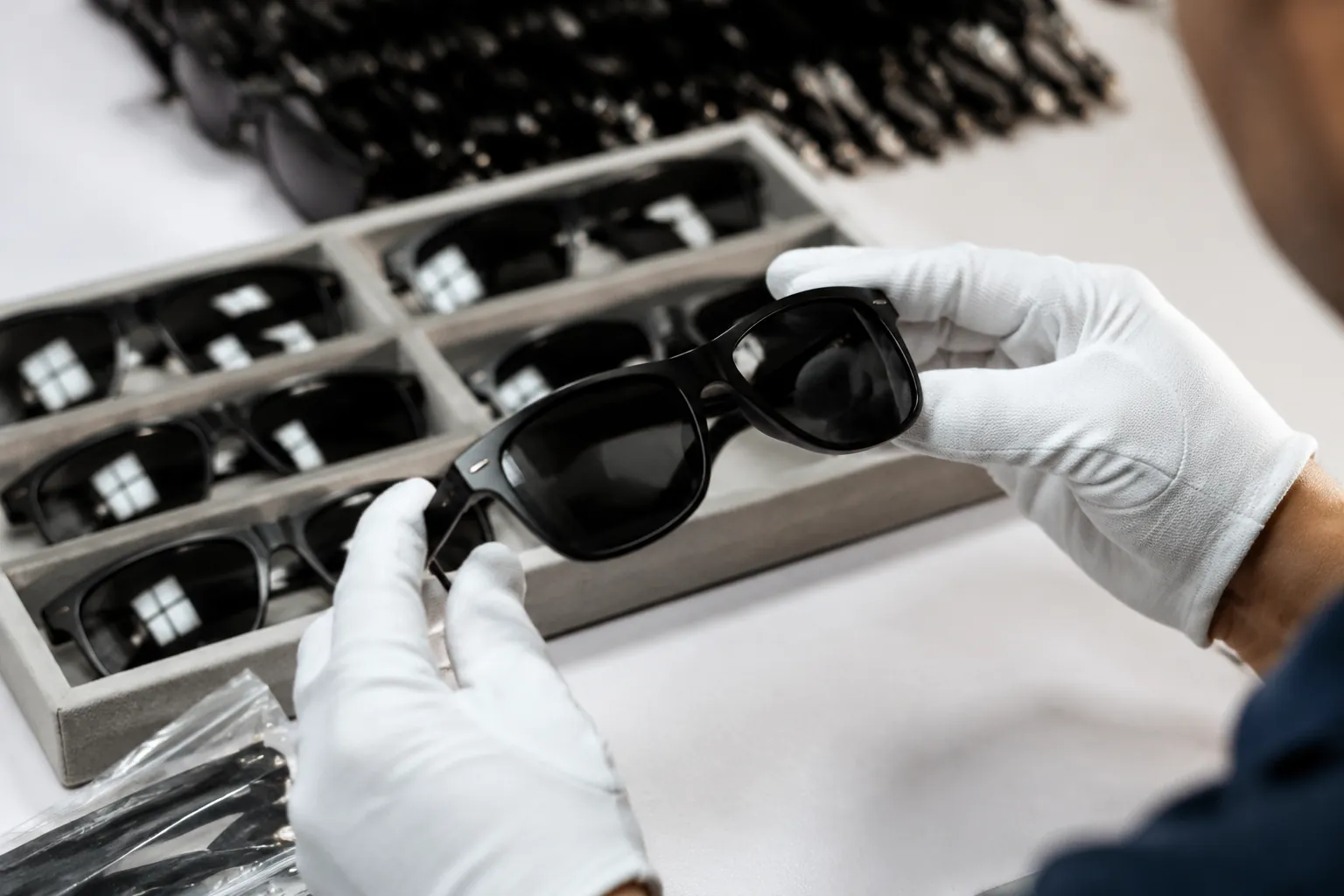
This guide is for brands, importers, distributors, promotional buyers, and retail teams deciding whether polarized lenses belong in a sunglasses program. Polarization is not a universal upgrade. It adds glare reduction, but it also adds cost, sampling checks, documentation work, and inspection risk. The right choice depends on channel, target retail price, lens material, order quantity, decoration method, packaging claims, and the buyer's quality-control plan. Based on factory-side sourcing practice at LumiShades in Wenzhou, this guide explains where polarization creates sellable value, where it becomes avoidable cost, and how to specify polarized sunglasses from sample approval to shipment.
Use Polarization Only Where Customers Notice It
Polarized lenses reduce glare from flat reflective surfaces such as water, wet roads, snow, glass, dashboards, and polished stone. That benefit is easy to sell in fishing, boating, driving, outdoor travel, and resort retail. It matters far less in a low-price festival frame where shape, color, logo, or event branding drives the sale.
For bulk buyers, polarization should be treated as a commercial feature, not a default upgrade. It usually raises lens cost, adds inspection points, and can limit some lens color, gradient, or mirror options. It can also give sales teams a clear value story: less glare, more outdoor comfort, and better use around water or roads. That story only helps if the channel can explain it quickly. If not, it is just extra cost.
LumiShades usually sees the strongest fit for polarized lenses in fishing, marina retail, driving programs, travel retail, resort shops, outdoor lifestyle collections, premium corporate gifting, and mid-tier private label assortments. The weakest fit is low-cost giveaways, novelty party frames, short-life event merchandise, and fashion capsules where lens color matters more than optical function.
Buyer rule: if the end customer cannot understand the benefit in one product-page sentence or at the shelf, polarization is likely to become cost rather than margin.
Match the Channel to the Price Tier
The same polarized lens can protect margin in one channel and weaken it in another. Start with the selling environment, target retail price, product claim, and reorder potential before adding the specification. Otherwise, you may pay for a feature the customer never asked for.
| Channel | Typical Retail Logic | Polarization Fit | Factory and Procurement Note |
|---|---|---|---|
| Fishing, boating, marina retail | Water glare is a clear purchase trigger, so the benefit is easy to explain | Strong | Use practical lens colors such as grey, brown, or green; require left and right lens axis checks before packing. |
| Driving and travel retail | Road glare control, comfort, and UV protection can support a higher ticket | Strong | Confirm destination-market requirements such as CE EN ISO 12312-1, ANSI Z80.3, or AS/NZS 1067; avoid claims not supported by test documents. |
| Outdoor sports and resort shops | Customers expect a performance story but still care about style | Good | Pair polarization with stable hinges, suitable frame fit, scratch-resistant coating where specified, and retail-ready packaging. |
| Fashion boutiques | Shape, color, material, and brand styling drive conversion | Mixed | Use polarization only if the retail price supports it and the approved lens color still fits the collection. |
| Promotional giveaways | Lowest landed cost, simple branding, and fast delivery often matter most | Weak | Non-polarized UV-protective lenses often meet the campaign objective unless the promotion is outdoor-performance themed. |
| Kids and novelty eyewear | Safety, fit, labeling, color, and price dominate | Usually weak | Prioritize applicable safety assessment, restricted-substance controls, small-parts risk, fit, and accurate consumer information. |
Order quantity changes the margin calculation. A 50-pair design test is useful for buyer review, photography, or a limited retail pilot, but unit cost will reflect sampling, setup, handling, and approval work spread across fewer units. Larger orders usually improve production efficiency. Still, buyers should confirm pricing against the final frame material, lens material, coating, decoration, packaging, inspection level, and required documents.
Know Where the Added Cost Comes From
A polarized lens is not just a darker tinted lens. It uses a polarizing filter layer or construction that must be cut, edged, fitted, and checked while keeping glare reduction consistent. The lens also needs orientation control. If the polarizing axis is inconsistent between the left and right lenses, the wearer may notice uneven glare reduction, visual discomfort, or distortion. That is a real defect, not a minor detail.
Factory costing depends on lens material, lens thickness, base curve, tint, coating, mirror finish, reject rate, order quantity, packaging, and required testing. TAC polarized lenses are common in value and mid-market adult sunglasses. PC polarized lenses are often used where impact resistance, low weight, or wrap-style designs matter. Nylon polarized lenses may fit higher-tier outdoor or performance-lifestyle programs where optical clarity, flexibility, or curve stability are priorities, but they usually require tighter planning and supplier confirmation.
- 50 pairs/design: useful for buyer testing, influencer seeding, catalog photography, or a narrow retail pilot; unit cost is higher because setup and handling are spread across fewer pieces.
- 300 pairs/design: a practical first commercial level for confirming lens color, logo placement, packing method, and pre-production approval before larger replenishment.
- 1000 pairs/design: better suited to private label replenishment where packaging, barcode labels, lens batches, and carton loading can be managed more efficiently.
- 5000+ pairs/design: more suitable for volume programs, but pricing still depends on frame material, lens specification, coating, decoration, packaging, testing, and inspection requirements.
List polarization as a separate cost item. Do not hide it inside a vague "premium lens" description. Then compare the added cost with the real wholesale or retail price lift. If the channel cannot recover that cost, the same budget may create more visible value through better hinge feel, improved coating, stronger packaging, cleaner logo application, or a more useful product insert.
Choose the Right Lens Material
The word "polarized" is not a full lens specification. Buyers should define lens material, lens color, visible light transmission category, coating, mirror finish if any, thickness, base curve, and intended market. These choices affect cost, durability, optical clarity, fitting risk, labeling, and test evidence. Be specific. Vague specs cause trouble later.
| Lens Option | Best Use | Trade-Off | Factory Control Point |
|---|---|---|---|
| TAC polarized | Mass-market fashion, driving, resort, promo-plus, and value outdoor programs | Good cost position and acceptable clarity for many programs; not ideal for heavy impact positioning | Check filter alignment, tint uniformity, edge quality, surface defects, and delamination risk after cutting. |
| PC polarized | Sports-inspired styles, active outdoor programs, kids styles where applicable, and lightweight wrap designs | Better impact resistance than TAC in many applications, but poor processing or coating can create distortion or stress marks | Control lens curve, coating adhesion, optical distortion, and stress during assembly. |
| Nylon polarized | Higher-tier outdoor, performance lifestyle, and flexible frame designs | Higher cost and tighter supply planning than common value lenses | Confirm curve stability, batch color, optical clarity, coating compatibility, and lead time before bulk cutting. |
| Non-polarized UV-protective lens | Fashion, events, low-price retail, color-driven collections, and fast campaigns | No polarized glare-reduction benefit | Verify UV protection, tint consistency, visible light transmission category, lens quality, and required labeling. |
Frame material changes risk too. Acetate frames can usually be heated and adjusted, so lens fitting is more forgiving when the eyewire groove and lens edge are properly matched. Injection frames are less forgiving because the groove is fixed by the mold. If lens curve, frame curve, and edging tolerance do not match, the result can be lens pop-out, frame warpage, or stress marks around the rim.
Approve the product as one complete system: final frame, final lens material, final lens color, final coating, final decoration, and final packaging. A loose lens sample and a separate frame sample are not enough for bulk approval. They do not prove fit, appearance, axis consistency, or packaging accuracy in the finished item.
Keep Decoration and Packaging Under Control
Polarized programs become harder to manage when the buyer adds every possible upgrade at once: polarized lens, mirror coating, temple logo, logo plate, custom pouch, color box, hangtag, barcode label, and printed insert. Each element may be fine on its own. Together, they slow sampling, create more approval loops, and raise reject risk. Start with the brand elements that support resale price. Remove the rest.
Common decoration methods include pad printing, laser engraving, hot stamping, metal logo plates, and custom temple hardware. Pad printing can be cost-effective for plastic or coated surfaces, but it needs adhesion checks, especially on curved temples. Laser engraving can be clean and durable on suitable metal or acetate surfaces, but contrast depends on material color and surface finish. Metal logo plates create a higher-tier look, yet they add tooling, positioning control, and attachment checks.
- Pad printing: suitable for simple logos; agree on position, color, adhesion test method, and acceptable tolerance before bulk production.
- Laser engraving: durable on suitable surfaces, but visibility depends on the base material, finish, and engraving depth.
- Metal logo plate: premium appearance; requires controlled slot, glue, pin, or mechanical fixing and checks for alignment and pull resistance.
- Retail packaging: pouch, microfiber cloth, hangtag, barcode label, warning card, and instruction leaflet must match the final lens claim and destination market.
Packaging claims must be exact. Terms such as "UV400," "polarized," "Category 3," and market-specific warnings should not be added casually. If a brown polarized mirror lens has a different visible light transmission result from a smoke polarized lens, the packaging and user information may need different wording. Approve artwork only after lens construction, target market, and required compliance documents are confirmed.
Treat Compliance as Part of the Product
Polarized sunglasses still need to meet the normal requirements for the destination market. Polarization does not replace UV protection, optical quality, impact assessment where applicable, labeling, traffic signal recognition, or restricted-substance control. A product can be polarized and still fail market requirements if the tint, coating, markings, or user information are wrong.
For European programs, buyers commonly reference CE EN ISO 12312-1 for sunglasses and confirm filter category, UV performance, visible light transmission, lens quality, markings, and user information. For U.S. distribution, buyers should discuss ANSI Z80.3 and FDA registration context with the supplier and importer. For Australia and New Zealand, AS/NZS 1067 is the relevant sunglass standard. For material safety, REACH is commonly requested by EU buyers for plastics, coatings, inks, nose pads, metal trims, and relevant packaging materials.
- CE EN ISO 12312-1: request evidence for the actual lens construction, filter category, UV performance, visible light transmission, markings, and user information for Europe.
- ANSI Z80.3: check optical quality, transmittance, traffic signal recognition, impact-related requirements where applicable, and labeling expectations for U.S. programs.
- AS/NZS 1067: confirm sunglass category, labeling, and consumer information for Australia and New Zealand.
- REACH: control restricted substances in frame material, coatings, inks, metal parts, nose pads, and relevant packaging materials.
- FDA registration: relevant to U.S. eyewear import context, but it is not a substitute for product-specific testing or accurate labeling.
- ISO 9001 and BSCI: useful factory-management or social-compliance references when available, but they do not prove that a specific sunglasses order meets lens or market standards.
Request documents that match the actual order: same lens material, same lens color, same mirror coating if used, same frame category where relevant, and same intended market. A grey non-polarized report from a previous season does not prove that a new brown polarized mirror lens is compliant. That shortcut leads to customs questions, retailer rejection, relabeling costs, or shipment delays.
Sample First, Then Lock the Schedule
Polarized sunglasses need more discipline during sampling than basic tinted-lens frames. LumiShades' normal custom sample window is 7-10 days, and bulk production is typically 25-35 days after approval. Actual timing depends on frame material, lens availability, coating, logo method, packaging, testing, order size, and whether the buyer changes specifications after sample approval.
- Confirm frame material, frame color, lens material, lens color, visible light transmission category, coating, target market, and retail claim before sample making.
- Cut and fit the lens to the actual frame, then check polarizing axis alignment, visual distortion, edge finish, and lens pop-out risk.
- Apply decoration by the approved method, such as laser engraving, pad printing, hot stamping, or metal logo plate, according to the surface and price tier.
- Review samples under daylight, indoor light, and reflective glare conditions. Do not approve polarized lenses from desk photos only.
- Confirm packaging copy after compliance wording, barcode format, warning labels, and destination-market requirements are checked.
- Run pre-production confirmation before bulk: frame color, lens batch, hinge tension, screw security, logo placement, pouch, case, SKU label, carton mark, and approved sample reference.
Most lead-time problems start with late changes. Switching from non-polarized smoke lenses to polarized brown mirror lenses after sample approval is not a small edit. It affects lens sourcing, color approval, testing evidence, packaging copy, and sometimes retail price. Treat that change as a new sample round, not a quick production note.
QC Checks That Protect Sell-Through
Polarized sunglasses need normal sunglass QC plus lens-specific checks. If the factory only inspects the frame finish, it will miss the most common complaints. The lens is where many returns start.
A practical inspection plan should include carton checks, retail packaging, appearance, function, fitting, decoration durability, and lens verification. Key points include polarizing axis consistency, UV performance, visible light transmission category, lens surface defects, coating scratches, left-right color difference, frame warpage, hinge opening tension, screw security, and logo adhesion. For acetate, check temple alignment after adjustment. For injection frames, check shrinkage, rim pressure, and lens pop-out risk after repeated temple opening.
Buyers should define acceptance criteria in the purchase order. "Good quality" is not a specification. State the approved lens color sample, logo tolerance, acceptable coating-defect limit, hinge feel, packaging components, barcode placement, warning labels, and whether spare screws, pouches, cases, or instruction leaflets are required.
Use polarization where it helps the buyer explain value quickly: water glare, road glare, outdoor comfort, fishing, driving, travel, and sport-inspired retail. Avoid it when design, color story, or low price is the main reason people buy. For a first order, keep the structure simple: one or two proven frame shapes, one or two lens colors, simple decoration, and retail packaging that states polarized and UV protection only when supported by the final specification and documents. LumiShades' MOQ of 50 pairs/design lets buyers test narrow assortments before moving to larger commercial volumes. Polarized sunglasses can add margin, but only when the customer values the feature and the specification is controlled from sample to shipment.
Purchase order test: if your team cannot write the product-page benefit in one sentence and attach the required specification, do not pay for polarization yet.
Buy Polarized Only for the Right SKU
Polarized sunglasses work best as a targeted feature, not a blanket upgrade. Put them in channels that can explain glare reduction and support the price. Keep them out of programs that win on speed, novelty, or the lowest landed cost.
The buying logic is simple. Define the customer, define the claim, define the documents, and only then define the lens. That order matters. Skip it and the program gets expensive fast.
Have a custom sunglasses project in mind?
Send us your styles, target market and quantities and we will return a detailed quote with MOQ, lead time and a sample plan.
Get a QuoteWhy source this from Wenzhou with LumiShades
Wenzhou in Zhejiang Province is widely regarded as China’s eyewear manufacturing capital, producing a large share of the world’s sunglasses. That concentration matters to buyers: a deep local supply chain for acetate sheet, hinges, lens blanks, plating and packaging means shorter component lead times, easier color and material matching, and a workforce with decades of eyewear-specific skill. LumiShades has manufactured in this ecosystem since 2009, and our vertical integration — in-house injection molding, acetate cutting, CNC milling, lens tinting, decoration and quality control — means no part of your order is quietly subcontracted to a workshop you cannot audit.
For international buyers, that vertical control translates into accountability. When a single factory owns every step, defects are traced and fixed at source rather than bounced between vendors, and your specifications survive intact from first sample to bulk. For procurement review, buyers can request process records, approved samples, quality checkpoints and project-specific compliance files before placing a bulk order. Required testing and documentation are confirmed against the destination market and product specification rather than assumed from a generic certificate list. Explore our manufacturing capabilities and quality control process to see how this works in practice.
Frequently asked questions
Should I make every sunglasses SKU polarized? No. Use polarized lenses for SKUs where glare reduction helps the channel sell: fishing, boating, driving, travel, outdoor retail, resort shops, and mid-tier programs with room for a higher price. Keep fashion-only, event, novelty, and lowest-price SKUs non-polarized unless the buyer, retailer, or sales page can clearly explain the benefit and recover the added cost.
What MOQ should I use to test polarized sunglasses? Use 50 pairs/design when you need a pilot order, buyer presentation, photography set, or small retail test. Move to 300 pairs/design or more when the frame, lens color, packaging, and sales channel are proven. Before scaling, approve a complete sample with the final frame, final polarized lens, decoration, packaging copy, barcode, and destination-market claims.
Will polarized lenses change my lead time? They can. LumiShades' normal custom sample window is 7-10 days, and bulk production is typically 25-35 days after approval, but timing depends on lens material, lens color, mirror coating, decoration, packaging, testing, and order size. Treat any post-approval change to lens color, coating, material, logo method, or compliance wording as a possible new sample and document review.
Which certifications or documents should I request for polarized sunglasses? Request documents that match the final product and destination market. For Europe, ask for CE EN ISO 12312-1 evidence covering the actual lens construction and user information. For the U.S., discuss ANSI Z80.3 and FDA registration context with the supplier and importer. For Australia and New Zealand, check AS/NZS 1067. For restricted substances, request REACH documentation where required. ISO 9001 and BSCI can support factory evaluation if available, but they do not replace product-specific sunglass testing.
Can I use mirror coating on polarized lenses? Yes, but approve and test the exact final construction. Mirror coating can affect appearance, visible light transmission, scratch behavior, and the filter category shown in user information. Do not rely on a plain polarized lens report for a polarized mirror lens unless the report clearly covers that same lens material, color, coating, and intended market.
How do I avoid poor polarized lens quality in bulk production? Approve the frame and lens together, not separately. Define lens material, lens color, coating, visible light transmission category, and target market in the purchase order. Require polarizing axis checks, UV and visible light transmission verification, lens-fit checks after temple movement, and inspection of logo adhesion, hinge tension, packaging, barcode labels, warning labels, and carton marks before shipment.
Ready to start?
Explore our wayfarer sunglasses or request a quote — our sales team replies within 12 hours.
Request a Quote