
Polarized Sunglasses Sourcing Guide for Retail Buyers
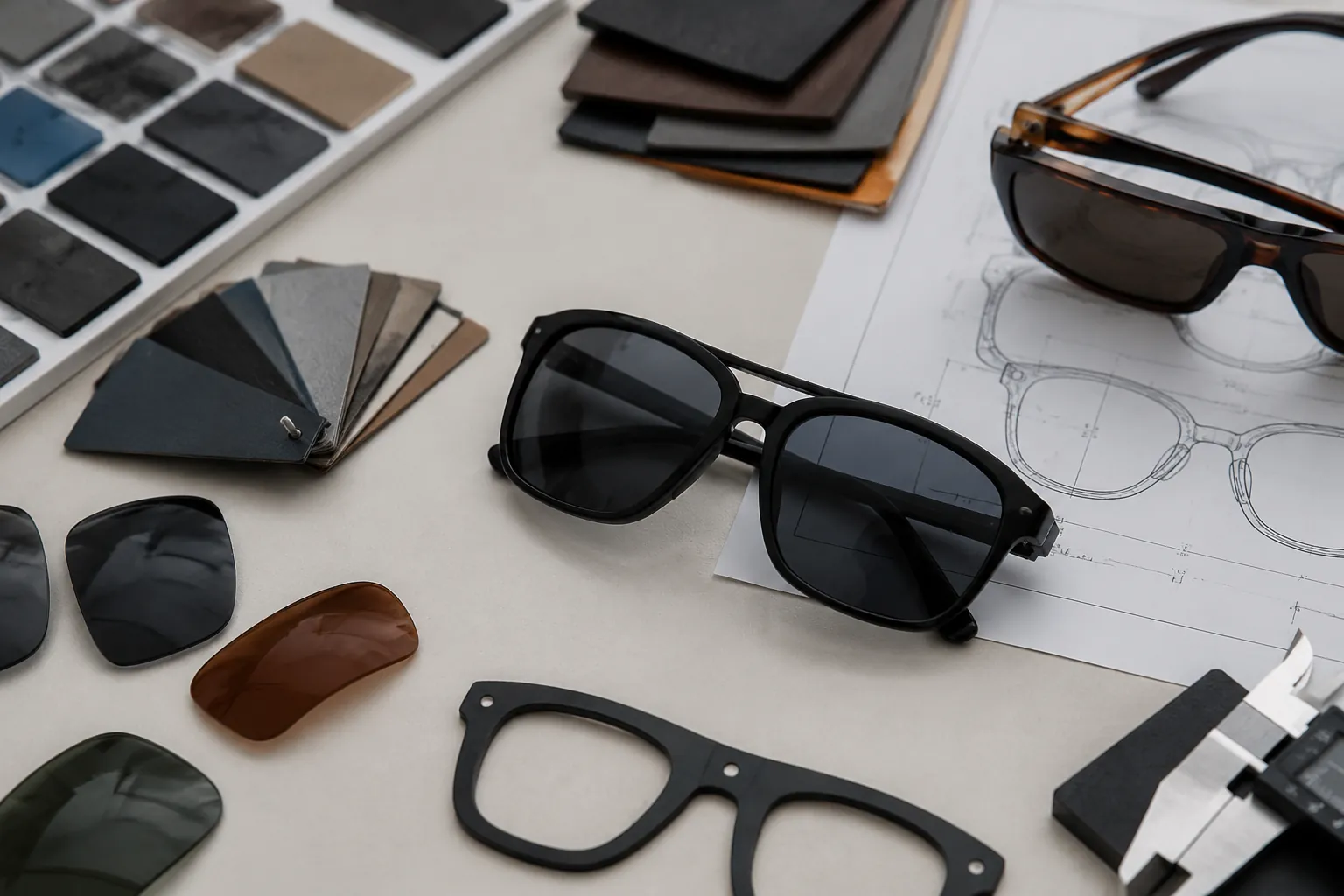
Polarized lenses are not a default upgrade. They matter where glare drives the purchase: driving, fishing, boating, travel, and outdoor retail. For brands, importers, distributors, and retailers, the job is to know where polarization improves sell-through and what to lock into the spec so bulk production stays consistent. This guide covers channel fit, lens build, QC points, compliance, and the production details buyers should pin down before ordering.
Where Polarized Lenses Sell
Polarized sunglasses sell best in channels where the shopper already feels the problem. Glare-heavy use cases are the clearest fit: driving, fishing, boating, beach travel, alpine and water sports, and premium outdoor retail. The buyer is not just choosing a look. They are buying comfort and less reflected glare.
That makes channel fit the first sourcing decision. Not lens color. A polarized SKU can help conversion when the shelf story is simple: "cuts glare" is easy to explain and easy to compare against a standard tinted lens. But if the retailer sells mainly on shape, color, and speed, a non-polarized UV lens may move faster and protect margin better. The assortment should usually split. It should not be universal.
| Channel | Polarized Fit | Why It Works | Typical Risk |
|---|---|---|---|
| Driving / auto | High | Helps reduce reflected glare from roads, wet surfaces, and other bright reflective areas | Very dark lenses may feel less comfortable in low-light conditions |
| Fishing / boating | High | Improves comfort by reducing glare off water | Uneven tint or poor lamination is easier to notice in bright daylight |
| Outdoor / sport retail | Medium to high | Supports a performance story and a premium position | Over-specifying features can raise landed cost without improving sell-through |
| Fashion / mass retail | Low to medium | Useful when the line needs a functional talking point | Polarization can add cost without enough retail lift |
As a rule, polarized lenses should be sold where the customer can feel the difference quickly. If the store associate cannot explain the benefit in one sentence, the SKU is probably too functional for that channel.
How Polarization Changes the Buyer's Math
Polarization is not just a lens feature. It changes unit economics and production control. Compared with a plain tinted lens, a polarized lens usually adds material cost, more process steps, and more rejection risk. In sourcing terms, that means a price premium, a more disciplined sample process, and a tighter QC plan.
At the factory level, polarization depends on the orientation of a polarizing film or layer inside the lens build. If the film orientation drifts, glare reduction is affected. If lamination is uneven, you can see haze, edge distortion, bubbles, or color shift. If the base tint is inconsistent, the final lens may look different left to right even if the polarization still works. Treat polarized lenses as an optical product with tolerances. Not as a cosmetic tint change.
For private label programs, the decision should start with landed cost and expected sell-through, not with the factory's lowest quote. A polarized lens can justify a higher unit cost if it helps a retailer raise ticket price, reduce returns, or position the product more clearly as functional eyewear. But if the shopper does not care about glare, that premium is hard to recover.
- Use polarized SKUs in channels where function is part of the purchase reason.
- Keep fashion-first and price-first programs on non-polarized lenses when glare reduction is not a selling point.
- Plan separate specs for lens color, visible light transmission target, and frame curve.
- Approve a physical sample for each colorway before scaling.
- Do not mix different lens constructions in the same SKU code.
For sourcing programs that need both polarized and non-polarized versions, keep the frame family and quality standard aligned so fit and appearance stay consistent across repeats.
What to Specify in the Lens Build
Write the lens spec like a production document, not a marketing brief. The more vague the brief, the more likely the factory is to substitute materials, shift tint, or ship mixed batches. A complete polarized spec should define the lens construction, tint target, optical performance target, decoration method, and compliance market.
In practice, the purchase order or tech pack should include the following:
- Lens construction: polarized TAC, polarized PC, polarized nylon, or another agreed build.
- Base tint: gray, brown, green, mirrored, gradient, or custom color.
- Visible light transmission target: for example, a darker outdoor lens may sit around 10% to 20% VLT, while a general-use lens may be higher.
- Frame wrap and curvature: especially important on sport frames, where a 6-base to 8-base curve changes coverage and glare blocking.
- Logo method: laser engraving, pad print, hot-stamp, metal plate, or in-mold mark.
- Compliance market: EU, US, Australia/New Zealand, or a mixed shipment plan.
Material behavior matters too. TAC lenses are light and common in polarized builds, but they can be more sensitive to heat and edge finishing than some alternatives. PC lenses offer good impact resistance, but scratch resistance usually depends on coatings and handling. If a design uses a mirror coating, that layer adds shelf impact but also raises the chance of visible defects if the coating process is unstable.
Buyers should also define acceptable variation. Ask for left/right lens color match within an approved visual range, no visible bubbles or delamination, and no visible edge lift under inspection light. If the supplier cannot discuss those tolerances clearly, the order is not ready for mass production.
Polarized vs Non-Polarized
There is no universal winner. The right choice depends on shelf price, customer use, and how much explanation your sales team can handle. A polarized program should earn its place through function and margin, not because it sounds premium by itself.
| Option | Pros | Cons | Best Use | Production Notes |
|---|---|---|---|---|
| Polarized | Reduces glare, supports a clear performance story, fits outdoor use cases | Higher cost, tighter process control, more inspection points | Driving, fishing, boating, premium outdoor retail | Freeze lens color and approve physical samples before mass production |
| Non-polarized tinted | Lower cost, simpler production, broader fashion appeal | No glare reduction, weaker functional story | Fashion retail, entry price tiers, fast-moving color programs | Best for wide assortments and quick replenishment |
| Mirrored polarized | Strong shelf impact, more premium look, useful for sport styling | More finish variables, higher defect visibility, easier to scratch if coating is weak | Outdoor retail, sport-inspired ranges, premium private label | Check mirror uniformity, coating adhesion, and surface scratch resistance |
| Gradient polarized | Fashionable appearance with functional glare reduction in the upper field | Less universal for performance use, harder to control color fade | Lifestyle outdoor, travel, mixed fashion-performance programs | Confirm fade height and left/right consistency under daylight |
Many buyers overbuy polarized units for general retail. That is a mistake. If the retailer cannot explain the benefit in one sentence, sell-through usually depends more on price, fit, and frame shape than on the lens spec.
Factory Process and Where Defects Show Up
Stable bulk production depends on controlling the whole chain, not just the lens. Every transfer point creates risk. The relevant steps may include frame molding or cutting, lens tinting, lens finishing, decoration, assembly, and final QC, depending on the product build and factory setup.
The usual failure points are predictable. Polarizing film can be misoriented or unevenly laminated. Tint can drift from one batch to the next, especially if dye concentration or cure time changes. Mirror coatings can show patchiness, pinholes, or edge pullback. Surface dust can appear under bright inspection lighting, and logos can shift if the print jig or engraving position is not fixed. On wrap frames, even a good lens can look wrong if the curve does not match the frame groove precisely.
Ask for sample approval under the same lighting and same lens construction that will be used in bulk. If possible, request first-article photos, a packed sample, and a pre-shipment QC report that covers lens clarity, color consistency, logo position, and cosmetic finish. Useful acceptance language includes:
- Left/right lens appearance match within the approved master sample.
- No visible bubbles, delamination, edge lift, or haze in normal viewing distance.
- Logo placement within the approved position and size window.
- Frame and lens fit without audible stress, flex whitening, or pop-out risk.
- Carton and accessory count verified at packing stage, not only at first article approval.
For bulk production, keep the approved build stable. If you change lens color, logo method, coating, or frame finish after approval, lead time and unit cost can both move. The only reliable way to keep repeat orders consistent is to keep the product definition consistent.
Compliance Buyers Should Ask For
Do not accept vague compliance talk. Ask for the exact standard tied to the market you are shipping into, plus the document set that supports it. For eyewear, the compliance question is not just whether a certificate exists. It is whether the product specification, materials, and test reports match the market claim.
Use only the certifications and registrations that are relevant to your shipment. The following list is the right starting point for mainstream sourcing programs: CE EN ISO 12312-1, ANSI Z80.3, AS/NZS 1067, REACH, FDA registration, ISO 9001, and BSCI.
Use the following market-by-market approach:
- EU-bound sunglasses: ask for CE EN ISO 12312-1 and REACH-related material control, including frame and lens substances.
- US programs: ask for FDA registration and ANSI Z80.3 where required by your channel policy or retailer standard.
- Australia/New Zealand: ask for AS/NZS 1067 and confirm the lens category fits the intended use.
- Retail and corporate audits: ISO 9001 and BSCI help on process and social compliance expectations.
Ask the supplier to map each document to the exact SKU family, not just the factory. A certificate for one product line does not automatically validate a different lens material, coating, or frame finish. If the supplier cannot connect the document set to the market claim, stop the order review there.
MOQ, Price Tiers, and Lead Time Planning
Polarized SKUs should be planned around breakpoints, not assumptions. At low volume, the lens premium can hit margin quickly. At higher volume, tighter spec control and fewer variants can bring the unit cost down enough to make the SKU work. Match the order size to the commercial risk of the launch.
A practical sourcing model looks like this:
| Order Level | Use Case | Buyer Focus | Risk Control |
|---|---|---|---|
| 50 pairs/design | Sample-plus, test launch, niche market trial | Fit, color, feel, customer reaction | Keep variants limited and avoid custom tooling changes |
| 300 pairs/design | First real retail run | Price threshold and repeatability | Freeze lens color, decoration method, and carton spec |
| 1000 pairs/design | Core stock program | Margin, replenishment speed, and consistency | Audit packing, batch consistency, and label accuracy |
| 5000+ pairs/design | Volume retail or chain rollout | Lowest landed cost and stable QC | Lock tooling, artwork, and packaging before the run |
Lead time is usually tied to how stable the spec is. A sample window of 7-10 days and bulk production of 25-35 days may be realistic for some programs, but every change after approval can extend the schedule. Changing a lens color can require tint matching. Changing a logo method can require new fixtures or screens. Changing frame finish can affect cure time and cosmetic inspection. Buyers who keep moving the spec usually miss the launch calendar they wanted.
The best pricing improvement usually comes from simplification: one lens construction, one or two colors, one frame family, and one packaging spec. That reduces setup loss, makes QC faster, and improves the odds that a reorder matches the approved sample.
Buyer Checklist Before You Place the PO
Use this checklist before sending deposit money. It prevents the most common sourcing mistakes and keeps the supplier accountable to a clear build standard.
- Confirm whether the channel truly needs polarized lenses.
- Write the lens construction, tint, and target market standard into the tech pack.
- Approve a physical sample under real lighting, not just photos.
- Lock the logo method: laser engraving, pad print, hot-stamp, or metal plate.
- Set carton, pouch, cloth, and accessory requirements before production starts.
- Ask for the exact compliance documents for your destination market.
- Agree on MOQ, unit price breakpoints, and lead time in writing.
- Request QC criteria for lens haze, bubble defects, coating uniformity, and left/right match.
If you are building a private label program, start with one polarized hero SKU and one non-polarized support SKU. That gives you a cleaner read on sell-through and makes replenishment easier to forecast. It also avoids splitting inventory into too many slow movers, which is one of the fastest ways to lose margin on sunglasses.
For retailers and importers, the strongest polarized program is usually the simplest one: one lens type, one or two colors, one stable frame family, and repeat production without spec drift. That keeps both the shelf story and the factory result under control.
Have a custom sunglasses project in mind?
Send us your styles, target market and quantities and we will return a detailed quote with MOQ, lead time and a sample plan.
Get a QuoteWhy source this from Wenzhou with LumiShades
Wenzhou in Zhejiang Province is widely regarded as China’s eyewear manufacturing capital, producing a large share of the world’s sunglasses. That concentration matters to buyers: a deep local supply chain for acetate sheet, hinges, lens blanks, plating and packaging means shorter component lead times, easier color and material matching, and a workforce with decades of eyewear-specific skill. LumiShades has manufactured in this ecosystem since 2009, and our vertical integration — in-house injection molding, acetate cutting, CNC milling, lens tinting, decoration and quality control — means no part of your order is quietly subcontracted to a workshop you cannot audit.
For international buyers, that vertical control translates into accountability. When a single factory owns every step, defects are traced and fixed at source rather than bounced between vendors, and your specifications survive intact from first sample to bulk. For procurement review, buyers can request process records, approved samples, quality checkpoints and project-specific compliance files before placing a bulk order. Required testing and documentation are confirmed against the destination market and product specification rather than assumed from a generic certificate list. Explore our manufacturing capabilities and quality control process to see how this works in practice.
Frequently asked questions
Do polarized lenses always sell better than non-polarized ones? No. Polarized lenses usually sell better where glare reduction is part of the purchase reason, such as driving, fishing, boating, and outdoor retail. In fashion or entry-price retail, non-polarized tinted lenses often move better because they are simpler to explain and usually cost less.
What is the minimum order for polarized private label sunglasses? The minimum order depends on the factory and the product build. If your supplier offers 50 pairs per design, that is usually suitable for sampling or a small test run. For any launch, ask the supplier to confirm MOQ by frame, lens type, logo method, and packaging, because those variables can change the minimum.
What should I specify to keep polarized bulk orders consistent? Specify lens construction, lens color, visible light transmission target, frame curve, logo method, packaging, and destination market. Approve a physical sample, keep the spec frozen through production, and require the supplier to confirm left/right lens match and cosmetic tolerances before mass release.
Which certifications should I ask for on polarized sunglasses? Match the document to the market: CE EN ISO 12312-1 for the EU, FDA registration and ANSI Z80.3 for US programs, AS/NZS 1067 for Australia/New Zealand, and REACH for material control. ISO 9001 and BSCI support factory process and audit expectations, but they do not replace product-specific compliance documents.
How long should I plan for samples and bulk production? Lead time depends on spec stability and factory capacity. Ask the supplier for a written sample lead time and a separate bulk lead time before you place the order. If you change lens color, logo method, coating, or frame finish after approval, expect the schedule to move.
What is the main production risk with polarized lenses? The main risk is inconsistency in the optical build. Common issues include tint drift, polarizing film misalignment, bubbles, haze, coating defects, and left/right mismatch. That is why sample approval, first-article inspection, and in-process QC matter more than with simple tinted lenses.
Ready to start?
Explore our aviator sunglasses or request a quote — our sales team replies within 12 hours.
Request a Quote