
Best Lens Tint Process for Stable Reorders
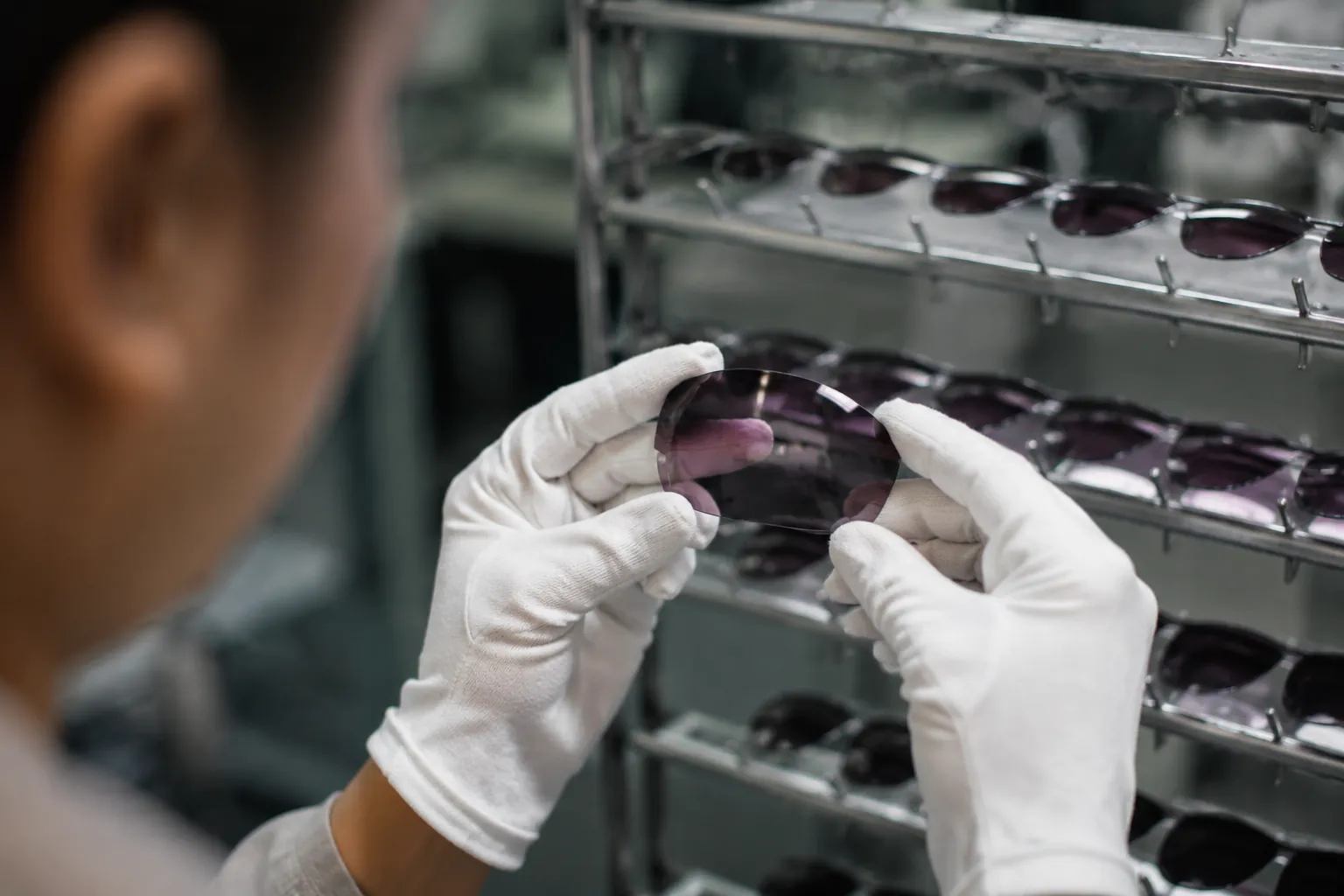
If you buy sunglasses in volume, reorder color drift is a real risk. A lens that looked right on the first run can come back lighter, darker, or slightly off hue on the next purchase order. This guide is for brands, importers, distributors, and retailers that need repeatable tint results, not vague promises. It explains which tint processes are typically more stable, where variation starts, and what to lock down in your specification before mass production.
What stable color matching really means
Stable color matching means the same lens tint stays within the same approved visual window from one production run to the next. It does not mean every lens is identical to the eye. In practice, buyers usually see subtle shifts rather than obvious failures: a gray lens may read slightly warmer, a green lens may look a bit more yellow, or a gradient fade may start a little higher or lower than the approved sample. Those differences can still matter when old stock and new stock sit side by side at retail.
For reorder control, a color name is not enough. A useful specification should include the approved physical sample, lens base material, tint type, transmission target or darkness level, surface finish, and whether the lens is solid, gradient, mirrored, or mirrored plus tint. If you want repeatability, define the color in process terms, not only in marketing terms. "Smoke gray" is a label; "Smoke gray on TAC base, approved against retained sample rev. B, with agreed transmission target and finish" is a usable production spec.
In practice, stable matching depends on four variables: the color system, the lens substrate, the process window, and the inspection standard. The color system sets the hue family. The substrate affects how fast the lens takes color and how dark it appears. Temperature and immersion time affect color uptake. The inspection light source and viewing angle affect how the same part is judged. If one of those inputs changes, the result may shift enough to require re-approval.
A strong reorder target is not "identical by eye." It is "within the same approved visual window under the same light source, with the same base material and the same documented process record." That is the difference between a good first order and a repeatable program.
The tint methods buyers actually choose from
Most reorder problems come from mixing up processes that behave very differently. The main choice is whether color is built into the material, absorbed after molding, or added as a surface layer. Those paths do not produce the same level of repeatability.
| Method | How it works | Typical process detail | Color stability on reorders | Best fit |
|---|---|---|---|---|
| Mass tinting / compound coloring | Color masterbatch is blended into the lens resin before molding | Masterbatch ratio, resin grade, and melt conditions must stay consistent | High if resin lot, ratio, and molding conditions stay consistent | Solid colors, injected lenses, base-colored fashion programs |
| Dip tinting | Finished lenses are immersed in a dye bath for a set time and temperature | Bath temperature, dye concentration, and immersion time must be controlled | Medium to high with tight control | Fashion shades, gradients, seasonal colors, reorderable custom tints |
| Coating / vacuum deposition | Color or mirror layers are applied to the lens surface | Coating thickness, chamber conditions, and cure time affect appearance | High for mirror appearance, medium for underlying tint color | Mirror lenses, specialty finishes, premium looks |
| Printed or laminated color film | Color comes from film or printed layers rather than the lens body | Adhesion, film thickness, and lamination heat influence repeatability and scratch resistance | Low to medium | Low-cost fashion programs and short-life promotional SKUs |
If your main goal is reorder consistency, mass tinting is usually the most stable for solid colors because the color is built into the material itself. Dip tinting is more flexible for fashion shades and gradients, but it only works well when the bath chemistry and timing are tightly controlled. Coating is useful for mirror appearance, but it should be treated as a finish layer rather than a substitute for a weak base tint. Film-based color is usually the least forgiving when buyers expect exact visual repeatability.
Best process by product type
There is no single best tint method for every lens type. The right answer depends on material, budget, target market, and how much color variation your brand can accept at retail.
- Injected polycarbonate lenses: Mass tinting is usually the most repeatable path for solid colors. Hold resin grade, melt conditions, and masterbatch dosing steady; even a small dosing change can alter the apparent darkness.
- TAC lenses: Both mass tinting and dip tinting can work. TAC tends to show color clearly, so base lot consistency matters. For sunglass programs, target a transmission window and keep the lens source fixed.
- Acetate-frame fashion lenses: Dip tinting is common, especially for gradient looks and custom shades. The lens base, polish quality, and bath condition must be locked, or hue and depth can drift.
- Mirror fashion lenses: Build a stable base tint first, then apply mirror coating. If the base tint is off, the final lens can still look wrong because the reflective layer intensifies the underlying tone.
- Gradient lenses: Dip tinting is usually the practical choice. Fixture depth, part orientation, and immersion time must be fixed. A small change in immersion position can visibly move the fade line.
In-house process integration matters. A factory that handles tinting and QC under one roof can protect the color record better than a multi-supplier chain. Every handoff creates room for interpretation: a different lab may read the shade differently, a different dye supplier may use the same color name with different absorption behavior, and a different QC team may approve a slightly shifted batch if they are comparing against memory instead of a retained standard.
For repeat programs, the biggest risk is not dramatic failure. It is a subtle repeat issue triggered by a small change, such as switching dye suppliers, changing resin source, or moving to a different oven cycle. Those changes can shift hue even when the shade name stays the same on paper.
Where color drift starts
Most buyers blame the tint room, and sometimes that is true. But color drift often starts earlier in the chain, or later during handling and storage. If you only check the dye bath, you may miss part of the problem.
- Base lens lot changes: Different resin lots can vary in clarity, yellowness, and UV response. A slightly warmer base can make the final lens look darker and browner, especially on lighter smoke tones.
- Dye concentration changes: Evaporation, weighing errors, or bath contamination can alter the effective dye ratio. A small concentration shift can move the shade in a visible way on low-transmission lenses.
- Temperature changes: Temperature affects uptake speed. In dip tinting, the bath should be held in a defined operating range set by the factory and approved by the buyer for the specific lens type.
- Time variation: On lighter tints, even a short time change can be visible. On darker fashion colors, time variation may affect saturation as well as darkness.
- Surface finish changes: High gloss can make a lens appear deeper and cleaner, while a different polish level can make the same tint look flatter or hazier.
- Decorative overlays: Mirror coating, printed logos, pad printing, and edge paint can change visual perception by altering contrast and reflectivity.
- Packing and storage exposure: Heat and UV can affect appearance before the buyer sees the goods, especially if samples are stored near windows or in hot cartons during transit.
Short version: color control is not just "what dye did you use?" It is a chain of inputs. If you only control the dye, you can still get drift. If you want reorder stability, control material, bath, time, temperature, finish, and post-process handling as one system.
Practical rule: If the first approved sample is the standard, keep the lens base, dye lot, bath temperature, immersion time, and finish consistent on every reorder. If any of those changes, request a new approval sample before production.
The control points that matter on reorder
For stable repeat orders, ask the factory to control the following items in writing. These are the checkpoints that keep a second run from drifting away from the first approved sample.
| Control point | What to lock | Why it matters | What to request from supplier |
|---|---|---|---|
| Master standard | Physical approved sample and revision code | Everyone compares against the same target instead of memory | Retained golden sample signed off by both sides |
| Lens substrate | Material type, resin grade, and supplier lot | Base color, clarity, and heat response affect final tint | Same resin family or same finished lens base per reorder |
| Bath recipe | Dye type, concentration, water quality, and replenishment rule | Prevents hue shift and depth drift as the bath ages | Written formula, mix sequence, and batch record |
| Process window | Temperature, time, loading density, and fixture orientation | Controls how much color the lens absorbs | Standard operating range with tolerance limits |
| Inspection method | Light source, angle, distance, and pass/fail criteria | Stops subjective decisions from changing lot to lot | Inspection under the same lamp and same viewing setup |
Do not accept "we compare by eye" as the only control. Eye checks are useful, but they are not a complete specification. A proper buyer file should include the approved sample, target shade code, transmission target, and acceptable variance window. If you want to be more specific, request a tolerance statement such as "must remain within one shade step of the golden sample under D65 light, 45-degree viewing, with no visible banding or edge break." That is more usable than a loose color name.
For gradient or mirrored lenses, ask the supplier to define the zone boundaries as well. The start and end points of the fade, the mirror coverage percentage, and the acceptable edge transition width should all be part of the record. If those are not documented, the next run can look different even when the base tint is close.
Cost, MOQ, and lead-time logic
Stable color is not free, but it does not have to be expensive. The main cost driver is usually changeover rather than tint chemistry itself. Every time a line changes color, the factory spends time on setup, sample pulls, bath adjustment, and inspection. That cost gets spread across the order quantity.
MOQ and pricing vary by supplier, lens type, and process, so buyers should ask factories for their own written quotation and lead-time schedule. In general, small orders carry higher unit cost because setup and inspection are spread over fewer pairs, while larger orders usually improve unit economics. The most useful question is not "what is your cheapest price?" but "what changeover cost is included in this price, and what inputs must stay fixed for the next reorder?"
Lead times also depend on process type. Samples typically take longer than a clean reorder because the factory may need to test the bath, confirm the visual target, and retain a master sample. Bulk production is usually faster once approval is locked. Dip tinting often needs extra setup and test pieces. Mass-tinted lenses can be faster after the resin recipe is fixed. Mirror and decorated lenses add cycle time for coating, curing, printing, or inspection.
Decoration matters too. Laser engraving, pad printing, foil stamping, and metal logo plates should be scheduled after the color target is approved, not before. Otherwise, a batch may be decorated and then rejected for shade mismatch. On repeat orders, ask whether the factory will use the same engraving depth, ink batch, cure cycle, and logo placement jig. Those details affect yield and rework risk.
If your reorder is tied to a promotion or retail launch, build buffer time into the plan. That buffer gives room for shade correction, photo sign-off, and rework without putting the shipment at risk. A realistic schedule is better than an aggressive one that forces a weak approval.
Compliance still has to match the color
Color consistency is not useful if the lens fails the market's compliance requirements. For sunglasses, the compliance set should be defined alongside the tint specification, not after the fact. Relevant standards and frameworks may include CE EN ISO 12312-1, FDA registration, ANSI Z80.3, AS/NZS 1067, REACH, ISO 9001, and BSCI, depending on the market and the supplier's scope.
That matters because tint choices affect visible light transmission, glare reduction, and category labeling. A dark fashion tint may look correct, but if the optical category or marking does not fit the destination market, the shipment can still be rejected. REACH also matters for dyes, coatings, inks, and auxiliary chemicals used in the process. A factory can match the color and still fail on restricted substances if the supply chain is not controlled.
For overseas buyers, the clean workflow is simple: confirm the target market standard first, then specify the tint. That order helps prevent the common mistake of approving a visually attractive lens that later cannot ship. If your program covers multiple regions, the specification should identify the market split so the factory knows which transmission band and labeling rules apply to each destination.
Good compliance and good color control reinforce each other. If the transmission target is clear, the tint room has a measurable endpoint. If the coating or dye system is documented, the compliance team can trace the materials. The best reorder programs do both at once.
What to put in your spec sheet
If you want repeatable reorders, the purchase specification has to be detailed enough that a second factory could follow it without guessing. The goal is not bureaucracy; it is to remove ambiguity before production starts.
- Lens material and base color, including resin grade or finished lens family
- Tint type: solid, gradient, mirror, mirrored plus tint, or layered
- Approved physical sample and revision code
- Target darkness level, transmission target, or visual reference standard
- Allowable variation for hue, depth, and fade position
- Inspection light source, viewing angle, and pass/fail conditions
- Packaging state at approval, since stacked heat can affect appearance
- Compliance target by market: CE EN ISO 12312-1, ANSI Z80.3, AS/NZS 1067, or other applicable standard
- Decoration method, if any, including logo placement, ink type, and cure method
One blunt rule: if the specification fits on one loose sentence, it is too weak for reorder control. Put the details on paper. Sign off the sample. Keep the same reference code for the next buy. If the supplier changes anything material, ask for a new sample run before approving volume production.
For brands and distributors, the safest choice is usually a factory with in-house tinting plus in-house QC. That reduces handoff errors and gives you one owner for the color record. For most repeat programs, controlled dip tinting or mass tinting with locked inputs is the best answer. Pick the method that matches the product, then control it like a process, not a guess.
How to judge a supplier's repeatability
When you compare factories, do not stop at "can you match the sample?" Ask how they will keep the match on the next batch. The better suppliers can describe their process in concrete terms: batch traceability, temperature logging, sample retention, and reinspection rules.
A serious supplier should be able to tell you whether they hold bath temperature within a defined operating range, how often they refresh the dye solution, what tolerance they allow for immersion time, and how they segregate approved samples by revision. If they cannot explain those points, their repeatability is likely informal rather than controlled. That may be acceptable for promotional goods, but it is risky for retail sunglasses that need seasonal reorders.
Ask for retained samples from the last production run. If the supplier keeps a physical record, they can compare the next run against the real prior batch, not just a remembered shade. That is one of the simplest ways to reduce reorder surprises and catch drift before shipment.
For brands that reorder every season, the best model is simple. Lock the substrate, lock the process window, document the decoration method, and keep the compliance target tied to the shade approval. When those elements stay fixed, lens tint becomes a repeatable manufacturing process instead of a negotiation every time you place a purchase order.
Have a custom sunglasses project in mind?
Send us your styles, target market and quantities and we will return a detailed quote with MOQ, lead time and a sample plan.
Get a QuoteWhy source this from Wenzhou with LumiShades
Wenzhou in Zhejiang Province is widely regarded as China’s eyewear manufacturing capital, producing a large share of the world’s sunglasses. That concentration matters to buyers: a deep local supply chain for acetate sheet, hinges, lens blanks, plating and packaging means shorter component lead times, easier color and material matching, and a workforce with decades of eyewear-specific skill. LumiShades has manufactured in this ecosystem since 2009, and our vertical integration — in-house injection molding, acetate cutting, CNC milling, lens tinting, decoration and quality control — means no part of your order is quietly subcontracted to a workshop you cannot audit.
For international buyers, that vertical control translates into accountability. When a single factory owns every step, defects are traced and fixed at source rather than bounced between vendors, and your specifications survive intact from first sample to bulk. For procurement review, buyers can request process records, approved samples, quality checkpoints and project-specific compliance files before placing a bulk order. Required testing and documentation are confirmed against the destination market and product specification rather than assumed from a generic certificate list. Explore our manufacturing capabilities and quality control process to see how this works in practice.
Frequently asked questions
Which lens tint method is most stable for reorders? For solid colors, mass tinting is usually the most stable because the color is built into the lens material. For gradients or fashion shades, controlled dip tinting can also be repeatable if the lens base, bath recipe, temperature, time, and inspection method are all locked.
Can the same tint name mean different colors across factories? Yes. A color name alone is not enough. Different dyes, base resins, polish levels, and process windows can produce visibly different results even if the shade label is the same. Ask for a retained physical sample, revision code, and transmission target.
What tolerances should I ask for in a tint specification? Ask for a physical golden sample, a revision code, a transmission target or darkness level, a hue/depth tolerance window, and a defined inspection light source. For gradients, also lock the fade start point, fade width, and allowed edge transition.
How should I compare a first order to a reorder? Compare the reorder against the same retained sample under the same light source and viewing angle used for approval. Confirm the same lens base, same finish, same decoration method, and same market standard before you approve production.
Which compliance standards should I check for tinted sunglasses? Check the standards that apply to your market and product scope. Common references include CE EN ISO 12312-1, ANSI Z80.3, AS/NZS 1067, FDA registration, REACH, ISO 9001, and BSCI where relevant. Confirm which of these the supplier actually holds or follows before you place the order.
What should I ask a supplier to prove repeatability? Ask for the batch record, dye or masterbatch traceability, bath temperature log or process record, retained samples, and the exact inspection setup used for approval. If the factory cannot show those records, repeatability is not well controlled.
Ready to start?
Explore our wayfarer sunglasses or request a quote — our sales team replies within 12 hours.
Request a Quote