
Polarized Sunglasses: Buyer Guide for Retail Margins
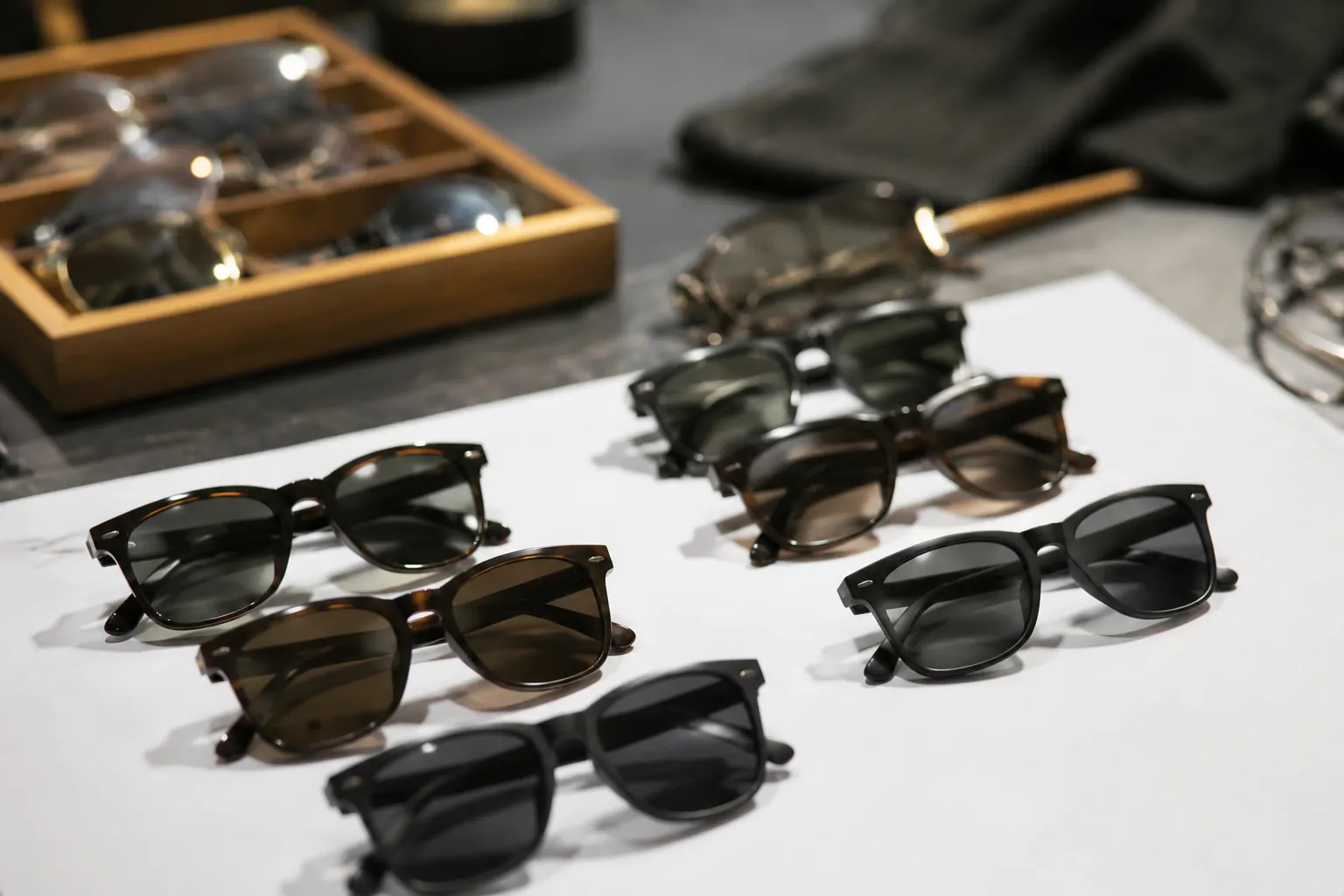
Polarized sunglasses sell best when the shopper already has a reason to want them. Driving. Fishing. Boating. Bright outdoor work. The feature is useful, but it adds cost and narrows the audience. That means buyers need to place polarized SKUs with care. This guide is for brands, importers, distributors, and retailers deciding where polarized sunglasses belong, how many to carry, and what to confirm before placing an order.
What polarization changes at retail
Polarization is a lens function, not a style choice. A polarized lens includes a filter that reduces horizontally reflected light. That can cut glare from roads, water, snow, and glossy surfaces. Simple enough.
For retail planning, think in use cases. Drivers often get it fast. So do fishing, boating, and outdoor buyers. Fashion shoppers are less likely to care unless the frame is already positioned as a functional product. If you stock polarized too broadly, you may pay for a feature that does not improve conversion.
The real question is whether the channel supports a higher ticket and a clear functional story. If it does, polarized can fit. If it does not, the feature may just sit there. That is dead weight.
Where polarized SKUs usually sell best
Polarized inventory belongs in channels where the customer has a clear reason to buy the feature. Same product. Different result, depending on the shelf and the shopper.
| Channel | Polarized fit | Why it works | Main risk |
|---|---|---|---|
| Travel / convenience retail | Moderate | Drivers and travelers understand glare reduction quickly | Price sensitivity at checkout |
| Sport / outdoor retail | High | Fishing, boating, hiking, and cycling customers often want function first | Needs clear UV, tint, and fit claims |
| Optical / eyewear specialty | High | Staff can explain lens differences and position the feature accurately | Assortments can become too technical if overbuilt |
| Mass fashion retail | Low to moderate | Some shoppers will accept polarization as a premium feature | Slower sell-through if the frame story is weak |
In travel and convenience, keep the assortment tight. One or two polarized options are usually enough. In outdoor and optical, you can go deeper on tint, frame shape, and fit. In fashion-led stores, keep polarization in a small premium block. Do not spread it across the whole wall.
Price points and volume planning
Polarization changes the landed cost stack. Lens construction, film application, quality control, and defect risk all affect cost. The number depends on frame material, lens type, decoration, packaging, and order volume. Ask for a quote tied to a specific spec. "Polarized" is not a full spec.
Margin discipline matters. A polarized SKU that costs more to make must either retail at a higher price or replace a weaker seller. If you add polarization to a low-price line without moving the retail price, you can squeeze margin and slow turns at the same time. Bad trade.
| Volume tier | Buyer logic | Typical use | Risk if overbought |
|---|---|---|---|
| 50 pairs/design | Test a concept or market | Samples, small drops, niche channels | High unit cost if the design misses |
| 300 pairs | Prove repeatability | Regional retail, first reorder | Too many colorways can freeze cash |
| 1000 pairs | Build a core SKU | Stable channel program | Weak sell-through ties up stock |
| 5000+ pairs | Price efficiency matters most | National rollouts, chain programs | A bad forecast becomes expensive fast |
Do not assume every polarized style belongs in a high-volume buy. Start with one frame, one lens tint, and one retail story. Reorder only after the numbers justify it.
The assortment rule: do not polarize everything
Many buyers make the same mistake. They treat polarized as the answer to every sunglasses brief. It is not. A healthy assortment mixes polarized and non-polarized SKUs.
Use a simple split:
- Function-led styles: polarized lenses, darker tints, and driving or outdoor positioning.
- Fashion-led styles: non-polarized, lower entry price, and broader color options.
- Bridge styles: one polarized and one non-polarized version of the same frame if the channel supports testing.
This keeps the assortment from getting too narrow. It also protects the opening price point. If every SKU is polarized, some shoppers will walk. They want a lighter fashion accessory, not a utility product.
For private label programs, a workable structure is one hero polarized driver, one polarized outdoor frame, and a few non-polarized fashion frames around them. Easy to buy. Easier to reorder.
What to ask the factory before you place the PO
Polarized lenses are easy to describe and easy to mis-specify. Ask for the exact build before you approve production. Avoid vague language like "good quality polarized." That tells you nothing.
- Confirm the lens construction, such as TAC or PC, and whether the lens is polarized.
- Ask for the tint and visible light transmission target.
- Check whether the frame geometry works with the lens curve and wrap.
- Review scratch resistance expectations and coating stack.
- Request quality-control checkpoints for polarization direction, distortion, and cosmetic defects.
Also ask which parts of the process are done in-house and which are outsourced. That matters because polarized programs often fail at handoff points such as lens insertion, alignment, or damage during decoration. Clear process notes reduce mismatch risk and speed up revisions.
Samples typically take 7-10 days after the specification is confirmed. Bulk lead time depends on the product, order size, and factory schedule. Confirm whether the quote includes lens sourcing, decoration, packing approval, and final inspection. If it does not, ask again.
Compliance is market-specific
Buyers need the right compliance set for the destination market, not a random stack of certificates. The documents commonly relevant in this category include CE EN ISO 12312-1, FDA registration, ANSI Z80.3, AS/NZS 1067, REACH, ISO 9001, and BSCI. Use only the ones that match your market and channel requirements.
Compliance does not replace product testing against your own spec. You still need to verify lens category, UV performance, labeling, packaging claims, and any retailer-specific rules. If you sell into multiple regions, build separate compliance packs. One file rarely covers everything.
| Requirement | Why buyers care | What to verify |
|---|---|---|
| CE EN ISO 12312-1 | Needed for many EU eyewear programs | Lens category, UV protection, labeling |
| FDA registration | Relevant for U.S. market access | Supplier registration status and product documentation |
| ANSI Z80.3 | Useful for U.S. performance expectations | Impact, optical quality, labeling |
| AS/NZS 1067 | Required for Australia / New Zealand programs | Category, UV claims, test records |
| REACH | Controls restricted substances in the EU supply chain | Material declarations and dye/finish inputs |
If a supplier cannot explain which document applies to which market, keep looking.
A sourcing process that avoids dead stock
Use a small launch sequence. Polarized programs fail most often because the buyer over-orders before the market gives proof.
- Step 1: Pick one use case per SKU, such as driving or fishing.
- Step 2: Lock one frame shape and one lens tint.
- Step 3: Sample at the target price tier, not the cheapest possible build.
- Step 4: Check fit, lens alignment, decoration durability, and packaging.
- Step 5: Start with 50 or 300 pairs, depending on channel confidence.
- Step 6: Reorder only after sell-through data supports it.
If you are buying through a distributor network, give field teams fewer options. They will usually sell what they can explain quickly. Two polarized styles with clear use cases often beat six vague ones.
If the product is going to chain retail, ask for a sample approval record, a color standard, a lens reference, and a carton spec. Packaging mismatches can slow receiving even when the sunglasses themselves are fine.
What to keep in the line, and what to cut
Keep polarized SKUs where the feature is obvious, the ticket supports the cost, and the buyer can explain the benefit in a few seconds. Cut them where the feature is invisible or the channel is mostly fashion.
A practical rule for most B2B buyers:
- Keep polarized in driving, outdoor, marine, and optical programs.
- Keep a smaller number in travel retail if the price ladder supports it.
- Use non-polarized styles to defend opening price and assortment breadth.
- Do not add polarized variants just to make the line look more premium.
The best assortment is usually narrower than the sales team wants and more structured than the design team wants. That is normal. Polarization should improve sell-through where the use case is real. Elsewhere, it can cut margin and tie up cash.
When evaluating a supplier, look for a program that can support both polarized and non-polarized styles, with clear lead times, documented QC, and market-appropriate compliance support.
Have a custom sunglasses project in mind?
Send us your styles, target market and quantities and we will return a detailed quote with MOQ, lead time and a sample plan.
Get a QuoteWhy source this from Wenzhou with LumiShades
Wenzhou in Zhejiang Province is widely regarded as China’s eyewear manufacturing capital, producing a large share of the world’s sunglasses. That concentration matters to buyers: a deep local supply chain for acetate sheet, hinges, lens blanks, plating and packaging means shorter component lead times, easier color and material matching, and a workforce with decades of eyewear-specific skill. LumiShades has manufactured in this ecosystem since 2009, and our vertical integration — in-house injection molding, acetate cutting, CNC milling, lens tinting, decoration and quality control — means no part of your order is quietly subcontracted to a workshop you cannot audit.
For international buyers, that vertical control translates into accountability. When a single factory owns every step, defects are traced and fixed at source rather than bounced between vendors, and your specifications survive intact from first sample to bulk. For procurement review, buyers can request process records, approved samples, quality checkpoints and project-specific compliance files before placing a bulk order. Required testing and documentation are confirmed against the destination market and product specification rather than assumed from a generic certificate list. Explore our manufacturing capabilities and quality control process to see how this works in practice.
Frequently asked questions
Should I make my core fashion line polarized? Usually no. Keep polarization for function-led SKUs unless your channel clearly sells the added value. If you want to test it, start with one frame and one tint rather than converting the whole line.
What MOQ should I expect for a polarized style? MOQ varies by factory and spec. Ask for a written quote by design, lens type, decoration, and packaging. For a test order, many buyers start with the smallest order size the supplier will accept, then reorder only after sell-through supports it.
How long does a polarized sample take? Ask the supplier for sample lead time after the spec is approved. A realistic quote should state whether it includes lens sourcing, decoration, and final QC. Do not approve timing without that detail in writing.
What is the main risk with polarized sunglasses in retail? Buying too many styles that do not have a clear use case. Polarized raises product cost, so if the channel cannot explain the benefit, sell-through can lag and margin can compress.
Which certifications matter for export? Use only the market-specific documents you actually need: CE EN ISO 12312-1 for many EU programs, FDA registration and ANSI Z80.3 for U.S. needs, AS/NZS 1067 for Australia/New Zealand, and REACH where relevant. Also confirm any buyer-specific requirements before production.
Ready to start?
Explore our round sunglasses or request a quote — our sales team replies within 12 hours.
Request a Quote