
Polarized Sunglasses Sourcing Guide for Buyers
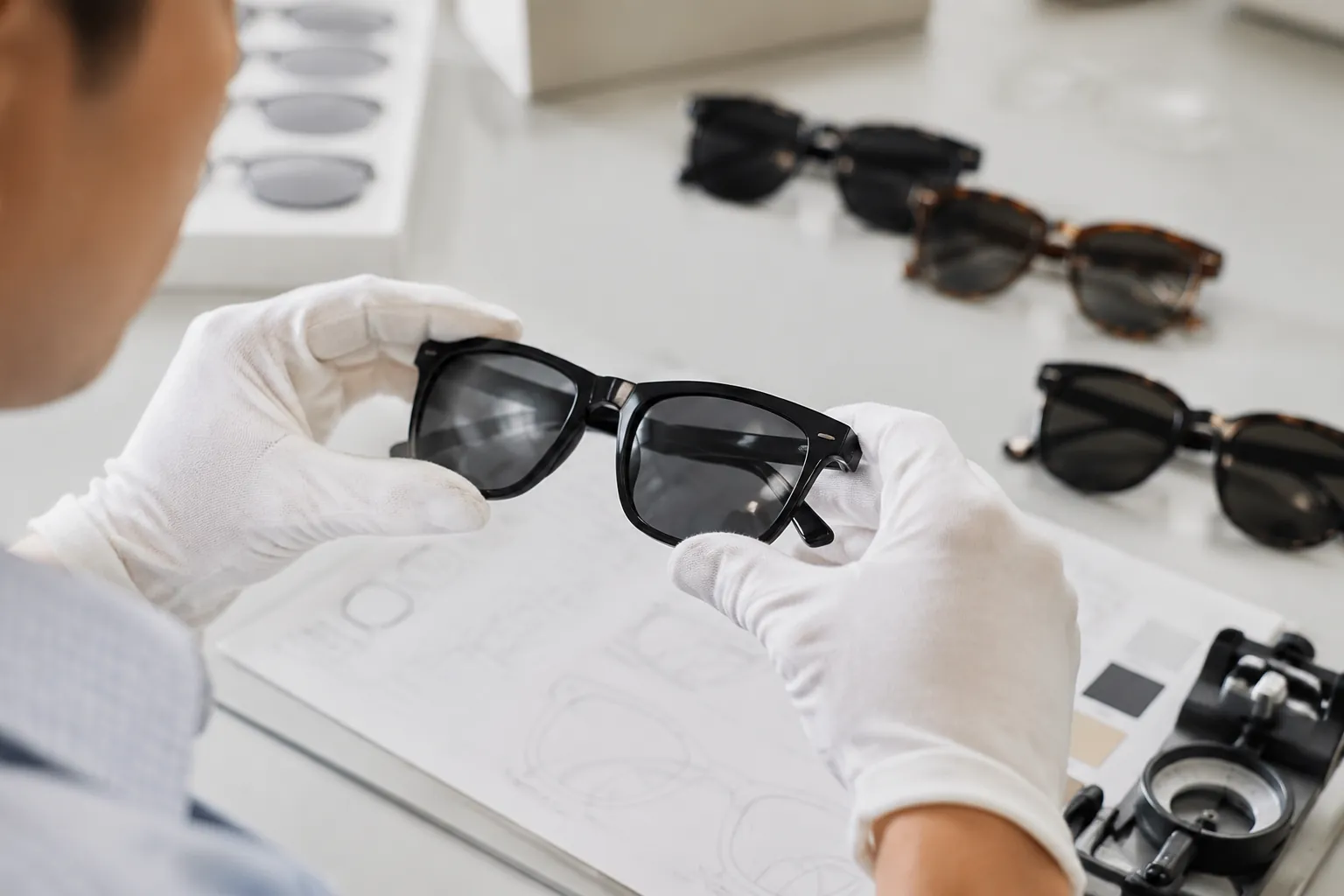
This guide is for retail buyers, importers, distributors, and private-label brand owners deciding if polarized sunglasses belong in a retail line. It explains where polarization gives shoppers a clear reason to pay more, where it adds cost without enough lift, and which specifications must be fixed before sampling and bulk approval. The aim is simple: cleaner supplier quotes, fewer failed samples, tighter compliance control, and finished goods that support every claim printed on the hangtag.
Is Polarization Worth the Added Cost?
Polarized lenses cost more than standard tinted lenses because they include a polarizing filter. That filter reduces glare from horizontal reflective surfaces such as water, roads, snow, glass, and vehicle windshields. Depending on the lens construction, the filter may be laminated into the lens or bonded as part of the lens material. Added material, lamination control, cutting yield, handling risk, and verification time can all raise the unit price.
The buyer question is not, "Are polarized lenses better?" Not always. The better question is, "Can the shopper understand the benefit fast enough to justify the shelf price?" For fishing, boating, driving, beach, golf, cycling, travel, and outdoor work channels, the value is easy to show. Glare drops when the wearer looks at water, asphalt, or reflective glass. For festival frames, novelty colors, party packs, and low-price checkout bins, polarization may not raise conversion enough to protect margin.
Use polarized lenses where glare reduction is the product reason. Do not add them only to make a spec sheet look richer. In volume sourcing, small upgrades become real money. A lens upgrade of $0.25 per pair adds $1,250 to a 5,000-pair order before duty, freight, packaging, platform fees, and retail markup.
Before requesting samples, define the sales channel, target retail price, frame material, lens material, lens color family, destination market, compliance requirements, packaging, and target ex-factory cost. Vague requests such as "make it premium polarized" create vague quotes. A useful sourcing request names the frame material, lens material, base curve, lens filter category, mirror or non-mirror finish, logo method, packaging, test standard, barcode requirements, and expected order quantity.
Match Lens Specs to the Retail Channel
Polarization works as a retail tool only if the channel can explain it. Some channels have trained staff, detailed product pages, or use-case merchandising. Others sell mainly on price, color, and speed. Match the lens specification to the selling environment before approving tooling, materials, or bulk purchase orders.
| Retail channel | Polarized value | Recommended lens approach | Buyer caution |
|---|---|---|---|
| Fishing, boating, marina, beach shops | High. Water glare reduction is visible and easy to demonstrate. | Grey, brown, or green TAC, PC, nylon, or other suitable polarized lenses; category 3 is common for bright outdoor use. | Check corrosion resistance expectations for screws, hinges, logo plates, and metal trims, especially for salt-air channels. |
| Driving, automotive, travel retail | High. Road glare and windshield reflections are easy to explain. | Grey or brown polarized lenses with visible light transmission suitable for the intended filter category and market standard. | Avoid category 4 for driving. Test readability of common LCD dashboards, phones, and navigation screens. |
| Outdoor sport and resort stores | Medium to high, depending on the activity. | PC or nylon polarized lenses, wrap or semi-wrap frames, suitable hard coat, and secure temple fit. | Check optical distortion near curved lens edges, especially on high-base designs. |
| Fashion boutiques and apparel chains | Medium if the price point supports it. | Polarized core shapes for proven sellers; mirror colors only where the category and tint remain compliant. | Do not let mirror color override optical category, color repeatability, or documentation. |
| Promotional giveaways and checkout bins | Low unless the polarized claim is central to the offer. | Standard UV-protective tinted lenses may be enough if the channel is mainly price-driven. | Polarized cost can erase margin in impulse-price programs. |
For a mixed retail range, keep the ladder clear: non-polarized entry models, polarized core sellers, and a smaller polarized mirror group for higher perceived value. Sales teams can explain that. Buyers can cost it. Factories can repeat it.
Lens Materials, Curves, and Tolerances
Custom polarized sunglasses commonly use TAC, PC, CR39, nylon, or other lens materials, depending on the supplier's process and the buyer's target market. The right choice depends on retail price, impact expectations, frame curve, optical performance, coating needs, and destination-market testing. Write the material into the specification. "Polarized lens" alone is not enough.
- TAC polarized: common for mainstream retail because it is light, cost-efficient, and suitable for many flat to moderate-curve fashion frames.
- PC polarized: often selected where impact resistance and lightweight performance matter, including sport, active, or kids' styles, subject to applicable testing.
- CR39 polarized: valued for optical clarity and a more premium feel, but heavier and generally less impact-resistant than PC.
- Nylon polarized: useful for performance and curved lenses because of its flexibility and optical stability, usually at a higher unit cost.
Lens base curve changes production risk. A 2-base or 4-base fashion lens is usually easier to cut and mount than a high-wrap lens. High-wrap polarized lenses need tighter control of film axis, edging pressure, frame groove depth, and lens seating. If the lens twists during assembly, the polarization axis can shift. The pair may then fail a polarization check or look inconsistent in use.
For practical sourcing, define visible light transmission, lens filter category, thickness range, color tolerance, optical zone expectations, and fit tolerance. For assembled frames, inspect temple alignment, lens retention, hinge action, screw security, bridge comfort, and visible gaps at the eyewire or groove. Approve color with a physical lens chip or production sample, not only a photo. Camera exposure and monitor brightness can hide real tint differences.
Repeatability depends on retained approval samples and written specs. Ask the supplier to keep a signed golden sample, lens color chip, lens category record, logo artwork, and packaging proof. Reorders should be checked against something measurable, not memory or product renders.
MOQ, Price, and Lead-Time Logic
Polarized sunglasses pricing depends on frame material, lens material, order size, decoration, packaging, coating, testing, inspection requirements, and destination-market documentation. A simple injected frame with TAC polarized lenses will not price like acetate with CNC-milled details, metal logo plates, mirror coating, and rigid case packaging.
MOQ is not just a sales policy. It reflects setup time, material purchasing, decoration fixtures, packaging preparation, and QC batching. Some suppliers support small test runs. Others need higher quantities because of material minimums or production-line efficiency. Ask for MOQ by design, by color, and by lens option. Each variable can change the calculation.
| Order size | Typical use | Cost behavior | Lead-time note |
|---|---|---|---|
| 50 pairs/design | Retail test, buyer presentation, small launch | Highest unit cost because setup is spread across very few units. | Confirm whether the supplier treats this as sampling, trial production, or a true bulk order. |
| 300 pairs/design | Small retail run or first replenishment | Better purchasing efficiency for lenses, packaging, and decoration than very small runs. | Confirm whether materials are in stock or need separate booking. |
| 1,000 pairs/design | Distributor, online brand, or chain-store program | Fixtures, printing, assembly, and inspection usually become more efficient. | Book mirror lenses, logo plates, custom cases, and printed packaging before production slots are fixed. |
| 5,000+ pairs/design | Seasonal retail program or private-label range | Best opportunity for price efficiency, subject to material, tooling, testing, and packaging choices. | Consider split shipments if launch dates, warehouse capacity, or retailer routing rules create risk. |
The cheapest quote is often cheap because something is missing: hard coating, accurate lens category, stable hinge quality, compliant labels, acceptable pouch material, UV test support, or enough inspection time. Ask what is included, what is excluded, which standards are covered, whether testing is third-party or internal, and whether the quote is based on final artwork and packaging files.
Lock These Specs Before Sample Approval
A polarized sample approval should be a technical checkpoint, not just a color review. Before approval, the supplier should know the destination market, applicable standard, frame material, lens material, lens category, visible light transmission target, UV claim, logo method, packaging, carton marks, and inspection level.
- Target market: confirm whether the shipment needs CE EN ISO 12312-1, ANSI Z80.3, AS/NZS 1067, REACH, FDA registration, ISO 9001 support, BSCI support, or retailer-specific documentation.
- Lens material: specify TAC, PC, CR39, nylon, or another agreed material instead of writing only "polarized."
- Lens color and category: define grey, brown, green, gradient, smoke, or mirror, plus the intended filter category and visible light transmission range.
- Polarization direction: require consistent axis alignment between left and right lenses and define the check method.
- UV performance: state UV400 or the applicable standard requirement, then verify it on the actual production lens configuration.
- Frame fit: define temple opening, front curve, lens retention, hinge feel, nose bridge comfort, and acceptable cosmetic defects.
- Decoration: approve laser engraving, pad printing, heat transfer, metal logo plate, or temple insert by size, position, color, durability expectation, and artwork version.
- Packaging: lock pouch, case, barcode, hangtag claim, warning text, polybag, carton quantity, and shipping marks before bulk production.
Decoration needs close review on polarized styles. Pad printing on temples is cost-effective, but artwork should be checked for rub resistance and chemical resistance if the retailer requires it. Metal logo plates can add perceived value, but they need accurate recesses, clean fixing, and consistent plating. Lens logos require care. Poor placement can distract the wearer if it enters the optical zone.
Ask the supplier to return a signed specification sheet with the approved sample. The sheet should identify the exact frame material, lens material, lens color, lens category, coating, logo method, packaging components, barcode file, test standard, and approval date. This becomes the production reference and the baseline for reorders.
Compliance and Claims Without Overreach
Polarized does not mean compliant. It describes glare reduction, not full product safety. Sunglasses still need to meet the relevant market requirements for UV protection, visible light transmission, traffic signal recognition, labeling, restricted substances, and general product safety.
For Europe, buyers commonly specify CE compliance to EN ISO 12312-1 for sunglasses. For the United States, ANSI Z80.3 is commonly referenced, and FDA registration may be relevant because non-prescription sunglasses are regulated as medical devices in the U.S. system. Australia and New Zealand buyers should specify AS/NZS 1067. REACH can apply to restricted substances in frame materials, coatings, nose pads, paints, and metal components. ISO 9001 and BSCI may support quality-management and social-compliance expectations, but they do not replace product testing for the sunglasses themselves.
Buyer rule: do not print "polarized," "UV400," a filter category, or a driving-use claim on packaging until the exact production lens, tint, coating, mirror finish, and color have been checked against the applicable requirement.
Mirror coatings and dark tints can change visible light transmission. A category 3 lens and a category 4 lens are different retail products. Category 4 lenses are generally not suitable for driving. If the sales channel includes driving, travel, or automotive retail, confirm lens category, traffic signal recognition, and display readability before packaging copy is printed. Reprinting hangtags is cheaper than recalling goods. Better still, approve claims before print.
QC Checks That Catch Lens Problems
Polarized sunglasses need normal frame inspection plus lens-specific checks. The factory should inspect incoming lens sheets or blanks, verify cutting accuracy, check coating condition, confirm polarization effect, and inspect assembled pairs under controlled light. Random final inspection alone may miss process problems if lens cutting, coating, or assembly is unstable.
Useful checks include a polarization tester or LCD screen check, UV transmission verification, visual inspection for bubbles and film waves, lens color comparison against the approved sample, lens retention test, hinge cycle check, temple alignment, screw security check, logo placement check, barcode scan test, and packaging verification. For acetate frames, watch lens groove fit, front warpage, polishing marks, and temple balance. For injection frames, watch shrinkage, parting lines, sink marks, and lens popping after assembly. For metal frames, watch plating marks, solder joints, nose pad alignment, and screw loosening.
- Before production: approve golden sample, lens chip, logo artwork, packaging proof, barcode file, carton mark, and compliance plan.
- During production: inspect lens cutting, frame assembly, hinge function, logo placement, color consistency, and lens seating.
- Final QC: apply the agreed sampling plan, polarization checks, UV claim support, cosmetic inspection, carton marks, and packing quantity checks.
- Before shipment: confirm export documents, test reports, SKU list, retailer routing rules, and split-shipment details if applicable.
Complete approvals before materials are booked for bulk production. Late artwork, changed lens color after sampling, missing barcode files, unclear packaging claims, or delayed compliance decisions can affect cost, timing, and inspection results even when the factory process is stable.
A Practical Approval Path for First Orders
For a first polarized order, keep development tight. Start with one or two proven frame shapes instead of many experimental styles. Choose a standard grey, brown, or green polarized lens first. Add mirror or gradient options only after fit, compliance, and cost are stable. Too many variables make samples harder to judge.
A workable path is straightforward: send a full technical request and artwork, receive a written quote, confirm sample cost and timing, review samples, revise if needed, approve a golden sample, place the bulk order, confirm deposit and documents, produce bulk, inspect, then ship. Start the calendar after the supplier receives complete specifications, artwork, packaging files, and compliance requirements. Not after the first informal inquiry.
Before approving bulk, wear the sample outdoors. Look at water, car windshields, phone screens, dashboards, and road reflections. Open and close the temples repeatedly. Check whether the frame sits level, whether the bridge pinches, and whether the lens color works in natural light. Put the sample into the case, attach the hangtag, scan the barcode, and review the carton label. Retail failures are often basic: a claim staff cannot explain, a temple logo that scratches, a barcode that scans wrong, or a frame that feels uncomfortable after a short wear test.
The best polarized program is not the most complicated one. It is the one where the lens benefit fits the channel, the specification is clear, the supplier can repeat the approved result, and the packaging says only what the product can prove.
Have a custom sunglasses project in mind?
Send us your styles, target market and quantities and we will return a detailed quote with MOQ, lead time and a sample plan.
Get a QuoteWhy source this from Wenzhou with LumiShades
Wenzhou in Zhejiang Province is widely regarded as China’s eyewear manufacturing capital, producing a large share of the world’s sunglasses. That concentration matters to buyers: a deep local supply chain for acetate sheet, hinges, lens blanks, plating and packaging means shorter component lead times, easier color and material matching, and a workforce with decades of eyewear-specific skill. LumiShades has manufactured in this ecosystem since 2009, and our vertical integration — in-house injection molding, acetate cutting, CNC milling, lens tinting, decoration and quality control — means no part of your order is quietly subcontracted to a workshop you cannot audit.
For international buyers, that vertical control translates into accountability. When a single factory owns every step, defects are traced and fixed at source rather than bounced between vendors, and your specifications survive intact from first sample to bulk. For procurement review, buyers can request process records, approved samples, quality checkpoints and project-specific compliance files before placing a bulk order. Required testing and documentation are confirmed against the destination market and product specification rather than assumed from a generic certificate list. Explore our manufacturing capabilities and quality control process to see how this works in practice.
Frequently asked questions
What is the minimum order quantity for custom polarized sunglasses? Ask the supplier to quote MOQ by design, frame color, lens color, and logo version. Small test runs may be possible, but they usually carry a higher unit cost because setup, material purchasing, decoration, packaging, and inspection time are spread across fewer pairs. For a first order, confirm whether the quantity is treated as sampling, trial production, or bulk production.
How long do polarized sunglasses samples and bulk production take? Timing depends on whether the frame, lens, logo method, packaging, and materials are standard or custom. Ask for separate lead times for sample making, sample revision, material booking, bulk production, testing, final inspection, and shipping. Do not start the production calendar until the supplier has final artwork, packaging files, barcode data, compliance requirements, and written sample approval.
Which lens material should I choose for retail polarized sunglasses? Use TAC for many mainstream fashion and lifestyle programs where cost, weight, and general clarity are the priorities. Consider PC for sport, active, or kids' styles where impact resistance is important and testing supports the claim. Consider CR39 for optical clarity and premium positioning, and nylon for curved or performance frames where flexibility and stability justify the added cost.
Can I claim UV400 and polarized on the hangtag? Only if the approved production lens configuration supports both claims. Polarization means glare reduction; it does not prove UV protection, filter category, traffic signal recognition, or market compliance. Verify the exact lens material, tint, coating, mirror finish, and color before printing UV400, polarized, category, or driving-use claims.
Which certifications and standards should I discuss before sampling? Discuss the destination market first. Common requirements or support documents may include CE EN ISO 12312-1 for Europe, ANSI Z80.3 and FDA registration considerations for the United States, AS/NZS 1067 for Australia and New Zealand, REACH for restricted substances, and ISO 9001 or BSCI where quality-management or social-compliance support is required.
Do polarized lenses cause problems with phone or car displays? They can. Polarized lenses may darken, rainbow, or obscure some LCD screens and instrument displays at certain viewing angles. If the product is sold for driving, travel, sport, or work use, test approved samples with typical dashboards, phones, navigation screens, payment terminals, and outdoor lighting before bulk approval.
Ready to start?
Explore our round sunglasses or request a quote — our sales team replies within 12 hours.
Request a Quote