
UV400 vs Polarized: Wholesale Lens Spec Guide
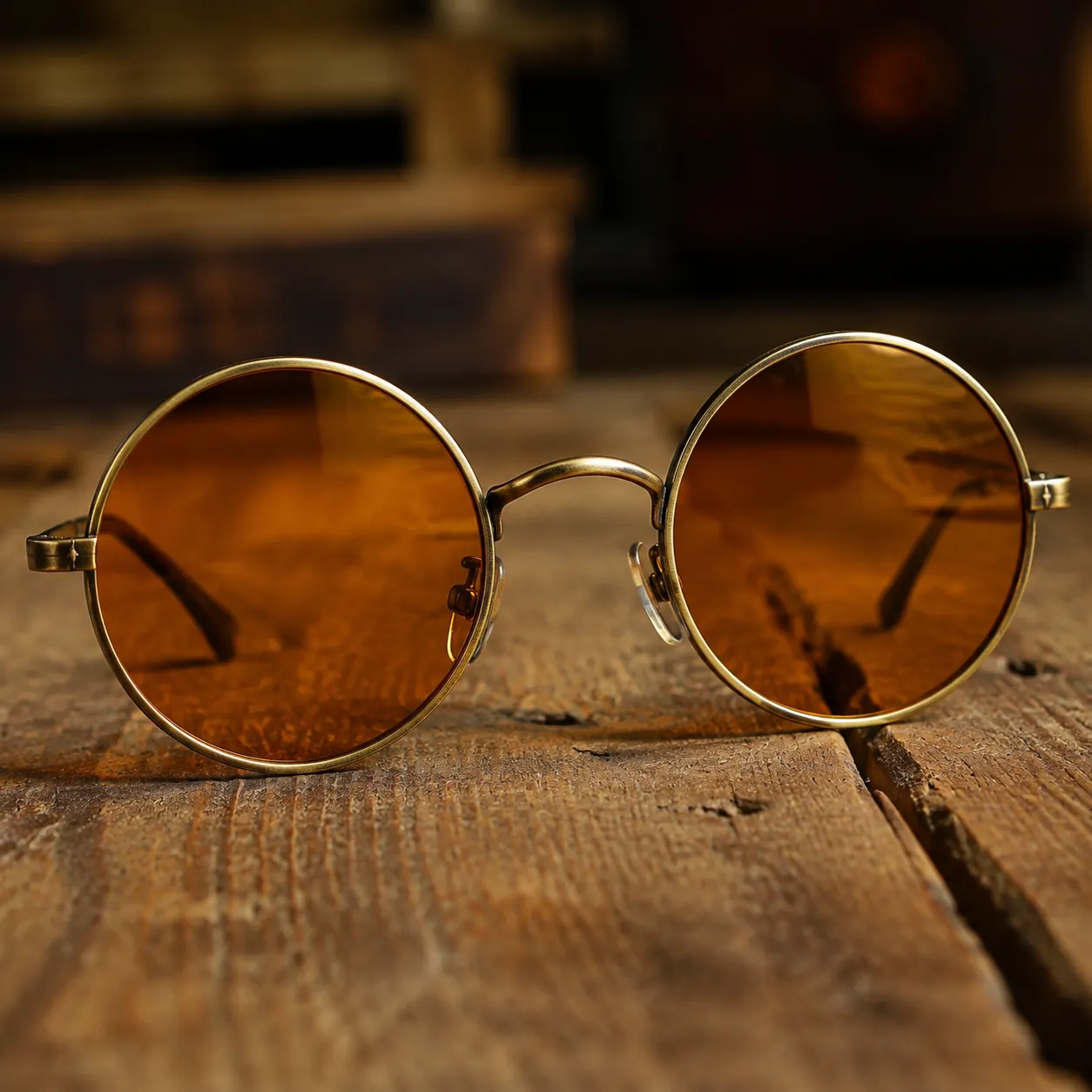
If you buy sunglasses for retail, distribution, private label, or promotional programs, UV400 and polarized are not interchangeable specs. They solve different problems, affect cost differently, and create different quality risks when the purchase order is vague. This guide explains what each spec means, where it helps sell-through, and how to write lens requirements clearly so the factory quotes the right build the first time.
Start with the buying decision, not the buzzwords
UV400 and polarized are often sold together. They are not the same thing. UV400 is a protection spec. It means the lens is designed to block ultraviolet radiation up to 400 nanometers, covering UVA and UVB. Polarization is a glare-reduction feature. It cuts reflected light from water, roads, glass, and metal. A lens can be UV400 without being polarized. It can also be polarized and still need separate UV confirmation.
For wholesale buyers, start with channel fit. Fashion retail usually needs broad style choice and tight price control. UV400-only styles often make the most sense there. Driving, marine, fishing, outdoor work, and premium sport accounts usually justify polarized UV400 because the user feels the difference fast. Promotional programs and price-led private label lines usually benefit more from a clean UV400 spec unless polarization is part of the sales story.
Then check build complexity. A sunglasses program is more than lens color and frame shape. It also includes base material, tint transmission, coating method, logo placement, and final QC. If the factory handles frame production, lens fitting, decoration, and inspection in-house, the lens requirement still has to be written clearly on the order. Clear specs reduce quote drift. They also reduce sample-to-bulk mismatch.
Simple rule: UV400 is the baseline protection story. Polarization is the upgrade. Do not let a premium-sounding word replace a real technical requirement.
What UV400 actually covers
UV400 means the lens is intended to block ultraviolet radiation up to 400 nanometers, which covers the UVA and UVB range relevant to sunglasses buyers. It is the baseline protection spec most mass-market sunglasses should meet if they are sold as sun-protection eyewear. In sourcing, UV400 is not decoration. It is a functional requirement, and it should be stated clearly on the purchase order.
Do not confuse UV400 with darkness. A dark lens can still fail on UV protection if the material or coating is wrong. A light or medium tint can still block UV effectively if the lens formulation is correct. Color mainly affects visible light transmission, not UV protection by itself. So write the functional requirement first, then the cosmetic target.
For buyers, the best way to write the requirement is to tie UV400 to the destination market standard you actually need. For Europe-linked sales, that is often CE EN ISO 12312-1. For the U.S. market, buyers commonly reference ANSI Z80.3. For Australia and New Zealand, AS/NZS 1067 is the relevant standard. If the supplier can show the applicable test report or declaration against the approved sample, your customs and retail QA risk drops.
Ask for tolerance language too. If tint consistency matters to your program, state the acceptable transmission range on the approved sample and bulk order. If you skip tolerance, the sample may look right while bulk shows visible color drift.
- Specify UV400 on the PO if the product is sold as sun-protection eyewear.
- State the destination standard: CE EN ISO 12312-1, ANSI Z80.3, or AS/NZS 1067.
- Ask for tint transmission targets and acceptable tolerance, especially on repeat orders.
- Request batch QC or incoming inspection records if the order is private label or multi-market.
What polarization changes in the real world
Polarization reduces reflected glare from flat surfaces such as water, wet roads, windshields, glass facades, and metal. That makes the lens more comfortable for driving, boating, fishing, and outdoor work. The customer benefit is easy to explain: less squinting, better contrast, and a clearer view in glare-heavy conditions. That is why polarized styles often sell better in performance channels even when they cost more.
The trade-off is real. Polarized lenses can make LCD screens, some dashboard displays, phone screens, and certain instrument panels look dim, striped, or partially blacked out depending on the angle. That does not make the product defective. It just means the channel has to expect it. For a driving program, that limitation is often fine. For a tech-forward lifestyle line, it can trigger complaints if the buyer never warned the customer.
Polarization also changes manufacturing detail. A polarized lens is not just a tinted lens with a nicer label. The supplier has to control polarization film orientation, bonding quality, light transmission, and cosmetic finish. The spec should say whether the lens is a polarized film construction, a laminated polarized lens, or another defined build. If that is not written, quote drift is likely.
Material behavior matters too. On acetate frames, polarized lenses often pair cleanly with premium finishes, but the lens edge and groove fit still need to be checked on rimless or semi-rimless styles. On injected frames, the cost is usually better, but the lens stack still has to pass fit and stability checks. On metal builds, polarization may be paired with thinner lens profiles, which changes edge polish and coating requirements. The factory should confirm fit before bulk, not after assembly.
Short rule: UV400 protects against UV. Polarized reduces glare. Different jobs, different sales stories.
UV400 vs polarized: side-by-side buying trade-offs
Use the comparison below to decide what belongs in the line, not just what sounds stronger in a sales pitch.
| Spec | Buyer value | Best channels | Typical downside | Typical commercial use |
|---|---|---|---|---|
| UV400 only | Baseline UV protection at lower cost | Fashion retail, promo, entry-level private label | No glare reduction; easier to compare on price only | Open-price programs, seasonal fashion drops |
| Polarized + UV400 | UV protection plus glare control | Driving, fishing, outdoor, premium retail | Higher cost; some screen-visibility complaints | Performance-led assortments, premium UV stories |
| Tinted non-polarized | Style and light reduction | Fashion collections, color-led capsules | Weakest protection story if UV spec is omitted | Trend-driven launches with limited functional claims |
| Polarized premium build | Higher perceived value and better shelf story | Private label, gift sets, sports accounts | Tighter QC needs, more expensive rejects if spec drifts | Hero SKUs where margin supports the upgrade |
In practical assortment planning, UV400 is the floor. Polarization is the feature upgrade that earns its keep when the customer can clearly feel the difference. If your line has three price levels, a sensible structure is entry UV400, mid-tier UV400 with better frame finishing or packaging, and top-tier polarized UV400 for channels that can support the price.
That structure also protects inventory turns. You do not need to overbuy polarized across the board because one account asked for it. Put the feature where sell-through is strongest and where return risk is lowest.
Where each spec helps margin, and where it hurts it
Margin is not just landed unit cost. It is the mix of cost, sell-through speed, return rate, and discounting needed to clear slow stock. UV400-only styles are usually cheaper to land, easier to open at retail, and safer for volume programs where the buyer wants broad reach. Polarized styles carry a higher ticket, but they can also support stronger gross margin if the channel understands the value.
The risk is over-specifying. A buyer who forces polarized on a low-price fashion program often ends up with a shelf price that does not move. A buyer who strips out UV and compliance language just to save a little cost can end up with rejects, claims, or a product that cannot be sold in the destination market. The right spec matches the use case and the channel economics.
On the manufacturing side, polarization adds cost because it adds material, handling, and process control. It can also increase inspection burden and yield risk if the lens stack is inconsistent. That is why many factories reserve their best pricing bands for repeat volume. Once the sample is approved and the order repeats, pricing is usually easier to manage than on one-off pilot runs.
That pricing structure matters because polarized programs usually become more efficient once you move beyond sample validation. A small pilot can prove the style. A larger order is where the unit economics usually start to make sense for retail or distribution reorders.
- Use UV400-only for price-led, broad-market assortments.
- Use polarized where glare control is part of the selling story.
- Match lens spec to use case before you match it to trend language.
- Budget for higher inspection and a smaller acceptable defect rate on polarized lots.
How to write the purchase requirement correctly
A weak PO says "UV400 polarized sunglasses." That is not enough. A usable PO states the lens type, tint target, compliance standard, decoration method, and any optical or cosmetic limits. The factory should not have to guess. Guessing creates rework and delays.
A strong requirement usually includes six elements. First, define the lens spec clearly: UV400 only, polarized UV400, or non-polarized tinted UV400. Second, name the market standard. Third, state the lens color and transmission target. Fourth, define whether screen-visibility trade-offs are acceptable. Fifth, lock the sample approval rule and the bulk repeat tolerance. Sixth, note any decoration constraints that affect the lens or temple build.
For example, if you want a printed logo on the temple, pad printing may be fine on a flat acetate surface but less durable on a flex-heavy injection arm unless the ink system is chosen correctly. Laser engraving can work well on metal and some coated components, but it changes the finish appearance. Metal logo plates add a premium feel, but they require placement tolerance and attachment checks. If a temple carries a wire-core insert, wall thickness, bend tolerance, and heat stability matter too. None of that should be left to assumptions.
Ask for the same written spec on the sample and the production order. If the approved sample is polarized and the bulk order is later switched to non-polarized to save cost, the carton copy, retailer spec sheet, and customer expectation all have to be rewritten. Otherwise, you are creating a dispute before the product even ships.
For repeat programs, include measurable QC language where possible. A common commercial approach is to approve against a signed golden sample, accept lens color variance within the agreed transmission band, and require carton and unit-label match to the approved artwork. That gives your factory a clear target and gives your QA team something they can check.
Compliance and test language buyers should not skip
Compliance language should match the destination market. Do not write one generic statement and expect it to work everywhere. For overseas B2B buyers, the main references are CE EN ISO 12312-1 for Europe-linked channels, ANSI Z80.3 for U.S. performance expectations, AS/NZS 1067 for Australia and New Zealand, REACH for chemical-substance restrictions, ISO 9001 for quality management, and BSCI for social compliance. If the supplier also has FDA registration for U.S. process control, note that separately, but do not confuse registration with performance certification.
Do not invent extra claims. If the supplier cannot document it, leave it out. Retailers and importers get burned when cartons, lab reports, and PO wording do not match. If you need a declaration, tie it to the approved sample and the production lot number. If you need a test report, ask for the report number and issue date, not a vague summary.
A practical compliance sentence looks like this: "Lens must meet UV400 performance and comply with the applicable market standard for the destination country. Supplier to provide test records or declaration tied to the approved sample and production lot." That wording is blunt, but it works because it can be checked.
Also check material behavior by frame type. Acetate can take rich tints and premium polish, but it may show edge inconsistency if the lens cut is rough. Injected frames often favor speed and price, but the lens pocket tolerance has to be managed or the lens can rattle. Metal frames may need thinner or beveled lens geometry to keep weight down. A good factory tests those combinations in QC before shipment, not after a retailer complains.
Buyer scenarios: which spec to order by channel
Use the channel, not the catalog, to decide the lens spec.
| Channel | Recommended spec | Why it fits | Order note |
|---|---|---|---|
| Fashion retail | UV400 only or mixed UV400/polarized | Lower cost supports a wider color and style range | Keep lens color and frame finish consistent across the line |
| Driving and outdoor | Polarized UV400 | Glare reduction is a clear selling point | State that screen-visibility trade-offs are acceptable |
| Promotional programs | UV400 only | Better price control at high volume | Use simple specs, standard decoration, and stable packaging |
| Retail private label | Two-tier mix | Lets you build a margin ladder | Reserve polarized for hero SKUs and repeat sellers |
If you are planning a launch, start with one UV400 sample and one polarized sample in the same frame. Compare the look, the screen behavior, the perceived quality, and the target shelf price before you commit to bulk. That small test costs far less than overstocking the wrong lens type or learning too late that the retailer wanted a lower-cost build.
For buyers working with an OEM/ODM factory, the cleanest workflow is sample, spec lock, carton lock, then bulk. On a low-MOQ program, validate one channel first, then scale once the sell-through signal is real. That sequence is especially useful when a program includes mixed decoration methods, because each method can slightly change yield, lead time, and finish risk.
Final buyer checklist before you place the order
Do not approve the order until these points are clear. This is the part that prevents disputes later.
- Is the SKU UV400 only, polarized UV400, or both in different colorways?
- Which market standard applies to the destination country?
- Are the lens tint, transmission, and finish written into the spec?
- Is polarization acceptable for the intended channel and screen use?
- Do sample and bulk approvals use the same written requirement?
- Are QC checks tied to the approved sample, carton copy, and label claims?
- Are decoration methods, placement tolerances, and finish limits documented?
If you are buying from a factory, use the sample window and bulk lead time you were quoted to stage your approval properly. Confirm the MOQ, sample timing, and bulk timing in writing before you open the order. That is the cleanest way to protect margin without guessing.
UV400 is the protection baseline. Polarized UV400 is the performance upgrade. The best wholesale buy is the one whose spec is written tightly enough for the factory to build it exactly once.
Have a custom sunglasses project in mind?
Send us your styles, target market and quantities and we will return a detailed quote with MOQ, lead time and a sample plan.
Get a QuoteWhy source this from Wenzhou with LumiShades
Wenzhou in Zhejiang Province is widely regarded as China’s eyewear manufacturing capital, producing a large share of the world’s sunglasses. That concentration matters to buyers: a deep local supply chain for acetate sheet, hinges, lens blanks, plating and packaging means shorter component lead times, easier color and material matching, and a workforce with decades of eyewear-specific skill. LumiShades has manufactured in this ecosystem since 2009, and our vertical integration — in-house injection molding, acetate cutting, CNC milling, lens tinting, decoration and quality control — means no part of your order is quietly subcontracted to a workshop you cannot audit.
For international buyers, that vertical control translates into accountability. When a single factory owns every step, defects are traced and fixed at source rather than bounced between vendors, and your specifications survive intact from first sample to bulk. For procurement review, buyers can request process records, approved samples, quality checkpoints and project-specific compliance files before placing a bulk order. Required testing and documentation are confirmed against the destination market and product specification rather than assumed from a generic certificate list. Explore our manufacturing capabilities and quality control process to see how this works in practice.
Frequently asked questions
Is UV400 enough for a wholesale sunglasses line? For many fashion and promotional programs, yes. UV400 is the baseline protection spec and usually the right cost-to-value choice for broad-market assortments. If the channel is driving, fishing, marine, or premium outdoor, add polarization only where the use case justifies the higher cost.
Can a lens be polarized but not UV400? Yes. Polarization reduces glare, but it does not automatically prove UV protection. If the product is sold as sun-protection eyewear, specify UV400 and require the applicable market standard or test documentation for the destination country.
Should I put both UV400 and polarized on every SKU? Usually no. That raises cost without improving sell-through across every channel. A better structure is UV400-only for price-sensitive accounts and polarized UV400 for performance-led or premium SKUs.
What should I ask the factory for before bulk? Ask for the approved sample, the written lens spec, the applicable compliance standard, and confirmation that the bulk lot will match the sample. For export programs, tie the paperwork to CE EN ISO 12312-1, ANSI Z80.3, or AS/NZS 1067 as applicable, and include tint or transmission tolerances if color matters.
How much does polarization affect price and lead time? Polarization usually increases unit cost because it adds material and process control, and it can increase inspection burden if the lens stack is inconsistent. Lead time should still be confirmed in writing with the factory for each order because it depends on sample approval, order size, and build details. Always lock timing before you release bulk.
Ready to start?
Explore our square sunglasses or request a quote — our sales team replies within 12 hours.
Request a Quote