
Polarized Sunglasses Sourcing: Cost, Specs, QC
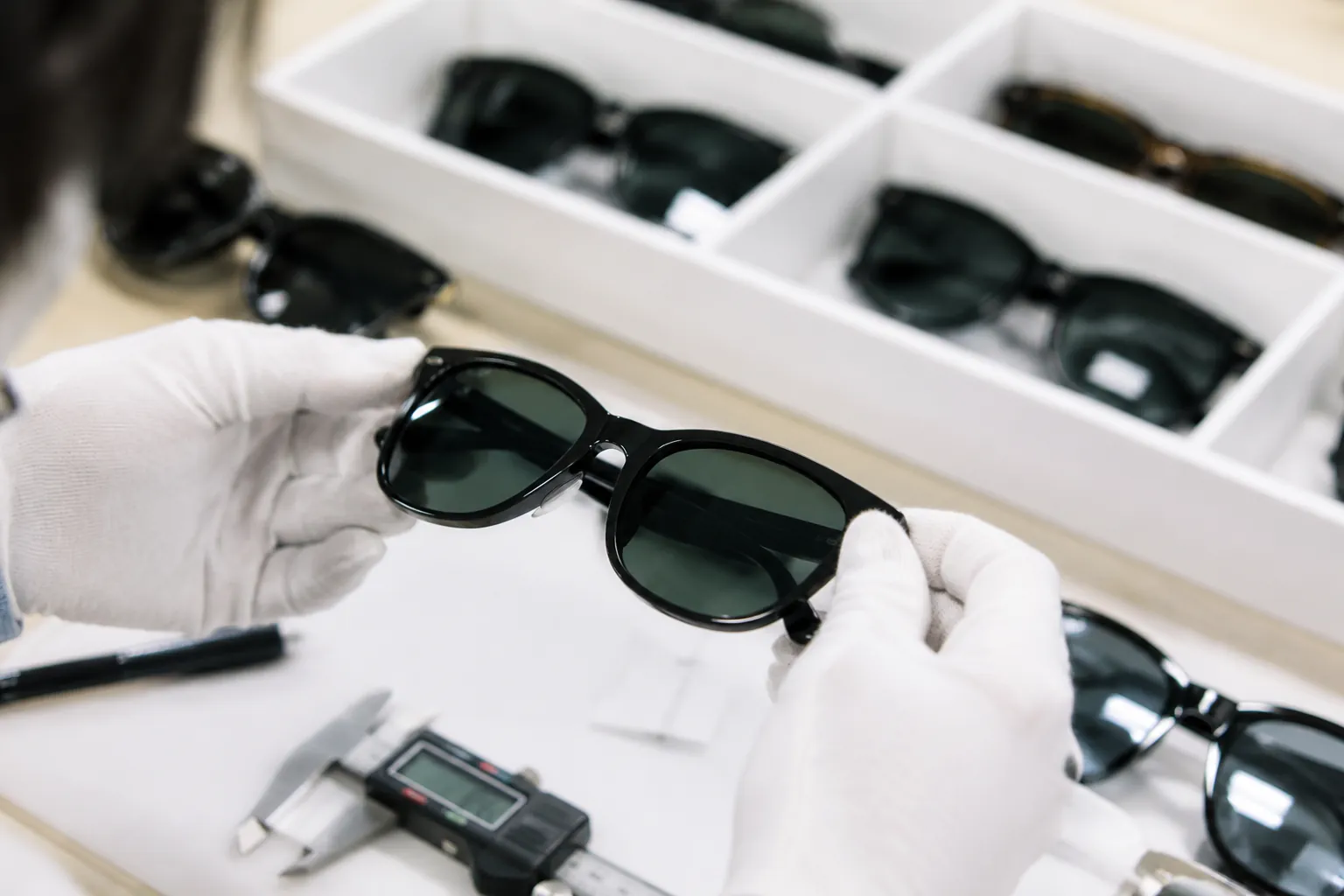
This guide is for brands, importers, distributors, and retailers buying polarized sunglasses in volume. It explains what drives cost, how common polarized lens materials behave, which specifications to lock before production, and how to compare samples with simple checks. The aim is practical: clearer RFQs, stronger sample approval, tighter purchase orders, and fewer quality disputes before shipment.
Start With the Use Case, Not the Label
Polarized lenses matter when glare reduction is part of the product promise. They reduce light reflected from horizontal surfaces such as water, wet roads, snow, glass, polished stone, and vehicle hoods. That makes them useful for fishing, driving, boating, beach retail, snow travel, and some outdoor workwear programs. For a fashion-only style sold mainly on frame shape, color, logo, or low price, polarization may not earn back the added cost.
Be clear about what polarization is. It is a lens construction choice, not just a sales claim. Most polarized sunglass lenses use a polarizing film laminated into TAC, PC, nylon, or another lens structure. That film has an axis, usually set to reduce horizontally reflected glare. If the axis is poorly controlled, the lens may look dark but perform unevenly. If lamination, edging, coating, or assembly is weak, defects can appear as edge bubbles, haze, film shift, stress marks, or delamination after heat and pressure exposure.
Define the use case before asking for prices. A fishing style with mirror lenses may need strong polarization efficiency, scratch control, salt-water exposure review, and stable coating color. A low-cost festival style may only need UV protection, acceptable clarity, and consistent tint. A driving collection needs comfortable visible light transmission, low distortion, and consistent left-right lens behavior.
Factory-floor rule: buy polarized lenses when glare reduction is visible to the customer. If the sale depends mostly on color, logo, shape, or price, compare polarized and non-polarized samples before locking the spec.
Where the Added Cost Comes From
The added cost is not just the polarizing film. It also comes from lens material, lamination quality, cutting orientation, coating yield, inspection time, reject rate, and assembly control. A basic non-polarized PC lens can often be tinted, cut, coated, and fitted with fewer process risks. A polarized lens needs film-axis control, careful heat and pressure handling, and clearer rejection standards.
For custom programs, the cost gap depends on lens material, frame material, order size, coating, packaging, compliance testing, and decoration. Do not compare a plain smoke PC lens with a TAC polarized mirror lens and call the difference factory markup. They are different products, with different materials, process steps, and inspection risks.
| Lens option | Typical use | Cost impact | Main control point |
|---|---|---|---|
| Non-polarized PC | Promo, fashion, and some kids styles where market rules allow | Lowest | UV performance, optical distortion, coating rub |
| TAC polarized, often around 0.74-1.1 mm | Mainstream retail polarized sunglasses | Moderate | Axis direction, haze, edge delamination |
| PC polarized, often around 1.5-2.0 mm | Sport and impact-conscious frames | Moderate to high | Injection stress, rainbow marks, lens fit |
| Nylon polarized | Curved sport lenses and higher optical requirements | High | Base curve, decentering, coating adhesion |
| Polarized with mirror coating | Fishing, beach, outdoor, and display-driven retail | Higher | Mirror scratch, color drift, coating adhesion |
Ask suppliers to separate frame price, lens price, decoration, packaging, compliance testing, tooling, and setup charges where possible. Bundled quotes are easy to read, but they hide tradeoffs. If two prices differ by a meaningful amount, ask what changed: lens thickness, lens material, film grade, hard coating, inspection level, packaging, tooling, or margin.
Spec Sheet Details That Prevent Disputes
A purchase order that says only "polarized black sunglasses" is too weak. It invites substitution. It also makes claims hard to prove. Buyers should define lens material, lens color, visible light transmission, UV requirement, filter category, base curve, thickness, polarization axis, frame material, hinge type, logo method, packaging, labeling, and destination-market compliance.
Visible light transmission, or VLT, should be stated as a target range. Do not rely on words like "dark," "smoke," or "brown." Many retail sunglasses fall into filter category 2 or category 3, depending on darkness and market rules. A common category 3 lens is usually darker. A lighter fashion or driving-friendly lens may sit higher. Confirm the exact category and VLT range against the destination-market standard and the intended use.
For polarization, request a measurable factory target and a practical control method. At minimum, define the approved blocking orientation, require left-right lens consistency, and ask the supplier to record its test method during sample approval. A tolerance such as +/-3 degrees may be discussed for commercial programs, but the final tolerance should match the supplier's equipment, lens design, and accepted quality level.
For Europe, CE EN ISO 12312-1 is the key sunglass standard to discuss. For the United States, ANSI Z80.3 is commonly requested, and FDA registration status may be relevant depending on the manufacturer, importer, and product classification process. Australia and New Zealand buyers should request AS/NZS 1067. REACH may apply to chemical restrictions in plastics, coatings, metals, and surface finishes for products placed on the EU market. ISO 9001 and BSCI are factory-management or social-compliance documents. They do not replace product test reports.
- Lens material: TAC, PC, nylon, or approved alternative, with thickness and base curve stated.
- Lens category: target filter category and VLT range, not only a color name.
- UV performance: UV400 or standard-specific UV result supported by test records.
- Polarization axis: approved orientation and left-right tolerance agreed at sample stage.
- Coating: hard coat, mirror, gradient, oil-resistant treatment, salt-exposure requirement, or no extra coating.
- Frame process: injection molding, acetate cutting, CNC milling, metal assembly, or hybrid construction.
- Decoration: laser engraving, pad printing, heat transfer, metal logo plate, temple insert, or lens logo.
- Compliance file: required standard, test report, marking, user information, and restricted-substance documents where applicable.
Keep the approved sample as the control sample. Sign it. Date it. Photograph it. Record available lens readings such as VLT, UV result, lens color, thickness, and polarization check. If bulk production drifts, the signed sample and spec sheet become the reference—not memory, not chat messages.
Sample Comparison: Practical Bench Tests
You do not need a full optical lab to reject weak polarized samples early. You do need a consistent method. Test every sample under the same light source. Clean the lenses first. Compare them in the same order. Dust, fingerprints, lighting changes, and viewing angle can make a good lens look bad or hide a weak one.
- Check polarization: hold the lens in front of an LCD screen or another polarized lens and rotate it. A polarized lens should darken strongly at the blocking angle.
- Check axis consistency: compare left and right lenses together. If one lens blocks at a visibly different angle, request the supplier's axis-control explanation or measurement record.
- Inspect haze: view the lens against white and black backgrounds. Look for milkiness, cloudy patches, film lines, uneven tint, or visible lamination marks.
- Look for stress: view the lens through another polarized lens. Rainbow patterns near drilled holes, lens edges, or tight frame grooves can indicate stress.
- Check outdoor glare: compare samples over water, wet pavement, car glass, and other reflective surfaces. Record which sample reduces glare most consistently.
- Check screen interaction: test phone screens, dashboards, and display panels if the product is intended for driving, sport, or lifestyle use.
- Check fit pressure: inspect the lens edge and frame groove. A lens forced into the frame may pass visual inspection but later crack, warp, or delaminate.
Ask the factory for its own sample-stage records. Useful records include UV result, VLT reading, polarization check, lens thickness, lens color reference, and a short note on frame fit. If the supplier handles lens tinting, cutting, frame production, decoration, and QC in-house, ask which step produced each sample and where defects are controlled. If steps are outsourced, ask how incoming parts are checked before assembly.
QC Controls Before Bulk Shipment
Polarized lens quality should be checked before mass assembly, during assembly, and before final packing. Waiting until cartons are closed is too late. The supplier is under pressure. The buyer has fewer options. Sorting costs more.
For a normal bulk order, request incoming lens inspection, first-piece approval, in-line inspection, and final AQL inspection. Define defects in writing before production. Critical defects may include wrong lens type, failed UV performance, broken frame, sharp edge, missing required marking, or unsafe assembly. Major defects may include obvious haze, axis mismatch, loose hinge, poor temple alignment, coating scratch, visible logo defect, or wrong packaging. Minor defects may include small cosmetic marks outside the central viewing area if the brand accepts them.
| Check point | What to inspect | Buyer instruction | Why it matters |
|---|---|---|---|
| Incoming lenses | UV, VLT, polarization, color, thickness, surface | Hold assembly until records pass | Bad lenses become expensive after fitting |
| First-piece build | Lens fit, frame stress, logo, hinge, temple opening | Approve photos and readings before mass run | Catches tooling and assembly errors early |
| In-line QC | Scratches, axis, screw tightness, coating marks | Inspect by batch, not only at the end | Stops repeated defects from spreading |
| Final inspection | AQL defects, packing, labeling, carton marks | Use signed sample and PO spec as reference | Prevents mixed or downgraded goods shipping |
Inspection depth should match order size and risk. For small trial orders, focus on sample approval, material confirmation, and final inspection. For larger or repeat programs, add in-line checks and retain samples from early, middle, and late production batches. If the order includes mirror coating, acetate polishing, metal logos, or special packaging, add checks for coating scratches, frame surface finish, logo position, plating consistency, and packing abrasion.
MOQ, Price Breaks, and Lead-Time Logic
Polarized lenses can affect lead time, but the lens is not always the bottleneck. Stock TAC polarized lenses in common colors such as grey, brown, and G15-style green may be available quickly. Delays usually come from custom tint, mirror coating, unusual base curve, acetate color matching, logo tooling, special packaging, third-party testing, or slow sample approval.
MOQ and price breaks are commercial inputs. They are not quality guarantees. A low MOQ can help with launch testing, distributor samples, influencer kits, or retail trials. Larger quantities usually improve component purchasing, setup efficiency, decoration cost allocation, and inspection planning. Still, a bigger order needs the same basics: signed sample, locked spec, and written QC criteria.
- Low MOQ trial: useful for market testing, sample distribution, or first retail feedback; unit price is usually highest because setup is spread across fewer units.
- First commercial run: suitable for testing sell-through while confirming packaging, logo durability, lens consistency, and supplier communication.
- Scaled production: more efficient for custom lenses, decoration setup, packaging procurement, and dedicated inspection records.
- Repeat program: strongest opportunity for stable pricing, retained samples, component forecasts, and batch-to-batch quality comparison.
Separate the schedule into sample making, sample approval, material preparation, production, inspection, testing, and shipping. A supplier may quote a sample window and a bulk-production window, but those dates mean little until the specification is complete. Coatings need curing. Acetate needs cutting, tumbling, polishing, and hardware assembly. Injection frames need mold setup, color control, and cooling stability. Third-party testing can also add time, depending on lab capacity and the requested standard.
Late changes are a common schedule risk. A lens color revision, logo plate adjustment, hinge change, packaging update, or compliance-label correction can reset sample approval. Do not approve polarized samples and then expect production to start cleanly after changing the spec. Put all revisions into one updated spec sheet and confirm it before deposit or mass-production release.
Common Failure Modes and Prevention
Many polarized sunglasses problems are visible before shipment if inspectors know where to look. The worst failures are not always dramatic. A slight axis mismatch can make one eye feel different from the other. Mild haze can make a premium product look cheap even if UV performance passes. Edge delamination may appear after heat, pressure, rough edging, or tight assembly.
- Axis mismatch: often caused by poor cutting orientation or mixed lens batches. Require left-right comparison during incoming and in-line QC.
- Edge delamination: can be caused by weak lamination, aggressive edging, heat exposure, or tight frame grooves. Inspect fitted lens edges and discuss heat checks for relevant markets.
- Rainbow stress marks: can be caused by tight grooves, over-forced assembly, drilled holes, or injection stress. Check through a second polarized lens.
- Mirror coating scratches: can be caused by weak hard coat, rough handling, dirty benches, or abrasive pouch material. Require clean trays and protective handling before packing.
- Color drift: can be caused by inconsistent tinting, mixed lots, or coating variation. Approve a signed color standard under controlled light.
- Logo durability failure: can be caused by poor ink selection, weak curing, or unsuitable surface treatment. Request rub tests or tape checks when logo wear matters.
- Compliance mismatch: can be caused by wrong filter category, missing marking, unsupported documents, or reports that do not match the shipped product. Confirm the required standard and report scope before production.
Use a simple test for supplier readiness: can the factory explain how it checks lens material, UV performance, VLT, polarization, surface quality, and final assembly? If not, be careful. A low unit price is useless if the shipment needs warehouse sorting or cannot support the documents required for the destination market.
RFQ Template for Polarized Programs
A strong RFQ reduces back-and-forth and exposes weak suppliers quickly. Send the same file to each factory. Ask them to quote against the same conditions. If one supplier replies with material details, timing, test plan, document scope, and price breaks while another sends only a low number, that tells you something.
Include frame drawings or reference photos, target material, lens type, lens color, filter category, logo method, packaging, market destination, order quantity by design, and required documents. State whether you want stock polarized lenses or fully custom lens development. For polarized programs, ask for test photos or readings during the sample stage, not only after bulk production.
| RFQ line item | What to write | What to ask back |
|---|---|---|
| Quantity | Target quantity and forecast by design or color | MOQ, price breaks, setup charges, and tooling cost |
| Lens | TAC, PC, nylon, or other approved polarized lens with color, VLT, filter category, and UV requirement | Material, thickness, base curve, VLT tolerance, polarization check, and available test report |
| Frame | Injection PC, TR, acetate, metal, or hybrid construction | Tooling status, color MOQ, material confirmation, and lead time |
| Decoration | Laser logo, pad print, heat transfer, metal logo plate, temple insert, or lens logo | Position tolerance, durability check, setup fee, and pre-production artwork approval |
| Compliance | Destination market and required standard | CE EN ISO 12312-1, ANSI Z80.3, AS/NZS 1067, REACH, FDA registration status, ISO 9001, or BSCI as applicable |
| Timeline | Target sample approval date, production release date, inspection date, and shipment window | Sample lead time, bulk lead time, testing time, and risks that could change the schedule |
Also ask where each process is performed. Confirm whether lens tinting, lens cutting, injection molding, acetate work, metal assembly, logo application, coating, and QC are done in-house or by subcontractors. In-house production can reduce handoffs, but it still needs written controls. Outsourced production can work if the supplier has incoming inspection, traceability, and clear responsibility for defects.
Have a custom sunglasses project in mind?
Send us your styles, target market and quantities and we will return a detailed quote with MOQ, lead time and a sample plan.
Get a QuoteWhy source this from Wenzhou with LumiShades
Wenzhou in Zhejiang Province is widely regarded as China’s eyewear manufacturing capital, producing a large share of the world’s sunglasses. That concentration matters to buyers: a deep local supply chain for acetate sheet, hinges, lens blanks, plating and packaging means shorter component lead times, easier color and material matching, and a workforce with decades of eyewear-specific skill. LumiShades has manufactured in this ecosystem since 2009, and our vertical integration — in-house injection molding, acetate cutting, CNC milling, lens tinting, decoration and quality control — means no part of your order is quietly subcontracted to a workshop you cannot audit.
For international buyers, that vertical control translates into accountability. When a single factory owns every step, defects are traced and fixed at source rather than bounced between vendors, and your specifications survive intact from first sample to bulk. For procurement review, buyers can request process records, approved samples, quality checkpoints and project-specific compliance files before placing a bulk order. Required testing and documentation are confirmed against the destination market and product specification rather than assumed from a generic certificate list. Explore our manufacturing capabilities and quality control process to see how this works in practice.
Frequently asked questions
Are polarized lenses always worth the extra cost? No. They are worth it when glare reduction is part of the product promise, such as fishing, driving, boating, beach, snow, and outdoor use. For fashion-led or low-price programs, request both polarized and non-polarized samples. Compare glare reduction, VLT, UV result, lens clarity, coating quality, and landed cost before deciding.
What MOQ should I expect for a custom polarized sunglasses design? MOQ depends on frame material, lens type, color, logo method, packaging, tooling status, and whether lenses are stock or custom. Ask each supplier to quote the same quantities, such as trial, first commercial run, and scaled production levels. Require them to separate setup charges, tooling, packaging, testing, and unit price. Do not judge MOQ alone; check whether the supplier can support the required lens tests and documents.
How should I compare polarized samples from different factories? Use the same method for every sample. Clean the lenses, check polarization against an LCD screen or another polarized lens, compare left and right axis behavior, inspect haze on white and black backgrounds, look for rainbow stress through another polarized lens, test outdoor glare, and record VLT, UV result, lens thickness, and visible defects if the supplier provides readings. Keep the best approved sample signed and dated as the bulk-production control.
Which compliance documents should I request for polarized sunglasses? Request documents based on the destination market and product claim. For Europe, discuss CE EN ISO 12312-1 and REACH where applicable. For the United States, ANSI Z80.3 is commonly requested, and FDA registration status may be relevant depending on the business role and product process. For Australia and New Zealand, request AS/NZS 1067. ISO 9001 and BSCI can support supplier evaluation, but they do not replace product-specific test reports.
Can polarized lenses be combined with mirror coating or gradient tint? Yes. Polarized lenses can be combined with mirror coatings, gradient tints, and other surface treatments, but each added process can increase cost, lead time, and defect risk. Ask for coating adhesion checks, scratch inspection, color consistency review, VLT confirmation, and a signed control sample before bulk production. If the product is used near salt water, discuss salt-exposure expectations before approving the coating.
How long does a polarized sunglasses order usually take? Lead time depends on stock availability, lens customization, frame material, logo tooling, packaging, testing, inspection, and sample approval speed. Ask the supplier to separate sample lead time, production lead time, third-party testing time, and shipping time. Treat any lead-time promise as conditional until the specification, artwork, compliance requirements, and approved sample are locked.
Ready to start?
Explore our square sunglasses or request a quote — our sales team replies within 12 hours.
Request a Quote