
Polarized Sunglasses Sourcing Guide for Buyers
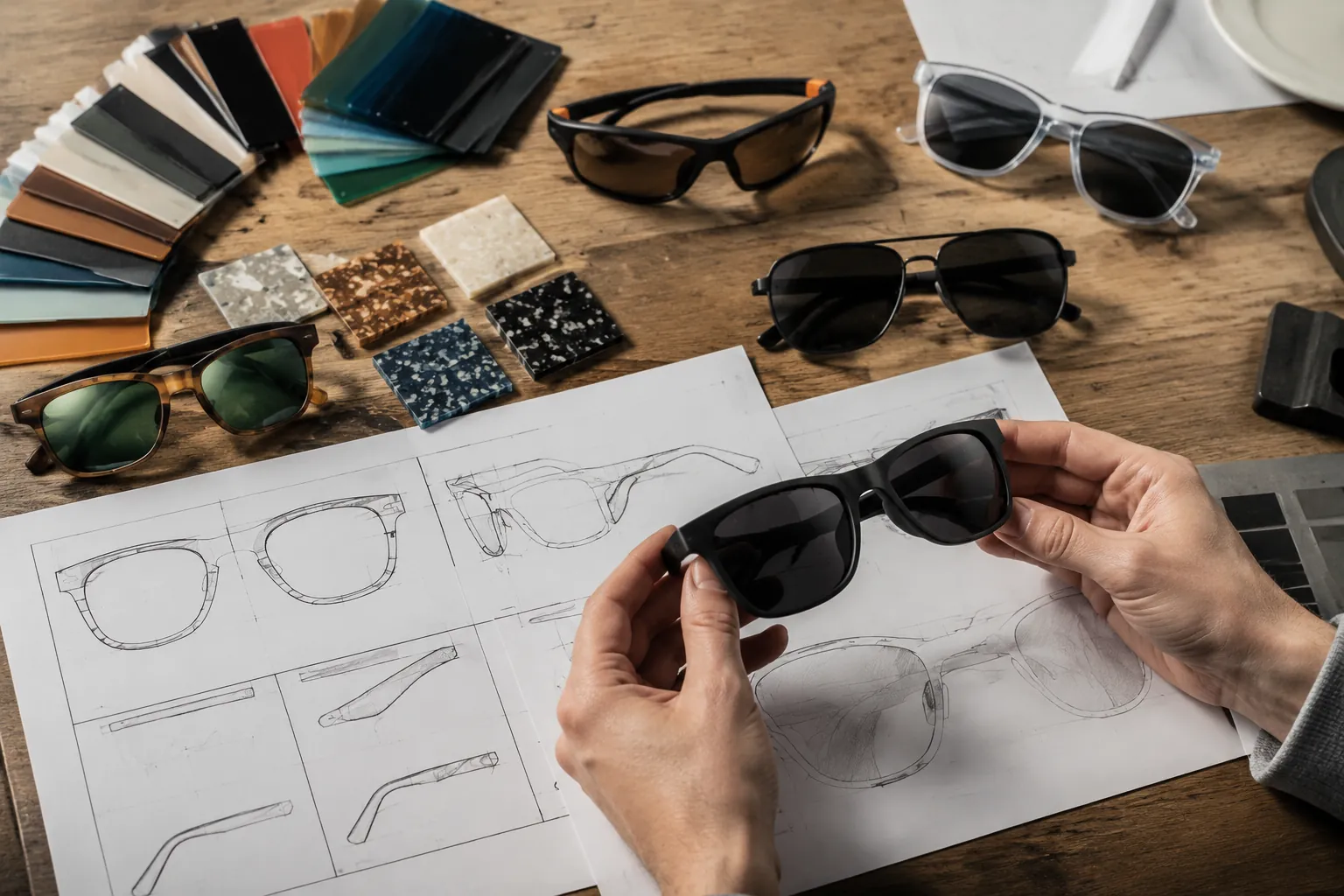
This guide is for overseas brands, importers, distributors, and retail buyers sourcing polarized sunglasses for private label programs. It explains where polarization adds real selling value, what drives cost, which lens and frame choices affect optical performance, and how to check samples before bulk approval. Use it before confirming MOQs, approving artwork, negotiating pricing, or building a polarized SKU plan.
Where Polarization Pays
Polarized lenses are not better for every sunglasses program. They reduce horizontally reflected glare from water, wet roads, snow, glass, dashboards, and polished metal. That makes them useful for driving, fishing, boating, skiing, cycling near water, outdoor work, resort retail, and other channels where glare reduction is easy to show. For a low-price fashion frame worn for short periods, the added lens cost may not pay back.
For private label buyers, polarization changes the product promise. Once "polarized" appears on a hangtag, product page, barcode label, or sales sheet, the product must support that claim. Buyers need visible glare reduction, consistent lens color, low distortion, clean assembly, and documents that support UV and filter-category claims. A bad polarized lens can create more returns than a standard UV lens. Wearers notice uneven vision fast.
Treat polarized programs as a separate specification path, not a late lens swap. Frame curve, lens base curve, groove depth, tint, coating, hinge balance, and decoration timing all affect the finished product. A polarized lens can still perform poorly if it is cut off-axis, forced into a tight frame groove, overheated during processing, or packed in a way that damages the coating.
Cost Logic: What Adds Price
The added cost in polarized sunglasses usually comes from lens construction, lower production yield, tighter handling control, and longer inspection time. A polarized lens contains a film layer that must be aligned and protected during forming, cutting, tinting, coating, and assembly. Axis error is not just cosmetic. It can weaken glare blocking and make the left and right lenses feel different.
Small orders usually carry higher unit cost because setup work is spread across fewer pairs. This may include lens sourcing, color review, logo fixtures, packaging setup, barcode or label preparation, and sample inspection. Pricing becomes more efficient as order quantity increases because fixed costs are distributed across more units. Ask for tiered quotations. Do not use sample-level pricing to judge bulk margin.
| Order Level | Best Use | Cost Behavior | Buyer Control Point |
|---|---|---|---|
| 50 pairs/design | Market test, showroom sample, influencer drop | Highest unit cost because setup, lens review, and packing preparation are spread thin | Use for validation, not as the basis for final bulk margin |
| 300 pairs/design | Small retail launch or distributor trial | Decoration and lens costs begin to normalize; color and packaging variants still affect cost strongly | Limit lens colors, logo methods, and packaging versions |
| 1000 pairs/design | Core private label SKU | Better purchasing efficiency for lenses, cartons, pouches, and printed inserts | Lock the golden sample and written QC checklist before deposit |
| 5000+ pairs/design | Chain retail, importer program, seasonal catalog | Best opportunity for stable component purchasing and repeatable inspection planning | Require in-line checks plus final inspection, not only finished-carton review |
The rule is simple. Do not add polarization to a novelty SKU unless the retail channel can explain the benefit. Customers rarely pay more for a feature they do not understand. For a first program, reduce risk with two or three frame shapes, one logo method, one pouch or box format, and one or two practical lens colors.
Lens Materials, Curves, and Coatings
Most private label polarized sunglasses use TAC or polycarbonate lenses. TAC is common because it is lightweight, cost-effective, and widely used in polarized lens construction. It works well for lifestyle, beach, driving, and general retail sunglasses. Polycarbonate is tougher and is often selected for sport positioning, but it needs careful processing. Stress marks, coating adhesion problems, and optical distortion show more clearly on curved lenses. Nylon can suit higher-performance sports eyewear, but it costs more and should match a clear performance brief.
Base curve matters as much as material. A 4-base or 6-base lens is usually easier to control than a deep 8-base wrap. Wrap frames look sporty. They also raise distortion risk if the lens is formed, edged, or forced into the frame incorrectly. For 6-base and 8-base sport styles, ask for sample-stage checks on polarization axis, center thickness, edge fit, and grid distortion. Keep the visual criteria practical: left and right lenses should match in tint, lens edges should sit cleanly in the groove, and there should be no whitening, film lift, chips, or pressure marks after assembly.
- TAC polarized: cost-effective for lifestyle, driving, resort, and beach retail where weight and price control matter.
- PC polarized: better for sport and outdoor positioning; check stress marks, coating adhesion, and optical clarity after forming.
- Nylon polarized: suitable for higher-performance sports collections when the buyer needs stronger optical and durability requirements.
- Gray tint: a common choice for natural color perception and driving-oriented programs.
- Brown or amber tint: useful for contrast in fishing, outdoor, and variable-light conditions; approve the shade in real daylight.
- Mirror coating: increases perceived value but shows scratches, dust, fingerprints, coating marks, and packing rub more easily.
Confirm sample timing in writing. It depends on frame availability, lens color, decoration method, packaging, and compliance requirements. Do not confirm bulk timing until the physical sample, artwork, packaging files, carton marks, and required test or document route are approved.
Decoration and Packaging Choices
Decoration looks simple on a quotation. It is not. It affects cost, timing, and reject risk. Pad printing is usually economical for temple logos and simple one-color branding. Laser engraving can be clean and durable for metal parts, acetate temples, or subtle premium marks. Metal logo plates can raise perceived value, but they need correct cavity planning, adhesive or mechanical fitting, and extra inspection. Hot stamping and printed pouch branding can support retail presentation, but color and artwork position should be approved before bulk production.
Logo placement must match the frame material and surface shape. A logo printed across a curved temple may look stretched or uneven. A metal plate placed too close to a hinge can interfere with screw service or create stress at the temple. For acetate, CNC milling depth and polishing quality affect how cleanly an embedded logo sits. For injected frames, mold texture, surface treatment, and release-agent residue can affect print adhesion. Test decoration on the final frame material, not only on a flat sample plaque.
| Method | Best For | Typical Risk | Buyer Check |
|---|---|---|---|
| Pad printing | Cost-controlled temple logos and simple brand marks | Ink rub, poor opacity, color shift on dark frames | Rub test and color approval on final frame material |
| Laser engraving | Premium subtle logos on metal, acetate, or selected coated parts | Low contrast, uneven depth, or heat marks | Approve visibility under indoor and outdoor light |
| Metal logo plate | Retail lines needing stronger shelf value | Misalignment, adhesive failure, edge gaps | Check plate fit before final assembly and packing |
| Printed pouch or box | Gift, resort, and chain retail programs | Late artwork delays, color mismatch, carton mark errors | Confirm dieline, barcode, warnings, and market language early |
Packaging also protects the lens. Mirror polarized lenses should not be packed lens-to-lens without protection. Confirm microfiber pouches, paper sleeves, inner bags, divider cards, and carton compression requirements before shipment. A mirror coating can pass inspection and still arrive damaged if rubbing or pressure occurs during transport.
How to Verify Polarization
Test polarization before approving a production sample. Do not rely only on supplier photos. A simple first check is to place the lens in front of an LCD screen or polarization test card, then rotate it about 90 degrees. A proper polarized lens should darken strongly at the correct angle. Both lenses should behave consistently. If the left and right lenses darken at noticeably different angles, the polarization axis may be inconsistent.
Next, check visual comfort. Look through the lens at a straight grid, door frame, window frame, or tiled wall while slowly moving the sunglasses left to right. Lines should not wave, jump, or bend excessively. Then wear the sample outdoors and look across water, wet pavement, or a glossy car hood. Glare should drop clearly. The lens should not create strong color patches, cloudy areas, or eye strain.
- Confirm lens material, tint color, coating, UV claim, filter category, and polarization requirement before sample making.
- Use a polarization test card or LCD screen on both lenses and compare left-right behavior.
- Inspect lens edges after cutting for film delamination, whitening, chips, rough bevels, or uneven thickness.
- Check frame groove fit so the lens seats without excessive force, rim distortion, or visible edge gaps.
- View a straight grid through the lens and look for distortion while moving the frame slowly.
- Wear the sample outdoors near wet pavement, water, glass, or reflective metal to confirm glare reduction.
- Approve one sealed golden sample and keep it as the reference for bulk production and final inspection.
Also check heat, pressure, and transport behavior. A frame that looks acceptable on day one may show stress marks, lens movement, or coating rub after compression or warm storage. For sport wraps, mirror coatings, and tight lens grooves, ask the supplier to check packed samples after a reasonable handling simulation. The goal is not to over-test every small order. The goal is to catch common failure points before they become bulk returns.
Compliance: Claims on Paper
Polarized performance is only one part of the compliance file. Sunglasses must also meet destination-market safety, labeling, and restricted-substance requirements. Common routes include CE EN ISO 12312-1 for the European market, ANSI Z80.3 for the United States, AS/NZS 1067 for Australia and New Zealand, REACH for restricted substances in the EU, FDA registration where applicable for U.S. import and establishment requirements, plus management or social-audit systems such as ISO 9001 and BSCI. Do not ask a factory to "add certificates" after production. Build the required test standard, label language, and document package into the first quotation.
CE EN ISO 12312-1 is relevant for sunglasses sold in the EU and covers requirements such as transmittance, filter category, and related product information. ANSI Z80.3 is commonly requested for non-prescription sunglasses in the U.S. market. AS/NZS 1067 applies to Australia and New Zealand. REACH matters for restricted substances in materials, coatings, nose pads, inks, and packaging components. FDA registration may be relevant to U.S. eyewear import handling, but it is not a substitute for product testing against the applicable sunglasses standard.
| Market | Common Requirement | Buyer Should Confirm |
|---|---|---|
| European Union | CE EN ISO 12312-1, REACH | Lens category, UV protection, labeling, restricted substances, EU language needs |
| United States | ANSI Z80.3, FDA registration where applicable | Impact, transmittance, UV claims, importer documentation, retail warnings |
| Australia/New Zealand | AS/NZS 1067 | Filter category, warning labels, packaging language, UV claims |
| Multi-market program | Combined test plan | One spec sheet that avoids conflicting labels, claims, and category wording |
Keep printed claims conservative and evidence-based. "Polarized UV400 sunglasses" should only be used if the test file and product specification support both the UV and polarization claims. If packaging claims more than the report proves, a retailer audit, customs review, or customer complaint can become expensive. Approve the exact retail claim, hangtag wording, barcode label, user warning, and destination-market language before bulk packaging is printed.
Factory Process Points That Reduce Returns
Most polarized defects are preventable when the supplier controls the process before final packing. Risk starts with lens storage. Polarized sheets and finished lenses should be protected from heat, pressure, dust, and scratching. During cutting, operators need to maintain orientation and avoid chipped edges. During tinting and coating, temperature and time should stay within the lens supplier's recommended process range. During assembly, the lens should not be forced into a frame groove that is too tight.
Assembly is a common failure point. If the lens is forced into acetate or injected frames, stress can appear near the rim. If screw tension is uneven, one side of the frame can distort. Hinges matter too. A loose or uneven hinge makes the frame sit crooked, and the wearer may blame the lens because vision feels uneven. Practical in-line checks should include polarization axis, lens surface defects, groove fit, temple opening, screw torque, bridge comfort, lens symmetry, and packing abrasion risk.
- Incoming lens check: confirm material, tint, coating, surface quality, and polarization axis before cutting or assembly.
- Frame groove check: verify that the lens seats cleanly without excessive pressure, edge gaps, or rim distortion.
- Decoration check: inspect laser engraving, pad printing, metal logo plates, and printed packaging before final packing.
- Wear-fit check: confirm temple balance, bridge comfort, hinge movement, screw tightness, and lens symmetry.
- Packing check: prevent mirror abrasion, lens rubbing, pouch staining, and carton compression damage during export transport.
For bulk orders, request a written inspection standard that matches the approved sample. It should define acceptable and unacceptable defects for lens color, polarization performance, coating marks, frame alignment, logo placement, packaging, barcode labels, and carton marks. If AQL inspection is used, agree on the AQL level and defect classification before production, not after goods are packed.
A Practical Path for First Orders
Start with a tight brief. Send frame reference, target retail price, lens material, base curve, tint, polarization requirement, UV claim, logo method, packaging, destination market, and order quantity. If the target cost is uncertain, ask for quotes at several quantity levels. This shows where cost breaks appear and keeps negotiation from getting stuck at sample-level pricing.
Approve the lens before approving the full commercial package. Buyers often spend too much time on logo size and too little on tint, axis, curve, and distortion. Ask for a physical sample and keep one approved unit sealed as the golden sample. If the program includes multiple lens colors, approve each color separately. Gray polarized and brown polarized do not behave the same under real light. Mirror coatings can also change perceived tint.
Before deposit, lock the specification sheet. It should list frame material, lens material, base curve, lens category, UV and polarization claims, coating, Pantone or physical color reference, logo placement, packaging, compliance documents, inspection method, carton marks, and shipment requirements. Then confirm the timeline based on the approved specification. Delays often come from late artwork, unclear packaging, changing lens colors after sampling, slow compliance confirmation, or missing barcode and warning-label details.
Polarized sunglasses can be a strong private label SKU when the buyer matches the feature to the channel. They are not a shortcut around sourcing discipline. Reduce returns by specifying clearly, testing samples carefully, limiting the first program, and giving the supplier a measurable standard before production starts.
Have a custom sunglasses project in mind?
Send us your styles, target market and quantities and we will return a detailed quote with MOQ, lead time and a sample plan.
Get a QuoteWhy source this from Wenzhou with LumiShades
Wenzhou in Zhejiang Province is widely regarded as China’s eyewear manufacturing capital, producing a large share of the world’s sunglasses. That concentration matters to buyers: a deep local supply chain for acetate sheet, hinges, lens blanks, plating and packaging means shorter component lead times, easier color and material matching, and a workforce with decades of eyewear-specific skill. LumiShades has manufactured in this ecosystem since 2009, and our vertical integration — in-house injection molding, acetate cutting, CNC milling, lens tinting, decoration and quality control — means no part of your order is quietly subcontracted to a workshop you cannot audit.
For international buyers, that vertical control translates into accountability. When a single factory owns every step, defects are traced and fixed at source rather than bounced between vendors, and your specifications survive intact from first sample to bulk. For procurement review, buyers can request process records, approved samples, quality checkpoints and project-specific compliance files before placing a bulk order. Required testing and documentation are confirmed against the destination market and product specification rather than assumed from a generic certificate list. Explore our manufacturing capabilities and quality control process to see how this works in practice.
Frequently asked questions
Is polarized always worth the extra cost for private label sunglasses? No. Polarization is worth considering when the customer clearly benefits from glare reduction, such as driving, fishing, boating, resort, outdoor, and sport channels. For low-price fashion SKUs, standard UV lenses may protect margin better. Ask whether the retail page, hangtag, or sales team can explain the benefit in one sentence. If not, polarization may not earn back its added cost.
What MOQ should I use to test a polarized sunglasses design? Use a small order or sample run to validate frame fit, lens tint, polarization axis, logo method, and packaging. For price planning, request quotes at several quantity levels instead of relying on one MOQ. Compare a test quantity, a small launch quantity, and a core bulk quantity so setup costs, lens purchasing, and packaging costs are visible.
How can I check if the sample is truly polarized? Use a polarization test card or LCD screen. Hold the lens in front of the screen, rotate it about 90 degrees, and check that it darkens strongly at the correct angle. Test both lenses and compare their behavior. Then wear the sample outdoors near water, wet pavement, glass, or a glossy car hood to confirm real glare reduction, and view a straight grid to check distortion.
Which lens material is best for polarized sunglasses? TAC is the common cost-effective choice for lifestyle, beach, resort, and driving sunglasses. Polycarbonate is often chosen for sport positioning or added toughness, but it needs careful checks for stress marks, coating adhesion, and distortion. Nylon suits higher-performance sports eyewear when the buyer has a clear performance requirement and budget.
Which compliance documents should I request? Match documents to the destination market. For the EU, ask about CE EN ISO 12312-1 and REACH. For the U.S., ask about ANSI Z80.3 and FDA registration where applicable. For Australia and New Zealand, ask about AS/NZS 1067. Also confirm that the report, label wording, filter category, UV claim, and product specification all refer to the same model or material set.
Do mirrored polarized lenses have higher defect risk? Yes. Mirror coatings make scratches, dust spots, coating marks, fingerprints, and packing rub easier to see. Before bulk approval, inspect the lens under strong light, confirm protective packing, and test whether the pouch, paper sleeve, or inner bag can rub the coating during transport. Mirror lenses should have clear surface-defect limits in the inspection standard.
How long does a polarized private label order take? Timing depends on frame availability, lens material, lens color, mirror coating, logo method, packaging, and compliance requirements. Ask the supplier to quote sample timing and bulk timing in writing after the specification is complete. Do not treat the schedule as fixed until the physical sample, artwork, packaging files, carton marks, and required documents are approved.
Ready to start?
Explore our square sunglasses or request a quote — our sales team replies within 12 hours.
Request a Quote