
Exclusive Sunglass Colorways Using Existing Molds
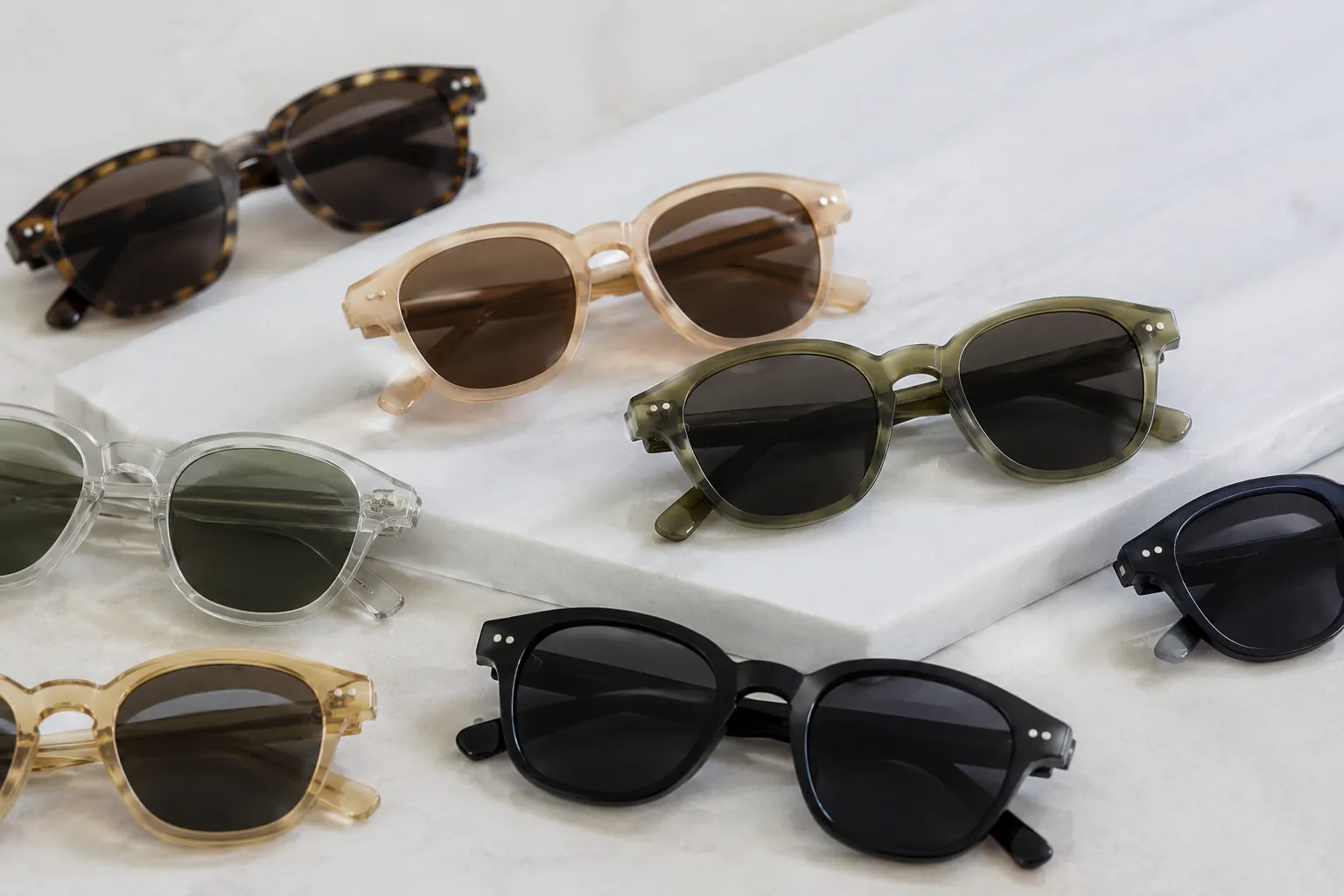
This guide is for brand owners, importers, distributors, and retail buyers who want an exclusive sunglass SKU without paying for new tooling. Often, the smarter route is not a new mold. It is a controlled colorway built on existing tooling: frame color, lens tint, finish, and branding detail. Done well, this cuts development risk, shortens decision time, and makes repeat orders easier to manage. Done badly, it creates color drift, coating rejects, logo adhesion failures, and bulk production that does not match the approved sample. The goal is not just to approve a nice prototype. It is to define a repeatable commercial specification that can be quoted, produced, inspected, and reordered with fewer surprises.
Start with the real question: what must look exclusive?
Buyers often ask for a new mold before confirming what actually drives the product story. That is a mistake. New tooling adds cost and usually adds uncertainty because fit, shrinkage, hinge alignment, polishing, lens seating, and assembly tolerances all need to be proven again.
An existing mold with production history is usually a safer base. The shape, assembly method, and common quality risks are better understood. Not perfect. Just more predictable.
For most sunglass programs, buyers and end customers notice these visible factors first:
- Front frame color - for example black, crystal, tortoise, or translucent fashion tones
- Temple color or finish - matching or contrast tones, matte or gloss, or a metal detail
- Lens appearance - for example smoke, brown, green, gradient, mirror, flash, or polarized
- Branding detail - such as pad print, laser mark, foil detail, or a metal logo element
Shape still matters. But if the base shape already fits the target segment, these details usually do most of the exclusivity work. A simple rule helps: if your customer would describe the product mainly by its color, lens look, finish, or branding treatment, start with a colorway plan before paying for a new mold.
The four levers that change the product fastest
Not every customization option behaves the same way in production. Some are straightforward. Others add cosmetic risk, process variation, or extra compliance review. The four fastest and most common levers are below.
- Frame color and material effect. Injection materials are commonly used for solid colors, transparent tones, and cost-sensitive programs because they can be consistent when material and masterbatch are controlled well. Acetate can create deeper color, richer tortoise patterns, and layered effects, but sheet pattern and tone can vary naturally from piece to piece.
- Lens tint and category. Standard tints such as smoke, brown, and green are usually easier to source and match than highly specific fashion colors. Darker lenses, gradients, mirror coatings, and polarized versions need closer review because visible light transmission and labeling can change by market.
- Surface finish. Gloss, matte, sanded, or rubberized finishes can change the retail impression of the same mold. Matte and soft-touch effects may look more premium or sporty, but they also show rub marks more easily and can affect logo adhesion if the coating system is wrong.
- Decoration. Pad printing is widely used for simple logos and is usually the easiest method at lower volumes. Laser marking can give a cleaner and more durable look on compatible materials. Metal plates or inlays look more premium, but they add assembly steps and require tighter positioning control.
These levers can change the commercial identity of a style quickly. The same frame shape can read as basic, fashion, or premium depending on the frame tone, lens look, finish, and branding method.
What changes cost, MOQ, and lead time most
The best colorway is not the one with the most options. It is the one that creates visible difference without adding avoidable production risk. In general, lower-volume projects work best when they stay close to standard material and finishing programs. Complex effects usually make more sense once volume is higher.
| Customization choice | Typical MOQ impact | Unit cost impact | Lead-time impact | Main production risk |
|---|---|---|---|---|
| Standard solid injection frame color | Often suitable for lower MOQs, subject to factory policy | Usually low | Minimal if color is standard | Color mismatch if reference is unclear |
| Custom translucent or mixed injection color | May require higher MOQ than standard colors | Usually low to moderate | May require extra sampling or material setup time | Shade variation, visible flow lines |
| Acetate pattern or lamination | Often more practical at higher volumes | Usually moderate to high | Can add cutting, matching, and material sourcing time | Pattern consistency, sheet yield loss |
| Custom lens tint or gradient | May be possible at low MOQ, depending on lens source | Usually low to moderate | Minimal to moderate | Transmission tolerance, color consistency |
| Mirror or flash coating | Often easier to cost-justify at higher volumes | Usually moderate | Can add coating process time | Scratch visibility, cosmetic coating rejects |
| Pad print logo | Commonly available at low MOQ | Usually low | Minimal | Ink adhesion on coated or soft-touch surfaces |
| Laser engraving or metal logo plate | May require higher MOQ or added setup cost | Usually moderate | May add process or assembly time | Positioning consistency, extra assembly control |
These are directional trade-offs, not fixed rules. Actual MOQ, cost, and timing depend on the factory, material, lens source, and decoration method. Ask for quotations by break quantity. Also ask which options use standard programs and which need custom setup.
A practical framework for one repeatable exclusive
Many delays come from approving too many combinations at once. Start narrower. Develop one clear hero colorway first. Then decide whether a simpler commercial version or a more premium variant is worth adding.
- Choose the base shape. Select a mold that already fits your channel, whether that is fashion, sport, promotional, kids, or optical-sun crossover.
- Set a retail band. Entry, mid-market, and premium programs use different cues. The target retail position should guide the material, lens, and logo choices.
- Pick one lead visual cue. Let one feature do most of the work: frame tone, lens effect, or temple branding.
- Limit first-round variables. In the first sample round, change no more than two major appearance variables, such as frame color and lens tint, while keeping the logo method standard.
- Define tolerances before bulk. Approve against a control sample and written reference. For lenses, confirm the intended category, tone, and any market-specific requirement. For logo placement, request a marked photo or drawing with dimensions.
- Lock the reorder version. Before bulk starts, confirm whether reorders must match the hero sample exactly or whether an approved cost-down version is acceptable for wider distribution.
This avoids a common problem: a sample that looks good once but is hard to reproduce consistently at scale.
What to confirm on material, finish, and decoration before approval
Different materials and finishes respond differently to colorway plans. Ignore that early, and the approved sample and delivered bulk order may not match.
Injection frames are commonly used for stable solid colors, transparent greys, and sporty constructions. They are often a practical choice for lower-volume customization. Still, buyers should review likely cosmetic issues, especially on very light transparent shades or very high-gloss dark colors, where flow marks, gate marks, or polishing marks may be more visible.
Acetate frames usually provide more depth and a stronger premium appearance. They are often chosen for tortoise patterns, laminations, striped sheets, and richer translucent effects. The trade-off is natural pattern variation. For acetate, approve not only one control sample but also an acceptable variation range for grain, contrast, and tone.
Lens finishing needs the same discipline. Standard solid tints are generally easier to control than gradients, mirrors, or flash coatings. Coated lenses can look strong, but they are usually more sensitive in cosmetic inspection because fine scratches, edge marks, and coating dust are easier to see.
Decoration methods also differ in risk and durability:
- Pad print: widely used, flexible, and usually cost-effective for simple branding
- Laser engraving: cleaner and typically more durable on compatible surfaces, but without the color contrast of print
- Hot foil or stamped logo: visually attractive in some applications, but process quality must be confirmed
- Metal plate or inlay: a stronger premium cue, but with added assembly and positioning control requirements
Before approving decoration, ask direct process questions. Is the logo applied before or after final coating? What internal adhesion or rub test is used? Has the same method been used successfully on the same substrate and finish before? Those answers matter more than artwork alone.
A color change can still trigger compliance review
A common sourcing mistake is assuming that an existing mold with a new colorway needs no further compliance review. Not true. The frame shape may already be proven, but changes to lens tint, darkness, gradient, mirror effect, polarization, material, paint, or decorative parts can still affect the documentation or testing path.
Common references buyers may request for sunglasses include CE EN ISO 12312-1, ANSI Z80.3, and AS/NZS 1067. Material-related review may include REACH. Some buyers also request FDA registration details where relevant to internal vendor onboarding, as well as factory system or social compliance credentials such as ISO 9001 and BSCI.
Do not treat these references as automatic approval for every variation. Verify the exact requirement for the destination market and for the exact production version being ordered.
- If you change lens darkness, gradient, mirror effect, or polarization, ask whether visible light transmission category, labeling, or testing needs review again.
- If you add polarized claims, make sure the documents and product marking correspond to that exact lens version.
- If you change frame material, paint, coating, or decorative parts, review whether updated material declarations are needed.
- If packaging or product copy states UV400 or a similar claim, confirm that the approved production version supports that claim and that the documentation is current.
Colorway development is not just design. It is also document control and claim control.
Sample-to-bulk workflow that keeps revisions in check
The cleanest workflow is one where each approval has one purpose. That keeps back-and-forth down and makes it easier to trace where a mismatch happened later.
- Send a complete brief. Include the base style code, destination market, target quantity, logo method, color references, lens type, packaging needs, and target price band.
- Request a feasibility review. Ask the factory to flag combinations that may create avoidable issues in yield, assembly, coating quality, decoration adhesion, or compliance review.
- Approve first samples for appearance. Use the first round to confirm the overall look, fit, and commercial direction. Do not test too many lens coatings or logo methods at the same time unless there is a clear reason.
- Approve against a control sample. For acetate, mixed-color injection, or coated lenses, define acceptable variation in writing and keep the control sample identified for future comparison.
- Confirm quotations by break quantity. Ask for pricing at multiple quantity levels so you can see when upgraded lenses, coatings, or logos become commercially sensible.
- Approve a pre-production sample. This should lock the frame color, lens tone, logo position, packaging, and carton marks before bulk production starts.
- Set inspection points for bulk. Agree on the visual standard, key dimensions, logo placement tolerance, and any specific checks for coating, hinge alignment, or lens appearance.
One warning. If the brief says "dark olive lens" but the only reference is a phone screenshot, disputes are likely. Use Pantone where suitable, provide physical swatches when color is critical, and state whether lens matching should prioritize daylight, store lighting, or photography appearance.
Three low-risk colorway formulas that usually work
Not every collection needs a dramatic concept. In many B2B programs, the best exclusive is the one that looks deliberate, fits the margin structure, and can be reordered with reasonable consistency.
Formula 1: Commercial core. Black or dark tortoise frame, smoke or brown lens, and a small temple logo. This is usually the lowest-risk route because the materials, lens colors, and decoration methods are widely used.
Formula 2: Modern fashion variant. Crystal grey, transparent olive, or champagne frame with a related solid or gradient lens and discreet laser branding. This can change the perceived product significantly without adding major assembly complexity.
Formula 3: Premium-looking upgrade. Rich acetate pattern, mirror or polarized lens where the market supports it, and a metal temple plate or inlay. This can create stronger shelf impact, but the buyer should confirm the cosmetic standard, assembly tolerance, and compliance implications before rollout.
The logic is simple: choose a shape that already works, let color and decoration create the difference, and keep the first order disciplined. If sell-through is strong, a later tooling investment becomes an informed decision instead of a guess.
Have a custom sunglasses project in mind?
Send us your styles, target market and quantities and we will return a detailed quote with MOQ, lead time and a sample plan.
Get a QuoteWhy source this from Wenzhou with LumiShades
Wenzhou in Zhejiang Province is widely regarded as China’s eyewear manufacturing capital, producing a large share of the world’s sunglasses. That concentration matters to buyers: a deep local supply chain for acetate sheet, hinges, lens blanks, plating and packaging means shorter component lead times, easier color and material matching, and a workforce with decades of eyewear-specific skill. LumiShades has manufactured in this ecosystem since 2009, and our vertical integration — in-house injection molding, acetate cutting, CNC milling, lens tinting, decoration and quality control — means no part of your order is quietly subcontracted to a workshop you cannot audit.
For international buyers, that vertical control translates into accountability. When a single factory owns every step, defects are traced and fixed at source rather than bounced between vendors, and your specifications survive intact from first sample to bulk. We back this with 15+ years of experience, shipments to 60+ countries, more than 5 million pairs produced per year and a 98.5% on-time delivery rate. Our certifications — CE EN ISO 12312-1, FDA registration, ANSI Z80.3, AS/NZS 1067, REACH, ISO 9001 and BSCI audit — mean the compliance documentation your market requires already exists. Explore our manufacturing capabilities and quality control process to see how this works in practice.
Frequently asked questions
Can I make an exclusive colorway if other buyers use the same mold? Yes. In eyewear, commercial exclusivity often comes from the exact combination of frame color, lens tint, finish, and logo treatment rather than from shape alone. To make that exclusivity easier to protect, ask the factory to list the approved color references, lens specification, finish, and logo placement on the final specification sheet. If you want stronger separation, consider a controlled acetate pattern, a custom lens tone, a distinctive logo location, or custom packaging reserved for your program.
What is the lowest practical MOQ for trying a new colorway? There is no universal MOQ. The practical minimum depends on the factory, the mold, the frame material, the lens source, and the decoration method. A simple combination on an existing mold with standard frame colors, standard lenses, and pad printing is usually the easiest place to start. Custom acetate matching, mirror coatings, polarized lenses, or metal logo parts often become more practical at higher volumes because setup, sourcing, and reject risk are harder to absorb on very small orders. Ask the supplier to quote the same style at several quantity levels and to state which parts of the specification are standard versus custom.
Will a new lens color require new compliance testing? It may. A new lens color can change visible light transmission, lens category, labeling, and the documentation needed for the destination market. Send the exact lens specification to the supplier and ask three questions before approval: what standard applies to the market, whether the new lens falls into a different category, and whether existing reports cover that exact lens version or a new review is needed. Do not assume that a previous report for the same frame shape automatically covers a different tint, gradient, mirror coating, or polarized lens.
How many sample rounds should I expect? For a clear and complete brief, many projects can be managed in one appearance sample round and one pre-production confirmation round. More rounds are usually caused by incomplete color references, too many simultaneous changes, or late decisions on logo method, packaging, or compliance claims. To keep the process short, send a full brief at the start, approve against a named control sample, and separate appearance approval from final production approval.
What is the safest decoration method at low MOQ? Pad printing is usually the safest starting option for lower-volume orders because it is widely available, relatively flexible, and easy to revise during development. It is especially practical for straightforward temple branding. Even so, buyers should still confirm adhesion on the actual substrate and finish, particularly on matte, painted, or soft-touch surfaces. If durability is a priority, ask the supplier what internal adhesion or rub test is used and request the logo position on a marked sample or drawing before bulk approval.
Ready to start?
Explore our shield & oversized sunglasses or request a quote — our sales team replies within 12 hours.
Request a Quote